Interwar Spooky Stories

Interwar Spooky Stories

With Halloween nearly upon us, it is time for a review of spooky short stories written in interwar Britain. Although Halloween was not celebrated in the modern sense during the interwar period, All Hallows Eve was a longstanding feature of the Church calendar, originating out of pagan Samhain celebrations. Short stories were an immensely popular format in the interwar years, with many short stories published in newspapers and dedicated magazines such as Strand Magazine. Many journalists and authors worked in the genre, which could be lucrative.

In recent years, the British Library publishing arm has re-issued many original stories of the 1920s and 1930s in various edited collections. Spooky short stories of the period often crystallise contemporary fears about technology, alienation, and modernity. They can also address social inequalities in a pointed way. For example, F Tennyson Jesse’s story ‘The Railway Carriage’, published in Strand Magazine in 1931, hinges on the third-class railway carriage as a democratic space that forces together people from wildly different backgrounds.[1]

The story’s protagonist, a young woman named Solange, finds the closed nature of the railway carriage oppressive: ‘she would have given a great deal to be out of that little third-class carriage, to be in a modern corridor train, to be – this, above all – away from her travelling companions.’[2] The design of the train means that Solange cannot change carriages whilst the train is in motion, heightening her feeling of being trapped with two unusual companions. Solange ‘had to stay with them whether she would or no. It was really an outrage, she thought to herself, that such a thing as a non-corridor train should still exist.’[3]

Solange is a modern, somewhat entitled young woman, who by the end of the story has to accept that there are things beyond the rational realm and that she cannot always control the world around her in the way she would like. When the train crashes, Tennyson Jesse introduces a supernatural element to the story and meditates on the justness of capital punishment, a practice that was under much debate during the interwar period. Despite the introduction of a possible ghost, the true horror of the story lies in the very real judicial practices of interwar Britain.

Another story which effectively conveys the terror that the proximity of strangers can bring is E.M. Delafield’s ‘They Don’t Wear Labels.’[4] It also demonstrates how the anonymity of the big city can be exploited, and how patriarchal structures can put women in danger. The story’s protagonist is Mrs Fuller, a boarding house keeper, who takes in a couple, Mr and Mrs Peverelli. Mr Peverelli is very charming, but his wife is sickly. From the moment the couple enter the house, Mr Peverelli plays on sexist stereotypes which Mrs Fuller is very happy to accept. He implies that his wife’s ailments are nervous disorders; Mrs Fuller then tells Mrs Peverelli ‘shed’ a good deal to be thankful for, with her husband in a good job, and always ready to do what would please her.’[5]

When Mrs Peverelli tries to tell Mrs fuller that Mr Peverelli is forcing her to eat and drink things against her will, and that she thinks her husband is trying to poison her, Mrs Fuller naturally rubbishes the suggestion. E.M. Delafield neatly demonstrates the pervasive assumptions about domestic violence: ‘If you really believed it, why – you’d left him. It’s surely the very first thing you’d have done’ huffs Mrs Fuller. ‘You don’t understand’, responds Mrs Peverelli. ‘I love him.’[6]

Shortly thereafter, the Peverelli’s move on, the wife looking ‘worse than ever – sallower and more frightened.’ The true horror of Mr Peverelli’s designs is revealed at the close of the story, when Mrs Fuller realises he has ground up a Christmas bauble and fed the powdered glass to his wife.[7] Murder by ground glass was, incidentally, one of the ways in which Edith Thompson suggested murdering her husband in her letters to her lover Freddie Bywaters. E.M. Delafield had followed the Thompson-Bywaters case closely, and is surely referencing it in this story. Mrs Fuller, and the reader, are confronted by their willingness to believe strangers at face value, and to believe men over women. The horror here is not supernatural, but rather the by-product of an inherently unequal society.

A final female-penned, London-based, spooky short story appeared slightly after the interwar period, at the close of the Second World War. In 1945, Elizabeth Bowen published the (very short) story ‘The Demon Lover’.[8] It effectively uses the bombed-out locales of war-torn London. Bowen’s protagonist, Mrs Drover, is checking up on her Kensington house after an extended stay in the country, away from the Blitz.

Things take a dark turn when Mrs Drover discovers a mysterious letter from a past lover, which warns her that today is ‘our anniversary, and the day we said. (…) I shall rely upon you to keep your promise.’[9] It transpires that Mrs Drover had a soldier lover during the First World War, who went missing. In fear of him, she decides to get a taxi as quickly as possible before the man can come to the house and claim her. Yet rather than a means of escape, the taxi becomes her prison, as she realises too late that the man behind the wheel is the very man she is fleeing from.

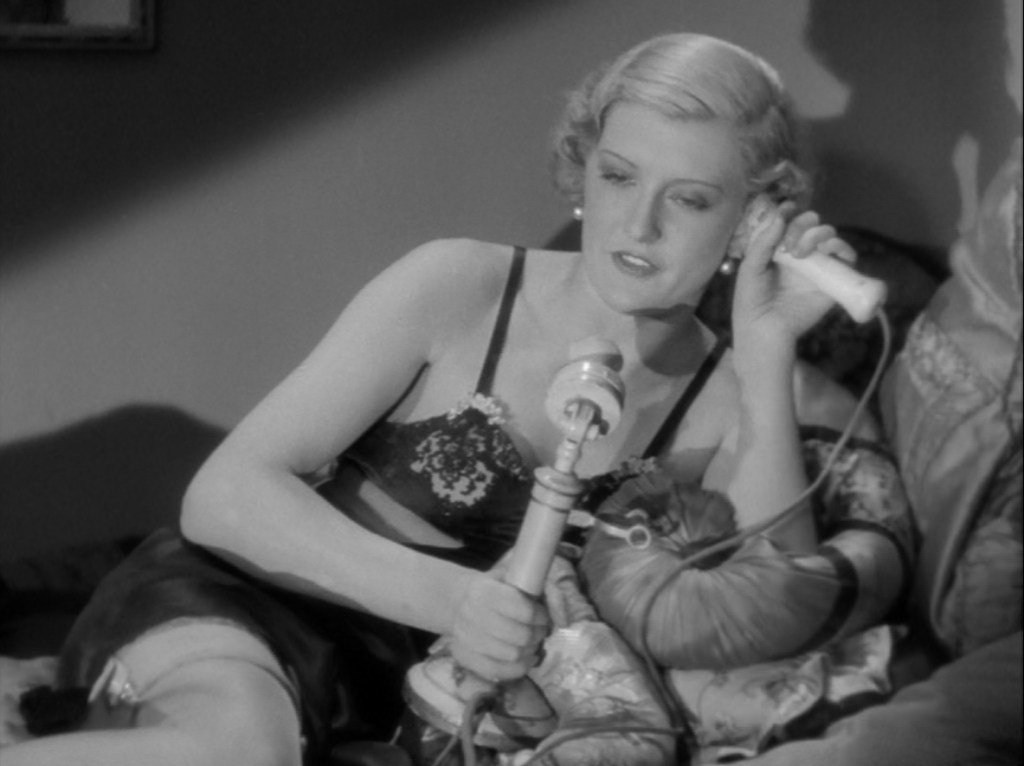
As in ‘The Railway Track’, in ‘The Demon Lover’ a means of transport traps a woman rather than give her freedom. The latter story also includes ample reflections on ageing and the compromises made by women: marriage, children and a big house in Kensington versus the excitement of a passionate love affair. Like Mrs Peverelli, Mrs Drover ultimately is unable to escape masculine power. The scariest thing for women turns out to be the patriarchy itself.

All of the stories and books mentioned in this post are available to purchase through the British Library online shop.


[1] F Tennyson Jesse, ‘The Railway Track’, in Blood on the Tracks: Railway Mysteries, edited by Martin Edwards (London: British Library, 2018), pp. 267-286

[2] Ibid., p. 272

[3] Ibid., p. 277

[4] E. M. Delafield, ‘They Don’t Wear Labels’, in Capital Crimes: London Mysteries, edited by Martin Edwards (London: British Library, 2015), pp. 265-273

[5] Ibid., p. 268

[6] Ibid., p. 270

[7] Ibid., p. 273

[8] Elizabeth Bowen, ‘The Demon Lover’, in Into the London Fog: Eerie Tales from the Weird City, edited by Elizabeth Dearnley (London: British Library, 2020), pp. 81-91

[9] Ibid., p. 85

Sonnie Hale

Sonnie Hale

Sonnie Hale was born John Robert Hale-Munro in London in 1902. His father, Robert, was also an actor. After an education at the Roman Catholic Beaumont College, Hale turned to a career in show business. During the interwar years, he was one of the most recognisable comedy stars in British film, often co-starring with Jessie Matthews, who would become his wife in 1931.

Like other interwar comedy stars, such as Gracie Fields, Hale’s career in the 1920s was based on the stage. His brand of comedy was mainly verbal – Hale was great at the quick repartee. The silent films made during this decade demanded a different, more physical type of comedy. During the 1920s, therefore, Hale appeared in revues which allowed him to perfect his singing and dancing skills. Once sound film became an established medium in Britain in the early 1930s, Hale combined his theatre work with film appearances.

Musical comedy was a popular film genre in 1930s Britain, and Hale packed his schedule with film roles in the first half of the decade. He starred in two films each in 1932 and 1933, a whopping four films in 1934, and three in 1935. He then appeared in one film each in 1936, 1938 and 1939. His acting output slowed down in the second half of the decade because he had at that point also turned his hand to writing and directing, directing three films across 1937 and 1938.

Hale’s first feature film role was a leading part opposite star Jack Hulbert. In the musical comedy Happy Ever After, Hulbert and Hale star as two window cleaners, both named Willie, who try and help a young starlet who is hoping to break into Hollywood. Hale’s time on the stage had evidently given him good connections with stars such as Hulbert and Hulbert’s wife Cicely Courtneidge, who also starred in the film.

From 1933, Hale started appearing in films with Jessie Matthews, by that point his real-life wife. From 1926 to 1930 Hale had been married to actress Evelyn Lay. Matthews had been married to her first husband for the same period. The relationship between Matthews and Hale started when he was still married to Lay, and caused much publicity and controversy at the time. Matthews was cited as co-respondent in Hale’s divorce case against Lay and Matthews’ letters to him were read out in court. The press, naturally, lapped it up, and the judge saw it fit to make comments about Matthews’ conduct.

Public sympathy was with Lay, but Hale and Matthews proved to be a successful professional as well as personal couple, and the public did not reject their collaborations. They appeared together in the ensemble piece Friday the Thirteenth (Hale as a comic bus conductor, Matthews as a chorus girl) and Hale played a supporting role in the Matthews’ star vehicles Evergreen, First a Girl and It’s Love Again, all directed by Victor Saville.

In none of these films, however, does Hale play the love interest to Matthews; he lacked the traditional good looks that 1930s British cinema demanded for the part of the romantic lead. Instead, Hale is the funny, supportive sidekick to either Matthews herself, or to the male lead. In It’s Love Again, for example, he plays Freddie Rathbone, who helps his friend and gossip journalist Peter Carlton come up with his gossip column every day. When Peter’s job is on the line, the pair come up with a fictional society figure, Mrs Smythe-Smythe, about whom Peter can make up the most outrageous stories and thus scoop his rivals at other papers. Hale plays Rathbone as a bit of a waster, who mainly enjoys going to society parties for the free food and wine. He is also, however, loyal to Peter and supportive of Peter’s attempt to impress the aspiring actress Elaine Bradford, played by Matthews.

After It’s Love Again, Hale took over from Saville as director. He directed Matthews in three films: Head over Heels, Gangway and Sailing Along. All three are less accomplished than Saville’s turns directing Matthews, and Hale gave up directing after 1938.

He did not, however, give up acting. His next role after It’s Love Again was a move away from musical comedy. Hale starred as petty criminal Sam Hackett in the Edgar Wallace crime thriller The Gaunt Stranger. Although Hale’s performance still has comic touches to it, the film’s overall tone is much darker than his previous work. It was only a brief foray into a different genre – by 1939 Hale was back to comedy, in the Walter Forde-directed Let’s Be Famous.

The Second World War caused a hiatus in Hale’s film career, although he was able to pick up his stage career which had languished for most of the 1930s. He briefly returned to film and TV films in the second half of the 1940s – by now divorced from Matthews and married to his third wife, Mary Kelsey. Towards the end of his life, he wrote the comedy play The French Mistress which was a success in the West End and made into a film in 1960. Hale died in London in 1959.

The General Strike of 1926

<strong>The General Strike of 1926</strong>

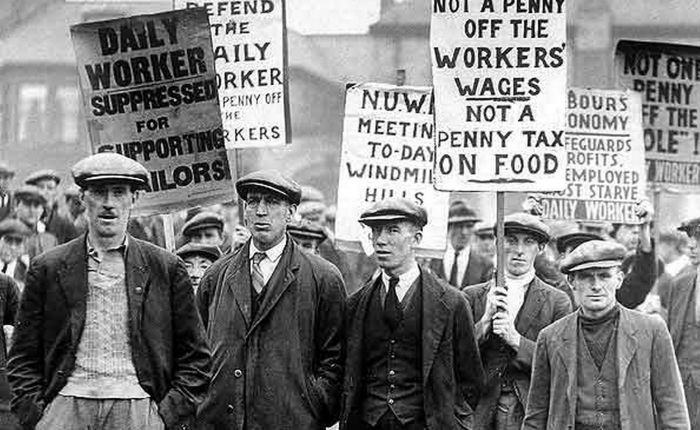
As industrial strike action continues across Britain for most of the summer and autumn of 2022, many news articles have reached back to the ‘winter of discontent’ –  a period of widespread trade union action in 1978/1979 which eventually led to a Conservative election victory which ushered in Margaret Thatcher as prime minister. Far fewer people have made the link with the much more comprehensive strike action which took place nearly 100 years ago, across nine days in May 1926.

The General Strike, as it came to be known, was an expression of working-class discontent that had been steadily building up since the end of the First World War. The war’s devastation, as well as its upheaval of social norms, challenged the British class system. After the war finished, many working-class men who had fought side by side with men of higher social standing were unwilling to accept the pre-war inequalities. On top of that, returning troops faced mass unemployment and a lack of affordable housing. Socialism gained traction in Britain, as well as elsewhere in Europe.[i]

The direct cause of the General Strike was a pay dispute in the coal mining industry. The industry was privatised and to counteract declining profits, coal mine owners reduced wages by over a third in a seven year period. In March 1926, the government supported a recommendation that miners’ pay should be reduced further. In response, the Trade Union Council (TUC), an overarching body of trade unions, called a strike to start on 3 May. All TUC member unions were bound to participate in the strike action, which led to millions of workers stopping work.

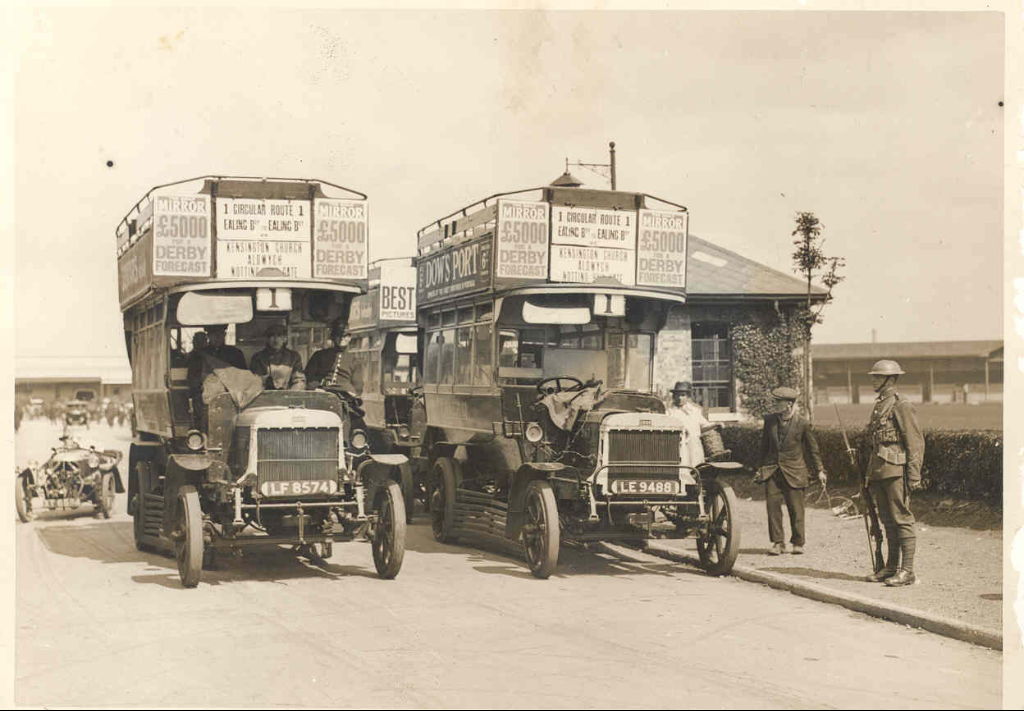
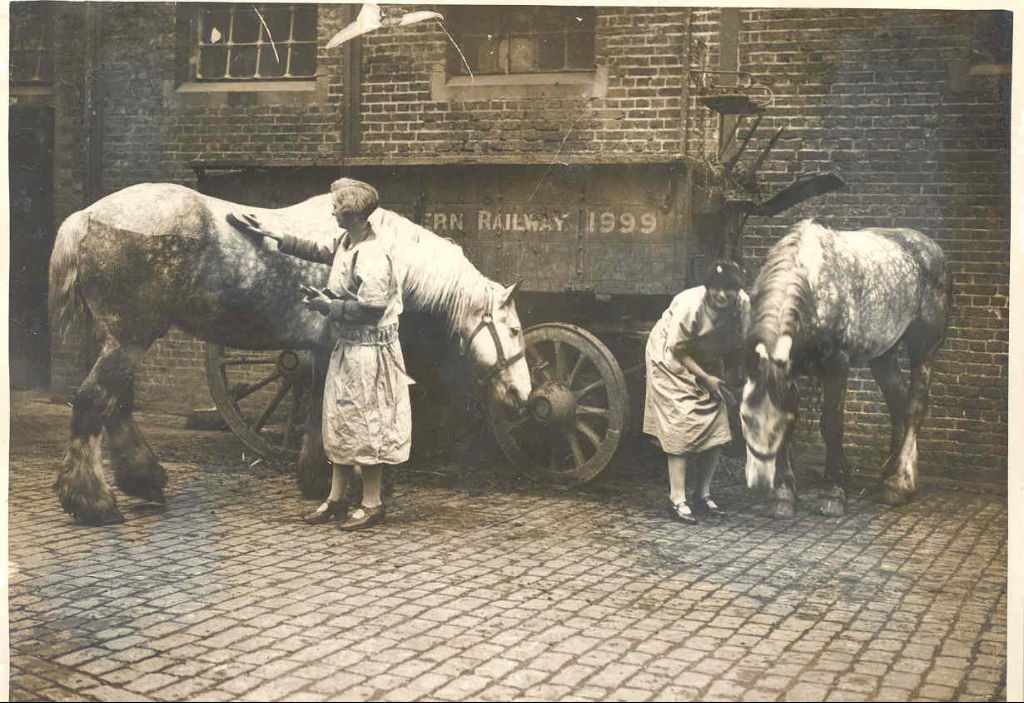
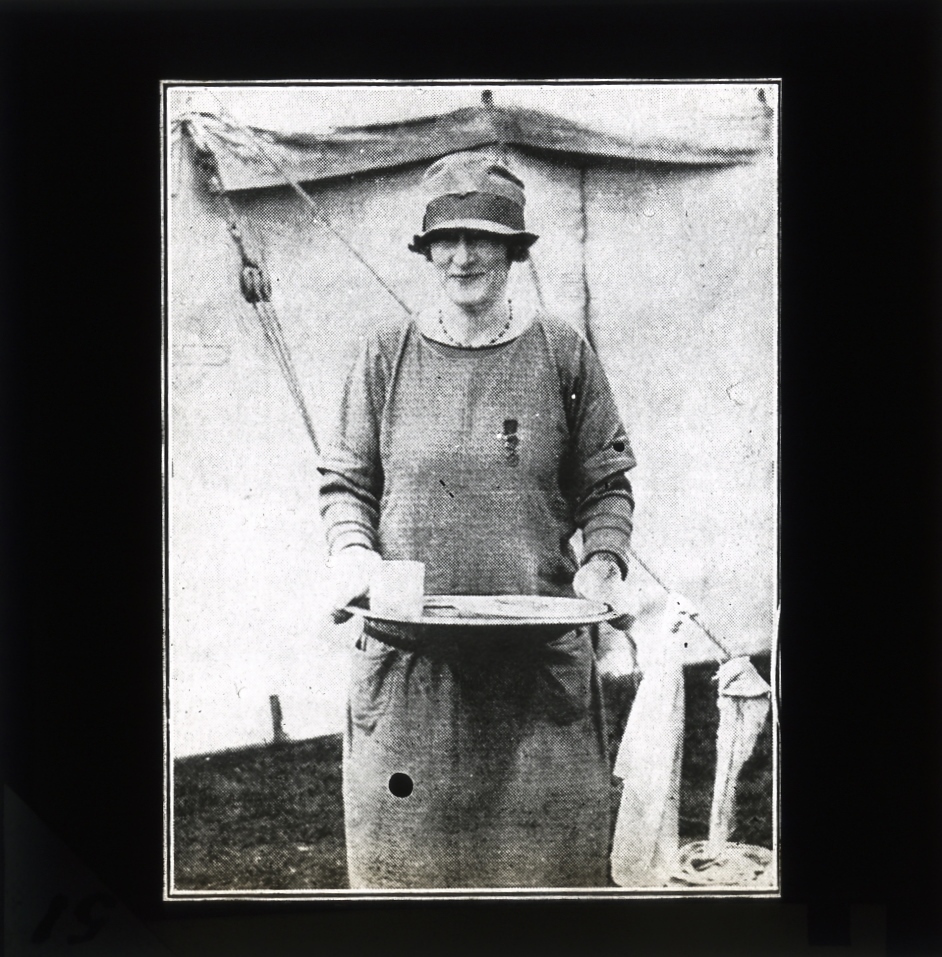
From railway workers and bus drivers to newspaper printers and food delivery staff, the strike impacted many essential services in the country. To keep things going, some people in non-unionised sectors ‘volunteered’ to work in roles affected by the strike, driving buses and delivering milk. Upper class families also ‘volunteered’ – wealthy women, for example, helped to serve out food from communal kitchens in Hyde Park. The establishment encouraged reminisces of the war, likening the emergency provisions put in place during the strike to the type of volunteer work many had undertaken during the conflict.

Because the printers’ union participated in the strike, the newspaper industry was severely impacted by the strike. Some papers managed to produce emergency bulletins which were much shorter than regular papers, and printed on a much smaller format. Newspaper proprietors in the 1920s mostly had warm relationships with the Conservative party, allowing the Government to produce the British Gazette, a pro-government publication. The TUC responded by producing their own British Worker, but were unable to match the circulation of the Gazette.

The National Union of Journalists was not TUC-affiliated at the time of the strike. The NUJ leadership badly muddled its response to the TUC’s call for strike action, leaving some NUJ members frustrated by being told they should not join a strike with which they had solidarity; and others annoyed because they felt forced to declare their views on a matter which had, strictly speaking, nothing to do with the NUJ.

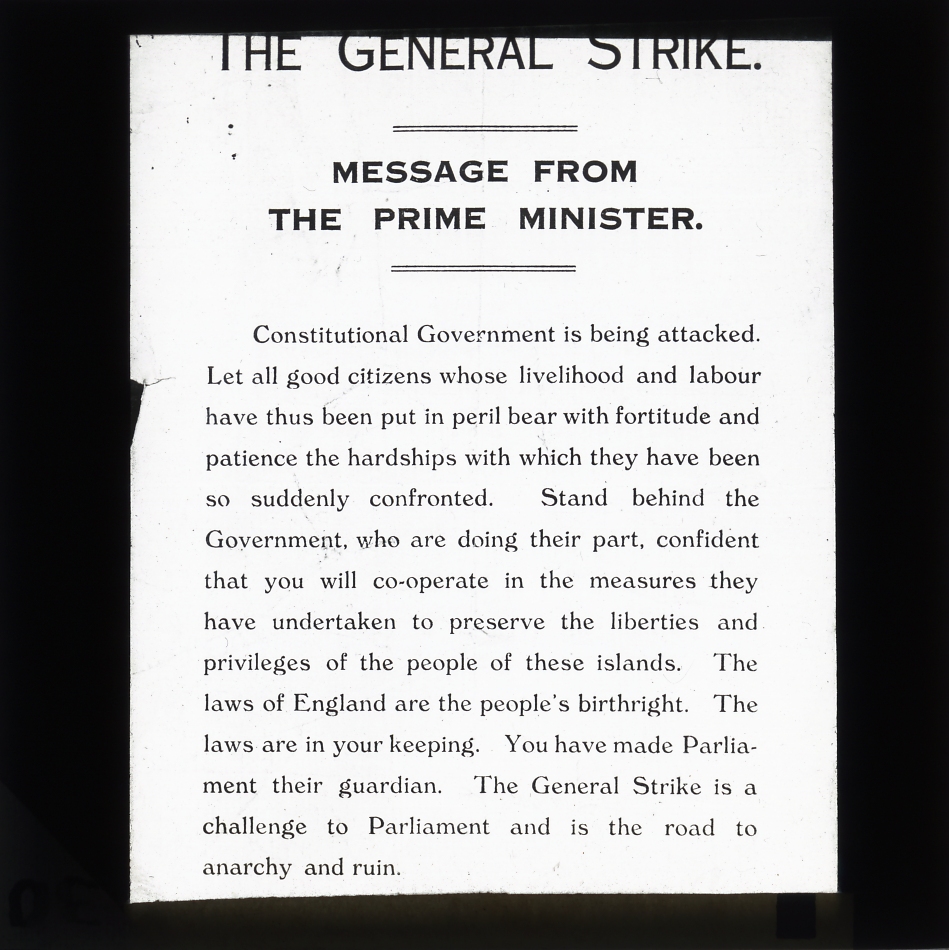
The Conservative government, led by Stanley Baldwin, took a hard line against the strikers. In the British Gazette, he likened the strikes to a coup on the government:

Constitutional Government is being attacked. Let all good citizens whose livelihood and labour have thus been put in peril bear with fortitude and patience the hardships with which they have been so suddenly confronted. Stand behind the Government, who are doing their part, confident that you will co-operate in the measures they have undertaken to preserve the liberties and privileges of the people of these islands.

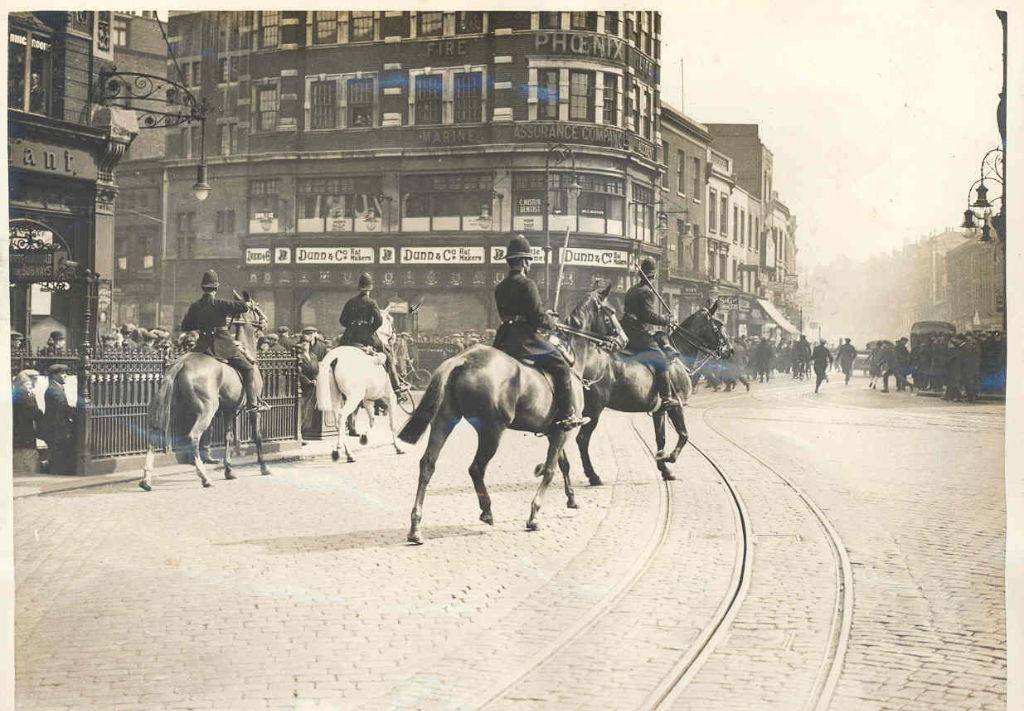
The ‘liberties and privileges’ of the millions of strikers were clearly not under consideration. Contemporary newsreels similarly focused on the efforts of the ‘volunteers’ and the supposed relief of Londoners when the strike was called off after nine days, without showing the various violent clashes between police and strikers which also occurred during the strike period.

The strike was eventually called of on legal grounds – it was determined that only the miner strike was aligned with the 1906 Trade Dispute Act, meaning that all other strikers did not have any legal protection.[ii] Although the miners continued their resistance until the end of 1926, they did not obtain any wage increases.

The following year, Stanley Baldwin passed a new Trade Disputes and Trade Union Act which made it illegal for any unions to strike in sympathy with another union – in future, each union was only allowed to go on strike if the dispute in question directly affected them. According to labour historian Anthony Mason, ‘The defeat which the trade unions suffered at the hands of the Government successfully discredited the idea of widespread industrial action as a method of obtaining the demands of labour. It did much to ensure the relatively quiescent acceptance by Labour of the persistent unemployment of the thirties.’[iii] The impact of the General Strike, then, was felt much beyond the nine days it lasted in May 1926; arguably it has impacted labour relations in Britain into the 21st century.


[i] Dan S. White, ‘Reconsidering European Socialism in the 1920s’, Journal of Contemporary History, Vol. 16, no. 2 (1981), 251-272

[ii] Jessica Brain, ‘The General Strike 1926’, Historic UK, accessed online: https://www.historic-uk.com/HistoryUK/HistoryofBritain/General-Strike-1926/

[iii] Anthony Mason, ‘The Government and the General Strike, 1926,’ International Review of Social History, Vol. 14, no. 1 (1969), 1-21

The Gaunt Stranger (1938)

<strong>The Gaunt Stranger (1938)</strong>

As has been noted previously on this blog, the work of detective fiction writer Edgard Wallace was often used as source material for British interwar films. Wallace was a prolific writer, so despite his early death in 1932, there were plenty of opportunities to translate his work to the screen for years afterwards. One such crime thriller is 1938’s The Gaunt Stranger. What sets this story apart from most British interwar crime fodder is that, very unusually, the criminal escapes the police at the end of the story.

Like so many interwar texts, The Gaunt Stranger existed in multiple formats and under different titles. Wallace originally published the story as a novel in 1925 under the title The Gaunt Stranger. Shortly after its publication, Wallace adapted it for the stage in collaboration with celebrated acter Gerald Du Maurier under the same name. In 1926 Wallace re-published the novel, now titled The Ringer, with some modifications to the text based on the stage production. The Ringer appears to have been put on stage again in 1929, and was also adapted as a film in Britain in 1928, 1931 and 1952. The second of these films was directed by Walter Forde, who in 1938 directed the story again under the auspices of Michael Balcon at Ealing Studios, but this time under the book’s original title.

The story of The Gaunt Stranger is almost as intricate as its production history. Set over a period of only 48 hours, it centres on lawyer-cum-criminal Maurice Meister, who receives warning that he is to be killed on 17 November, in two days’ time, by the notorious criminal ‘The Ringer’. Everyone in England, including Scotland Yard, believed the Ringer to have been killed two years’ previously in Australia. After the Ringer’s apparent death, Meister took in the Ringer’s sister as his secretary. It is insinuated that his relationship with the woman was more than just professional, and she committed suicide on 17 November the previous year. The Ringer appears to have come back from the dead to avenge his sister.

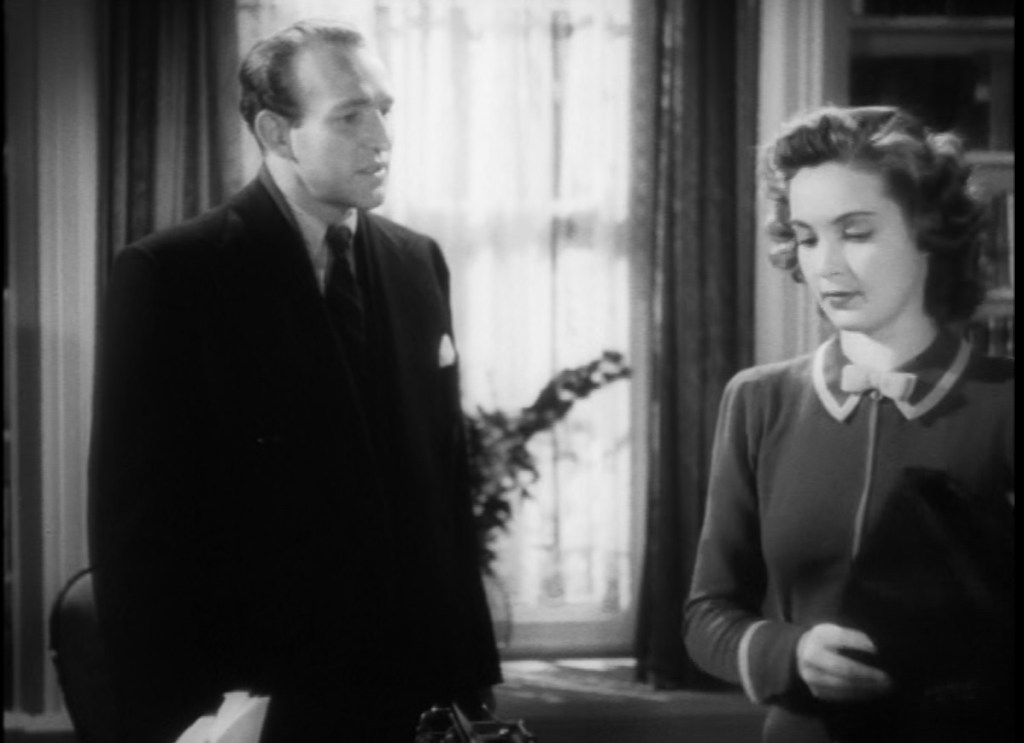
The Scotland Yard team is made up of DI Alan Wembury, Scottish police surgeon Dr Lomond, and Inspector Bliss, who has recently returned from Australia and who was the man who ostensibly killed the Ringer two years previously. Wembury calls in the help of small-time criminal Sam Hackett, who is one of the few men in England who would be able to recognise the Ringer. Wembury also has an admiration for Meister’s current secretary, Mary Lenley, whose brother Johnnie is also a criminal recently released from Dartmoor. Finally, in the course of the investigation the police identify and question Cora Ann, the Ringer’s American wife.

DI Alan Wembury and Mary Lenley in The Gaunt Stranger

With a runtime of only 71 minutes and a comprehensive cast of characters with complicated interrelations, The Gaunt Stranger moves at a rapid pace. Nonetheless, Forde makes effective use of repeated panning shots of empty rooms inside Meister’s house. The film opens with several shots of these empty rooms, ending with a shot of Meister playing his piano. Similar shots are repeated several times during the film, to stress Meister’s solitary living arrangements and highlight his vulnerability. As the 17 November dawns, Scotland Yard effectively imprison Meister in his own house to ensure he stays safe. Little do they know that the danger will not be coming from outside the house.

The closed circle of characters and the physical closure of Meister’s house set The Gaunt Stranger up as a classic murder mystery. What remains unclear until the end, however, is the identity of the Ringer himself. Johnnie, the criminal brother of secretary Mary, is a possible contender. More suspicious is inspector Bliss, who so recently returned from Australia. He acts oddly throughout the film, and seems reluctant to trust Wembury or collaborate fully with the investigation. Wembury does not know Bliss personally, opening up the possibility of him being someone other than who he pretends to be. Cora Ann also behaves oddly, first insisting that her husband is dead, before changing her story and admitting that he is still alive.

Johnnie Lenley and Sam Hackett in The Gaunt Stranger

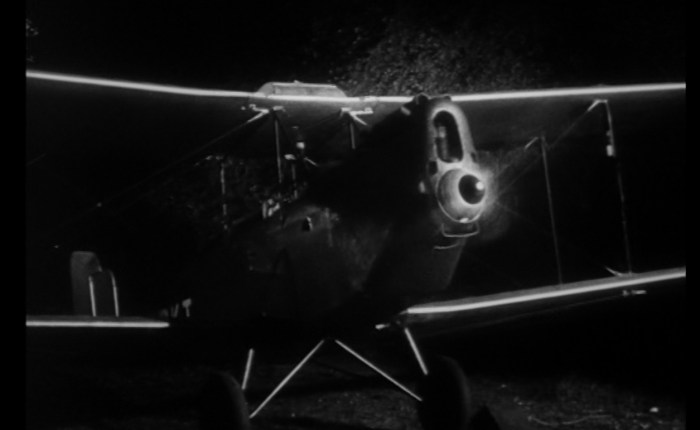
Meister himself is also anything but a sympathetic character. Like other books of the period, Wallace opted to make his victim an unpleasant character, so that the audience is not too concerned whether the murder is prevented or not. More unusually, however, Wallace also arranged for the Ringer, when his identity is eventually revealed, to make a spectacular escape from the police and the country. Once the Ringer’s identity is confirmed, it is clear to the audience in retrospect that Cora Ann has been playing along with her husband throughout the film. Their escape, which involves piloting a plane from a nearby airfield, was clearly planned in advance.

The Ringer and Cora Ann escape in The Gaunt Stranger

The police in The Gaunt Stranger are depicted as organised and capable. They effectively arrest multiple people throughout the film and are not fooled by Meister’s attempts to come across as a respectable lawyer – they are fully aware of his criminal activities. When Sam Hackett, the criminal informer, attempts to steal some of Meister’s silverware, he is apprehended by a Bobby almost immediately. Johnnie, too, is arrested as soon as he tries to break into a house. The film puts some of the police’s technological infrastructure on display, such as telegrams and cars wired with radios. Nevertheless the Ringer’s unscrupulous nature allows him to escape despite the police’s efforts. The Gaunt Stranger is one of the few British interwar films which entertains the possibility of a fallible police force that can be outwitted by master criminals.

The Abdication Crisis

As the UK getting used to a new monarch on the throne, let’s cast our minds back to the events of 1936, when an abdication crisis ultimately resulted in the confirmation of Prince Albert, the second son of King George V, as King George VI.

Prior to 1936, and throughout the 1920s, George V’s eldest son Edward, Prince of Wales, was an enormously popular figure. This blog has previously touched on his popularity as a newsreel subject and his ability to kick off new fashion trends. Edward was often seen in London’s nightlife and also travelled a great deal, both for work and for pleasure. He had the reputation of a playboy and remained unmarried in 1936, when he was already 42 years of age. His brother George, by contrast, was a year younger than him but had married at 28 and fathered two children (Elizabeth and Margaret) by the time he was 35.

As is customary in Britain, George V reigned until his death and the eldest child [at the time, the eldest son] is declared monarch immediately afterwards. A formal coronation ceremony follows some months later. When George V passed away in January 1936 after a long period of declining ill-health, Edward was duly proclaimed King. The abdication crisis ensued when, in the autumn of 1936, Edward declared his intention to marry the American divorcée Wallis Simpson.

Wallis’ nationality was already something that spoke against her in a country that was, at the time, concerned and suspicious of American cultural influences through popular culture. The popularity of Hollywood films and dance bands was blamed for a host of cultural ills. But Wallis’ past relationships were the real obstacle to the match. Edward had first met her as early as 1931 and she did not file for a divorce from Mr Simpson until October 1936, making it abundantly clear that her relationship with Edward had started during her marriage.

Although one of the key reasons that the Church of England was created was famously to allow Henry VIII to divorce Catherine of Aragon, divorce was a significant social taboo in interwar Britain. Divorce laws were eased in the 1920s but the social stigma on divorce was still significant – and not helped by the gleeful reporting of high-profile divorce cases in a tabloid press keen to increase its readership. The key objection which Prime Minister Stanley Baldwin therefore proposed against Edward’s marriage to Wallis was that ‘the people’ would not accept her as Queen. After several months of legal tussle between Edward and the government, it became clear that a marriage between Edward and Wallis would not be accepted as long as he was on the throne. In December 1936, Edward formally abdicated and his brother Albert was proclaimed King, styling himself as George VI. Edward was never officially coronated; his coronation had been planned for May 1937; a date eventually used for the coronation of George VI instead.

One of the aspects of the abdication crisis that is difficult for a modern audience to comprehend is how absolutely the British newspapers refused to print anything about it until early December 1936. As this blog has frequently noted, newspapers were extremely popular and influential during the interwar period, and in the mid-1930s popular newspapers in particular were constantly trying to increase their circulation figures. A royal scandal of this magnitude would appear to be excellent content to draw in readers. However, the respect for the monarchy was such that newspaper proprietors, who were fully aware of Edward’s relationship with Wallis, agreed a media blackout.

Such a thing would of course be completely impossible in our current digital media landscape, but even back in 1936 London newsvendors sold international publications, and journalists in other countries had no scruples about reporting the story. American outlets in particular splashed on the story, which from their perspective could be told as a fairy tale of an American commoner falling in love with the (future) King of Britain. The overwhelming power of the British press, however, ensured that its refusal to print the details for months meant that the majority of the British public remained equally unaware. The media blackout during the crisis exemplifies the power of newspaper proprietors during the interwar period, and the very close relationships between the newspapers and the corridors of power – although it must be pointed out that this blackout was voluntary and press-driven, and not imposed by the government or the Royal household.

Shortly after Edward’s abdication, Britain was introduced to Mass Observation, an (eventually) influential research organisation which aimed to understand modern society by asking ‘normal’ people to share their observations on everyday life and historical events.1 After its founding in January 1937, its first published work included a collection of ordinary peoples’ views on the Abdication Crisis. Mass Observation in a way seems to react against the media blackout initially surrounding the abdication. While powerful newspaper proprietors decided to withhold the news from the public, Mass Observation gave the public at large an opportunity to respond to the crisis and give their opinions on it.

The abdication crisis was a pivotal cultural moment in interwar Britain, one that laid bare some of the machinations of the powerful news media and its close links with those in power; but which also facilitated the emergence of a more democratic way of understanding everyday culture. Although Edward’s decision to choose marriage over a royal appointment was a personal one, it had significant social ramifications.

  1. Frank Mort, ‘Love in a Cold Climate: Letters, Public Opinion and Monarchy in the 1936 Abdication Crisis’, Twentieth Century British History, Vol. 25, no. 1 (2014), p. 32

Winifred Holtby

<strong>Winifred Holtby</strong>

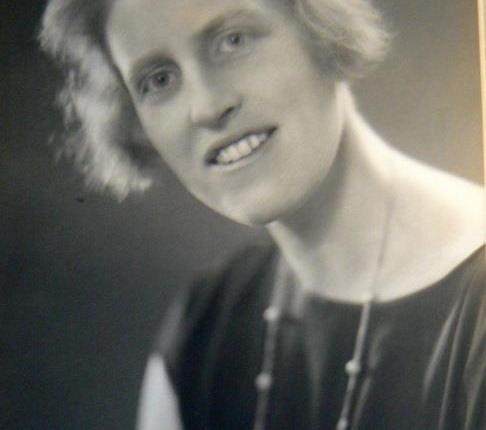
Winifred Holtby (1898-1935) was a Yorkshire writer, journalist and activist who remains primarily remembered for her final, posthumous novel South Riding. She is also frequently linked to her closest friend, writer and journalist Vera Brittain, who penned the influential First World War memoir Testament of Youth. Holtby and Brittain studied together at Oxford’s all-female college, Somerville, and subsequently shared households for most of the remainder of Holtby’s life.

Although Brittain remains the better-known of the pair (arguably partially because her life was not cut short like Holtby’s), Winifred Holtby was more than a friend and companion to Brittain. She had her own strong political and feminist views, which were expressed in her journalism and activism. After a visit to South Africa in 1926, Holtby actively supported the Black South African community for the rest of her life.[1]

Winifred Holtby was born in Rudston, a small Yorkshire village between Hull and Scarborough. She came of age during the First World War and briefly served in the Women’s Army Auxiliary Corps (WAAC) before starting her studies at Somerville in 1919. Here she met Brittain, who was some five years older than her. After the war, Holtby lectured for the League of Nations, the ‘first worldwide intergovernmental organisation whose principal mission was to maintain world peace.’ She also became involved in the Six Point Group, a feminist collective set up by Lady Rhondda. The latter also co-founded Time and Tide, a feminist interwar publication to which both Holtby and Brittain became regular contributors.[2] (E.M. Delafield’s Diary of a Provincial Lady also started as a column in Time and Tide).

Committed feminist as Holtby was, her journalistic writings of the time are striking both because they address some issues that remain unresolved, and because they reveal a sharp sense of humour. The overall tone of Holtby’s writing in this area demonstrates optimism. After the expansion of the vote to all men and women in 1928, interwar feminists seemed to believe that equality between men and women on all fronts was just a matter of time. Nearly a hundred years on, such optimism seems naïve. However, it does mean that Holtby’s writing on inequality remains recognisable and accessible.

In ‘Should a Woman Pay?’, which appeared in the Manchester Guardian in October 1928, she tackles the social dilemma of who should pay the bill when a man and woman go out together. Introducing us to the fictional Jack and Jill, Holtby demonstrates how a clinging to the social custom of the man paying can lead to resentment between modern couples – Jack insists on paying for Jill’s lunch because ‘his masculine honour is affronted’ by the suggestion she pays, or they split the bill. When both return to their respective jobs for the afternoon, they are distracted, make mistakes, and ‘they both hate everything.’

Holtby links this very relatable scenario to ‘the industrial revolution, the introduction of factory labour, the divorce of women from domestic industry’ and the subsequent removal of women from any source of substantial income.[3] A quick internet search reveals that the question ‘Should the woman pay?’ remains unresolved – Harvard Business Review devoted an article to it in April 2021 and a live WikiHow page talks readers through the ‘problem’ (which remains presented in heteronormative terms).

In ‘Counting the Cost’, also published in the Manchester Guardian in the same year, Holtby responds to a letter to the editor submitted by a man who is frustrated that his wife is undertaking too many activities in the community and does not have enough time to manage the household. ‘If I came home from work at six (which I don’t) and had to get my own tea [dinner], things would happen’ fumes the man. Holtby gently pokes fun at the man’s worked-up tone: ‘He really is very cross indeed. He makes you feel that the first of those things which would happen would be a very bad tea. Bad temper never fries good bacon.’[4] She ends the article by acknowledging that whilst some things may be lost when women go out of their home, both economy and society gain much by women actively participating in it.

Holtby herself was one such woman actively participating in public life during the interwar period. Although she never married, she did undertake caring responsibilities for Vera Brittain’s family, whom she lived with for large proportions of her life.[5] Holtby repeatedly referred to herself as ‘50% a politician’ and she tirelessly raised funds to help unionise Black workers in South Africa.[6] Despite only being ‘50% a writer’ in her own perception, Holtby produced seven novels, two volumes of poetry, two short story collections, a play, and four works of non-fiction including a memoir of Virginia Woolf. As a witty and gifted writer and commentator, her work deserves continued recognition.


[1] Testament of a Generation: The journalism of Vera Brittain and Winifred Holtby, edited by Paul Berry and Alan Bishop (London: Virago, 1985), pp. 21-23

[2] Marion Shaw, ‘Introduction’, in Winifred Holtby, South Riding (London: Virago, 2011), p. xi

[3] Winifred Holtby, ‘Should a Woman Pay?’, reproduced in Testament of a Generation, pp. 57-60.

[4] Winifred Holtby, ‘Counting the Cost’, reproduced in Testament of a Generation, pp. 54-57

[5] Shirley Williams, ‘Preface’, in Winifred Holtby, South Riding (London: Virago, 2011), p. ix

[6] Marion Shaw, ‘Introduction’, in Winifred Holtby, South Riding (London: Virago, 2011), p. xii; Testament of a Generation: The journalism of Vera Brittain and Winifred Holtby, edited by Paul Berry and Alan Bishop (London: Virago, 1985), pp. 22

Let Me Explain, Dear (1932)

<strong>Let Me Explain, Dear (1932)</strong>

The introduction of sound film in Britain around 1930 opened up more opportunities for filmmakers to produce comedies based on dialogue rather than slapstick. As London’s theatre sector was thriving, many comic plays transferred over to the silver screen. Popular plays such as Pygmalion were turned into films, and of course a whole series of popular farces performed at the Aldwych theatre were also adapted.

Almost more than any other genre of film, comedy is specific to the time and place in which it was made. An adaptation of a 1915 comedy play made in 1932 is a good example of this. Let Me Explain, Dear was based on the play ‘A Little Bit of Fluff’, the full text of which is available to read online. ‘A Little Bit of Fluff’ was a great success when it was first staged and it ran for the majority of the First World War at the Criterion Theatre, no doubt giving audiences a welcome respite from the war news (the theatre poster available on Wikipedia highlights that the Criterion was ‘built entirely underground’ and therefore safe in case of air raids).

The play was adapted into a film in 1919 by the short-lived Q Film Productions company, and again in 1928 for a larger-scale production starring Betty Balfour as one of the female leads. Let Me Explain, Dear is the first sound film adaptation of the play; all three adaptations are produced in Britain for the domestic market, as they cater to a specific cultural sensibility. ‘A Little Bit of Fluff’ is positioned as a farce, but its comedy is much broader than that of the Aldwych farces that had become so popular by the time Let Me Explain, Dear was released.

The story of the film, which is only slightly evolved from the play, is simple enough. George Hunter is married to Angela, a domineering woman who holds the financial purse strings in the relationship. When George believes Angela to be away from home, he meets Mamie, a glamourous young woman with an undefined job in some sort of performance-related industry. Mamie has borrowed an expensive pearl necklace from a banker boyfriend.

Mamie (Jane Carr) and George (Gene Gerrard) getting cozy in a taxi in Let Me Explain, Dear

The necklace accidentally ends up with George and then Angela. In an attempt to retrieve the necklace or make enough money to buy a replacement, George ropes in the help of his neighbour Merryweather to scam a newspaper insurance scheme. Eventually personal relations, necklaces, and scams get hopelessly tangled up before George ends up reconciled with Angela and Mamie returns to her banker boyfriend.

One of the ways in which the film has updated the original play text is through the inclusion of the apparently newfangled and fictitious concept of the ‘water taxi’. At the opening of the film, George takes a ‘water taxi’, a speedboat across the Thames, because he sees Mamie inside it. Due to George’s clumsiness, the taxi ends up crashing into the side of a much bigger vessel. This accident later forms the basis of George’s attempt to claim insurance money from his newspaper. In the original play, the alleged accident was that of a bus. The inclusion of the water taxi allows for some spectacular shots of the boat speeding across the Thames – and by 1932 buses were much safer than they had been in 1915, perhaps making the idea of a bus accident slightly less believable.

The ‘water taxi’ in action in Let Me Explain, Dear

The fact that George tries to scam money from an insurance scheme run by a popular newspaper also does not appear in the original text. In the play, the insurance scheme is run by the bus company itself – prior to the unification of London Transport in 1933 separate bus companies maintained the various routes across London. By the time Let Me Explain, Dear was made, the ‘newspaper wars’ were in full swing and popular newspapers tried to gain more subscribers in part by offering generous insurance schemes. Let Me Explain, Dear uses this to bring its plot right up to date for contemporary viewers.

Let Me Explain, Dear has the occasional moment of verbal wit that has stood the test of time – when Angela reveals the pearl necklace she has found in George’s overcoat pocket, she snaps ‘What do you say to that?’ George’s friend Merryweather responds: ‘I don’t know, I’ve never talked to one before.’ Mostly, though, the blatant sexism underpinning the entire plot and dialogue alienates the film from modern viewers. The relationship between George and Angela appears to be solely built on mutual distrust and annoyance. When Merryweather asks George how he came to be married to Angela, his response is ‘I just sort of sobered up and there she was.’

Merryweather (Claude Hulbert); Angela (Viola Lyel) and George (Gene Gerrard) in Let Me Explain, Dear

Whereas in the play it is made clear that George is such a bad entrepreneur that his work activities were actively costing the couple money, and that is why Angela has demanded he stop ‘working’, in the film Angela appears to solely want to emasculate George by paying everything for him. George’s quick work to woo Mamie is not judged, and Mamie herself is a cardboard character who prances around in underwear and starts screaming hysterically (and then faints) when she thinks her pearl necklace has been stolen.

Mamie (Jane Carr) relaxing at home in Let Me Explain, Dear

Lead actor Gene Gerrard also co-wrote and co-directed Let Me Explain, Dear; a feat he repeated in the same year with Lucky Girl, another light comedy adapted from a stage play. Alhtough there is not much to recommend Let Me Explain, Dear to modern audiences, it is a necessary reminder of the range and variety of output of the British film industry during the interwar period.

Aerodromes in interwar Britain

So far, this blog has had plenty to say about the increase of car ownership in interwar Britain; the development of public transport; and even the popularity of competitive cycling. It has, however, not yet touched upon that other mode of transport which swiftly developed during the 1920s and 1930s: airplanes.

Like many of the changes that became embedded into British society during the interwar period, it started in the Edwardian period. After the Wright brothers made their pioneering flight in the US in 1903, the first flight in England took place in 1908. As is common with the development of new technologies, its first application was in the military. Germany’s successful use of Zeppelins and Gotha bomber planes during the First World War prompted the British army to expand the activities of the Royal Flying Corps (later to become the RAF) and develop a first aircraft factory in Croydon.[1]

A short-lived RAF base in Hounslow hosted the first ever commercial international flight in 1919, to Le Bourget airport in Paris. Shortly thereafter, the facilities at Croydon developed into the only international airport in Britain, launching flights to Paris, Rotterdam and Cologne. The Hounslow base closed, although after the Second World War Heathrow Airport was developed nearby.

Early flights were not just for passengers, but also for the transport of ‘air mail’, allowing much swifter international communications than had hitherto been possible. The pilots of these commercial flights were often ex-RFC pilots, as they were the only group of people already trained to fly planes.[2]

Although Croydon was the international airport, there were many other airfields in existence throughout the interwar period, including around London. The types of planes used in the interwar period were light and flew relatively low to the ground compared to modern jet planes. They therefore did not need extensive runways to take off and land. A large and level field was usually all that was required. This is visible, for example, in this British Pathé footage from 1927 showing ‘Mousehold Aerodrome’ in Norfolk:

Mousehold was a former RAF base which after the First World War housed a flying club, and eventually developed into Norwich Airport in 1933 (NB the current Norwich Airport is on a different site). Throughout the 1930s, many local airports opened up across Britain as domestic flights were viewed as the modern alternative to rail travel. Once again, the need to expand air travel was framed as a competition with Germany, where passenger numbers were much higher.[3] The general enthusiasm for flight and flying which also expressed itself in literature and other art forms has frequently been referred to as ‘airmindedness.’[4]

In addition to the development of commercial domestic and international flights, aerodromes were also sights of spectacle when they hosted the arrival or take-off of celebrity aviators. Throughout the 1920s especially, there was an appetite for developing new flight routes and setting new speed records. Although Alcock and Brown managed the first successful non-stop transatlantic flight in 1919 (from Newfoundland to Ireland), the man who managed to do the trip as a solo flyer received much more attention. Charles Lindbergh flew from Long Island to Paris in 1927. When he landed in Croydon a week later, an estimated 120,000 people attended the airfield to welcome him.[5]

A few years later, Britain’s own Amy Johnson became an icon of modernity when she flew on her own from England to Australia in 1930 – the first woman to manage that feat. An article in the Daily Mirror at the end of that year lauded 1930 as ‘the most wonderful year in history for women’ partially because of them being ‘outstanding in aerial feats.’[6] Johnson herself savvily used the media to secure an income, as she did not receive any formal sponsorships. She sold the exclusive reporting rights of her flight to Australia to the Daily Mail and continued to use this tactic for subsequent record-breaking attempts.[7]

The development of jet planes after the Second World War shifted aviation from something that was potentially accessible to a large portion of the population, to a technology that required large capital investment and specialist training. Croydon Airport could not accommodate the newer, bigger planes and Heathrow, opened in 1946, took its place as London’s premier airport. Many of the local airports either closed down or became solely used by amateur flying clubs. The war had demonstrated the devastation that bomber planes could cause, tempering previous enthusiasm for air flight. For a brief period, however, Britain had been enamoured by the modern possibilities of going up in the air.


[1] Bob Learmonth, Joanna Bogle, Douglas Cluett, The First Croydon Airport: 1915-1928 (Sutton: Sutton Libraries and Arts Services, 1977), pp. 19-20

[2] Ibid., pp. 40-48

[3] Michael John Law, 1938: Modern Britain – Social Change and Visions of the Future (London: Bloomsbury, 2018), pp. 115-120

[4] Michael McCluskey and Luke Seaber (eds), Aviation in the Literature and Culture of Interwar Britain (London: Palgrave, 2020)

[5] Learmonth, Bogle, Cluett, The First Croydon Airport, p. 72

[6] ‘1930 the most wonderful year in history for women’, Daily Mirror, 29 December 1930, p. 3

[7] Bernhard Rieger, ‘‘Fast couples’: technology, gender and modernity in Britain and Germany during the nineteen-thirties’, Institute of Historical Research, vol 73, no. 193 (2003), 369

Cinema management

As going to the cinema became Britain’s most popular leisure activity in the 1920s and 1930s, there was increased attention for the business side of managing cinemas. Working in the cinema industry now became a viable career path, albeit mostly for men. Cinemas also increasingly became parts of chains such as Odeon and ABC. These chains set up their own internal training schemes and rotated management staff between cinemas to ensure consistency of service.

The interwar period also saw a big increase of the print market, including the appearance of many trade papers, guides, and ‘self-help’ books. The majority of the population still left school at 14, and there emerged a vibrant culture of self-improvement and lifelong learning. In one of the main trade papers for the cinema sector, Kinematograph Weekly, cinema managers were encouraged to constantly learn from one another and improve their craft. In addition, several handbooks were published in the interwar period which purported to teach the budding cinema manager how to best run a picture palace. Together, these articles and books demonstrate what were considered the most important aspects of the cinemagoing experience at the time.

In 1934, Kinematograph Weekly reprinted a lecture given by a supervisor at ABC, for an audience of assistant managers keen to advance their careers. The lecture demonstrates the wide range of skills managers were expected to have: knowledge of engineering, the ability to retain staff discipline, but also knowledge of accounts and figures and the ability to market the cinema’s films to the public. The speaker claims a manager needs ‘professional integrity beyond reproach, a cool head for emergencies and tact sufficient for the average international diplomat.’[1] Statements like this are clearly designed to make the audience feel they have chosen a challenging and rewarding career, even if its professional standing or pay was nowhere near that of lawyers, doctors, or diplomats.

The lecture also advised that managers should be in the cinema from around 10am, and stay until the end of the final screening. It was considered good practice for managers to be at the front of house in evening dress at the end of the night, to personally wish patrons a good night. It is clear from this article that the role of a manager demanded long hours and knowledge on a wide range of subjects. At the same time, the manager had a clear position of authority in the cinema and did not have to undertake manual labour such as cleaning or carpentry, like the other staff.

Three years after this lecture was published, a guidebook appeared which was sanctioned by the Cinema Exhibitor’s Association (CEA), the professional body for cinema owners. Like the lecture, the author of the book is keen to stress the emotional appeal of the cinema manager’s job, describing it on the book’s opening page as ‘a real man’s job’ with ‘grave responsibility’; a job that is ‘enthralling’, ‘creative’ and requiring continuous learning.[2]

The book continues to provide very detailed information on how to manage the day-to-day operations of a cinema, implying that its intended audience was those who were new to the business and not assistant managers who already had significant experience. A substantial proportion of the book is concerned with advice on staff management. Depending on the size of the cinema, a manager could be in charge of anything between half a dozen and several tens of staff. Both the Kine Weekly article and this handbook advocate daily inspections of staff, to instil discipline and check for cleanliness.[3] The front-of-house staff were expected to adhere to strict rules on appearance: ‘the hair of all uniformed male attendants must be cut short at the back and sides, and their face and hands kept clean.’[4]

There were a handful of female cinema managers in the interwar period, but they were very much considered to be the exception rather than the rule.[5] As noted above, the 1937 guide describes cinema management as ‘a real man’s job’, perhaps restating the supposed masculinity required for the role in response to a small but growing number of female managers. During the Second World War, the CEA had to allow women much more access to cinema work to allow cinemas to continue operating.[6]

Both the handbook and the lecture quoted here are fairly light on what education (if any) is required for cinema managers. Whilst similar books aimed at cinema operators (projectionists) stress that theirs is a skilled role requiring technical expertise, the guidance for managers mainly highlight the variety and responsibility of the role.[7] Provided the aspirant manager felt confident that he had the physical and mental ability to manage a varied job, these sources present the role as an achievable career goal for anyone who wanted to pursue it.

Want to read more about employment in 1930s cinemas? I recently published a more in-depth article on this topic which you can find here.


[1] S. Simpson, ‘The Principles of Kinema Management’ in Kinematograph Weekly, 5 April 1934, p. 41

[2] JH Hutchison, The Complete Kinemanager (London: Kinematograph Publications, 1937), p. 1

[3] Ibid., p. 91

[4] Ibid., p. 83

[5] In 1934, the Ideal cinema in Lambeth was managed by a Miss M.A. Ball, Kinematograph Weekly, 8 February 1934, p. 58; and the Queen’s Hall in Catford was managed by a Miss M Woodroffe from 1916, Kinematograph Weekly, 22 Feburary 1934, p. 36

[6] Rebecca Harrison, ‘The Coming of the Projectionettes: Women’s Work in Film Projection and Changing Modes of Spectatorship in Second World War British Cinemas, Feminist Media Histories, vol. 2, no. 2 (2016), 47-70

[7] W.S. Ibbetson, The Kinema Operator’s Handbook (London : E. & F. N. Spon, 1921), p. 1