Fascination (1931)

Fascination (1931)

Three years after his directorial debut, the silent film The First Born (1928), Miles Mander tried his hand on two sound films. The first, The Woman Between, was an adaptation of his own stage play ‘Conflict’. The second, Fascination, was based on another writer’s script. Unlike some actor-directors, like Tom Walls, Mander decided to restrict his duties to directing only and did not appear in either film.

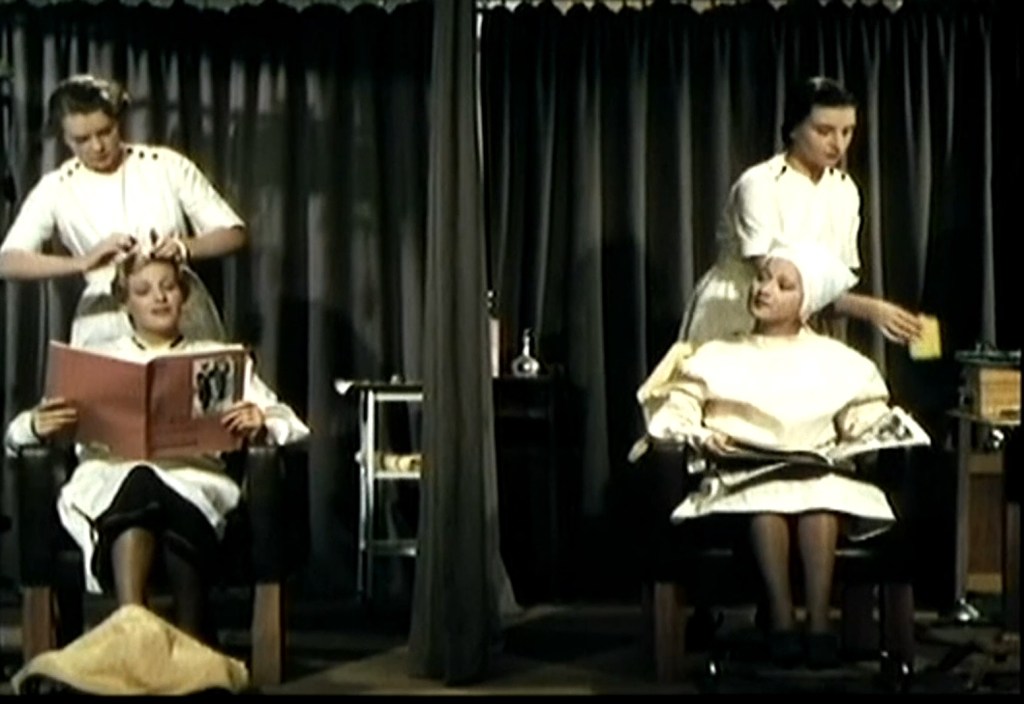
Fascination’s main attraction for modern audiences is the starring role of future ‘Hitchcock Blonde’ Madeleine Carroll, appearing here four years before her famous role in The 39 Steps opposite Robert Donat. According to the DVD sleeve notes, only one 35mm copy of Fascination survives in Britain, of which the sound and image quality leave something to be desired. It is, however, eminently watchable, not only for Carroll’s performance, but also as an interesting counterpoint to The Divorce of Lady X which was released seven years later. Both films deal with marital fidelity, but whereas the later film treats infidelity as a comic subject and accepts its existence as a matter of course, Fascination is much more moralistic on the subject.

Madeleine Carroll as Gwenda Farrell in Fascination

Fascination opens with a scene in a children’s playroom, where a little boy and girl are playing with a toy train set. They are Larry and Vera, the protagonists of the film. Mander’s directorial style comes across immediately in the close-up shots of various toys, which give an emotive impression of the room from a child’s perspective. He shuns any establishing shot of the space. In foreshadowing of Larry and Vera’s later troubles, the toy train runs of the rails and Larry, in trying to fix it, breaks the tracks altogether. However, the children quickly make up and a third boy, who had been playing in a corner, orders that they should be ‘married’; a mock ceremony ensues.

The film then briefly moves to Larry and Vera’s courtship as young adults (Larry is ‘in his last term at Oxford’ studying to be an architect) before moving on to a time three years into their marriage, when the main action of the film begins. Vera and Larry have been established as a devoted couple, who laugh and play together and commit to a series of ten ‘commandments’ of marriage, which include ‘telling the other everything that matters’ rather than the more traditional expectation for the wife to obey the husband.

Vera and Larry courting in Fascination

Three years into the marriage, there are no children yet (more on that later) but Larry has established himself as an up-and-coming architect/interior designer and Vera is a content housewife. Larry has received a request to do the interior design of an apartment for a famous stage actress, Gwenda Farrell, who is currently starring in the hit play ‘Fascination’. Gwenda, of course, is played by Madeleine Carroll. Reeling from a recent break-up, Gwenda is taken by Larry and he is smitten by her. The reasons for his attraction to Gwenda are never explained; the audience is asked to assume that it is inevitable for a happily married man like Larry to fall in love with another women based on her looks and glamour alone.

After an initial meeting in a cafeteria, ostensibly to discuss the business of the flat, it is Larry who suggests that they go out on the river for the rest of the day and have a picnic. Once outside, he starts flirting with Gwenda and she calls him a ‘silly boy’ and tells him not to ‘spoil things’. However, she immediately follows this up with an invitation to supper in her flat – and as if the audience needs reminding, Mander here inserts a shot of a sign in the adjacent pond which announces ‘Danger’.

Although Larry is clearly an active and willing participant in the affair, it is no surprise that Gwenda is presented as the primary guilty party, as she reciprocates his attention and moves the relationship along. At the night of the supper (where we can assume the relationship is consummated), Vera is starting to get upset with Larry’s frequent absences from home. Her suspicions are confirmed when Gwenda sends Larry an intimate letter which Vera reads. But even here Vera has not done anything illicit or objectionable: Larry has eye trouble and asks Vera to read his letters out to him, even encouraging her to open the one marked ‘Personal’. Vera does not reveal to Larry what she has read and burns the letter without him being any the wiser.
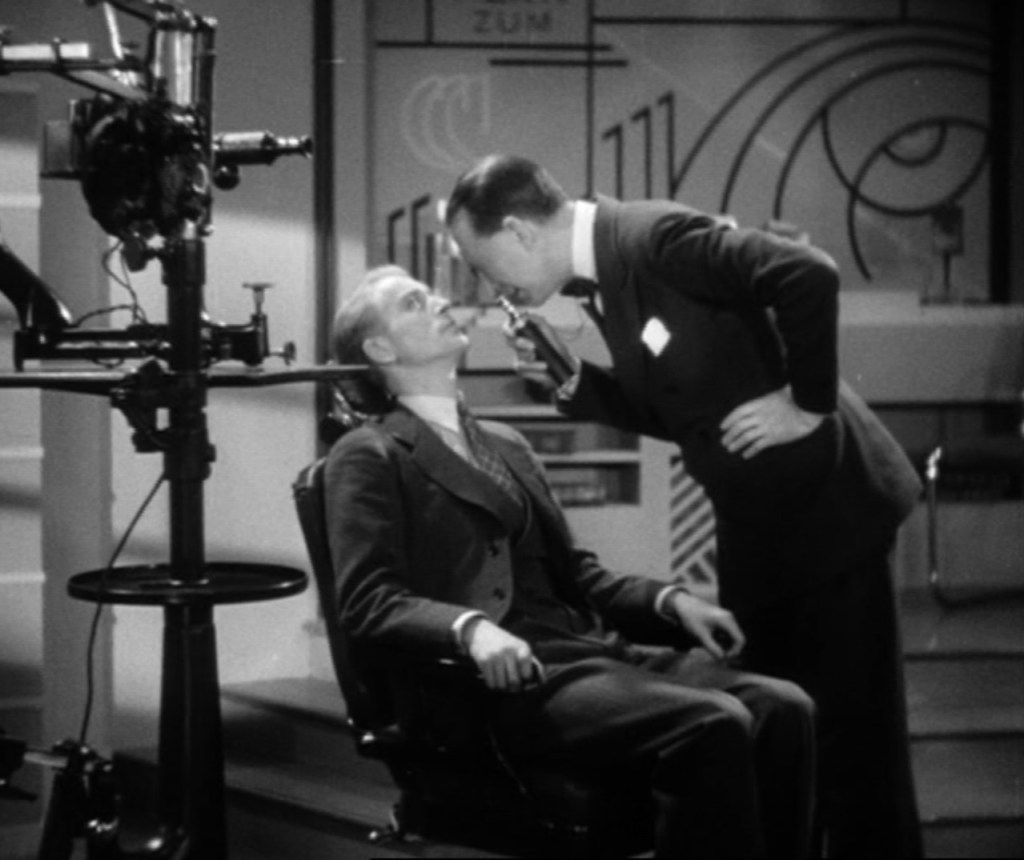
Larry visiting a very modernist optician in Fascination

Although Larry by this point is starting to feel very conflicted about his affair and wants to end it, Gwenda ostensibly still has too much of a hold on him to enable him to break things off. Thankfully for him, his wife has found a solution. Vera writes to Gwenda under false pretences and invites the other woman to her marital home. Here, rather than having an argument, Vera explains that she loves Larry and wants to protect her marriage, so she is happy to silently consent to his affair with Gwenda. In Vera’s reasoning, if she were to cause a big fuss, Larry would be driven into Gwenda’s arms more.

Before Gwenda has a chance to respond to this proposal, Larry comes home – Vera hides Gwenda quickly behind a curtain. Larry confesses his affair to Vera, begs her forgiveness and offers to write to Gwenda immediately to break off the relationship. Gwenda decides to reveal herself and explains to Larry that Vera, in her generosity, had agreed to him continuing the affair just to keep her marriage intact. She insists on ending her relationship with Larry now that she has met Vera.

Vera warmly says goodbye to Gwenda in Fascination

Fascination ends with the contrast of Gwenda, smoking alone in her dressing room and forcing herself to get ready for yet another night’s performance; and Vera and Larry, cuddled together in a chair where Vera reveals to him that she is pregnant.

Larry and Vera happily reunited at the end of Fascination

Unlike in The Divorce of Lady X, then, divorce is an impossible outcome in Fascination. If Vera had opted to divorce Larry, she would have had to stand the shame and exposure of the divorce court, with a famous actor cited as co-respondent in the case. Clearly, for a respectable middle-class woman this was not really a route to contemplate, even without the added complexity of pregnancy or children. Her willingness to allow the affair to continue, then, is perhaps less magnanimous than the film presents, and more pragmatically her only option.

Yet, by perpetuating the narrative that single women ‘steal’ husbands away from faithful wives; and faithful wives should accept this and allow husbands to come back in their own time, Fascination clearly sides with patriarchal norms. Vera’s ostensible agency is in fact non-existent- something also stressed by a scene where she visits Larry’s office to ask him for household money. Fascination presents marriage as the route to a woman’s happiness, and independence and professional success as poor substitutes. Despite the increasingly progressive position of women in British society by the early 1930s, this film demonstrates that cultural texts often still expounded traditional viewpoints.
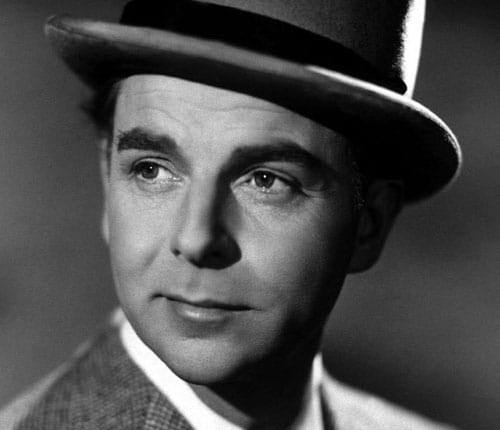
Emlyn Williams

Emlyn Williams

George Emlyn Williams was born in the tiny Welsh village of Pen-y-ffordd in 1905. As a Welshman with dark colouring and an unusual name, Williams appeared very different from popular interwar actors such as Laurence Olivier and Brian Aherne, both of whom performed in West End theatre at the same time. Unlike that other famous Welshman of the period, Ivor Novello, Williams steered clear of musical theatre and nightclubs in favour of writing and performing in plays exploring murder and criminal psychology.

After attending grammar school and undertaking some schooling in France on a scholarship, Williams won a scholarship to Oxford, where he became involved with the Oxford University Dramatic Society (OUDS). Williams was supposed to graduate in 1926, but instead of studying for his exams he wrote a play, Full Moon, which was put on at the Oxford Playhouse under the management of J.B. Fagan. Williams decided to move to London without completing his degree when Fagan offered him a small walk-on part in the production And So To Bed, in which Edmund Gwenn and Yvonne Arnaud appeared as the principal players.[1]

This modest role marked the start of a long West End career, in which Williams combined acting with writing and directing, regularly casting himself as the lead for his own productions. In his autobiography, Williams presents the years from 1926 to 1935 as ones in which he finds his feet both professionally and in his personal life. After numerous failures and some mild successes, the book ends with the first West End performance of his play Night Must Fall, which Williams credits as his ‘first solid success’[2] – it ran for a year and a half before transferring to Broadway for another 64 performances.

Night Must Fall is based on a notorious murder case of the interwar period, the ‘Crumbles Murder’ case of 1924. Patrick Mahon, a charming Richmond-based salesman, struck up an extramarital affair with typist Emily Kaye. Kaye fell pregnant, and Mahon led her to believe that they would travel to South Africa to start a new life together. Instead, he murdered her in a cottage on the Sussex coast and dismembered and destroyed her body so thoroughly that very little of it was found during the police investigation. What particularly spoke to the public’s imagination is that, less than 48 hours after the murder, Mahon picked up another woman and spent a few days at the cottage with her, whilst Kaye’s partly-dismembered body was in the next room.[3]

Williams combined this story with the equally notorious murder perpetrated by Sidney Fox, who in 1929 killed his own mother by strangling her and subsequently set her hotel room on fire to cover his tracks. In Night Must Fall, Dan, a charming man (modelled on Patrick Mahon) strikes up a friendship with a rich but cranky old lady and her niece Olivia. Whilst the niece suspects that Dan is a murderer, she still falls in love with him and helps him stay out of the hands of the police. Eventually, Dan murders the old lady and steals her money – although Olivia wants to help Dan escape, the play ends with him being arrested.

In his autobiography, Williams states that he had initially been interested in adapting the story of Fritz Haarman, a German serial killer who murdered at least 27 boys and young men in Hanover, in 1924. Williams was bisexual and identified with Haarman’s young victims: poor or homeless men, in some instances selling sex for money, lured back to Haarman’s flat with promises of food and shelter. ‘Yes, it could have happened to me’, acknowledges Williams. Although the story is clearly close to his heart, British theatre censorship laws absolutely precluded the depiction of a homosexual, paedophilic murderer.[4]

Alongside this career as theatre author and actor exploring the darker side of life, Williams also appeared in films. One of his first appearances was as the comic best friend to the protagonist in the Oxford comedy Men of Tomorrow (1932). Although the film was a commercial failure, it did bring Williams exposure and he was voted the most popular British actor by the readers of Film Weekly, ahead of Leslie Howard and Jack Hulbert.[5] This in turn landed Williams with a contract at Gaumont-British, where he wrote as well as acted. His first gig with them was writing the dialogue, and starring in, Friday the Thirteenth (1933). He subsequently worked on the Jessie Matthews vehicle Evergreen and supplied dialogue for the 1934 Hitchcock film The Man Who Knew Too Much.

Although his contract with Gaumont was not renewed beyond 1935, Williams stayed active in film for the remainder of the interwar period, and beyond. As well as adapting Night Must Fall for the screen, he also acted in a range of genres such as the comedy Night Alone and the thriller They Drive By Night (both 1938). In 1936, he was cast as Caligula in Joseph von Sternberg’s unfinished I, Claudius, opposite other such greats at Charles Laughton, Flora Robson, and Merle Oberon.

Later in his career, Williams toured with an innovative one-man theatre show called Emlyn Williams as Charles Dickens, in which he delivered parts of Dickens’ novels in a manner similar to how Dickens himself toured in the 19th century. He remained interested in murder, and wrote a book about the Moors murders in 1968. Williams continued to be active as a writer and actor until close to his death in 1987.


[1] Emlyn Williams, Emlyn: A sequel to George (London: Penguin, 1976), p. 13

[2] Ibid., p. 449

[3] Colin Evans, The father of forensics: the groundbreaking cases of Sir Bernard Spilsbury and the beginnings of modern CSI (Thriplow: Icon, 2007), pp. 140-147

[4] Williams, Emlyn, pp. 213-221

[5] Ibid., 319

The Divorce of Lady X (1938)

The Divorce of Lady X (1938)

Just as the end of the 1920s saw the introduction of sound film in British cinema, by the time the 1930s drew to a close, a new innovation was introduced: Technicolor – or more correctly, three-strip Technicolor. Earlier versions of ‘two-colour Technicolor’ had been used in Hollywood since the First World War, for example for segments of Carl Laemmle’s 1925 The Phantom of the Opera starring Lon Chaney. Three-strip Technicolor gave more realistic colour images, and is the process which is famously used in The Wizard of Oz (1939).

Technicolor required financial investment, so it took some years to bring it to Britain. The first British Technicolor film was Wings of the Morning, made in 1937. It was followed hot on its heels by a film of Britain’s most lavish film producer, Alexander Korda. A Hungarian by birth, Korda moved in Britain in the early 1930s, when he’d already worked in Hollywood and various European film industries. In 1933, he had a huge success on both sides of the Atlantic with The Private Life of Henry VIII, a lavish period piece that depicted Henry Tudor belching and stuffing his face with food at regular intervals. The role of Anne Boleyn is played by Merle Oberon, in one of her first substantial screen roles.

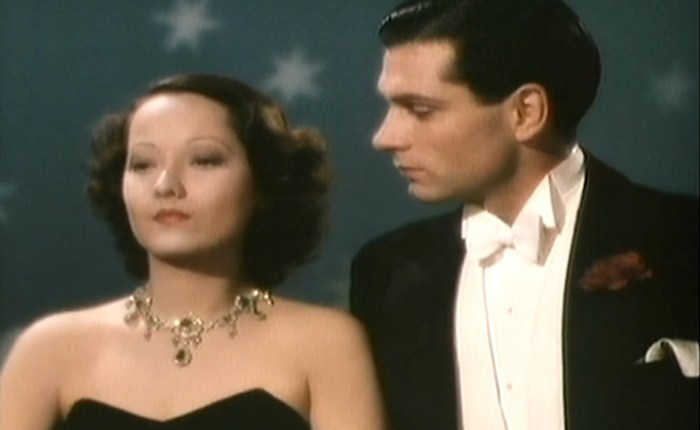
Korda cast her again as the female lead in The Scarlet Pimpernel in 1934, and also in The Private Life of Don Juan in the same year. By 1939, the pair were married, although the marriage only lasted to the end of the Second World War. During their courtship, they made The Divorce of Lady X (1938), in which Oberon stars opposite Laurence Olivier. This comedy, with its frank discussion of divorce and extramarital relations, shows how ‘propriety’ became less important in Britain towards the end of the interwar period.

The Divorce of Lady X is a re-make of a 1933 film, Counsel’s Opinion, which Korda also produced. Both films are based on a play by Gilbert Wakefield. The 1933 film, whilst favourably received upon its release, is no longer extant. The Divorce of Lady X, by contrast, was syndicated for TV release in the US in the 1940s, and is widely available on DVD and online.

The story of The Divorce of Lady X centres on that favourite trope of British interwar cinema: a man and a woman, who are not married, are forced to spend a night together in a (hotel) room. Nothing untoward happens, but everyone assumes the couple must be having an affair. A similar trope is used in Night Alone, as well as numerous Aldwych farces, such as A Cuckoo in the Nest, Rookery Nook, and Lady in Danger. In The Divorce of Lady X, Leslie Steele, a young socialite, and Everard Logan, a divorce lawyer, are thrown together due to an impenetrable fog, which leaves them both stuck in the same central-London hotel. Leslie talks Logan into sharing his suite with her – her sleeping in bed, him on a mattress in the adjacent sitting room.

Laurence Olivier as Everard Logan, getting ready for an
uncomfortable night on the floor in The Divorce of Lady X

During the course of the evening Logan incorrectly assumes Leslie is married. The next day, a member of his club, Lord Meere, comes to Logan’s office and asks him to arrange for a divorce from Lady Meere, as the latter spent the previous night in the same central-London hotel, with a man in her room. Logan assumes that Leslie, who has not given him her last name, is Lady Meere, and that he unwittingly has become both the barrister and the co-respondent in Lord Meere’s divorce suit.[1]

Logan continues to court Leslie, telling her he does not care that his career will be ruined, as long as she will marry him after she’s obtained her divorce from Lord Meere. Leslie continues to play along, although she herself has also fallen in love with Logan. Eventually, Leslie meets the real Lady Meere, and the two women concoct a plan to reveal the truth to Logan. Logan is initially embarrassed by being taken for a ride and he storms off to France, but Leslie follows him onto the boat and manages to change his mind.

Leslie (Merle Oberon) nursing a sick Logan (Laurence Olivier) on the boat to France

Right from the outset of the film, it is made clear that Logan has had multiple affairs – when Leslie comments that his pyjamas are hideous and he should dump the woman who buys them for him, he shoots back ‘we parted six months ago!’. At the same time, he rings up another woman to apologise for not being able to see her that evening, due to the fog. Although Leslie is not explicitly shown to have any lovers of her own, she is very confident and flirts with Logan in a way that makes it unlikely that he is her first love interest. The real Lady Meere, moreover, is repeatedly quoted as having had four husbands and several ‘episodes’ with other men, and at the end of the film it is made clear that she is cheating on Lord Meere. Crucially, none of this is depicted as wrong or objectionable; although all characters admit that four divorces is perhaps a bit much, Lady Meere is also shown to be a sympathetic and attractive woman. When Logan admits to his assistant that he (as he thinks) has fallen in love with a married woman, it is a matter of amusement rather than embarrassment, and divorce is depicted as largely normalised.

Lady Meere (Binnie Barnes) and Leslie (Merle Oberon)
plotting on how to break the truth to Logan (Laurence Olivier)

This representation of marriages as likely not lasting nor monogamous clearly presents a challenge when the central relationship of the film must also fulfil narrative convention. For the audience to be invested in the relationship between Leslie and Logan they must believe that it will end in a happily ever after, not a marriage that will quickly dissolve because one or both parties are conducting affairs.

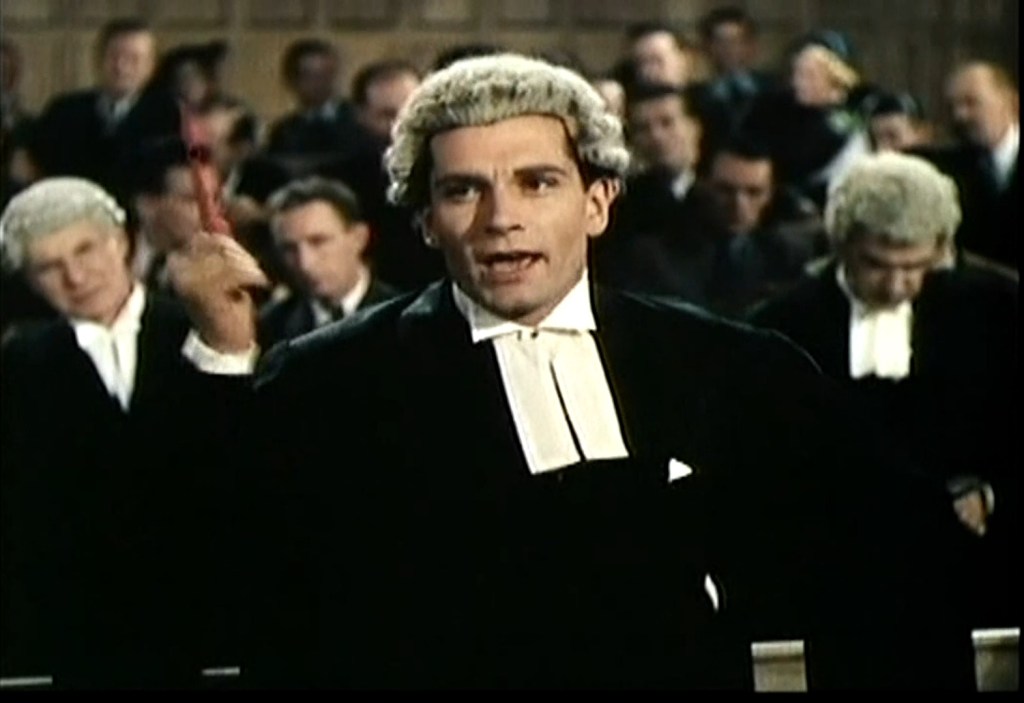
To resolve this, The Divorce of Lady X uses the trope of the woman-as-saviour: Leslie, for all her modern manners, is essentially a respectable girl. When she first meets Logan, he is extremely cynical about women, due to his experience in the divorce court. This cynicism reaches a high point during a withering closing-arguments monologue in one of his divorce cases, which Leslie witnesses from the public gallery. ‘Modern woman has disowned womanhood, and refuses man’s obligation!’ he thunders. ‘She demands freedom, but won’t accept responsibility! She insists upon time to “develop her personality”, and she spends it in cogitating on which part of her body to paint next.’

Laurence Olivier as Everard Logan, spouting against Modern Woman in court

Little wonder that Leslie is not impressed after hearing that speech! But no fear – her steadfast conviction that she is the one to save and reform Logan is rewarded in the end. When she follows him onto the boat to France at the film’s close, the choppy waters give her a chance to mother and nurture Logan. Her triumph is crowned by a final scene in the divorce court, in which Logan’s speech is the opposite of his earlier outburst. Appearing now as the defence of the woman accused of divorce, rather than as counsel for the husband, Logan gushes that his client is ‘a woman – that unique and perfect achievement of the human species (…) especially evolved for the comfort and solace of man.’ The message is clear: Leslie has managed to persuade Logan that married life is, after all, best. The open discussion of, and jokes about, divorce that form the backbone of The Divorce of Lady X point towards the ‘permissive society’ of post-War Britain; but its resolution of the protagonists’ story in a traditional marriage shows that in the 1930s the stability of conservative traditions still held sway.

The Divorce of Lady X can be viewed on the PBS website.


[1] In British divorce law, a co-respondent is a person cited in a divorce case as having committed adultery with the respondent ie. the half of the couple not initiating the divorce.

First a Girl (1935)

First a Girl (1935)

Musical star Jessie Matthews was at the prime of her career in 1935 when she starred as the lead in First a Girl.[1] This musical comedy directed by Victor Saville is one version of a popular film plot; it is a remake of the German comedy Viktor und Viktoria (1933), which was re-made in West Germany in 1957, and most famously adapted by Hollywood in 1982, as Victor/Victoria starring Julie Andrews.

The basic plot of all four films, including First a Girl, is similar. An aspiring stage actress (in the British film she’s called Elizabeth, and naturally is played by Matthews) meets Victor, an actor who aspires to Shakespeare but in reality performs as a female impersonator. When a bad cold prevents Victor from performing one evening, he persuades Elizabeth to take his place, by pretending to be a man who pretends to be a woman. This is a great success, and ‘Victoria’ quickly becomes an international star, forcing Elizabeth to appear as a man when in public. Things get complicated when Elizabeth falls in love with a (straight) man, who believes her to be a man also.

Whilst both the 1933 original and the 1982 American version are regularly interpreted as queer films, First a Girl underplays the homosexual possibilities of Elizabeth’s flirtation with her male love interest. This is partly due to Matthews’ own appearance. As The New York Times noted upon First a Girl’s US release in 1936:

Normally it is with sorrow and self-hatred that this column hints at the inadequacies of a star, but this time it is a distinct pleasure to call Miss Matthews’s acting performance hopelessly bad. In “First a Girl” she is pretending to be a man and making no headway at all, except with the members of her supporting cast, who swoon with astonishment upon discovering her sex. 

Quite beside Matthew’s obviously feminine appearance, First a Girl underplays any potential sexual tension between Elizabeth and her love interest, Robert, until Robert understands that Elizabeth is a woman. Prior to that point, the film focuses on the comedic potential of Elizbeth’s cross-dressing, rather than any transgressive possibilities in her relationship with Robert.

Jessie Matthews as ‘Victoria’, appearing with Sonnie Hale, in First a Girl

All versions of the film appear to include a similar sequence in which ‘Victoria’ is ‘forced’ to perform activities which are coded as specifically masculine, to comic effect. In First a Girl this sequence is set in a Parisian nightclub, where Victor and Elizabeth find themselves during their European tour. Elizabeth has to wear a tuxedo here, and hangs out at the bar with Robert – a part of the club only available to men. She quickly gets drunk when trying to keep up with Robert’s rate of drinking, and struggles when trying to smoke a cigar. Whilst these scenes give Matthews an opportunity to display her comedic talent, they also undermine her sexual capital whilst she is performing as a man. As soon as Elizabeth’s true gender identity is revealed to Robert, she turns from an unsophisticated youth into a charming young woman.

It is significant that these scenes of gender-bending performance are set in Paris – a location that invited connotations of licentiousness and sexual transgression in the British popular imagination of the 1930s. Interestingly, in the 1933 German film, ‘Victoria’ is in London when forced to undertake activities which may ‘out’ her as a woman. ‘Victoria’ finds herself in an environment that is both literally and figuratively foreign to her.

As Jeffrey Richards points out, male and female impersonation had a long tradition on the British theatrical and music hall stage.[2] The character of Victor, then, works well in this British film. He is portrayed as older than Elizabeth (although actor Sonnie Hale was only five years Matthews’ senior) and can easily be read as a music hall performer in the Victorian tradition. His female impersonation act is purely comic, whilst Elizabeth’s is sophisticated. He links the film’s plot to a specifically British performance tradition, whereas the glossy song-and-dance numbers performed by Elizabeth have more in common with Hollywood productions.[3] The film makes no explicit reference to its German origins.

First a Girl, then, significantly dilutes the queer and transgressive possibilities of the original source material, which allowed the film to flourish in interwar Britain. According to the BFI, it was a great commercial success when it was released (something also suggested by its export to the US the following year). It remains a very watchable and enjoyable film for modern audiences; and a good example of how British interwar filmmakers moderated both European and Hollywood influences to arrive at a British compromise between the two.

First a Girl is available for rental on BFI Player (UK only)


[1] Jeffrey Richards, The Age of the Dream Palace: Cinema and Society in 1930s Britain (London: IB Tauris, 2010), pp. 217-218

[2] Ibid., p. 218

[3] This is not unusual for Jessie Matthews films. See Sarah Street, ‘Got to Dance my Way to Heaven’: Jessie Matthews, art deco and the British musical of the 1930s, Studies in European Cinema, 2:1, (2005), 19-30

Jack Hulbert

Jack Hulbert

A wildly popular musical comedy star of stage and screen in the 1930s, Jack Hulbert has since been dismissed by some critics as a ‘light entertainer’[1] who ‘can seem tirelessly jaunty company.’[2] During the peak of his film career, Hulbert ranked high in popularity charts. In 1933 he was voted the top British male star in audience questionnaires and 1936 he was the third most popular British star based on domestic box office returns.[3] He starred in fourteen films across the decade.

Jack Hulbert was born in Cambridgeshire in 1892 to a doctor. He studied at Cambridge where he joined the Cambridge Footlights. His brother Claude Hulbert, who was eight years his junior, followed the same trajectory. Both brothers became two of the first Footlights alumni to reach acting success and fame. After Cambridge, Jack Hulbert got a role in a theatre production, playing opposite Cicely Courtneidge. The couple married in 1916 and stayed together for the rest of their lives, often working together on stage and screen.

After completing his war service, Hulbert returned to his career in variety theatre and produced and acted in numerous stage productions across the West End. During the 1920s, British films were still silent and therefore did not provide a suitable medium for comedy stage stars like Hulbert and Courtneidge, who depended on witty dialogue and song-and-dance numbers to win over their audiences. Further, until the adoption of the 1927 Cinematograph Films Act, very limited numbers of British films were being produced at all.

By the start of the 1930s the couple found themselves in debt due to financial mismanagement. As the British film industry was at the same time transitioning to sound, the time had come for Hulbert and Courtneidge to make the leap to the silver screen. Their first appearance was as themselves in Elstree Calling! (1930). As implied by the title, this film was a series of separate sketches performed by popular entertainers supposedly broadcasting from Elstree studios north of London.

After Elstree Calling! Hulbert moved into narrative fiction films, and increasingly worked separately from Courtneidge. In common with other popular comedy stars of the period, such as George Formby and Gracie Fields, Hulbert usually played characters called Jack. The titles of some of his films, such as Jack’s the Boy (1932), Jack Ahoy (1934), Bulldog Jack (1935) and Jack of All Trades (1936) worked to eliminate the difference between the actor and his characters even further.

Hulbert’s persona was a confident and likeable middle-class charmer who was able to be both comic and romantic.[4] . His films ‘appear to exist primarily for the display of [his] talents as singer, dancer and comedian.’[5] In Jack of All Trades, he plays a likeable chancer who is looking for a job. After striking up an acquaintance with Lionel, a bank clerk (played by Robertson Hare) Jack starts showing up at Lionel’s office and pretend that he works there. His pretence is so successful that he ends up convincing the bank bosses to build an entire new shoe factory. The scenes where Jack and Lionel present their proposal to the Board, all of whom approve the plans because they are too embarrassed to admit that they have no idea what they are being shown, still have the power to resonate with modern audiences. The final third of Jack of All Trades, however, descends into fast-paced slapstick action typical of Hulbert films with a lot of physical comedy.

Hulbert singing ‘Where There’s You, There’s Me’ in Jack of All Trades

A similar tension between narrative and apparently stand-alone action can be found in Bulldog Jack, a film satirising the extremely popular Bulldog Drummond book and film series. Bulldog Drummond was a fictional, highly successful police inspector. At the start of Bulldog Jack, Jack Hulbert’s character accidentally crashes his car into Bulldog Drummond’s, injuring the latter and making him bed-bound. When the young daughter of a jeweller asks for help because her father has fallen victim to a gang of thieves and blackmailers, Drummond asks Jack to pretend to be the famous ‘Bulldog’ and take on the case.

Again, the first section of the film gives plenty of space for comedy and romance, before the action-packed climax set in the London Underground. The criminal gang have set up their headquarters in a disused Underground station, and the gang leader hijacks an Underground train in an attempt to get away. Jack ends up crawling over the top of the train carriages, like a true action hero, to stop the train. Prior to this final chase, Bulldog Jack uses sped-up shots of Jack and his friends chasing the criminals up and down the spiral staircases of the Underground station.

By the mid-1930s the use of sped-up film was quite unusual; it was a device much more often used in the ‘cinema of attractions’ that pre-dated World War One. Jack Hulbert’s films did not fully conform to the conventions of narrative filmmaking. Instead, they applied techniques from earlier film genres and from the variety stage onto the long-form fiction film medium. Although this allowed Hulbert to perform in a similar mode across his stage and film productions, as a result his 1930s film work can jar to modern audiences and make it more challenging to understand Hulbert’s enormous popularity at the time.

Elstree Calling! can be viewed on YouTube.


[1] James Chapman, ‘Celluloid Shockers’, in The Unknown 1930s: An alternative history of the British cinema, 1929-1939, ed. Jeffrey Richards (London: IB Tauris, 1998), p. 91

[2] Brian McFarlane, ‘Jack of All Trades: Robert Stevenson’, in The Unknown 1930s, p. 164

[3] Jeffrey Richards, The Age of the Dream Palace: Cinema and Society in 1930s Britain (London: IB Tauris, 2010) pp. 160-161

[4] McFarlane, ‘Jack of All Trades’, p. 163

[5] Ibid.

Glamour Girls

We’re going to have a closer look today at two articles that appeared in early issues of Picture Post. Picture Post was a weekly photojournalism magazine that was launched in Britain in 1938. Its pages contained a huge breath of articles and reportage, which covered topics from word politics to science and nature to fashion and entertainment. Due to the timing of its launch, and the fact that its founder and editor was the Jewish journalist Stefan Lorant, the first issues contain frequent criticism and condemnation of Nazi Germany. This political content was balanced with pieces on ‘lighter’ topics.

In November 1938 and May 1939, Picture Post ran two pieces on ‘Glamour Girls’. Together, these pieces give an insight into the position of young female stage performers in London at the end of the interwar period. By the end of the 1930s, ‘glamour girl’ was the name for the young women who danced on the stage as part of troupes – they were more commonly referred to as ‘chorus girls’ in the earlier part of the interwar period. The adoption of the term ‘glamour girl’ is symptomatic of the continued Americanization of British popular culture throughout the 1920s and 1930s – indeed, one of the Picture Post articles follows an American dance troupe in London.

The row of young, thin, white chorus girls who are all dressed alike and dance in perfect unison was a very recognizable feature of modern urban entertainment during the interwar period. The phenomenon has most famously been critiqued by Siegfried Kracauer in his essay ‘The Mass Ornament’ which originally appeared as a series of articles in the Frankfurter Zeitung in 1927. Kracauer, too, centres his analysis around an American troupe, the Tiller Girls – but British chorus girl troupes quickly sprang up to emulate the American original. Chorus girls appear in myriad British films of this period, from Friday the Thirteenth (1933) to The Show Goes On (1937).

But what of the glamour girl in news reportage? The first Picture Post article under consideration was published in the issue of 22 October 1938 and is entitled ‘A Glamour Girl’s Day’. This piece purports to give insight into the day-to-day life of a group of American dancers who were performing at the Dorchester hotel at that time. Why the show’s impresario, Mr Chester Hale, did not recruit British girls when he had to put on ‘the snappiest cabaret show’ possible, is not made clear. Chester Hale himself appears to have been an American; and it’s implied that American girls are better qualified for ‘snappy’ shows.

The piece both observes the dancers as a foreign species and reassures the readers that they are completely harmless; and it also does not neglect to draw attention to the girls’ physical features. The captions to some of the photos give a good indication of the article’s overall tone:

Hard-working, ambitious, well-educated, carefully chaperoned is the first-class glamour girl of to-day. Wanda Cochran has studied philosophy and public-speaking. Is studying now at the R.A.D.A. (…) Doris Call, a blue-eyed blonde from Virginia, is also studying at the R.A.D.A. She has six sisters, two brothers.

The piece makes much of the fact that the girls are very young – some of them are reported to be only 16. A few have brought their mothers and siblings with them for company; according to one of the mothers, she thinks dancing in a cabaret is much safer for a girl than going to high school (in America). The article runs the reader through a typical day for the troupe during their run at the Dorchester, and repeatedly stresses that the girls engage in wholesome activities such as learning about London and British history; educating their siblings; and improving their dancing and singing skills. It is also emphasised that they usually go home after they finish their shows at 1am – they very much do not go to nightclubs with young men.

Slipped in between the descriptions of the girls’ physiques (average weight 8 st 8 lbs; average height 5 ft 6 in) is the following:

Mr Hale gets a lump sum per week from the Dorchester. Out of that he pays the girls and their fares, and provides the dresses (…) the dresses have run him into a good many hundred pounds. The girls pay their own living expenses. Most of them stay in flats with various accompanying members of their family.

As the dancers have to pay for their own accommodation in central London, as well as their food and regular clothes and expenses, one suspects that they did not actually have any money left over to save. It is also not specified whether the fares for the ‘various accompanying members of their family’ were covered by the Dorchester. What the young women get out of the experience is the ‘glamour’ of their costumes, and the opportunity to learn more about British history and British culture; which covers up a precarious employment position that required them to temporarily relocate; work late hours; and forego traditional schooling.

The conditions of employment also receive attention in the second Picture Post article, printed on 6 May 1939 under the title ‘The Making of a Glamour Girl.’ Although this piece appeared only 6 months after the previous article, the tone differs markedly. The status of the glamour girl appears to have rapidly deteriorated; no longer does the article attempt to stress the career aspirations of glamour girls. Instead, the piece confidently states that ‘Few of them [glamour girls] have any stage ambitions, the majority realise their limitations and are content to be just glamorous.’

Indeed, the low requirements for the role are presented as a selling point:

To be a good Glamour Girl, a girl must possess four qualities. She must have good looks and a figure to match, she must be able to walk gracefully in time to music, she must know how to wear clothes, and she must be tall. No girl who has these attributes need starve or spend her days tapping on a typewriter, stage managers will only be too eager for her services.

The role of the glamour girl (now capitalized) is no longer presented as one that requires hard physical work or any skill, but instead is reduced purely to physical requirements. It is presented as an ideal job for a ‘fun’ girl who wants to make easy money; the jobs are alleged to pay at least £5 a week. The implication that this is a good wage is belied by the statement also included in the article, that many glamour girls work as fashion models and mannequins during the day. The apparent need to work two jobs, alongside the short ‘shelf life’ of the glamour girl (the article estimates the average girl’s stage career to last 3 or 4 years) do not signal this as a financially sound or stable career path. Through these articles, girls and young women were not encouraged to consider long-term benefits of education or jobs that could be done at any age, but instead were directed to consider a job in which one had to work relatively few hours and wear nice clothes, as desirable.

Of course, it would be amiss to imply that these articles were primarily aimed at aspiring glamour girls; both articles were clearly (also) an excuse to print photographs of slender young women in revealing outfits. The 1939 article is accompanied by a dozen photographs, nine of which show the performers in bathing suits or other similarly revealing performance outfits. The 1938 article mostly shows the girls dressed in everyday clothes, but allows the reader a glimpse ‘backstage’ with photos of the girls putting on make-up and putting on their shoes. Both articles present the reader with a fantasy of young, happy, untroubled dancers and only hint at the financial precarity these roles perpetuated.

Ivor Novello

Ivor Novello

Polymath Ivor Novello, born David Ivor Davies in Wales in 1893, was one of interwar London’s prolific entertainers. Novello was his mother’s maiden name; choosing this as his professional title undoubtedly gave him greater name recognition than his paternal family name. Novello’s first success came as a songwriter during the Great War, with the popular tune ‘Keep the Home Fires Burning’.

During the interwar period, Novello was active as a composer, actor, playwright and screenwriter, occasional film producer, and all-round society figure. In 1926 he ran a nightclub together with actor Constance Collier, with whom he also regularly collaborated on creative projects. The club, the 50/50, was temporarily struck off the register of licensed premises after alcohol had allegedly been served after licensed hours.

Besides his collaborations with Constance Collier, Novello’s interwar projects read like a who’s who of creative Britain. He wrote songs for a play penned by P.G. Wodehouse, wrote songs for Jack Buchanan and had an affair with Siegfried Sassoon. His British film debut came in 1923 as the lead in Adrian Brunel’s The Man Without Desire; Novello also co-produced the film with Miles Mander. The Man Without Desire is a romantic historical melodrama set in Italy; it was the first in a series of roles in which Novello played foreigners, often of high birth. His dark features made him equally convincing as British, Mediterranean, or Eastern European.

After The Man Without Desire came The Rat, which proved so popular that it spawned two sequels. This film was based on a play which Novello had co-written with Collier. In The Rat Novello starred as Pierre Boucheron, a dashing figure in the Parisian underworld. His long-time friend Odile is clearly quietly devoted to him, but the Rat is seduced by the wealthy Zelie de Chaumet, before inevitably realising it is Odile who can provide him with true love. Zelie first sees the Rat in an underground dive bar, where he performs a passionate parody of the Apache Dance with a young woman.

The Apache Dance in The Rat exemplifies Novello’s sexual ambiguity on screen. In real life he lived quite openly as a gay man with his lifelong partner Bobbie Andrews. This was possible in the artistic circles in which Novello and Andrews moved, but clearly it was not possible to explicitly depict homosexuality on screen or stage. Instead, Novello is positioned as a romantic hero; sensual rather than virile, and sometimes surprisingly a-sexual.

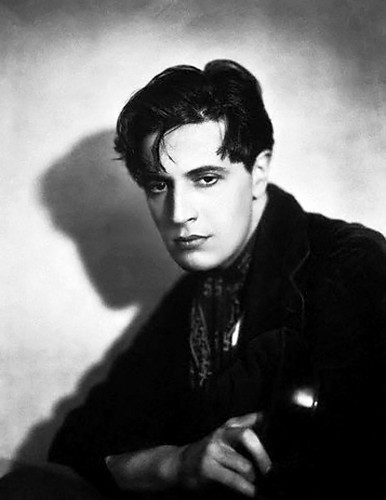
Ivor Novello portrait

In Hitchcock’s Downhill, for example, Novello’s character Roddy is not seduced by Mabel, despite her best efforts. Whilst Roddy’s friend Tim is wooing Mabel in the back room of the shop in which she works, Roddy is chatting to some small children who have come to buy sweets. When Roddy later in the film marries the actress Julia Fotheringale, the film never shows any physical intimacy between the couple. Unlike many films of the period, Downhill does not end with the establishment of a heterosexual couple, but rather with Roddy’s restoration as the male heir to his family.

Novello collaborated with Hitchcock for a second film in 1927, The Lodger. This film, based on a popular novel by the same name, was inspired by the Jack the Ripper murders. Novello reprised his role as ‘the Lodger’ in a 1932 sound film remake, directed by Maurice Elvey. In both versions, Novello’s character courts Daisy, the daughter of his landlord. Daisy already has a suitor, a police officer in the 1927 film and a journalist in the 1932 version. Daisy’s original suitors are men of action, who expect that Daisy will marry them based on their previous courtship. Novello’s character, however, manages to win Daisy over through conversation and emotional sensitivity rather than by displaying any of the more traditionally ‘masculine’ traits.

A year after the first version of The Lodger, Novello starred as Lewis Dodds in one of the multiple adaptations of the bestselling novel The Constant Nymph.1 Here Novello was again directed by his friend Adrian Brunel to play the composer who marries one woman but finds that his wife’s young cousin, whom he has known since she was a child, is more devoted in her affections. Again, Novello’s character is linked in a coupling which cannot fulfil the expected template.

After film transitioned from silent to sound, Novello returned largely to the West End stage as a writer and actor of musical comedies. This may in part have been due to the limitations of his specifically recognisable voice and accent, which made him less convincing in the foreign character roles in which he was regularly cast. Novello’s contribution to the musical genre continues to be remembered in the song writing and composing awards named after him, which were established a few years after his death.

The theatre in the building where Novello kept a flat for most of his adult life was also named after him in 2005. It is situated across the road from the Aldwych Theatre, where Tom Walls and Ralph Lynn first became famous; another one of the countless connections that put Novello at the heart of London’s interwar entertainment industry.

[1] Lawrence Napper, British Cinema and Middlebrow Culture in the Interwar years, (Exeter: University of Exeter Press, 2009), pp. 35-79

Tom Walls

Earlier this year this blog had a look at the comedy actor Ralph Lynn. Today we are going to discuss the other half of the ‘Lynn & Walls’ comedy duo: Tom Walls. Walls was born in 1883 and had a prolific career as actor, director and producer of plays and films; followed by a second career as the owner of a race horse stable in Epsom. As a young man, Walls attempted a career as an officer in the Met, but this did not last – allegedly, he spent rather too much time ‘interrogating prostitutes’ on duty.[i]

Tom Walls and Ralph Lynn first worked together on the farce Tons of Money in 1922.[ii] Prior to that time, Walls had been managing and acting in shows in seaside towns. Walls and his business partner Leslie Henson scored a big success with Tons of Money, which started out at the Shaftesbury Theatre but transferred to the Aldwych. Walls would remain at the Aldwych for the remainder of the decade, putting on a series of wildly successful farces with a largely stable cast and crew consisting of Ralph Lynn, Yvonne Arnaud, Mary Brough, and Ben Travers as the writer for most of them.

Whereas Lynn was remembered as the ‘ideal farce actor to work with’[iii], Walls tends to invoke phrases like ‘no shame’; ‘contemptuous’; ‘peculiar’ and ‘a dictator’.[iv] He was also undoubtedly a man with a lot of energy. He acted in a lead part in all of the Aldwych farces, as well as directing them. Walls was also the driving force behind getting the farces translated to film in the 1930s, when he wanted a new challenge. Not having worked in the medium before was no barrier to Walls; he acted as both director and actor from the first Aldwych film, Rookery Nook, in 1930. In total, Walls directed 23 films in the 1930s, and acted in most of those as well as in some other productions.

Most of Walls’ film roles, thankfully, remain available to us today. Due to the long-lasting partnership between Walls, Travers and Lynn; and Walls’ considerable control over the productions, many of the Aldwych farces are written to play to his strengths. Generally, Walls played older men who have charm and wits, against Lynn’s younger, naïve characters. One obituary of Walls described his roles as ‘the dominating man supremely confident in himself’ – probably not too much of a stretch for Walls to play.

Walls’ role as Mr Tutt in A Cup of Kindness is a prime example of this type – Tutt is a patriarch who bosses about his wife, sons, and neighbours – but the role also gives Walls a chance to show off his charms in the scene where Tutt takes the young nurse Tilly  out to a West End Restaurant. Toeing the line of marital fidelity is a recurring theme in the Aldwych farces, as it is in Walls’ later film roles.

In the 1934 film Lady in Danger, Walls directed himself as the lead opposite Yvonne Arnaud. In this comedy, Arnaud plays the unnamed Queen of a (fictional) European micro-state, who has to flee a revolution. Walls is tasked with smuggling her to Britain, whilst Arnaud’s husband the King is staying in Paris. ‘The King is always in Paris’ is used as a knowing short-hand throughout the film to refer to the King’s regular infidelities. Walls’ character Richard is engaged to be married, but that does not stop him from flirting with the Queen.

Unlike in the Aldwych productions, where Walls’ characters flirt but never go any further, Richard and the Queen do share at least a kiss. The film makes is clear that it is permissible for the Queen to engage in this affair because her husband is also unfaithful. It does not deem it necessary to give any justification to Richard; it is a given that he must be able to have a dalliance with another woman before he is married. At the end of the film, the monarchy in the micro-nation is restored and the Queen returns to her husband’s side, and Richard returns to his fiancée, and neither of them face any repercussions. As the film’s director, Walls could ensure that his characters could have their cake and eat it, too. The conventions of farcical comedy allowed him to entertain such potentially transgressive behaviours.

Although his directing career ended with the outbreak of the Second World War, Walls appeared in a dozen or so films in the 1940s. At that stage, however, his main occupation was the breeding and training of race horses in Epsom. He achieved a high point in this career in 1932 when his horse April the Fifth won the Epsom derby – Walls was the only Epsom-based owner to win that derby in the whole of the 20th century. This 1933 Pathé newsreel includes some shots of Walls’ stables and home:

Walls was a very influential and well-known player of the interwar London entertainment industry, with business interests in theatre, cinema and racing. His surviving film performances capture his persuasive charm as well as his dominant personality. That is fame faded after his death in 1949 seems fitting for a man who preferred seizing the day over careful planning.


[i] Ben Travers, A-Sitting on a Gate (London: WH Allen, 1978), p.99

[ii] Ibid., pp. 87-88

[iii] Ibid., 91

[iv] Ibid., pp 89-90

Entertainment venues during the 1939 blackouts

Today we are going to venture to the extremity of the interwar period in Britain – September 1939. Britain declared war on Germany on 3 September 1939. In hindsight, this started what is now commonly referred to as the ‘Phoney War’ – a period that lasted until April 1940 during which little actual military action took place. At the time, of course, Londoners weren’t to know that the declaration on 3 September would not lead to immediate hostilities. Accordingly, the city prepared for the worst and much public activity was suspended. As soon as it became clear that the invasion was not imminent, however, restrictions were also loosened again very quickly. After our collective experience of various levels of restrictions and lockdowns over the past 18 months (at the time of writing), this period of rapid closures and re-openings of venues in 1939 resonates.

When reviewing the newspaper coverage of the first weeks of the war, what is striking is the relative prominence articles give to the closure of entertainment venues – specifically cinemas and theatres. On 1 September, the British government implemented formal blackout regulations to obstruct bombing efforts by enemy troops. Next morning’s Daily Mail article described how streetlights, hotels and even Buckingham Palace where thrown into darkness, but tellingly the headline of the piece is ‘London Cinemas, Theatres, Carry On in Dark.’[i] Whilst many cinemas and theatres understandably opted to close completely at night, some businesses attempted to continue business whilst adhering to blackout measures. It is these venues that the Mail celebrates for their determination to continue business as usual despite the circumstances.

On 7 September the Mail followed this up with an article that reassured readers that managers of theatres and cinemas that had been closed for the previous week, were ‘standing by’ in expectation of an imminent return to business as usual.[ii] The message to the reader is clear; no matter what may lie ahead, Londoners should be able to visit the cinema and theatre at night. After only a week of blackout, the entertainment industries were confident that the Government would exempt them from the regulations. As a sector that did not directly support the war effort, this confidence seems remarkable, but it was justified. On 8 September the Government approved that cinemas, theatres and football pitches in ‘safe zones’ could re-open immediately for business.[iii] Cinemas in London’s suburbs followed on 11 September, and Central London cinemas on 15 September.[iv]

For the Mail, it was clear why these spaces should be allowed to operate: they had a ‘job of assisting to maintain a cheerful Britain.’[v] The article presents the night-time entertainment industry as vital for keeping up the morale at the home front. The re-opening was presented as a return to ‘normality’, and a mark of resilience of Britons in the face of grave danger. The news of the first wave of re-opening was considered so welcome that a second article was included in the same issue, which highlighted the scale of the impact of cinema closures in particular. According to the Mail, cinemas served a million customers a week – the real numbers were in fact much higher.[vi]

When central London cinemas and theatres were finally reopened on 15 September it was front page news for the Mail again, and the article immediately listed which films would be showing where. The article ends with the sage reminder that ‘[i]f you do go to the cinema to-night, don’t forget your gas mask.’[vii]  Despite this possible danger, the Mail assumed its readers would rush to visit the cinema, as implied by the listings provided and the considerable coverage the Mail had given the issue over the previous week. Editors understood films to be an important part of their readers’ lives, even in wartime; and encouraged readers to continue with their lives as normal despite the war.

From reading the Mail coverage over these weeks, it appears that there is support for the Government decision to impose the blackout at the start of September, but also that it was considered unnecessary for that blackout to apply to places of entertainment. It was considered imperative for the public’s morale that they should be allowed to go out at night and enjoy themselves, also to show the enemy forces that the British spirit would not be broken.

Of course, entertainment venues were not immune to bomb damage. Once the Blitz started in earnest in autumn 1940, they did become targets – most famously, when the Café de Paris was hit in March 1941 dozens of people died. But during those first months of the Phoney War, entertainment venues were an important symbol of what was considered important to Londoners.


[i] ‘London Cinemas, Theatres, Carry On in Dark.’  Daily Mail, 2 September 1939, p. 10

[ii] ‘Managers ready for the ‘all clear’’, Daily Mail, 7 September 1939, p. 7

[iii] ‘Cinemas, football, start again to-day’, Daily Mail, 9 September 1939, p. 1

[iv] ‘First Two London Theatre Reopen’, Daily Mail, 12 September 1939, p. 5; ‘Cinemas and theatres are open until 10 to-night’, Daily Mail, 15 September 1939, p. 1 and p. 10

[v] ‘Cinemas, football, start again to-day’, Daily Mail, 9 September 1939, p. 1

[vi] ‘3,000 Cinemas Open Today in the “Safe” Areas’, Daily Mail, 9 September 1939, p. 5

[vii] ‘Cinemas and theatres are open until 10 to-night’, Daily Mail, 15 September 1939, p. 1 and p. 10