Featured

Ben Travers

Unlike some of the stars of the interwar silver screen, such as Madeleine Carroll and Ivor Novello, those working behind the scenes can often be a lot less well-remembered. This is certainly true for playwright Ben Travers, whose biggest professional success came during the 1920s and 1930s. He started out in theatre, writing many of the immensely popular Aldwych farces, a cycle of 12 popular plays staged between 1923 and 1933. When some of the farces were adapted for film, Travers also worked on the screenplay adaptations.

Ben Travers was born in 1886 in London. He initially started work in the family business, in the City of London. In Travers’ own words, taken from his autobiography: ‘I was to be sent to the City. Being sent to the City was then the inevitable lot of a youth who didn’t have the aptitude to do any good for himself by being sent anywhere else.’[1] Because the family business had branches all over the empire, Travers ended up travelling widely for his job, spending time in Singapore and Malaysia.

Alongside his day job, Travers was an avid theatre-goer, especially enjoying comedy plays. It was not long before he moved back to Britain, got a job in publishing, and started writing his own plays during the evenings.[2] He was following the advice espoused in the many writing handbooks of the time, and trying to build a writing career in his spare hours. However, commercial success as a writer remained elusive, and at the outbreak of the First World War Travers signed up and served in the Royal Naval Air Service.[3] At the end of the war, his original job was no longer available – Travers took this opportunity to ‘have a go’ at writing.[4] On the advice of those in the theatre industry, he wrote a farce, The Dippers. The text made its way through various theatre contacts and was eventually staged in London in the early 1920s.

The money that The Dippers earned Travers allowed him to keep writing, and he started turning out farces at greater speed. He wrote both A Cuckoo in the Nest and Rookery Nook immediately after The Dippers, and it were these plays that would link him to the Aldwych theatre. A Cuckoo in the Nest was initially considered by acting great Gerald du Maurier, but when this fell through, it was picked up by Tom Walls at the Aldwych. Walls, his co-star Ralph Lynn, and a group of other comic actors, had recently had great commercial successes with the plays Tons of Money and It Pays to Advertise. By 1925, they needed another hit, and opted to perform A Cuckoo in the Nest.[5] In Travers’ words ‘the farce was a definite success’, and it cemented a creative partnership that would last throughout the rest of the interwar period.[6]

The nine plays Travers wrote for the Aldwych company played almost continuously from 1925 through to early 1933. The longest-running play was Rookery Nook, which played 409 performances before it closed; it was followed by Thark which played 401 performances. From the early 1930s, when sound film was introduced in Britain, the company transferred their most popular plays to film. This was partially driven by the restless entrepreneurism of Tom Walls, who increasingly took on a director/manager role in addition to his acting. The first film they made was Rookery Nook. Although it was a commercial success, Travers later claimed that for him it was a ‘painful, distorted version of the genuine article’, as the film medium demanded a completely different approach to gags and timing.[7] Nonetheless, eventually eight out of the nine plays were turned into films, and Travers wrote another 12 film scripts in the 1930s, each of which were produced with some of the original Aldwych farce cast. Contractual obligations and developing personal relationships meant that Ralph Lynn and Tom Walls increasingly appeared separately, although they were often playing opposite other original Aldwych cast members. For example, in 1934 Travers wrote the script for Lady in Dangerstarring Tom Walls and Yvonne Arnaud, the latter of which had played in the stage version of A Cuckoo in the Nest back in 1925.

Travers wrote a few more film scripts in the 1940s and 1950s, and worked in theatre until his death in 1980. The most famous of is later works is the 1975 play The Bed Before Yesterday, which ran for 500 performances in the West End and starred a young Helen Mirren in the original cast. Yet the interwar period represented the undisputed peak of his career. Travers’ farcical comedies, poking fun at the middle classes without threatening to cause any real social disruption, were perfectly suited to a Britain where increasing numbers of white-collar workers had the money and leisure time to be entertained. In the Aldwych farces, he created a brand of humour that both tapped into historical stage traditions and simultaneously spoke to the social and cultural circumstances of the time in which it was made. By being able to transition to popular film at the exact time when the introduction of sound film created a demand for verbal (as opposed to physical) comedy, Travers ensured that his work was captured for posterity.


[1] Ben Travers, A-Sitting on a Gate (London: W.H. Allen, 1978), p. 22

[2] Ibid., pp. 37-39

[3] Ibid., p. 47

[4] Ibid., p. 61

[5] Leslie Smith, ‘Ben Travers and the Aldwych Farces’ , in Modern British Farce, (London: Palgrave Macmillan, 1989), pp. 50-69

[6] Travers, A-sitting on a Gate, p. 92

[7] Ibid., p. 110

Let Me Explain, Dear (1932)

<strong>Let Me Explain, Dear (1932)</strong>

The introduction of sound film in Britain around 1930 opened up more opportunities for filmmakers to produce comedies based on dialogue rather than slapstick. As London’s theatre sector was thriving, many comic plays transferred over to the silver screen. Popular plays such as Pygmalion were turned into films, and of course a whole series of popular farces performed at the Aldwych theatre were also adapted.

Almost more than any other genre of film, comedy is specific to the time and place in which it was made. An adaptation of a 1915 comedy play made in 1932 is a good example of this. Let Me Explain, Dear was based on the play ‘A Little Bit of Fluff’, the full text of which is available to read online. ‘A Little Bit of Fluff’ was a great success when it was first staged and it ran for the majority of the First World War at the Criterion Theatre, no doubt giving audiences a welcome respite from the war news (the theatre poster available on Wikipedia highlights that the Criterion was ‘built entirely underground’ and therefore safe in case of air raids).

The play was adapted into a film in 1919 by the short-lived Q Film Productions company, and again in 1928 for a larger-scale production starring Betty Balfour as one of the female leads. Let Me Explain, Dear is the first sound film adaptation of the play; all three adaptations are produced in Britain for the domestic market, as they cater to a specific cultural sensibility. ‘A Little Bit of Fluff’ is positioned as a farce, but its comedy is much broader than that of the Aldwych farces that had become so popular by the time Let Me Explain, Dear was released.

The story of the film, which is only slightly evolved from the play, is simple enough. George Hunter is married to Angela, a domineering woman who holds the financial purse strings in the relationship. When George believes Angela to be away from home, he meets Mamie, a glamourous young woman with an undefined job in some sort of performance-related industry. Mamie has borrowed an expensive pearl necklace from a banker boyfriend.

Mamie (Jane Carr) and George (Gene Gerrard) getting cozy in a taxi in Let Me Explain, Dear

The necklace accidentally ends up with George and then Angela. In an attempt to retrieve the necklace or make enough money to buy a replacement, George ropes in the help of his neighbour Merryweather to scam a newspaper insurance scheme. Eventually personal relations, necklaces, and scams get hopelessly tangled up before George ends up reconciled with Angela and Mamie returns to her banker boyfriend.

One of the ways in which the film has updated the original play text is through the inclusion of the apparently newfangled and fictitious concept of the ‘water taxi’. At the opening of the film, George takes a ‘water taxi’, a speedboat across the Thames, because he sees Mamie inside it. Due to George’s clumsiness, the taxi ends up crashing into the side of a much bigger vessel. This accident later forms the basis of George’s attempt to claim insurance money from his newspaper. In the original play, the alleged accident was that of a bus. The inclusion of the water taxi allows for some spectacular shots of the boat speeding across the Thames – and by 1932 buses were much safer than they had been in 1915, perhaps making the idea of a bus accident slightly less believable.

The ‘water taxi’ in action in Let Me Explain, Dear

The fact that George tries to scam money from an insurance scheme run by a popular newspaper also does not appear in the original text. In the play, the insurance scheme is run by the bus company itself – prior to the unification of London Transport in 1933 separate bus companies maintained the various routes across London. By the time Let Me Explain, Dear was made, the ‘newspaper wars’ were in full swing and popular newspapers tried to gain more subscribers in part by offering generous insurance schemes. Let Me Explain, Dear uses this to bring its plot right up to date for contemporary viewers.

Let Me Explain, Dear has the occasional moment of verbal wit that has stood the test of time – when Angela reveals the pearl necklace she has found in George’s overcoat pocket, she snaps ‘What do you say to that?’ George’s friend Merryweather responds: ‘I don’t know, I’ve never talked to one before.’ Mostly, though, the blatant sexism underpinning the entire plot and dialogue alienates the film from modern viewers. The relationship between George and Angela appears to be solely built on mutual distrust and annoyance. When Merryweather asks George how he came to be married to Angela, his response is ‘I just sort of sobered up and there she was.’

Merryweather (Claude Hulbert); Angela (Viola Lyel) and George (Gene Gerrard) in Let Me Explain, Dear

Whereas in the play it is made clear that George is such a bad entrepreneur that his work activities were actively costing the couple money, and that is why Angela has demanded he stop ‘working’, in the film Angela appears to solely want to emasculate George by paying everything for him. George’s quick work to woo Mamie is not judged, and Mamie herself is a cardboard character who prances around in underwear and starts screaming hysterically (and then faints) when she thinks her pearl necklace has been stolen.

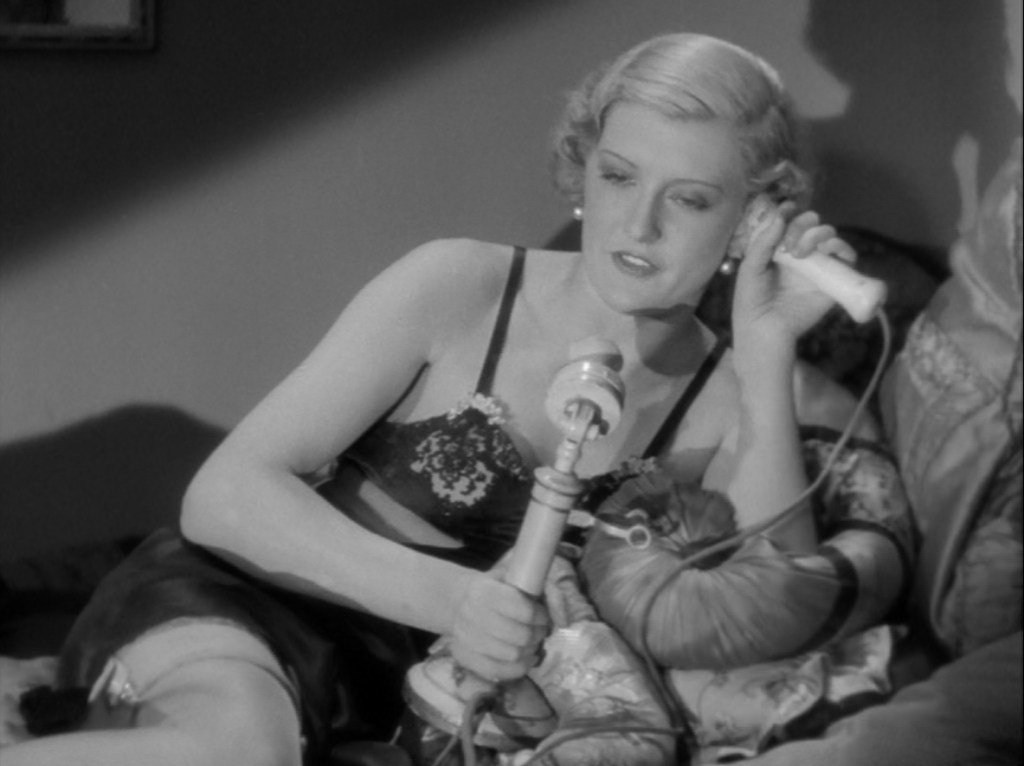
Mamie (Jane Carr) relaxing at home in Let Me Explain, Dear

Lead actor Gene Gerrard also co-wrote and co-directed Let Me Explain, Dear; a feat he repeated in the same year with Lucky Girl, another light comedy adapted from a stage play. Alhtough there is not much to recommend Let Me Explain, Dear to modern audiences, it is a necessary reminder of the range and variety of output of the British film industry during the interwar period.

Lady in Danger (1934)

Lady in Danger (1934)

Actor-director-manager Tom Walls was a popular comic actor on the interwar stage and screen. From 1922 onwards he produced and (often) starred in a series of enormously successful farcical plays at the Aldwych theatre. Many of these plays were turned into films in the 1930s, often with Walls directing. At the Aldwych, a steady cast of actors quickly formed, which took roles in each of the plays. Alongside Walls, the other male lead was Ralph Lynn; supporting roles were taken by Robertson Hare, Mary Brough, Winnifred Shotter and Yvonne Arnaud. The scripts were usually supplied by Ben Travers.

After sound film became a viable proposition in Britain, the Aldwych team recorded their repertoire for the screen at speed. Their first film, Rookery Nook, was produced in 1930. Then followed two more films in both 1931 and 1932, three films in 1933, another two in 1934 and the final one in 1935. After the supply of stage productions was exhausted, there followed another five films, based on original scripts, starring both Lynn and Walls (1935-1937). Both men also appeared separately in films during the 1930s, either with or without other Aldwych cast members.

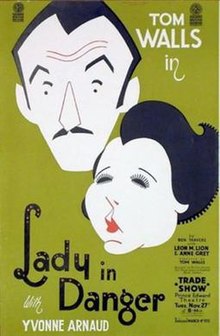
One such film, associated to the Aldwych farcical tradition but not quite a part of it, is Lady in Danger. Walls plays the male lead opposite Yvonne Arnaud, an originally French actress who gave up a promising career as a pianist in favour of the stage.[1] Theatre remained her primary occupation throughout her career, but Arnaud also appeared in twelve films during the interwar period. Half of these were related to the Aldwych team.

Lady in Danger was written by Ben Travers specifically for Walls and Arnaud, although Travers initially intended it to be a play rather than a film.[2] The film plays on their strengths and their personas, which by 1934 would have been extremely familiar to their audiences. Walls plays a charmer and ladies man, as he does in most of his films (and indeed as he appears to have been in real life). Arnaud’s secret weapon was her enduring French accent and supposed ignorance of the nuances of English, which could be played up for laughs. After more than a decade of regular collaboration, Walls and Arnaud had a great chemistry and rapport which is clear on the screen.

Lady in Danger starts in the fictional European state of Ardenberg – a ‘Ruritania’ setting such as this was gratefully used by film writers of the period to add some foreign flavour to their films without getting bogged down in cultural or historical accuracy. Ardenberg is on the verge of a revolution, during with the royal family will be deposed. British businessman Richard Dexter (Walls) flies into the country to retrieve stolen bonds. Before he leaves, the leader of the Ardenberg revolution asks him to escort the Queen (Arnaud) to Britain to keep her safe. The Ardenberg King has found refuge in his Paris apartment.

Upon arrival in London, Dexter has to keep the Queen hidden to ensure her continued safety. It proves difficult to hide her in his London flat, particularly when his fiancée Lydia stops by. Dexter moves the Queen to a country cottage, where the sparks between the couple fly. Ultimately, however, the Queen decides to return to Paris and join her husband. It’s made clear that the King regularly enjoys affairs, which lessens the severity of the Queen’s transgression. The monarchy is restored in Ardenberg and Dexter returns to Britain and to Lydia.

As can be expected for a comedy, the plot of Lady in Danger is rather thin, and mostly there to provide Walls and Arnaud with opportunities for verbal sparring. Sample dialogue includes Arnaud, after getting settled in the cottage and unpacking her luggage, announcing: ‘I am ready now for bed – I have undone all my clothing!’ Travers’ writing had a reputation for these types of jokes which stayed just on the right side of the BBFCs censorship rules, and the Sunday Times noted that ‘Skating on thin ice is this author’s speciality, and the riskiness of some of the double entendres is astonishing.’[3]

For a modern viewer, the ‘risqué’ jokes ensure that Lady in Danger is still funny and watchable, even if the characters are concerned about things such as what the housekeeper may think about an unknown woman sleeping in Walls’ spare room. It is (still) refreshing to see an actress in her mid-forties play a part in which she unapologetically pursues an affair and then also decides to walk away from a charming man in favour of her professional obligations. Arnaud seems to thoroughly enjoy the role in which she gets to boss everyone around.

Although Lady in Danger is not one of the original Aldwych farces, and it does not provide the same brand of humour that films with both Lynn and Walls deliver, it is still very funny. It is less silly than some of the team’s other films, and may appeal to audiences who find farcical humour difficult to enjoy. It also showcases Arnaud’s comic talent and allows new generations to discover this renowned actress.

Lady in Danger is available to view on the Internet Archive.


[1] Mark Newell, Oh, Calamity! The Lost, Damaged and Surviving Films of the Aldwych Farces and Farceurs (Kibworth: The Book Guild, 2020), p. 255

[2] Ibid., p. 170

[3] Ibid. p. 171

Fascination (1931)

Fascination (1931)

Three years after his directorial debut, the silent film The First Born (1928), Miles Mander tried his hand on two sound films. The first, The Woman Between, was an adaptation of his own stage play ‘Conflict’. The second, Fascination, was based on another writer’s script. Unlike some actor-directors, like Tom Walls, Mander decided to restrict his duties to directing only and did not appear in either film.

Fascination’s main attraction for modern audiences is the starring role of future ‘Hitchcock Blonde’ Madeleine Carroll, appearing here four years before her famous role in The 39 Steps opposite Robert Donat. According to the DVD sleeve notes, only one 35mm copy of Fascination survives in Britain, of which the sound and image quality leave something to be desired. It is, however, eminently watchable, not only for Carroll’s performance, but also as an interesting counterpoint to The Divorce of Lady X which was released seven years later. Both films deal with marital fidelity, but whereas the later film treats infidelity as a comic subject and accepts its existence as a matter of course, Fascination is much more moralistic on the subject.

Madeleine Carroll as Gwenda Farrell in Fascination

Fascination opens with a scene in a children’s playroom, where a little boy and girl are playing with a toy train set. They are Larry and Vera, the protagonists of the film. Mander’s directorial style comes across immediately in the close-up shots of various toys, which give an emotive impression of the room from a child’s perspective. He shuns any establishing shot of the space. In foreshadowing of Larry and Vera’s later troubles, the toy train runs of the rails and Larry, in trying to fix it, breaks the tracks altogether. However, the children quickly make up and a third boy, who had been playing in a corner, orders that they should be ‘married’; a mock ceremony ensues.

The film then briefly moves to Larry and Vera’s courtship as young adults (Larry is ‘in his last term at Oxford’ studying to be an architect) before moving on to a time three years into their marriage, when the main action of the film begins. Vera and Larry have been established as a devoted couple, who laugh and play together and commit to a series of ten ‘commandments’ of marriage, which include ‘telling the other everything that matters’ rather than the more traditional expectation for the wife to obey the husband.

Vera and Larry courting in Fascination

Three years into the marriage, there are no children yet (more on that later) but Larry has established himself as an up-and-coming architect/interior designer and Vera is a content housewife. Larry has received a request to do the interior design of an apartment for a famous stage actress, Gwenda Farrell, who is currently starring in the hit play ‘Fascination’. Gwenda, of course, is played by Madeleine Carroll. Reeling from a recent break-up, Gwenda is taken by Larry and he is smitten by her. The reasons for his attraction to Gwenda are never explained; the audience is asked to assume that it is inevitable for a happily married man like Larry to fall in love with another women based on her looks and glamour alone.

After an initial meeting in a cafeteria, ostensibly to discuss the business of the flat, it is Larry who suggests that they go out on the river for the rest of the day and have a picnic. Once outside, he starts flirting with Gwenda and she calls him a ‘silly boy’ and tells him not to ‘spoil things’. However, she immediately follows this up with an invitation to supper in her flat – and as if the audience needs reminding, Mander here inserts a shot of a sign in the adjacent pond which announces ‘Danger’.

Although Larry is clearly an active and willing participant in the affair, it is no surprise that Gwenda is presented as the primary guilty party, as she reciprocates his attention and moves the relationship along. At the night of the supper (where we can assume the relationship is consummated), Vera is starting to get upset with Larry’s frequent absences from home. Her suspicions are confirmed when Gwenda sends Larry an intimate letter which Vera reads. But even here Vera has not done anything illicit or objectionable: Larry has eye trouble and asks Vera to read his letters out to him, even encouraging her to open the one marked ‘Personal’. Vera does not reveal to Larry what she has read and burns the letter without him being any the wiser.

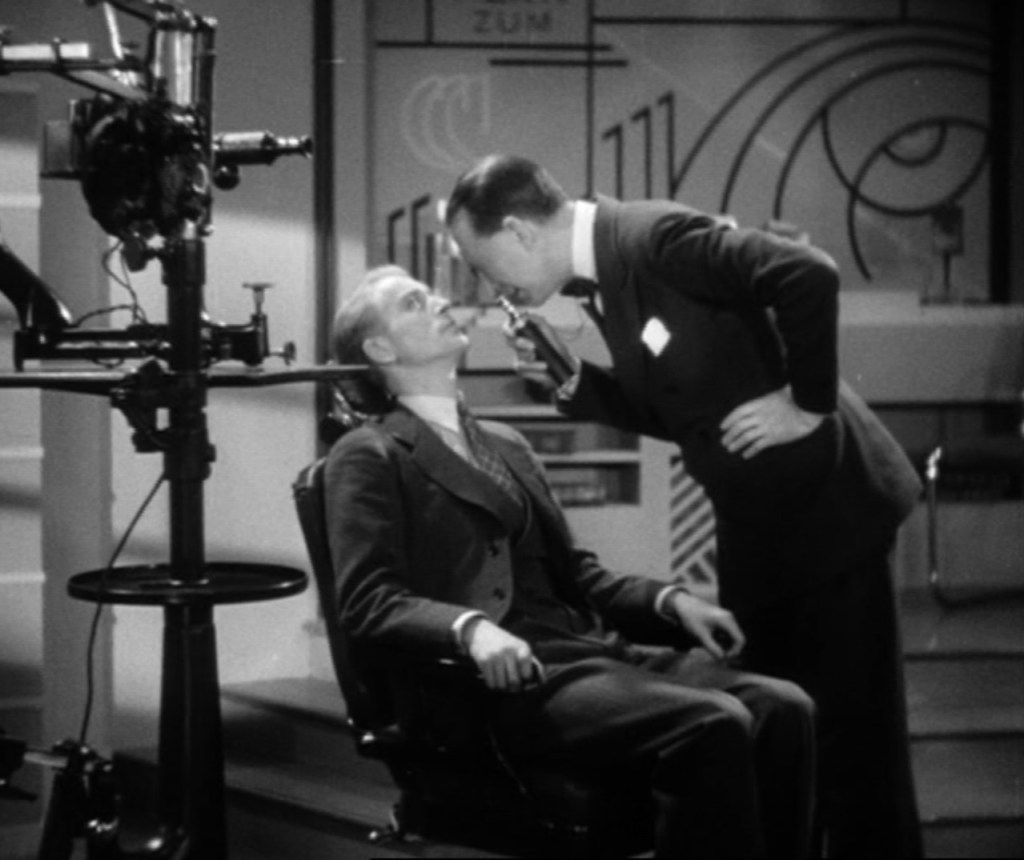
Larry visiting a very modernist optician in Fascination

Although Larry by this point is starting to feel very conflicted about his affair and wants to end it, Gwenda ostensibly still has too much of a hold on him to enable him to break things off. Thankfully for him, his wife has found a solution. Vera writes to Gwenda under false pretences and invites the other woman to her marital home. Here, rather than having an argument, Vera explains that she loves Larry and wants to protect her marriage, so she is happy to silently consent to his affair with Gwenda. In Vera’s reasoning, if she were to cause a big fuss, Larry would be driven into Gwenda’s arms more.

Before Gwenda has a chance to respond to this proposal, Larry comes home – Vera hides Gwenda quickly behind a curtain. Larry confesses his affair to Vera, begs her forgiveness and offers to write to Gwenda immediately to break off the relationship. Gwenda decides to reveal herself and explains to Larry that Vera, in her generosity, had agreed to him continuing the affair just to keep her marriage intact. She insists on ending her relationship with Larry now that she has met Vera.

Vera warmly says goodbye to Gwenda in Fascination

Fascination ends with the contrast of Gwenda, smoking alone in her dressing room and forcing herself to get ready for yet another night’s performance; and Vera and Larry, cuddled together in a chair where Vera reveals to him that she is pregnant.

Larry and Vera happily reunited at the end of Fascination

Unlike in The Divorce of Lady X, then, divorce is an impossible outcome in Fascination. If Vera had opted to divorce Larry, she would have had to stand the shame and exposure of the divorce court, with a famous actor cited as co-respondent in the case. Clearly, for a respectable middle-class woman this was not really a route to contemplate, even without the added complexity of pregnancy or children. Her willingness to allow the affair to continue, then, is perhaps less magnanimous than the film presents, and more pragmatically her only option.

Yet, by perpetuating the narrative that single women ‘steal’ husbands away from faithful wives; and faithful wives should accept this and allow husbands to come back in their own time, Fascination clearly sides with patriarchal norms. Vera’s ostensible agency is in fact non-existent- something also stressed by a scene where she visits Larry’s office to ask him for household money. Fascination presents marriage as the route to a woman’s happiness, and independence and professional success as poor substitutes. Despite the increasingly progressive position of women in British society by the early 1930s, this film demonstrates that cultural texts often still expounded traditional viewpoints.

The Divorce of Lady X (1938)

The Divorce of Lady X (1938)

Just as the end of the 1920s saw the introduction of sound film in British cinema, by the time the 1930s drew to a close, a new innovation was introduced: Technicolor – or more correctly, three-strip Technicolor. Earlier versions of ‘two-colour Technicolor’ had been used in Hollywood since the First World War, for example for segments of Carl Laemmle’s 1925 The Phantom of the Opera starring Lon Chaney. Three-strip Technicolor gave more realistic colour images, and is the process which is famously used in The Wizard of Oz (1939).

Technicolor required financial investment, so it took some years to bring it to Britain. The first British Technicolor film was Wings of the Morning, made in 1937. It was followed hot on its heels by a film of Britain’s most lavish film producer, Alexander Korda. A Hungarian by birth, Korda moved in Britain in the early 1930s, when he’d already worked in Hollywood and various European film industries. In 1933, he had a huge success on both sides of the Atlantic with The Private Life of Henry VIII, a lavish period piece that depicted Henry Tudor belching and stuffing his face with food at regular intervals. The role of Anne Boleyn is played by Merle Oberon, in one of her first substantial screen roles.

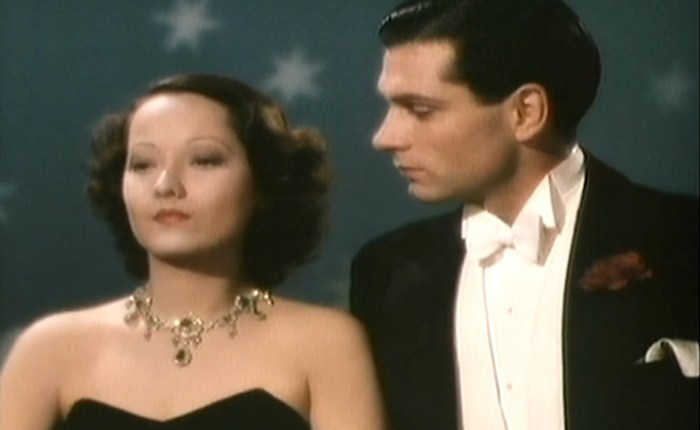
Korda cast her again as the female lead in The Scarlet Pimpernel in 1934, and also in The Private Life of Don Juan in the same year. By 1939, the pair were married, although the marriage only lasted to the end of the Second World War. During their courtship, they made The Divorce of Lady X (1938), in which Oberon stars opposite Laurence Olivier. This comedy, with its frank discussion of divorce and extramarital relations, shows how ‘propriety’ became less important in Britain towards the end of the interwar period.

The Divorce of Lady X is a re-make of a 1933 film, Counsel’s Opinion, which Korda also produced. Both films are based on a play by Gilbert Wakefield. The 1933 film, whilst favourably received upon its release, is no longer extant. The Divorce of Lady X, by contrast, was syndicated for TV release in the US in the 1940s, and is widely available on DVD and online.

The story of The Divorce of Lady X centres on that favourite trope of British interwar cinema: a man and a woman, who are not married, are forced to spend a night together in a (hotel) room. Nothing untoward happens, but everyone assumes the couple must be having an affair. A similar trope is used in Night Alone, as well as numerous Aldwych farces, such as A Cuckoo in the Nest, Rookery Nook, and Lady in Danger. In The Divorce of Lady X, Leslie Steele, a young socialite, and Everard Logan, a divorce lawyer, are thrown together due to an impenetrable fog, which leaves them both stuck in the same central-London hotel. Leslie talks Logan into sharing his suite with her – her sleeping in bed, him on a mattress in the adjacent sitting room.

Laurence Olivier as Everard Logan, getting ready for an
uncomfortable night on the floor in The Divorce of Lady X

During the course of the evening Logan incorrectly assumes Leslie is married. The next day, a member of his club, Lord Meere, comes to Logan’s office and asks him to arrange for a divorce from Lady Meere, as the latter spent the previous night in the same central-London hotel, with a man in her room. Logan assumes that Leslie, who has not given him her last name, is Lady Meere, and that he unwittingly has become both the barrister and the co-respondent in Lord Meere’s divorce suit.[1]

Logan continues to court Leslie, telling her he does not care that his career will be ruined, as long as she will marry him after she’s obtained her divorce from Lord Meere. Leslie continues to play along, although she herself has also fallen in love with Logan. Eventually, Leslie meets the real Lady Meere, and the two women concoct a plan to reveal the truth to Logan. Logan is initially embarrassed by being taken for a ride and he storms off to France, but Leslie follows him onto the boat and manages to change his mind.

Leslie (Merle Oberon) nursing a sick Logan (Laurence Olivier) on the boat to France

Right from the outset of the film, it is made clear that Logan has had multiple affairs – when Leslie comments that his pyjamas are hideous and he should dump the woman who buys them for him, he shoots back ‘we parted six months ago!’. At the same time, he rings up another woman to apologise for not being able to see her that evening, due to the fog. Although Leslie is not explicitly shown to have any lovers of her own, she is very confident and flirts with Logan in a way that makes it unlikely that he is her first love interest. The real Lady Meere, moreover, is repeatedly quoted as having had four husbands and several ‘episodes’ with other men, and at the end of the film it is made clear that she is cheating on Lord Meere. Crucially, none of this is depicted as wrong or objectionable; although all characters admit that four divorces is perhaps a bit much, Lady Meere is also shown to be a sympathetic and attractive woman. When Logan admits to his assistant that he (as he thinks) has fallen in love with a married woman, it is a matter of amusement rather than embarrassment, and divorce is depicted as largely normalised.

Lady Meere (Binnie Barnes) and Leslie (Merle Oberon)
plotting on how to break the truth to Logan (Laurence Olivier)

This representation of marriages as likely not lasting nor monogamous clearly presents a challenge when the central relationship of the film must also fulfil narrative convention. For the audience to be invested in the relationship between Leslie and Logan they must believe that it will end in a happily ever after, not a marriage that will quickly dissolve because one or both parties are conducting affairs.

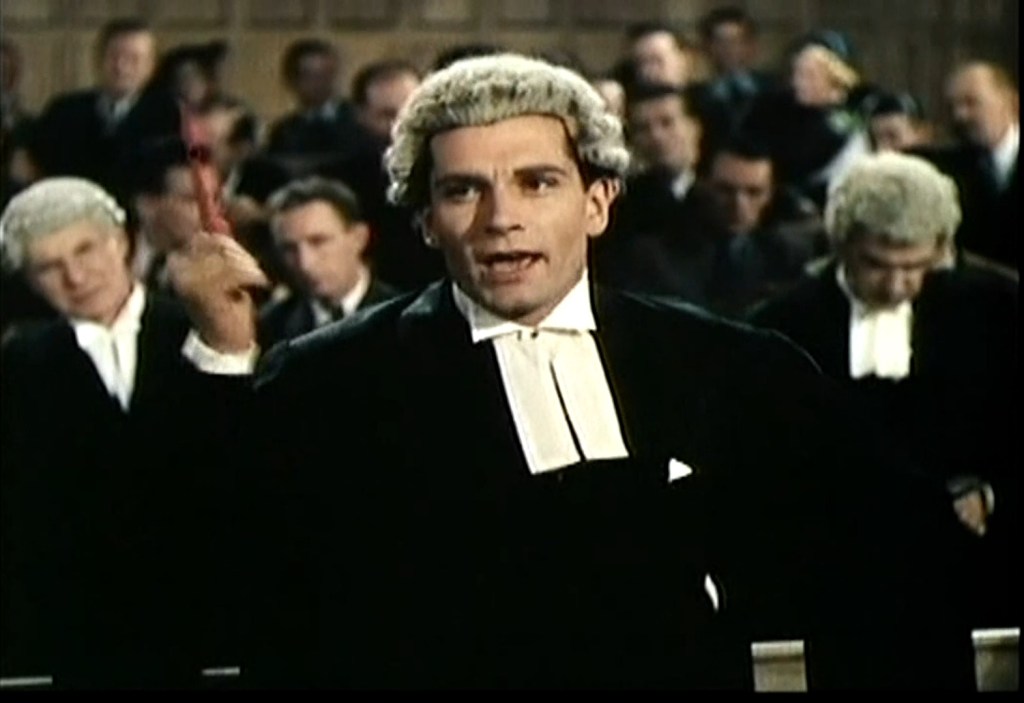
To resolve this, The Divorce of Lady X uses the trope of the woman-as-saviour: Leslie, for all her modern manners, is essentially a respectable girl. When she first meets Logan, he is extremely cynical about women, due to his experience in the divorce court. This cynicism reaches a high point during a withering closing-arguments monologue in one of his divorce cases, which Leslie witnesses from the public gallery. ‘Modern woman has disowned womanhood, and refuses man’s obligation!’ he thunders. ‘She demands freedom, but won’t accept responsibility! She insists upon time to “develop her personality”, and she spends it in cogitating on which part of her body to paint next.’

Laurence Olivier as Everard Logan, spouting against Modern Woman in court

Little wonder that Leslie is not impressed after hearing that speech! But no fear – her steadfast conviction that she is the one to save and reform Logan is rewarded in the end. When she follows him onto the boat to France at the film’s close, the choppy waters give her a chance to mother and nurture Logan. Her triumph is crowned by a final scene in the divorce court, in which Logan’s speech is the opposite of his earlier outburst. Appearing now as the defence of the woman accused of divorce, rather than as counsel for the husband, Logan gushes that his client is ‘a woman – that unique and perfect achievement of the human species (…) especially evolved for the comfort and solace of man.’ The message is clear: Leslie has managed to persuade Logan that married life is, after all, best. The open discussion of, and jokes about, divorce that form the backbone of The Divorce of Lady X point towards the ‘permissive society’ of post-War Britain; but its resolution of the protagonists’ story in a traditional marriage shows that in the 1930s the stability of conservative traditions still held sway.

The Divorce of Lady X can be viewed on the PBS website.


[1] In British divorce law, a co-respondent is a person cited in a divorce case as having committed adultery with the respondent ie. the half of the couple not initiating the divorce.

Tom Walls

Earlier this year this blog had a look at the comedy actor Ralph Lynn. Today we are going to discuss the other half of the ‘Lynn & Walls’ comedy duo: Tom Walls. Walls was born in 1883 and had a prolific career as actor, director and producer of plays and films; followed by a second career as the owner of a race horse stable in Epsom. As a young man, Walls attempted a career as an officer in the Met, but this did not last – allegedly, he spent rather too much time ‘interrogating prostitutes’ on duty.[i]

Tom Walls and Ralph Lynn first worked together on the farce Tons of Money in 1922.[ii] Prior to that time, Walls had been managing and acting in shows in seaside towns. Walls and his business partner Leslie Henson scored a big success with Tons of Money, which started out at the Shaftesbury Theatre but transferred to the Aldwych. Walls would remain at the Aldwych for the remainder of the decade, putting on a series of wildly successful farces with a largely stable cast and crew consisting of Ralph Lynn, Yvonne Arnaud, Mary Brough, and Ben Travers as the writer for most of them.

Whereas Lynn was remembered as the ‘ideal farce actor to work with’[iii], Walls tends to invoke phrases like ‘no shame’; ‘contemptuous’; ‘peculiar’ and ‘a dictator’.[iv] He was also undoubtedly a man with a lot of energy. He acted in a lead part in all of the Aldwych farces, as well as directing them. Walls was also the driving force behind getting the farces translated to film in the 1930s, when he wanted a new challenge. Not having worked in the medium before was no barrier to Walls; he acted as both director and actor from the first Aldwych film, Rookery Nook, in 1930. In total, Walls directed 23 films in the 1930s, and acted in most of those as well as in some other productions.

Most of Walls’ film roles, thankfully, remain available to us today. Due to the long-lasting partnership between Walls, Travers and Lynn; and Walls’ considerable control over the productions, many of the Aldwych farces are written to play to his strengths. Generally, Walls played older men who have charm and wits, against Lynn’s younger, naïve characters. One obituary of Walls described his roles as ‘the dominating man supremely confident in himself’ – probably not too much of a stretch for Walls to play.

Walls’ role as Mr Tutt in A Cup of Kindness is a prime example of this type – Tutt is a patriarch who bosses about his wife, sons, and neighbours – but the role also gives Walls a chance to show off his charms in the scene where Tutt takes the young nurse Tilly  out to a West End Restaurant. Toeing the line of marital fidelity is a recurring theme in the Aldwych farces, as it is in Walls’ later film roles.

In the 1934 film Lady in Danger, Walls directed himself as the lead opposite Yvonne Arnaud. In this comedy, Arnaud plays the unnamed Queen of a (fictional) European micro-state, who has to flee a revolution. Walls is tasked with smuggling her to Britain, whilst Arnaud’s husband the King is staying in Paris. ‘The King is always in Paris’ is used as a knowing short-hand throughout the film to refer to the King’s regular infidelities. Walls’ character Richard is engaged to be married, but that does not stop him from flirting with the Queen.

Unlike in the Aldwych productions, where Walls’ characters flirt but never go any further, Richard and the Queen do share at least a kiss. The film makes is clear that it is permissible for the Queen to engage in this affair because her husband is also unfaithful. It does not deem it necessary to give any justification to Richard; it is a given that he must be able to have a dalliance with another woman before he is married. At the end of the film, the monarchy in the micro-nation is restored and the Queen returns to her husband’s side, and Richard returns to his fiancée, and neither of them face any repercussions. As the film’s director, Walls could ensure that his characters could have their cake and eat it, too. The conventions of farcical comedy allowed him to entertain such potentially transgressive behaviours.

Although his directing career ended with the outbreak of the Second World War, Walls appeared in a dozen or so films in the 1940s. At that stage, however, his main occupation was the breeding and training of race horses in Epsom. He achieved a high point in this career in 1932 when his horse April the Fifth won the Epsom derby – Walls was the only Epsom-based owner to win that derby in the whole of the 20th century. This 1933 Pathé newsreel includes some shots of Walls’ stables and home:

Walls was a very influential and well-known player of the interwar London entertainment industry, with business interests in theatre, cinema and racing. His surviving film performances capture his persuasive charm as well as his dominant personality. That is fame faded after his death in 1949 seems fitting for a man who preferred seizing the day over careful planning.


[i] Ben Travers, A-Sitting on a Gate (London: WH Allen, 1978), p.99

[ii] Ibid., pp. 87-88

[iii] Ibid., 91

[iv] Ibid., pp 89-90

A Cup of Kindness (1934)

A Cup of Kindness (1934)

Following the blog a few weeks ago about British comedy actor Ralph Lynn, today we will look in more detail at one of the Aldwych film comedies, A Cup of Kindness (1934). This film was based on a stage production which was first performed in 1929. The film uses the location of a fictional London suburb to make fun of class aspirations in interwar Britain.

Advert for A Cup of Kindness at the New Gallery Kinema in Regent Street, Daily Sketch, 27 July 1934

A Cup of Kindness is the story of two neighbouring families, the Tutts and the Ramsbottoms. The parents of both families despise one another, but the children, Betty Ramsbottom and Charlie Tutt, are secretly dating and intending to marry. Once they reveal their relationship to their parents, hostilities between the families intensify. Charlie, played by Lynn in his characteristic bumbling way, starts to doubt whether it is such a good idea for him and Betty to marry. After the customary argument between the lovers, they are reconciled at the end of the film, and a truce of sorts develops between both sets of parents.

Although A Cup of Kindness presents itself as a timeless story,[i] both in its opening title and through an odd dream sequence in the second half of the film, where we see the prehistoric Tutt and Ramsbottom ancestors fighting with one another in front of their respective caves, its setting in a suburban development is very specific to the interwar period.

As noted previously on this blog, London’s suburbs expanded rapidly during the interwar period, and along with this stereotypes developed about the aspiring middle classes who lived in the suburbs. A Cup of Kindness, for all its broad comedy, adds further nuance to this stereotype through the subtle signifiers of class difference evident in the Tutts and Ramsbottoms. The modern viewer is required to pay close attention to these signs in order to decode them, but for interwar audiences they were likely much more familiar and easier to interpret.

The film opens with Mr Ramsbottom (Robertson Hare) walking from the train station to his house in the evening. Just before he reaches the family home, he passes the Tutt residence, where Mr Tutt (Tom Walls) is standing outside in the garden. The first signifier of difference is in the men’s dress: Ramsbottom is wearing a regular suit and a bowler hat; Tutt is wearing evening dress. Ramsbottom has clearly come from some sort of clerical job; his dress is the functional uniform of the white-collar worker. Tutt, on the other hand, is dressed for dinner; a custom usually observed by the upper classes. As he is already at home and had time to change, we can infer that he does not need to head the hours of the office worker.

The families’ houses, too, imply difference. The Tutt family home is detached, with a driveway and a portico. The Ramsbottom house on the other hand is semi-detached only, overall smaller in size and with a smaller garden. As the film continues, we find that the Ramsbottoms also have their slightly senile uncle Nicholas living upstairs; and they keep a day-servant as well as a day nurse for Nicholas. The Tutts, on the other hand, have no staff. They have, however, managed to send their son Stanley to Oxford, and are keeping their son Charlie despite him being apparently unable to hold down a job.

The outward signifiers then appear to show that Mr and Mrs Tutt are wealthier and of higher social standing than Mr and Mrs Ramsbottom. There is a line that the latter utters, however, that gives a clue as to what really matters in the social pecking order of suburbia, and it’s not money. During a particularly heated exchange, Mrs Ramsbottom snaps that Mrs Tutt “once was a barmaid.” The implications are clear. Not only are the Tutts not ‘really’ upper class, Mrs Tutt is not even respectably middle class. That one line by Mrs Ramsbottom reveals that in her opinion, its breeding rather than money that determines who comes out on top in the social pecking order.

Yet despite their apparently humble origins, Mr and Mrs Tutt are able to present a wealthy front in the suburban street, by spending their money on just the things that give the impression of riches. This reflects contemporary anxiety about the suburbs, which gave many more people who had previously been unable to enter the housing market, the opportunity to own their own home. This democratisation also facilitated the mixing of people who would previously not have been in each other’s orbit. People moved to the suburbs from all over London and you could end up living next to people were from slightly different socio-economic backgrounds than yourself.

The relationship between Charlie and Betty is an example of this: both sets of parents think that their child can do ‘better’: the Ramsbottoms think Betty should pursue someone more respectable and dependable than Charlie, and the Tutts think Charlie is lowering himself by settling for Betty. Their proximity in the suburban neighbourhood has allowed this pair to get to know one another despite their different family backgrounds. Whereas inner-city areas such as the East End developed an increasingly cohesive common identity between the wars,[ii] the suburbs’ lack of history or character encouraged more prominent attention to the individual or familial identity as opposed to the collective one. A Cup of Kindness demonstrates this tendency towards individual expression through consumer goods and social cues as timeless, when it is in fact specifically rooted in the historical period in which the story was written.


[i] Indeed its writer, Ben Travers, referred to it as ‘Romeo and Juliet (…) of the suburbs’; Ben Travers, A-Sitting on a Gate (London: WH Allen, 1972), p. 108

[ii] Benjamin J Lammers, ‘The Birth of the East Ender: Neighborhood and Local Identity in Interwar East London’, Journal of Social History , Winter, 2005, Vol. 39, No. 2, Kith and Kin: Interpersonal Relationships and Cultural Practices (Winter, 2005), pp. 331-344

Ralph Lynn

Ralph Lynn was born in 1882 in Salford and became one of the most popular comic actors in interwar Britain. Together with Tom Walls, Ralph Lynn formed the heart of a comedy ensemble that put on 10 plays and adapted 9 of those into films. The plays were put on in the Aldwych theatre, which Walls co-owned. During the interwar period, the term ‘Aldwych farce’ signified a very specific type of comedy production.

A version of Lynn’s performances in these shows are still available to us through his film work, which in addition to the nine adaptations of stage productions also include another eight films with Walls, not based on an existing stage production. These seventeen films were all made in the period 1930-1937, during which Lynn was also still acting on stage productions. After this enormously productive period Lynn mostly turned his back on film work, although he continued to appear on the London stage until 1958.[1]

The celebrity power that ‘Lynn and Walls’ had during the interwar period is still evident, for example in A Night Like This (1932), where the song that plays over the opening credits repeatedly reminds the audience “It’s Lynn and Walls.” There is also a newsreel of Ralph Lynn crowning the winner of an international beauty contest in 1935. This shows he was well-known enough to be asked to perform such minor public duties; the clip also gives a flavour of his comic talents:

This British Pathé newsreel of 1927, which shows clips from the stage production of Thark at the Aldwych, quickly dispenses with character names and refers to the characters as “Tom and Ralph”. Coincidentally, the clip also demonstrates why the Aldwych crew waited until 1930, when sound film started to become available, before they made their first film: the plays’ reliance on witty dialogue does not translate to silent film.

Modern audiences, then, can best experience Lynn as an actor through the film work he produced in interwar London. His character is invariably the ‘silly ass’, a foppish, hapless man who never tries to get into problems, but always ends up there. Ben Travers, the Aldwych’s regular script writer, remembers Lynn saying of one of his characters “[he] didn’t try to be funny but just walked rationally and naturally into trouble.”[2]

In A Night Like This (1932) for example, Lynn plays the upper-class, dim Clifford Tope, who decides to visit a nightclub in London. On the same evening, undercover police officer Michael Mahoney, played by Tom Walls, is undertaking an observation of the club because he suspects that the (legal) nightclub is a front for an illegal gambling club. Once inside, Tope gets inadvertently caught up in Mahoney’s investigation, primarily by physically getting in his way. In his apparent incompetence and naivete, Tope keeps unintentionally assisting Mahoney. In the end, of course, the men manage to bust the illegal gambling operation that is running upstairs. Mahoney is rewarded with praise from his superior officer; Tope has made an impression on nightclub dancer Cora (Winnifred Shotter).  

The stage production of A Night Like This, which had been put on in 1930, had benefited from a comfortable budget, which shows in the use of the elaborate nightclub setting. It had even been planned to use a real horse on stage.[3] The film version confidently uses the attractive nightclub setting and uses the cinematic medium to its advantage, for example through the insertion of lengthy sequences of Cora’s dance performances (which was a common trope in interwar films set in nightclubs) and in its focus on action over dialogue.

In other films that were adapted from stage plays, the action is more static and much of the enjoyment derives from the quick dialogue. Take for example this clip from Dirty Work (1934) which had been performed at the Aldwych Theatre in 1932:

Here, Jimmy Milligan (played by Lynn, on the right) and Nettle (played by Gordon Harker, on the left) are trying to convince Clement Peck (Robertson Hare) to don a disguise, in order to stage a fake burglary in the jewellery shop in which Milligan and Peck work. This short description adequately captures the absurdity of the plot, which, like many of the Aldwych farces, hinges on deception, disguise, and misunderstanding.

The pleasure of these films is not in their intricate narratives, well-developed characters or their ability to transport audiences to fantasy worlds. Instead, they provide a constant stream of witty gags, mix-ups and farcical situations right up until the happy resolution of the narrative. Ralph Lynn’s talents were strongly geared towards improvised comedy and wordplay, and in the Aldwych farces he had a perfect medium to display his craft. However, the historic and cultural specificity of comedy, as well as its perceived lower cultural value, has meant that the films have been relegated to relative obscurity. Because Lynn did not work in any other genre, he, too, has been largely forgotten; but his comic instinct and timing still work for twenty-first century audiences.

Most of the Aldwych farces are available on DVD via Network On Air.


[1] Morley, S.  (2020, November 12), ‘Lynn, Ralph Clifford (1882–1962), actor’ Oxford Dictionary of National Biography, https://doi.org/10.1093/ref:odnb/37702

[2] Ben Travers, A-Sitting on a Gate (London: WH Allen, 1978), p. 90

[3] Ibid., p. 110