Fascism in East London, 1932-1940

Fascism in East London, 1932-1940

The most notorious expression of anti-Semitic sentiment in interwar Britain was the creation and rise of the British Union of Fascists (BUF) by Oswald Mosley. Mosley founded the BUF in 1932, after first serving as an MP for the Conservative and Labour parties, and standing as an independent MP.[1] The history of the BUF has been extensively researched, and there is a general consensus that the BUF’s most fruitful recruitment ground was London’s East End.[2] The BUF’s popularity and membership fluctuated throughout the 1930s until Mosley was interned in 1940, which effectively ended the BUF’s existence.

Whitechapel and its environs had been the centre of London’s Jewish community from the mid-19th century[3]; when unemployment rates went up in the 1930s, the BUF’s anti-Semitic messages – formally adopted in 1934[4] –  found traction with some East Enders. When the local population struggled to get work, it was all too easy to blame the Jewish immigrants for ‘taking jobs’. Anne Kershen, a historian of the East End, has pointed out that Jews were the largest minority ethnic group in interwar Britain.[5] This, combined with a long history of anti-Semitism in Britain and Europe as a whole, made the Jewish community a much-used scapegoat for any perceived unfairness in society. With anti-Semitism on the rise across the content in the 1930s, in Britain too these sentiments were foregrounded more in the mid-1930s than in previous decades. 

The BUF paid considerable attention to the visual impact of its branding. Apart from the Blackshirt uniforms, which immediately identified BUF members in public, the party also recorded and sold speeches by Mosley and recordings of the Blackshirt Military Band as well as posters, postcards and photo books of Mosley and other BUF leaders.[6] Historian Julie Gottlieb has argued that the party deliberately borrowed from cinematic conventions at their rallies and meetings, which were sometimes held in cinemas. The use of light and sound effects, banners and flags, and choreographed movement all built up to a crescendo when Mosley himself appeared.[7]

The BUF recruited and retained its members primarily through its network of local offices and branches, were members could convene, plan and discuss activities such as rallies and marches. This local, grass-roots organisation meant that there was significant variation of BUF uptake and activity from parish to parish. In the East End, the Bethnal Green branch of the BUF was very successful in drumming up support by offering a cohesive ideological alternative to the local socialist council, which had left residents disillusioned.[8] The BUF also gained traction in Limehouse and Whitechapel.[9]

The organisational structure of the BUF also meant that a member’s involvement with the party was primarily based on local interactions and social activities. In the local headquarters, (male) party members convened to educate themselves, work on party outreach activities and undertake physical exercise classes. Female members had an entirely separate, but similar, experience, with their activities centring on recruiting and training new female members, as well as learning ‘fencing, boxing and first aid’.[10] The BUF’s insistence on physical fitness was part of its racist quest to create ‘New Men’ who would be able to ‘maintain and re-unify’ the British Empire.[11]

Beyond the social activities of the local branch, members could buy the aforementioned party memorabilia as well as party newspapers, cigarettes from the party’s own brand, playing cards, letter heads, et cetera.[12] For the truly committed BUF couple, a fascist wedding may be considered. At these, the groom would typically wear his Blackshirt uniform, whereas the bride could accessorize her dress with Fascist details. At one wedding, the bride cut the cake with an axe rather than a knife.[13] As historian Michael Spurr puts it: Rather than simply voting fascist at elections or proselytising on the streets, members of the BUF became Blackshirts, individuals whose identity and social experience was shaped and defined by this alternate fascist community.’[14]

Herein lies the key to the BUF’s popularity in the East End of the 1930s. The vast amount of social and cultural change which Britain experienced during the interwar period left some groups feeling abandoned. The international political situation was uncertain and a second World War seemed increasingly inevitable. The BUF offered a sense of community and a promise of a Greater Britain – as well as a strong commitment to peace with Hitler. The Party’s savvy marketing strategies amplified its mass appeal; it also frequently recruited teenagers looking for a sense of belonging. Being a BUF member left such an impression that members were able to fondly recall their time with the party, decades later.[15] For them, it was not the party’s political ideas which were of primary importance, but rather its community and the belief that Britain would rise above its difficulties to come out stronger.


[1] Mosley’s Blackshirts: The Inside Story of The British Union of Fascists 1932-1934 (London: Sanctuary Press, 1986), p. v-vii

[2] Thomas P Linehan, East London for Mosley: The British Union of Fascists in East London and South-West Essex, 1933-1940 (London: Frank Cass, 1996), p. 199

[3] Anne Kershen  Strangers, Aliens and Asians: Huguenots, Jews and Bangladeshis in Spitalfields 1666-2000 (London: Routledge, 2005), p. 64

[4] Michael A. Spurr. ‘’Living the Blackshirt Life’: Culture, Community and the British Union of Fascists, 1932-1940’, Contemporary European History, Vol. 12, No. 3 (Aug., 2003), 305-322 (307)

[5] Kershen, Strangers, Aliens and Asians, p. 208

[6] Julie Gottlieb, ‘The Marketing of Megalomania: Celebrity, Consumption and the Development of Political Technology in the British Union of Fascists’, Journal of Contemporary History, Vol. 41, No. 1 (Jan., 2006), 35-55 (41-42)

[7] Ibid., 45

[8] John Marriot, Beyond the Tower: A History of East London (Yale: Yale University Press, 2009), p. 306

[9] Ibid.

[10] Spurr, ‘Living the Blackshirt Life’, 315

[11] Liam J. Liburd, ‘Beyond the Pale: Whiteness, Masculinity and Empire in the British Union of Fascists, 1932–1940’, Fascism, 7 (2018), 275-296 (284-285)

[12] Spurr, ‘Living the Blackshirt Life’, 318

[13] Ibid., p. 319

[14] Ibid.

[15] Mosley’s Blackshirts: The Inside Story of The British Union of Fascists 1932-1934 (London: Sanctuary Press, 1986) is a compendium of past BUF members’ memories of the party

They Drive By Night (1938)

Towards the end of the interwar period, Warner Brothers’ British arm produced the thriller They Drive by Night, directed by Arthur Woods. This should not be confused with the 1940 American film of the same title, starring George Raft and Ida Lupino; although both films make reference to the long-distance lorry driving community, which is what their titles also refer to. Woods was still only in his early thirties when he directed They Drive By Night, but he’d already had a long career in the industry as a director (Radio Parade of 1935; Music Hath Charms) and screenwriter (Red Wagon; I Spy). They Drive By Night is a thriller, different from the majority of Woods’ work which was in musical comedy. Woods died in 1944 in active combat after joining the RAF at the outbreak of the Second World War.

The hero of They Drive By Night is ‘Shorty’ Matthews, played by Emlyn Williams. A the start of the film Shorty has just been released from prison, and he goes to look up Alice, an old flame who works as a dance hostess. When he arrives at her lodgings, Alice is dead in her room. Shorty panics and goes on the run, by posing as a long-distance lorry driver. With the help of Molly, one of Alice’s friends and colleagues, he keeps out of the hands of the police and is eventually able to track down Alice’s real killer. The killer is an older man with an obsession for the ‘criminal mind’, who used to often dance with Alice at the dance hall.

Although They Drive By Night is based on a British novel and set in England, the influence of the American producers on the film is marked. It is a prime example of the kind of film that met the criteria of a ‘British’ film under the 1927 Cinematograph Films Act, without actually conveying the British cultural values the Act also aimed to promote. For example, the characters use Americanisms and slang throughout the film. When Shorty first gets out of prison, he meets a woman in a bar: she is ostentatiously chewing gum, and her hair is dyed platinum blonde. This was hardly the type of womanhood thought to reflect British values, but Shorty and the barman look after the woman appreciatively.

They Drive By Night’s overall narrative also espoused values that are not typical of British films of the period. The main characters are a convicted criminal and a dance hostess turned lorry girl. As Julia Laite has explored, the lorry driving community caused concern in 1930s Britain as some young women hitched rides from drivers. It was suggested that this type of hitchhiking sometimes involved an exchange of sexual favours, which in turn led to the spread of venereal diseases amongst the lorry driving community.[1] This in turn could lead, it was feared, to unsafe road situations when lorry drivers were ill, thus neatly linking the whole matter to ongoing road safety debates.

In They Drive By Night, however, there is no suggestion that Molly sleeps with the lorry drivers that help her, and the general practice of girls hitching rides is not condemned. When one of them tries to take advantage of her, she fights him off. This driver is presented as a ‘bad sort’ and not representative of the whole lorry driving community – a second driver whom Shorty spends some time with is shown to be faithful to his wife at home. Overall, the lorry driver scene is presented as a more positive male environment than Shorty’s criminal network back in London; but ultimately the film presents a heterosexual coupling as the only truly appropriate outcome for Shorty.

The police play only a minor part in They Drive By Night, and they are not instrumental to the capture of Alice’s killer. Unlike other thrillers of the late 1930s such as The Squeaker or The Dark Eyes of London, the police inspector in They Drive By Night is not one of the protagonists who leads on the resolution of the case. Indeed, they do not feature in the film’s climax, in which Shorty and Molly are at home with the killer and he nearly succeeds in murdering Molly, at all. They Drive By Night skips over the killer’s arrest and trial – the parts of the process in which the police would be involved – straight to the day of his execution.

The police primarily feature as a plot device that gives urgency to Shorty’s actions as the police chase him. Shorty’s criminal record is no impediment to his status as the film’s hero, but throughout the film characters encourage him to ‘go straight’. First the owner of his regular bar tells Shorty not to go back to his old criminal habits. Then Molly’s steadfast support of Shorty whilst he is on the run for the police persuades him to say goodbye to his criminal life for good and turn himself in voluntarily. Only then is he able to outwit the killer and save Molly’s life as a traditional hero would. The eighteen months Shorty has done in prison for his earlier crimes are sufficient to wipe these off his slate and allow him a fresh start; arguably a philosophy more reflective of American culture than British values. Molly, too, is presented as a suitable romantic partner despite her past as a lorry girl and her work as a dance hostess; two roles which were regularly connected with loose morals.

They Drive By Night seems to represent a transitional point in British interwar cinema, where American values had influenced British culture so much that they started to permeate British films. Despite the best efforts of the legislators, they were not able to stem the tide of American cultural influence on the domestic film industry. This influence went beyond hairstyles and mannerisms to a fundamental re-appraisal of morality and social values.

They Drive By Night is available to view on Youtube.


[1] Julia Laite, ‘Immoral Traffic: Mobility, Health, Labor, and the “Lorry Girl” in Mid-Twentieth-Century Britain’, Journal of British Studies (2013) 52:3, pp. 693-721 (693-4)

Night Work for ‘Phone Girls (1929)

An ubiquitous feature of books and films in the interwar period is the use of telephones, and therefore the presence of phone exchange operators. Throughout the 1920s and 1930s, most phone calls in England were put through manual switchboards, which were owned by the Post Office and were mostly operated by young women. These operators would ask the caller which number they wanted to connect to, and then connect the wires on the switchboard to place the call. Switchboard operating became a ‘female’ job, because, in the words of the Science Museum: ‘The job of a switchboard operator took concentration, good interpersonal skills and quick hands. The Post Office, which ran the telephone service in the UK, soon realised that women and girls were much more skilled and reliable than the messenger boys who had first taken on the job.’

Switchboard operating fell into the same category as other jobs which were presumed to require nimble hands, such as hand-colouring films and working in confectionary and biscuit factories.[1] The operators were usually young because it was still the convention that women gave up paid work upon their marriage. There are plenty of anecdotes about regular callers getting to know ‘their’ switchboard operator. The romantic and dramatic potential of the job was effectively used by Maurice Elvey in his 1932 film The Lodger (The Phantom Fiend) in which a young female operator overhears a murder down the line.

In 1929, switchboard operators found themselves at the heart of a debate in which modernity and progress clashed with perceived notions of the suitability of female labour. The Daily Telegraph ran an article on 6 July of that year headlined ‘Night Work for ‘Phone Girls’ – note both the novelty of shortening the word ‘telephone’ and the referral to working women as ‘girls’, as was common practice. The article reports that the Postmaster General proposed to extend the shifts of female operators from 8pm to 10.30pm or 11pm. This would necessitate the hiring of more operators as an individual’s working hours would not increase, but rather a shift pattern would be introduced.

According to the article, the current convention to end women operator’s days at 8pm was maintained at the recommendation of ‘Parliamentary committees’ which were opposed to the employment of girls late at night. The Postmaster General however was of the opinion ‘that social conditions as they affect the employment of women have so changed in recent years’ that this rule could now be abandoned. The increased mobility of women in the immediate post-War period, as well as better access to public transport, had made women much more mobile after dark, and it was becoming commonplace for women to travel around at night.

Curiously, there is also reference to a ‘medical argument’ against women working at night. Although this argument is not spelled out, on suspects there would be concerns that night-work negatively impacts women’s health and may in turn affect their ability to have children. This argument is countered by the Postmaster General through reference to the extensive work women undertook during the Great War, which did not compromise their health.

So far for the social arguments against women working late at night – but the proposal to extend their shifts in the telephone exchange also touched on a recurring debate about jobs for men versus jobs for women. While the women’s roles were ending at 8pm, the evening shift in the exchanges was undertaken by part-time male operators, whose work was apparently ‘subject to a disproportionate number of complaints’. This appears to be the key reason the Post Office was proposing a change; they wanted to improve the service to their customers.

The part-time nature of these men’s contracts is pivotal: the Post Office stresses that for these men, the ‘post office pay is not intended to form their principal means of livelihood.’ [emphasis mine] If the proposal was for women to replace full-time male breadwinners, there would have been considerable opposition to it, even if it would improve the evening telephone service. During the interwar period, the narrative of the male head of household working to provide for his family was much supported.[2] It was regularly argued that women should not be ‘taking’ any roles that should go to male workers. The careful phrasing of the Postmaster General implies that the loss of labour would not be a hardship to any of these men; but it seems likely that for some of them, at least, the Post Office role was their primary income, and a redundancy would be keenly felt.

As this article demonstrates, an apparently simple desire to improve the telephone service for customers was enmeshed in wider debates and concerns that echoed throughout the interwar period. The attentive and powerful press industry could help or hinder an organisation’s ambitions by being either supportive or obstructive. During this period, heads of organisations such as the Post Office had to be acutely sensitive to the political environment even for innovations which may have appeared as strictly internal affairs.

You can see switchboard operators at work here at the International switchboard in London


[1] Miriam Glucksmann, Women Assemble: Women Workers and the New Industries in Inter-War Britain (London: Routledge, 1990)

[2] Christine Grandy, Heroes and Happy Endings: Class, Gender, and Nation in Popular Film and Fiction in Interwar Britain (Manchester: Manchester University Press, 2014)

“The most suppressed novel ever published in England”

When we think of banned books in interwar Britain, it’s likely that two examples spring to mind: D.H. Lawrence’s Lady Chatterley’s Lover (1928) and Radclyffe Halls’ The Well of Loneliness (1928). Lawrence’s book, however, was not actually banned in Britain at the time of its publication. Rather, the book’s frank treatment of extramarital sex meant that Lawrence was not able to find a commercial publisher for it. Instead the book was printed in limited runs for private subscribers; and later, a censored, abridged version of the novel was circulated more widely. Chatterley’s reputation as ‘banned’ actually stems from the 1960 obscenity trial that was started when Penguin decided to print the full, unabridged version of the novel for the mass market.[1] Penguin won the landmark case from the government and the book has been available in its full form ever since.

The Well of Loneliness did get banned, but not until after it was released on the market. The book was published in July 1928; an obscenity trial was convened in November of the same year. The book’s description of lesbian (sexual) relationships was judged obscene and likely to corrupt readers’ minds; it was subsequently withdrawn from the British market but remained available through copies printed in Paris. The novel was re-printed in 1949 without incurring a further trial and it has been in print ever since.

There was, however, a third book at the end of the 1920s which fell victim to an obscenity trial. Unlike the two more famous examples cited above, Norah C James’s novel Sleeveless Errand was suppressed before it was even properly published. The book was printed and distributed to reviewers and bookshops in February 1929. The reviewer of the Morning Post was so alarmed by the novel’s contents, that he alerted the Home Office, who promptly moved to confiscate all distributed copies. The police went as far as visiting reviewers who had received a copy of the book, at home, and demand they hand their copies over.[2] This decisive action meant that not a single copy of the book remained in circulation in Britain when a magistrate officially confirmed its status as ‘obscene’ in March 1929.[3]

Like The Well of Loneliness, Sleeveless Errand was subsequently published in English through a French publishing house; but it has never been re-published by an British press. The copy in the British Library is one of the ‘French’ copies, the preface of which draws parallels with Hemingway’s Fiesta: The Sun Also Rises, which had been published in 1926 and was not considered obscene despite dealing with similar themes as Sleeveless Errand.

For all the noise around the novel’s supposed obscenity, what exactly is it about its contents that was considered so objectionable? Sleeveless Errand follows Paula and Bill, two young Londoners, over the period of around 36 hours. At the start of the novel, Paula is dumped by her lover Philip. They are not married, but have clearly had regular sex, which the novel does not condemn. After the break-up, Paula goes to a Lyons Corner House where she contemplates suicide. Bill happens to be put on the same table as her; he’s just walked in to his wife and his best friend in bed together, so he is also feeling very depressed.

The pair meet each other in their mutual low moods and Paula takes Bill to some of her regular night haunts, where they meet a group of Paula’s friends who drink and swear liberally. Eventually, Bill stays the night in Paula’s flat and they tell each other about their childhoods. The next morning Paula settles a will and the couple hire a car, with the plan to drive off a cliff near Brighton. On the way south they run into various other delays, which lead them to postpone the suicide until the next morning.

At night in their hotel, Paula gives Bill a firm talking-to and tells him he should go back to his wife and make amends; in Paula’s view, Bill’s wife’s infidelity is not an insurmountable hurdle as he still loves her. Bill agrees to go back and patch up his marriage. The novel ends with Paula driving up to the intended cliff-top and very calmly and deliberately driving the car off the cliff at sunrise.

Newspaper articles reporting on the magistrate court hearing that banned Sleeveless Errand drew attention to the novel’s language: ‘Specifically, the prosecution protested that the book took the name of God or Christ in vain over 60 times, as in the line, “For Christ’s sake give me a drink.”’[4] Ostensibly then, it is the novel’s language that led to its suppression. One may also consider the liberal discussions about sex, including Paula’s explicit affair at the novel’s opening and her views on monogamy: “It doesn’t necessarily mean the end of the world because a woman has intercourse with a man who’s not her husband.”[5]

Additionally, descriptions of the activities Paula and her friends get up to in nightclubs are decidedly seedy: “By now, nearly all the couples were sitting about the room embracing. Rathbone was what Hudson called “dry cleaning” a large good-looking girl whose name was Letty. She was the Haunt whore.”[6] According to Christine Grandy, heroes in interwar fiction “were distinguished by their fulfilment of the independent male breadwinner role, while the deviancy of the villain’s character lay in his inability or unwillingness to work for his wealth.”[7] None of the characters in Sleeveless Errand come anywhere near this hero template; Paula and her friends all appear to be independently wealthy and happy to drink their days away, and Bill has decided to abandon his breadwinner duties.

But Sleeveless Errand goes one step further. Not only do none of the characters conform to the pervasive discourse present in interwar fiction that presented contributing members of society as ‘good’; it argues that the post-War generation is fundamentally unable to contribute to society and that suicide is the moral choice. Throughout the novel, Paula repeatedly refers to the condition of her generation, those who came of age immediately after the end of the First World War.

[M]y generation of women is rotten to the core. Freedom came too quickly for us. We weren’t ready for it. We had no reserves with which to meet the deadly disappointment after the War of finding ourselves workless, and husbandless and useless.[8]

This is the horror at the core of Sleeveless Errand. Rather than celebrating the end of the war and the upward mobility allowed by modernity, white-collar jobs, suburbs and automobiles, instead it maintains that the war has ruined the mental health of the young women. Those women, who are pivotal to the continuation of British culture by settling into their roles as wives and mothers, are ‘rotten’ and unable to fulfil their duties to society. Instead, Paula uses that symbol of modernity and progress, the automobile, to engage in the most subversive act of all. It is the rational, considered approach to suicide, which Paula commits to calmly and unwaveringly, that emblematizes the book’s dangerous potential. At a time when suicide was usually recorded as occurring ‘while of unsound mind’, Sleeveless Errand dares to raise the possibility that the act can be a well-thought out, even responsible, choice. Allowing women to entertain that possibility could have affected the foundations of interwar British society beyond repair. Seen in that light, the Home Office’s swift and decisive oppression of the work becomes understandable.


[1] Christopher Hilliard, ‘“Is It a Book That You Would Even Wish Your Wife or Your Servants to Read?” Obscenity Law and the Politics of Reading in Modern England’, American Historical Review 118:3 (2013), 653-678, https://doi.org/10.1093/ahr/118.3.653

[2] Bill Harrison, ‘Censors, critics, and the suppression of Norah James’s Sleeveless Errand.’ Atenea, 3:1-2 (2013) 23-41 (25)

[3] Ibid., 26

[4] Ibid.

[5] Norah C James, Sleeveless Errand (Paris: Henry Babon & Jack Kahane, 1929), p. 54

[6] Ibid., p. 66

[7] Christine Grandy, Heroes and Happy Endings: class, gender, and nation in popular film and fiction in interwar Britain (Manchester: Manchester University Press, 2016), p. 3

[8] James, Sleeveless Errand, pp. 204-5

Benita Hume

Benita Hume

Benita Hume was born Benita Humm in London in 1906. Although she’s largely forgotten today, and there is little information available about her online, she was an incredibly prolific actress in interwar British films. Like some of the other actors discussed on this blog, she made the move to Hollywood in the mid-1930s. At the eve of World War Two Hume married British-actor-in-America Ronald Colman and she largely retired from acting, meaning that she spent the bulk of her acting career in the British film industry.

Hume started out on the stage but very quickly moved into film, landing her first, small, part in the 1925 Jack Buchanan vehicle The Happy Ending. There followed a tiny uncredited part in Hitchcock’s Easy Virtue. In 1928 Hume starred in The Constant Nymph, an adaptation of an immensely popular interwar novel. This Adrian Brunel-directed drama, with Ivor Novello as the romantic lead, was a box-office success.

Although Hume does not play one of the leading roles, the film definitely raised her credentials. After The Constant Nymph, Hume was never out of work again and usually made around four films a year. Her dark colouring and aristocratic features led her to be cast as the wealthy socialite as much as the love interest; her characters were usually thoroughly modern women. In 1929, she starred opposite Jameson Thomasin the sci-fi film High Treason. Although Hume’s character Evelyn Seymour is romantically involved with Thomas’ character Michael Dean, she still leads a revolution of women against him when she realises his actions may unleash a world war. Evelyn Seymour is not the kind of love interest who defers her judgement to a man.

Later in the same year, Hume played an extremely capable secretary in Géza von Bolváry’s The Wrecker. In this film, the heir to a train company, ‘Lucky’ Doyle, is trying to figure out who is after a series of deadly train crashes. Hume is the company secretary, Mary, who is (of course) also Doyle’s love interest. The film’s climax sees Mary travelling solo on a train that is due to be ‘wrecked’. Doyle manages to prevent the disaster from occurring, after which he and Mary team up to unmask the Wrecker for once and for all.

Hume made the transition sound film apparently without issue. She used her stage career to good advantage: in 1930 she appeared in the original Broadway cast of Symphony in Two Flats, written by and starring Ivor Novello. Novello and Hume also took on the leading roles in the British film adaptation of the same play, which was released in the same year (a separate ‘American’ version of the film was made in which Hume’s role was fulfilled by American actress Jacqueline Logan).

A couple of years later, Hume appeared opposite Leslie Howard in Service for Ladies. Howard at this point had already transitioned his career to Hollywood and was allegedly in Britain for a brief holiday when Alexander Korda persuaded him to spend a few days filming this light-hearted comedy. Here, Hume is not the love interest but rather the wealthy foreign socialite Countess Ricardi, who does her best to seduce Howard’s Max Tracey and distract him from the real object of his affection.

In 1934, Hume played a lead part in the British production Jew Süss, which, unlike the notorious 1940 Nazi-sanctioned film of the same name, was made with a view to be a sympathetic portrayal of the Jewish people. In the same year, she starred opposite Douglas Fairbanks in another Alexander Korda film, The Private Life of Don Juan. It was to be Fairbanks’last film. Korda intended Don Juan to have the same success as his Private Life of Henry VIII which he’d made the year before, but unfortunately Don Juan flopped badly at the box office.

As the 1930s continued, Hume’s portfolio increasingly included American as well as British film productions. In Britain, although she was continually cast as either the female lead or the second most substantial female part, she never really had a career-defining role, nor was she ever nominated for any major prizes. Some of the films she appeared in were cheap productions that are no longer available for viewing, which is no doubt partially why Hume’s name is largely forgotten today. She was, however, a household name in the interwar period, and her considerable acting talent is on display in the range of films in which she took leading parts.

The British 1934 film Jew Süss can be viewed on YouTube.

Glamour Girls

We’re going to have a closer look today at two articles that appeared in early issues of Picture Post. Picture Post was a weekly photojournalism magazine that was launched in Britain in 1938. Its pages contained a huge breath of articles and reportage, which covered topics from word politics to science and nature to fashion and entertainment. Due to the timing of its launch, and the fact that its founder and editor was the Jewish journalist Stefan Lorant, the first issues contain frequent criticism and condemnation of Nazi Germany. This political content was balanced with pieces on ‘lighter’ topics.

In November 1938 and May 1939, Picture Post ran two pieces on ‘Glamour Girls’. Together, these pieces give an insight into the position of young female stage performers in London at the end of the interwar period. By the end of the 1930s, ‘glamour girl’ was the name for the young women who danced on the stage as part of troupes – they were more commonly referred to as ‘chorus girls’ in the earlier part of the interwar period. The adoption of the term ‘glamour girl’ is symptomatic of the continued Americanization of British popular culture throughout the 1920s and 1930s – indeed, one of the Picture Post articles follows an American dance troupe in London.

The row of young, thin, white chorus girls who are all dressed alike and dance in perfect unison was a very recognizable feature of modern urban entertainment during the interwar period. The phenomenon has most famously been critiqued by Siegfried Kracauer in his essay ‘The Mass Ornament’ which originally appeared as a series of articles in the Frankfurter Zeitung in 1927. Kracauer, too, centres his analysis around an American troupe, the Tiller Girls – but British chorus girl troupes quickly sprang up to emulate the American original. Chorus girls appear in myriad British films of this period, from Friday the Thirteenth (1933) to The Show Goes On (1937).

But what of the glamour girl in news reportage? The first Picture Post article under consideration was published in the issue of 22 October 1938 and is entitled ‘A Glamour Girl’s Day’. This piece purports to give insight into the day-to-day life of a group of American dancers who were performing at the Dorchester hotel at that time. Why the show’s impresario, Mr Chester Hale, did not recruit British girls when he had to put on ‘the snappiest cabaret show’ possible, is not made clear. Chester Hale himself appears to have been an American; and it’s implied that American girls are better qualified for ‘snappy’ shows.

The piece both observes the dancers as a foreign species and reassures the readers that they are completely harmless; and it also does not neglect to draw attention to the girls’ physical features. The captions to some of the photos give a good indication of the article’s overall tone:

Hard-working, ambitious, well-educated, carefully chaperoned is the first-class glamour girl of to-day. Wanda Cochran has studied philosophy and public-speaking. Is studying now at the R.A.D.A. (…) Doris Call, a blue-eyed blonde from Virginia, is also studying at the R.A.D.A. She has six sisters, two brothers.

The piece makes much of the fact that the girls are very young – some of them are reported to be only 16. A few have brought their mothers and siblings with them for company; according to one of the mothers, she thinks dancing in a cabaret is much safer for a girl than going to high school (in America). The article runs the reader through a typical day for the troupe during their run at the Dorchester, and repeatedly stresses that the girls engage in wholesome activities such as learning about London and British history; educating their siblings; and improving their dancing and singing skills. It is also emphasised that they usually go home after they finish their shows at 1am – they very much do not go to nightclubs with young men.

Slipped in between the descriptions of the girls’ physiques (average weight 8 st 8 lbs; average height 5 ft 6 in) is the following:

Mr Hale gets a lump sum per week from the Dorchester. Out of that he pays the girls and their fares, and provides the dresses (…) the dresses have run him into a good many hundred pounds. The girls pay their own living expenses. Most of them stay in flats with various accompanying members of their family.

As the dancers have to pay for their own accommodation in central London, as well as their food and regular clothes and expenses, one suspects that they did not actually have any money left over to save. It is also not specified whether the fares for the ‘various accompanying members of their family’ were covered by the Dorchester. What the young women get out of the experience is the ‘glamour’ of their costumes, and the opportunity to learn more about British history and British culture; which covers up a precarious employment position that required them to temporarily relocate; work late hours; and forego traditional schooling.

The conditions of employment also receive attention in the second Picture Post article, printed on 6 May 1939 under the title ‘The Making of a Glamour Girl.’ Although this piece appeared only 6 months after the previous article, the tone differs markedly. The status of the glamour girl appears to have rapidly deteriorated; no longer does the article attempt to stress the career aspirations of glamour girls. Instead, the piece confidently states that ‘Few of them [glamour girls] have any stage ambitions, the majority realise their limitations and are content to be just glamorous.’

Indeed, the low requirements for the role are presented as a selling point:

To be a good Glamour Girl, a girl must possess four qualities. She must have good looks and a figure to match, she must be able to walk gracefully in time to music, she must know how to wear clothes, and she must be tall. No girl who has these attributes need starve or spend her days tapping on a typewriter, stage managers will only be too eager for her services.

The role of the glamour girl (now capitalized) is no longer presented as one that requires hard physical work or any skill, but instead is reduced purely to physical requirements. It is presented as an ideal job for a ‘fun’ girl who wants to make easy money; the jobs are alleged to pay at least £5 a week. The implication that this is a good wage is belied by the statement also included in the article, that many glamour girls work as fashion models and mannequins during the day. The apparent need to work two jobs, alongside the short ‘shelf life’ of the glamour girl (the article estimates the average girl’s stage career to last 3 or 4 years) do not signal this as a financially sound or stable career path. Through these articles, girls and young women were not encouraged to consider long-term benefits of education or jobs that could be done at any age, but instead were directed to consider a job in which one had to work relatively few hours and wear nice clothes, as desirable.

Of course, it would be amiss to imply that these articles were primarily aimed at aspiring glamour girls; both articles were clearly (also) an excuse to print photographs of slender young women in revealing outfits. The 1939 article is accompanied by a dozen photographs, nine of which show the performers in bathing suits or other similarly revealing performance outfits. The 1938 article mostly shows the girls dressed in everyday clothes, but allows the reader a glimpse ‘backstage’ with photos of the girls putting on make-up and putting on their shoes. Both articles present the reader with a fantasy of young, happy, untroubled dancers and only hint at the financial precarity these roles perpetuated.

The Lodger (1927 and 1932)

This post is the second of a two-part mini series about Marie Belloc Lowndes’ story The Lodger. The first post considers the short story and novel Lowndes wrote. This post discusses two film adaptations of the book made in interwar Britain.

Marie Belloc Lowndes novel The Lodger, which appeared in 1913, was twice adapted for the screen during the British interwar period. The first, silent, adaptation was directed by Hitchcock in 1927; a sound remake directed by Maurice Elvey appeared five years later. Building on last week’s post which considered the differences between the short story version of The Lodger and the novelisation, this post unpicks the differences between the novel and the films.

The main difference between the novel and the screen adaptations is the identity of the Lodger. In the novel, there is no doubt that the lodger, Mr Sleuth, is responsible for a series of murders of women across London. The book’s tension is generated by the concern of Mr Sleuth’s landlady, Mrs Bunting, that the police are going to find out her lodger is a murderer, and how that will impact her own position. In both film versions of the story, the lodger is ultimately revealed to be a ‘good’ character, who is trailing the murderer in an attempt to stop him. Whilst Mrs Bunting in both films is equally as suspicious of her lodger, because he keeps leaving the house on nights that murders are committed, he is ultimately revealed to have honourable reasons for this.

Hitchcock has publicly claimed that this softer ending was foisted on him, and that he preferred the book’s ending. One presumes that the sound remake followed the same template for the sake of appeasing audiences familiar with the first film. Whilst the change makes the story feel a lot less sinister, it also aligns it more with expected film plots in which the main male character is revealed as a hero and suitable love interest for the female character.

This female character, Daisy (Mr Bunting’s daughter), is much more fleshed out in both films than she is in the book. The role is played by June Tripp in the first film, and by Elizabeth Allan in the second film. In the novel, Daisy is only present in the house every now and then, and she only meets Mr Sleuth face to face right at the book’s end. Generally, Daisy comes across as a bit dim and easily led. In a reflection of women’s increased participation in the workforce during the interwar years, Daisy has a job in both films. In the 1927 version, she is a mannequin for clothes – it is a job, but still one in which she is expected to be passive and decorative. In the 1932 film her job has changed to that of a telephone operator; in that capacity she overhears one of the murders as the victim desperately tries to ring for help.

In the films, Daisy plays a much more material part in the story, and her relationship with the Lodger is more substantial. In both films, she meets him at several points throughout the story and is on friendly terms with him. The fact that the lodger is played by film star and heartthrob Ivor Novello in both productions helps to present him as a viable love interest for Daisy. In the 1932 film, Daisy goes so far as to reject her original boyfriend in favour of the lodger. Again, these changes, which introduce a conventional young romance into the story, make the source material conform more closely to cinematic genre conventions.

Daisy’s original boyfriend, Joe Chandler in the book, also transforms between films. In the Hitchcock version, Joe is a police officer tasked with hunting down the murder, as he is in the novel. Like in the novel, Joe is oblivious to the possibility that the lodger is the murderer he is after – although of course unlike in the book, in the film the lodger is revealed to be innocent. Hitchcock also used the motif of the police officer who is blind to the guilt of those closest to him in his 1929 film Blackmail, so he perhaps appreciated the irony Lowndes built into the novel.

For the later film, Joe Chandler became John Martin, who is not a police officer but rather a tabloid reporter. By 1932 tabloid journalists had become much more socially visible as circulation figures of newspapers rapidly increased. In films, journalists were often presented as pseudo-detectives, collaborating with the police to investigate crimes. Perhaps it was felt that to change the Joe/John character from a police officer to a journalist was not too much of a change. John Martin is a ruthless reporter; at the start of the film, when Daisy witnesses a murder across the telephone line, he passes a picture of her on to his news desk without her consent. To her horror, Daisy finds the portrait printed on the paper’s front page the next day. John excuses this behaviour as he considers it his duty to present his bosses with all the scoops he gets. John’s inconsiderate behaviour paves the way for Daisy to ditch him for the lodger at the end of the film.

A final significant change between the novel and the 1932 film, specifically, is the identity of the lodger. In the book, Mr Sleuth is presented as a British gentleman, albeit one with possibly some foreign blood in him. In the Elvey film, the character is called Angeloff, and Novello plays him with a thick Ruritanian accent. The film’s resolution reveals that Angeloff has been on the trail of the murderer for many years, and that they have both travelled from a foreign country to Britain. Whereas the novel codes the criminal as domestic, the film explicitly presents him as a foreigner, who has wreaked havoc in Britain. The audience can rest assured that such horrific crimes would not be committed by a fellow citizen.

The Lodger enjoyed considerable popularity for decades after its release. However, throughout those years the story, which was originally closely modelled on the Jack the Ripper murders, developed to increasingly deviate from the original to reflect the changing times. The main element of the story, however – a man roaming around the streets at night killing young women – sadly remains relatable to audiences even to this day.

The Lodger (1911 and 1913) – Marie Belloc Lowndes

This post is the first of a two-part mini series about Marie Belloc Lowndes story The Lodger. This first post considers the short story and novel Lowndes wrote. The next post discusses two film adaptations of the book made in interwar Britain.

Today’s post discusses two texts which were written before the Great War, but which had a great cultural impact in interwar Britain due to their popularity. The writer Marie Belloc Lowndes published her short story ‘The Lodger’ in McClure’s Magazine in 1911.[1] She then expanded the story out into a full-length novel which was published by Methuen in 1913.

The Lodger’s main character is Mrs Bunting, a retired domestic servant who lives with her husband just off the Marylebone Road. Mr and Mrs Bunting are very poor at the start of the story, until a mysterious lodger, Mr Sleuth, rents a room with them. Mr Sleuth pays handsomely, but before long Mrs Bunting gets suspicious that he may be responsible for a spate of murders in the capital. Young women are found murdered at night, and these discoveries seem to coincide with Mr Sleuth going for night-time walks.

After a few weeks, Mr Bunting’s daughter Daisy comes to stay with the family, and Mrs Bunting gets increasingly concerned that Mr Sleuth will harm Daisy if he meets her. In the book-length version of the story, there is a fifth character: Joe Chandler, a young and ambitious police officer who is a friend of the family and who is courting Daisy. As the murders start piling up, Joe often pops into the house to give the Buntings updates on the police investigation, but he never once suspects that Mr Sleuth is the killer.

The short story puts the reader in the middle of events, and then relates the arrival of Mr Sleuth into the Bunting’s house through Mrs Bunting’s internal recollections. Daisy visits the house only very briefly in this version of the story. The novelisation presents the action chronologically, and allows much more time for Mrs Bunting’s suspicions and fears to develop. It also expands on Mr Bunting’s thirst for news, which is presented almost as an addiction.

At the start of the book, when the Buntings find themselves in extreme poverty, Mr Bunting is described as buying a paper with one of his last pennies ‘[w]ith an eagerness which was mingled with shame.’[2] Throughout the book he keeps buying papers, rushing out as soon as the newspaper boys come down the street, and sometimes not even waiting to go back inside before reading them. Yet despite Mr Bunting reading every column of newsprint on the case, he does not suspect Mr Sleuth to be the murderer until he physically bumps into him on a late-night stroll and finds his coat covered in blood. In The Lodger, the newspapers sensationalise the case and function as a potentially harmful distraction for the masses, rather than aiding with the resolution of the case.

The police, also, don’t have any grasp on who the murderer may be. This theme is brought out more in the novel rather than the short story. In this expanded version, the character of Joe Chandler frequently provides the Buntings and the readers with updates on the police’s investigation. There are a few moments in the novel where accurate eye-witness accounts of Mr Sleuth are dismissed by the police. When Mrs Bunting attends the inquest of one of the murders, there is one witness who accurately describes Mr Sleuth, but he is ignored. When he tells the coroner that the murderer left the scene carrying a bag such as the one the reader knows Mr Sleuth to possess, ‘not a single reporter at the long, ink-stained table had put down that last remark of Mr. Cannot. In fact, not one of them had heard it.’[3]

When Joe Chandler follows up on a possible sighting of the murderer, ‘on one evening he described at immense length the eccentric-looking gent who had given the barmaid a sovereign, picturing Mr. Sleuth with such awful accuracy that both Bunting and Mrs. Bunting secretly and separately turned sick when they listened to him, he never showed the slightest interest in their lodger.’[4] It is Mrs Bunting, rather than the police or the reporters, who susses out very quickly that it is her lodger who is committing these crimes. Initially, she does not alert the police because her mind refuses to accept her suspicions. Later on, however, her reluctance to alert the police originates from the perceived shame that it will bring on her household. Bunting has the same fears once he gets suspicious about the lodger:

‘But Londoners of Bunting’s class have an uneasy fear of the law. To his mind it would be ruin for him and for his Ellen to be mixed up publicly in such a terrible affair. No one concerned in the business would give them and their future a thought, but it would track them to their dying day, and, above all, it would make it quite impossible for them ever to get again into a good joint situation.’[5]

Instead, Lowndes allows the Buntings to get rid of the lodger without having to report him, in an ending that is near-identical in both the short story and the novel. Daisy ends up staying with the Buntings for her 18th birthday. Mr Sleuth invites her and Mrs Bunting to come to see the waxworks in Madame Tussaud’s. Inside, a private party which includes the Head Commissioner of the Police, is just exiting the building. As they pass the Buntings and Mr Sleuth, the Commissioner is telling his guests that the police know the murderer is someone who previously committed murders elsewhere in Britain, and who had escaped a lunatic asylum just before the London murders started.

The Commissioner makes it clear he would recognise the man if he saw him again; yet when he crosses paths with Mr Sleuth on his way out of Madame Tussaud’s the Commissioner ‘passed by Mr Sleuth unconcernedly, unaware.’[6] The lodger, however, is furious; he believes Mrs Bunting tried to trap him. With an excuse, he hurries out of the Madame Tussaud emergency exit and is never seen by the Buntings again.

The Lodger was clearly inspired by the Jack the Ripper murders which took place in 1888; and whilst its ending echoes the apparent disappearance of Jack the Ripper; and it allows the Buntings to continue their lives in peace, it does leave a murderer out on the streets, ready to strike again. Throughout the story and book, Lowndes spends virtually no time at all discussing the lodger’s victims; her concern is with how the strain of secrets and suspicion affects the Buntings’ marriage. With Mr Sleuth’s exit from the scene (and, in the book, the engagement of Daisy and Joe), their troubles are resolved.

Yet no thought is spared for the women navigating the streets at night. Although the identities of these women are not made explicit, it is suggested by Mrs Bunting that they are not ‘proper’ (in the short story, she refers to one of them as a ‘hussy’, although this reference is removed in the novel[7]). The implication is that respectable people like the Buntings should look out for themselves and do not need to have qualms about protecting those less fortunate. The Lodger provides a female-centred exploration of the strains of retaining respectability at all cost, written at a time when social status was imperative to many people.

The Lodger (novel) can be read for free at Project Gutenberg.


[1] Marie Belloc Lowndes, ‘The Lodger’, reprinted in Into the London Fog: Eerie Tales from the Weird City, ed. Elizabeth Dearnley (London: British Library, 2020), pp. 199-239

[2] Marie Belloc Lowndes, The Lodger, (London: Methuen, 1913), chapter 1, accessed online: https://www.gutenberg.org/files/2014/2014-h/2014-h.htm

[3] Ibid., chapter 19

[4] Ibid., chapter 24

[5] Ibid.

[6] Lowndes, ‘The Lodger’, p. 237

[7] Lowndes, ‘The Lodger’, p. 215

Ivor Novello

Ivor Novello

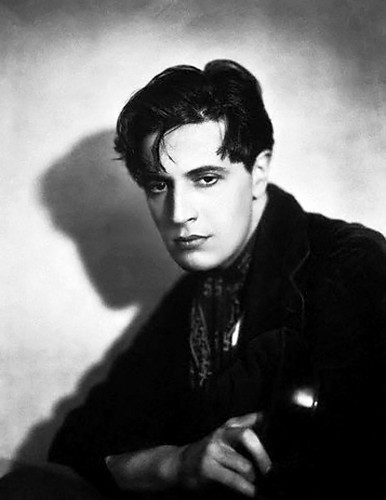
Polymath Ivor Novello, born David Ivor Davies in Wales in 1893, was one of interwar London’s prolific entertainers. Novello was his mother’s maiden name; choosing this as his professional title undoubtedly gave him greater name recognition than his paternal family name. Novello’s first success came as a songwriter during the Great War, with the popular tune ‘Keep the Home Fires Burning’.

During the interwar period, Novello was active as a composer, actor, playwright and screenwriter, occasional film producer, and all-round society figure. In 1926 he ran a nightclub together with actor Constance Collier, with whom he also regularly collaborated on creative projects. The club, the 50/50, was temporarily struck off the register of licensed premises after alcohol had allegedly been served after licensed hours.

Besides his collaborations with Constance Collier, Novello’s interwar projects read like a who’s who of creative Britain. He wrote songs for a play penned by P.G. Wodehouse, wrote songs for Jack Buchanan and had an affair with Siegfried Sassoon. His British film debut came in 1923 as the lead in Adrian Brunel’s The Man Without Desire; Novello also co-produced the film with Miles Mander. The Man Without Desire is a romantic historical melodrama set in Italy; it was the first in a series of roles in which Novello played foreigners, often of high birth. His dark features made him equally convincing as British, Mediterranean, or Eastern European.

After The Man Without Desire came The Rat, which proved so popular that it spawned two sequels. This film was based on a play which Novello had co-written with Collier. In The Rat Novello starred as Pierre Boucheron, a dashing figure in the Parisian underworld. His long-time friend Odile is clearly quietly devoted to him, but the Rat is seduced by the wealthy Zelie de Chaumet, before inevitably realising it is Odile who can provide him with true love. Zelie first sees the Rat in an underground dive bar, where he performs a passionate parody of the Apache Dance with a young woman.

The Apache Dance in The Rat exemplifies Novello’s sexual ambiguity on screen. In real life he lived quite openly as a gay man with his lifelong partner Bobbie Andrews. This was possible in the artistic circles in which Novello and Andrews moved, but clearly it was not possible to explicitly depict homosexuality on screen or stage. Instead, Novello is positioned as a romantic hero; sensual rather than virile, and sometimes surprisingly a-sexual.

Ivor Novello portrait

In Hitchcock’s Downhill, for example, Novello’s character Roddy is not seduced by Mabel, despite her best efforts. Whilst Roddy’s friend Tim is wooing Mabel in the back room of the shop in which she works, Roddy is chatting to some small children who have come to buy sweets. When Roddy later in the film marries the actress Julia Fotheringale, the film never shows any physical intimacy between the couple. Unlike many films of the period, Downhill does not end with the establishment of a heterosexual couple, but rather with Roddy’s restoration as the male heir to his family.

Novello collaborated with Hitchcock for a second film in 1927, The Lodger. This film, based on a popular novel by the same name, was inspired by the Jack the Ripper murders. Novello reprised his role as ‘the Lodger’ in a 1932 sound film remake, directed by Maurice Elvey. In both versions, Novello’s character courts Daisy, the daughter of his landlord. Daisy already has a suitor, a police officer in the 1927 film and a journalist in the 1932 version. Daisy’s original suitors are men of action, who expect that Daisy will marry them based on their previous courtship. Novello’s character, however, manages to win Daisy over through conversation and emotional sensitivity rather than by displaying any of the more traditionally ‘masculine’ traits.

A year after the first version of The Lodger, Novello starred as Lewis Dodds in one of the multiple adaptations of the bestselling novel The Constant Nymph.1 Here Novello was again directed by his friend Adrian Brunel to play the composer who marries one woman but finds that his wife’s young cousin, whom he has known since she was a child, is more devoted in her affections. Again, Novello’s character is linked in a coupling which cannot fulfil the expected template.

After film transitioned from silent to sound, Novello returned largely to the West End stage as a writer and actor of musical comedies. This may in part have been due to the limitations of his specifically recognisable voice and accent, which made him less convincing in the foreign character roles in which he was regularly cast. Novello’s contribution to the musical genre continues to be remembered in the song writing and composing awards named after him, which were established a few years after his death.

The theatre in the building where Novello kept a flat for most of his adult life was also named after him in 2005. It is situated across the road from the Aldwych Theatre, where Tom Walls and Ralph Lynn first became famous; another one of the countless connections that put Novello at the heart of London’s interwar entertainment industry.

[1] Lawrence Napper, British Cinema and Middlebrow Culture in the Interwar years, (Exeter: University of Exeter Press, 2009), pp. 35-79