Paul Robeson

Paul Robeson

Paul Robeson was born in 1898 in New Jersey. He became an actor, singer, activist and athlete, and was one of the very few prominent black actors to appear in British interwar films. Robeson lived with his wife in London between 1928 and 1939, during which period he studied Swahili and phonetics at SOAS, University of London. In London he appeared on the West End stage as Othello (1930) – the first black man to play the role on the West End stage in a hundred years.

Robeson was a popular actor and singer, and a well-known figure in London society. When, in 1929, he and his wife were denied entry to the Savoy grill room due to their skin colour, the matter was reported in the national press. The Savoy, however, flat-out refused to admit that it operated a colour bar and provided no explanation why the Robeson’s were refused entry.

On British film sets, Robeson also encountered racial prejudices. After appearing alongside his wife Eslanda in the art-house Borderline (1930), Robeson’s first commercial role in British film was 1935’s Sanders of the Rivers, directed by Zoltan Korda. The film was based on a selection of short stories by Edgar Wallace, published in 1911. The Edwardian context in which the source material was written was scarcely updated for the film. Sanders, played by Leslie Banks, is a colonial administrator in Nigeria. He is presented as firm but just, and has a paternalistic attitude towards the tribes which live in ‘his’ part of the Empire. Robeson plays Bosambo, a trusted native who provides Sanders with intelligence. When warring breaks out between the tribes, Basambo helps Sanders restore the peace.

Significant parts of the film were shot on location, which the marketing material claimed lent an air of authenticity to the plot. However, as one viewer has commented, the film appears to have been shot in East Africa rather than Nigeria or elsewhere in West Africa – to the untrained, white, British viewer these two disparate regions apparently looked the same. The film features several African tribes in crowd scenes and performing rituals. Rather than providing an ethnographic account of indigenous culture, these scenes show ‘wild’ Africa as the white colonial gaze imagined it to be.

Robeson distanced himself from the film after it appeared, on the grounds of its sympathetic portrayal of colonialism. Yet he continued to find himself in the bind that the only roles offered to him as a black man were those which also included racist or patronising depictions of African culture. In his next British film, Song of Freedom (1936), Robeson plays a dock worker, Johnny Zinga, who has a powerful voice. This film, at least, allows Robeson to show off his considerable singing talent.

Johnny is catapulted to fame after he is heard singing in his local pub, in the predictable ‘rags to riches’ success story that so many British films of the period included. But Johnny does not simply get famous: he is also discovered to be the rightful king to an African island. Johnny travels to the island and tries to rule it as best as he can, but eventually decides to return home to his old life in the London docks. Life on the (fictitious) African island is depicted as primitive, with Robeson once more asked to don ‘traditional’ native dress for these scenes. It was no doubt titillating to white audiences to see the chest of the 6”3’ Robeson on display for their consumption. Additionally, the suggestion that the one black dockworker in London is also a member of a royal family further undermines the perceived differences between African culture, with its supposed multitude of royal families, and the British Empire, over which one monarch reigns supreme.
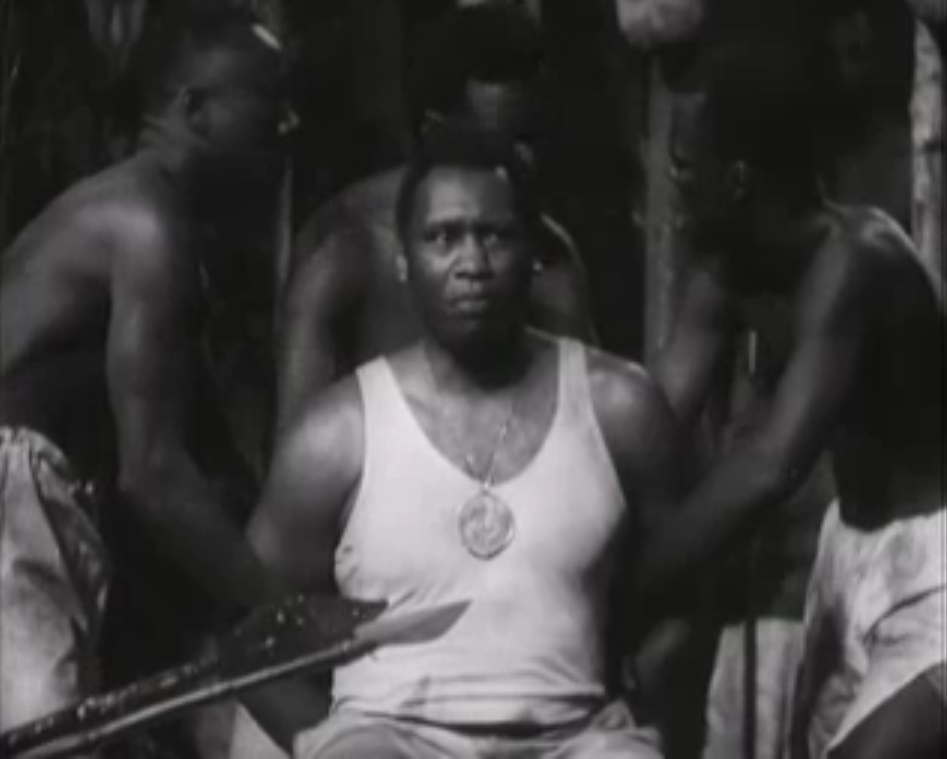
Paul Robeson in Song of Freedom (1936)

The following year, Robeson was once again cast in an adaptation of a popular fiction, this time the Victorian novel King Solomon’s Mines by H. Rider Haggard. The novel appeared in 1886 and was one of the first British novels to be set in Africa. In the film, explorer and adventurist Allan Quartermain agrees to help a young Irish woman whose father has gone off into the African wilderness to find the fabled King Solomon’s diamond mines. Robeson plays Umbopa, a native guide to the party.

When Quartermain, Umbopa and the others get captured by a native tribe ruled by the despotic Twala and the witch-doctor Gagool, Umbopa reveals that he is in fact the legitimate heir to the tribe’s throne. Eventually, Quartermain and Umbopa manage to persuade the tribe to overthrow Twala and the party find the entrance to King’s Solomon’s mine, which turns out to exist. They find the missing father inside the mine and manage to escape before the mine is destroyed.

The portrayal of the native tribe in King Solomon’s Mines leans heavily on depictions of mystical rituals and supposed witchcraft. At the same time, their leader is styled a ‘king’ and the title appears hereditary in the manner of European monarchies. Umbopa is, in contrast, calm, educated and righteous. He is, however, treated as exceptional among his peers, a fact further underlined by his royal heritage. The overall depiction of indigenous African tribes in the film leans heavily on stereotypes of barbarianism and primitivism.

Robeson returned to the US at the outbreak of World War Two. His increasingly radical left-wing political views put him under government scrutiny, and he was denied a passport for several years, effectively trapping him in the US. Although he continued to record songs, Robeson stopped acting after 1942. Although he was a high-profile star during the 1930s, the racism pervasive in British society pigeonholed him into roles where he had to repeatedly act out white fantasies of indigenous cultures; and play characters who unquestioningly submitted to white colonial rule.
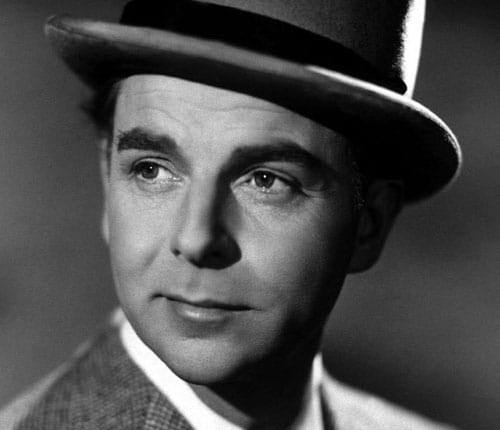
Emlyn Williams

Emlyn Williams

George Emlyn Williams was born in the tiny Welsh village of Pen-y-ffordd in 1905. As a Welshman with dark colouring and an unusual name, Williams appeared very different from popular interwar actors such as Laurence Olivier and Brian Aherne, both of whom performed in West End theatre at the same time. Unlike that other famous Welshman of the period, Ivor Novello, Williams steered clear of musical theatre and nightclubs in favour of writing and performing in plays exploring murder and criminal psychology.

After attending grammar school and undertaking some schooling in France on a scholarship, Williams won a scholarship to Oxford, where he became involved with the Oxford University Dramatic Society (OUDS). Williams was supposed to graduate in 1926, but instead of studying for his exams he wrote a play, Full Moon, which was put on at the Oxford Playhouse under the management of J.B. Fagan. Williams decided to move to London without completing his degree when Fagan offered him a small walk-on part in the production And So To Bed, in which Edmund Gwenn and Yvonne Arnaud appeared as the principal players.[1]

This modest role marked the start of a long West End career, in which Williams combined acting with writing and directing, regularly casting himself as the lead for his own productions. In his autobiography, Williams presents the years from 1926 to 1935 as ones in which he finds his feet both professionally and in his personal life. After numerous failures and some mild successes, the book ends with the first West End performance of his play Night Must Fall, which Williams credits as his ‘first solid success’[2] – it ran for a year and a half before transferring to Broadway for another 64 performances.

Night Must Fall is based on a notorious murder case of the interwar period, the ‘Crumbles Murder’ case of 1924. Patrick Mahon, a charming Richmond-based salesman, struck up an extramarital affair with typist Emily Kaye. Kaye fell pregnant, and Mahon led her to believe that they would travel to South Africa to start a new life together. Instead, he murdered her in a cottage on the Sussex coast and dismembered and destroyed her body so thoroughly that very little of it was found during the police investigation. What particularly spoke to the public’s imagination is that, less than 48 hours after the murder, Mahon picked up another woman and spent a few days at the cottage with her, whilst Kaye’s partly-dismembered body was in the next room.[3]

Williams combined this story with the equally notorious murder perpetrated by Sidney Fox, who in 1929 killed his own mother by strangling her and subsequently set her hotel room on fire to cover his tracks. In Night Must Fall, Dan, a charming man (modelled on Patrick Mahon) strikes up a friendship with a rich but cranky old lady and her niece Olivia. Whilst the niece suspects that Dan is a murderer, she still falls in love with him and helps him stay out of the hands of the police. Eventually, Dan murders the old lady and steals her money – although Olivia wants to help Dan escape, the play ends with him being arrested.

In his autobiography, Williams states that he had initially been interested in adapting the story of Fritz Haarman, a German serial killer who murdered at least 27 boys and young men in Hanover, in 1924. Williams was bisexual and identified with Haarman’s young victims: poor or homeless men, in some instances selling sex for money, lured back to Haarman’s flat with promises of food and shelter. ‘Yes, it could have happened to me’, acknowledges Williams. Although the story is clearly close to his heart, British theatre censorship laws absolutely precluded the depiction of a homosexual, paedophilic murderer.[4]

Alongside this career as theatre author and actor exploring the darker side of life, Williams also appeared in films. One of his first appearances was as the comic best friend to the protagonist in the Oxford comedy Men of Tomorrow (1932). Although the film was a commercial failure, it did bring Williams exposure and he was voted the most popular British actor by the readers of Film Weekly, ahead of Leslie Howard and Jack Hulbert.[5] This in turn landed Williams with a contract at Gaumont-British, where he wrote as well as acted. His first gig with them was writing the dialogue, and starring in, Friday the Thirteenth (1933). He subsequently worked on the Jessie Matthews vehicle Evergreen and supplied dialogue for the 1934 Hitchcock film The Man Who Knew Too Much.

Although his contract with Gaumont was not renewed beyond 1935, Williams stayed active in film for the remainder of the interwar period, and beyond. As well as adapting Night Must Fall for the screen, he also acted in a range of genres such as the comedy Night Alone and the thriller They Drive By Night (both 1938). In 1936, he was cast as Caligula in Joseph von Sternberg’s unfinished I, Claudius, opposite other such greats at Charles Laughton, Flora Robson, and Merle Oberon.

Later in his career, Williams toured with an innovative one-man theatre show called Emlyn Williams as Charles Dickens, in which he delivered parts of Dickens’ novels in a manner similar to how Dickens himself toured in the 19th century. He remained interested in murder, and wrote a book about the Moors murders in 1968. Williams continued to be active as a writer and actor until close to his death in 1987.


[1] Emlyn Williams, Emlyn: A sequel to George (London: Penguin, 1976), p. 13

[2] Ibid., p. 449

[3] Colin Evans, The father of forensics: the groundbreaking cases of Sir Bernard Spilsbury and the beginnings of modern CSI (Thriplow: Icon, 2007), pp. 140-147

[4] Williams, Emlyn, pp. 213-221

[5] Ibid., 319

Alastair Sim

Alastair Sim

Alastair Sim was born in 1900 in Edinburgh. After an aborted university education and active duty during the Great War, he trained as an elocution teacher and took up a lectureship in that subject at the University of Edinburgh in 1925. Elocution and drama teaching was his route into an acting career, of which his parents were not supportive. In 1930 Sim moved down to London, where his acting career took off.

After several years of stage roles, Sim made his film debut in 1935, with no fewer than five film credits to his name in that year alone. All were mostly low-budget comedies or crime films, in which Sim played smaller parts. Throughout his career he mostly played supporting roles, with the notable exception of Scrooge (1951) in which he played the titular character. It’s still considered one of the best portrayals of Scrooge on film.

As the 1930s continued, Sim got more substantial film roles in higher-profile films. His lanky frame (he was just over 6 feet tall) and distinctive voice made him instantly recognisable to audiences. In 1936 Sim starred opposite George Formby in the Monty Banks-directed Keep Your Seats, Please!. In the same year he was also directed by Monty Banks in the comedy The Man in the Mirror, although his name was misspelt as Alistair in the film’s credits.

In 1937-38, Sim starred opposite Jessie Matthews three times, in Gangway (1937); Sailing Along (1938) and Climbing High (1938). In Gangway, Matthews plays a journalist who gets caught up in a trans-Atlantic criminal plot. Sim is Detective Taggett, who is attempting to arrest the criminals. In Sailing Along, Matthews plays a precocious young woman and aspiring dancer who is brought up on a tug-boat. Sim here is the supporting character Sylvester, a confused and slightly simple-minded man who helps Matthews in her career aspirations. By the time of Climbing High, Sim was sufficiently famous that his name was included on the film’s poster. He again plays a supporting comedy relief character in this film.

Sim was only seven years older than Matthews, but in none of the three films is there the slightest inkling that he may be a suitable romantic partner for her characters. In fact, throughout the films Sim made in the interwar period, he plays characters who don’t have any romantic entanglements with co-stars. This was no doubt partly to do with his appearance, which did not meet conventional beauty standards of the period. Even in his thirties, he looked older than his years, and appeared somewhat ageless. His persistent casting in comedy roles further diminished his romantic appeal.

It is surprising, then, that in the 1937 crime film The Squeaker, Alistair Sim plays a character who has a settled domestic life, just when you least expect it. In The Squeaker Sim is Joshua Collie, a crime reporter for a popular newspaper. Journalists featured regularly in British interwar films, and were usually portrayed on the move, gathering news on the street; or pushing against deadlines in the newspaper offices.

Collie, on the other hand, is shown inside his comfortable living room, where he smokes a pipe after dinner like a suburban family man. He is not particularly interested in chasing down news, even though his friend, Scotland Yard inspector Barrabal, is feeding him plenty of information about the big criminal case he is working on. Collie reluctantly follows Barrabal’s leads only when his editor threatens to sack him for neglecting his duties. Alastair Sim played against the expected stereotype of the crime reporter, by making Collie a bit lazy and committed to his creature comforts. This enabled him to position himself again as a comedy character, even in a serious crime film which was based on a hard-boiled Edgar Wallace novel.

At the tail end of the interwar period Sim starred opposite Gordon Harker, another prolific interwar actor of comedy roles, in Inspector Hornleigh (1939). Sim played Sergeant Bingham, assistant to Harker in the titular role of Hornleigh. The pair are asked to investigate a murder in this comedy. The film was successful enough to spawn two sequels: Inspector Hornleigh on Holiday (also 1939) and Inspector Hornleigh Goes to It (1941).

Sim’s acting career lasted until his death in 1976. In the 1950s, as well as his interpretation of Scrooge, Sim also starred as the headmistress in the original St Trinian’s films, The Belles of St. Trinian’s (1954); and Blue Murder at St. Trinian’s (1957). Although his most commercially successful roles date from the second half of his career, he built up his screen persona and fame throughout the interwar period.

Edmund Gwenn

Edmund Gwenn

British actor Edmund Gwenn is internationally best-known for his role as Kris Kringle (‘Santa’) in the 1947 Christmas classic Miracle on 34th Street. This role earned Gwenn his only Oscar win (although he was nominated once more in 1950). Prior to his move to Hollywood at the start of World War II, Gwenn was a prolific stage and screen actor in interwar London. His instantly recognisable demeanour and voice made him a reliable choice for both leading and supporting roles.

Gwenn was born in 1877 and started his acting career on the late-Victorian and Edwardian stage, specialising in supporting roles of plays written by contemporary playwrights such as J.M. Barrie and John Galsworthy. He was a successful stage actor and did not make the transition to film acting until the start of the interwar period, when films were settling into the length and narrative types that we still recognise today.

Gwenn starred in only two feature-length silent films (Unmarried, opposite Gerald du Maurier, in 1920; and The Skin Game in 1921) before giving films a rest again until talkies became the norm in the early 1930s. Gwenn likely recognised that his power as an actor required him to be able to use dialogue as a means of expression. Once sound film work was available, he took to it with a vengeance, making no fewer than 36 films in the 1930s. No mean feat for an actor who was already 53 when the decade started.

In this film work, as in his stage roles, Gwenn continued to be associated with contemporary English writers. His first foray into sound film was a remake of The Skin Game, released ten years after the silent version in 1931. Both films were based on a Galsworthy play; the 1931 version was directed by Alfred Hitchcock.[1] Gwenn stars as Hornblower, a nouveau-riche industrialist who is looking to buy a piece of land from genteel landowner Hillcrist, to build industrial works. The conflict between ‘old England’ which values rural landscape, tranquillity and honour; and the new, industrial outlook which favours trade, progress and money, is at the heart of the film. The emotions between the two men and their families run so high that Hillcrist’s wife decides to reveal a damning secret about Hornblower’s daughter-in-law, as a result of which the young woman commits suicide. Hornblower, crushed with grief, decides to leave the area. Hillcrist’s victory is hollow, however, as he contemplates the moral depths to which his family has stooped to defend their way of life.

Gwenn played a man from a different social background a couple of years later in The Good Companions, a 1933 adaptation of a popular J.B. Priestley novel.[2] This Victor Saville-directed film remains a popular example of a British interwar comedy, and also stars Jessie Matthews and John Gielgud. In The Good Companions, Gwenn plays Jess Oakroyd, a Northern labourer who gets fired for speaking up against a malicious manager. Oakroyd decides to travel ‘south’ in search of work. In the Midlands, he stumbles across a faltering theatre troupe called the Dinky Doos. Simultaneously with Oakroyd’s arrival in the midlands, the film also follows teacher Inigo Jollifant and Miss Elizabeth Trant, who reach the Midlands from the East and West of England respectively. The three travellers join the Dinky Doos and help to make the troupe a success. The Good Companions was well-received by critics, who praised it as a ‘British’ picture at a time when the British film industry had been under considerable domestic pressure to prove it could stand up to the influence of Hollywood.[3]

Gwenn used his non-threatening appearance to great effect in 1936’s Laburnum Grove (directed by Carol Reed), which has been discussed in detail elsewhere in this blog. In this film, Gwenn plays Radfern, a seemingly innocent and typical suburban husband who is secretly involved in an international crime network. The film is, again, based on J.B. Priestley source material. Reed directed Gwenn again in 1938, as the working-class lead of Penny Paradise. This comedy-drama is set in Liverpool, and Gwenn plays Joe Higgins, a tug-boat captain who religiously enters the ‘penny pools’ – a postage betting system in which players try to guess the correct football scores for the entire league. Miraculously, Higgins guesses all the scores correctly, and he believes himself a rich man. However, his friend Pat, who was supposed to have posted in Higgins’ winning score, forgot to post it on time. Higgins gives up his job and throws a large party for the entire community before Pat has the courage to tell him what has happened.

Penny Paradise is a fairly typical 1930s British comedy, with the expected happy ending and moral lessons for the main characters. Gwenn rounded out the decade with a very different part, in what has commonly been called the ‘first Ealing Comedy’. Cheer Boys Cheer, produced by Michael Balcon and directed by Walter Forde, was released in 1939. It follows the plight of a small beer brewery which is up against a big, capitalist brewing corporation. The conviviality of the workers at the small brewery models how Balcon planned to run his new studio. Gwenn plays Edward Ironside, the head of the industrial brewer. The film’s most striking scene (to a modern audience) is a brief shot of Ironside reading Hitler’s Mein Kampf. In this last role of the decade, just before his move across the Atlantic, Gwenn came full circle with his performance as Hornblower in The Skin Game: that of an industrialist intent on undermining traditional British values. The changes which Britain underwent in the 1930s, however, meant that whilst at the beginning of the 1930s it was the life of the landed gentry that was worth protecting, by the end of the decade it was the working-class community spirit that was held up as the British ideal.

Gwenn continued to act almost up to his death at the age of 81, in 1959. His later roles increasingly included incidental parts in TV series. Whilst his later, American career may have brought him international and lasting fame and recognition, his frequent appearances in British films of the 1930s made him a key contributor to the interwar cultural landscape.


[1] Jeffrey Richards, The Age of the Dream Palace (London: IB Tauris, 2010) p. 316

[2] Laurence Napper, British Cinema and Middlebrow Culture in the Interwar Years (Exeter: University of Exeter Press, 2009), p. 81

[3] Ibid., p. 123

Kate Meyrick’s Private Diaries

Kate Meyrick’s Private Diaries

Kate Meyrick was known as the ‘Nightclub Queen’ in interwar London. She ran a string of nightclubs, of which the ‘43’ in Gerrard Street was the best-known. Nightclubs operated on the edge of the law – a club in itself was not an illegal space, but if alcohol was sold outside of hours permitted by the club’s license, the club owner could face hefty fines or even prison time. Additionally, clubs were supposed to only be open to members, who paid yearly subscriptions and were known to be of good character. In practice, Meyrick and other club owners generally allowed guests to become ‘members’ upon arrival.

Kate Meyrick made substantial money from her nightclub ventures, although they also cost her a lot to maintain. Her career effectively ended when it was revealed in 1929 that she had been bribing Police Sergeant George Goddard.[1] Goddard would tip Meyrick off if any of her clubs were likely to get raided, so that she could make sure no illegal activity was taking place in them.[2] Both Goddard and Meyrick were convicted – the latter to fifteen months’ hard labour which negatively impacted her health.

Throughout Meyrick’s career as a nightclub owner, she had become a well-known public figure, recognizable from press reports to those who would never get close to setting a foot in her clubs. After her death in 1933, publisher John Long published her memoirs, The Secrets of the 43.[3] Extracts from her ‘private diaries’ were subsequently serialised in the Sunday Express. These posthumous publications show how Meyrick’s family worked to shape her public image from convicted criminal to caring mother.

Meyrick had eight children, and professed that her main goal in entering the nightclub business was to give her family financial support. Many of her children entered her business as managers and staff in her ever-expanding network of clubs. Although Meyrick did not leave her children much capital when she passed, she had been able to secure advantageous marriages for most of them. Mary, one of Meyrick’s eldest daughters, married the Earl of Kinnoull. It was with his introduction that Meyrick’s diaries were published in the Sunday Express, giving them an aura of respectability.

In his introduction, the Earl calls his mother-in-law a ‘remarkable’ and ‘dynamic’ woman who hoped to give her children ‘brilliant chances she had been so determined they should enjoy.’[4] Her decision to start selling alcohol illegally is framed as the only option she had to make money for her children, as well as a result of her ‘impulsive nature’. The subsequent move through periods of financial success followed by raids, fines and prison sentences is related as ‘the slow slipping of the power of wealth from her fingers, her powerlessness to help her children as she longed to do.’

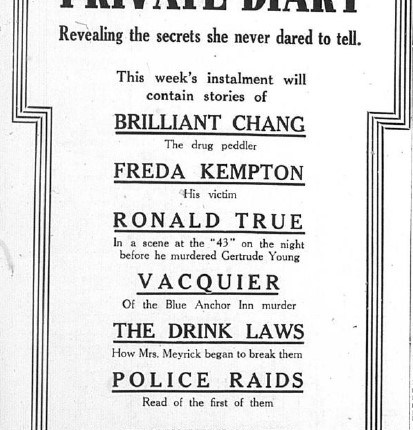
Advert in the Daily Express of 4 March 1933

The diary serialisation was advertised by the Sunday Express with reference to the notorious criminals Meyrick had hosted in her clubs, consciously tightening the public’s association between nightclubs and serious crime. If we accept the printed diaries as accurate copies of what Meyrick recorded, she herself was also eager to align herself and her clubs with notorious criminal cases. She describes that Ronald True, who was convicted of the murder of Gertrude Young, was in the ‘43’ the night before his arrest:

Have just seen the account of the arrest of Ronald True for the murder of Gertrude Young. He was in the 43 last night. Wonder if I am psychic? I went downstairs at 4 a.m. to stop the band, and ask them to come up to the first floor. When I went upstairs I felt I must turn round. When I did turn I found Ronald True gazing at me with murder in his eyes. (…) I suppose I ought to have warned somebody. But who?[5]

True was arrested on 9 March 1922 and was therefore in the club on 8 March – Gertrude Young had been murdered on 6 March, so any warning Meyrick could have given would not have saved her life. The ‘murder’ in True’s eyes was presumably imagined by Meyrick after she heard of his arrest.

This didn’t dissuade Meyrick from believing in her psychic abilities. She raises the topic again when she describes allegedly greeting Patrick Mahon in one of her clubs, shortly before he is arrested for the ‘Crumbles murder’; one of the more graphic murders to take place in England in the 1920s.

He [Mahon] was only in last week. How dreadful to think I shook hands with a murderer. (…) I am sure I am psychic. Just as in the case of Ronald True, Mahon’s eyes impressed me. They were not like the eyes of ordinary people: there was something behind them.[6]

Through the publication of Meyrick’s autobiography and diaries, her family were able to exercise control over her public image, which in turn affected their own reputations. By downplaying the illegal activities in which Meyrick had participated and foregrounding her commitment to her children, the Earl of Kinnoull was presenting his mother-in-law as a courageous and hardworking woman. He also profited from her by selling her diary to a newspaper. The Sunday Express, in the meantime, milked Meyrick’s proximity to notoriety to boost its own circulation. After her death, Meyrick’s own words became a tool for others to use.


[1] Heather Shore, ‘Constable dances with instructress’: the police and the Queen of Nightclubs in inter-war London’, Social History, (2013) Vol. 38, No. 2, 183–202, p. 199

[2] Clive Emsley, ‘Sergeant Goddard: the story of a rotten apple or a diseased orchard?’ In: Srebnik, Amy Gilman and Levy, Rene eds. Crime and culture: an historical perspective. Advances in Criminology (Aldershot, UK: Ashgate, 2005), pp. 85–104

[3] Kate Meyrick, The Secrets of the 43 (London: John Long, 1933)

[4] Earl of Kinnoull, ‘The Things She Could Never Tell’, Sunday Express, 25 February 1933, p. 9

[5] ‘Sergeant Goddard’s First Raid’, Sunday Express, 5 March 1933, p. 13

[6] ‘Valentino – Mahon – Kreuger – and Jimmy White’, Sunday Express, 12 March 1933, p. 13

Gracie Fields in Picture Post (1938)

Gracie Fields in Picture Post (1938)

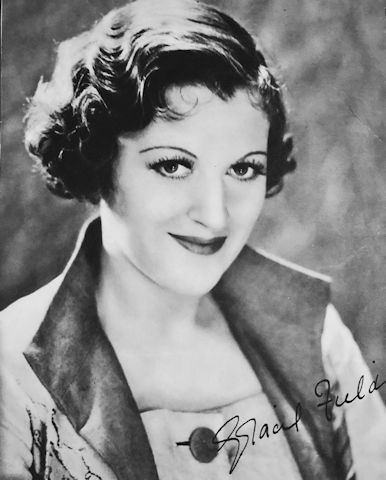
Gracie Fields was one of Britain’s biggest stars during the interwar period, and she is certainly one of the stars that is best remembered today. With her signature Lancashire accent; dry, witty comedy; and hearty songs, she came to represent a version of Britishness grounded in no-nonsense hard work and companionship. Whilst the music hall stage was her natural home, in the 1930s Fields expanded her reach through appearing in a string of musical comedy films. In these, she generally played a working-class woman with aspirations to perform as a singer. Her characters, often called Grace/Gracie or Sally, met any obstacles with good cheer and eventually achieved their ambitions.

In 1938, Fields was invited to perform for Queen Mary (the late King’s wife and grandmother of Queen Elizabeth II) in the Royal Albert Hall. To mark the occasion, Picture Post featured an extensive spread titled ‘A Day With Gracie’.[1] The text and pictures of this article give an insight in how Fields’ celebrity persona was constructed at this stage of her career, when she had become an established star.

Rochdale News | News Headlines | Appeal for Gracie Fields memories for new  biography - Rochdale Online

The article starts with an imaginative recounting of how a six-year old Gracie used to sing on the streets of Rochdale, whilst dreaming of future riches: ‘She thought of the day when she would be a famous actress, with enough money to buy clothes, mansions, motor-cars, and holidays abroad.’[2] The article positions Fields’ working-class and Northern background as a pivotal part of her development as a singer. However, it also states that a desire for material wealth underpinned her ambition.

The article goes on to describe Fields’ first attempts as a singer: supporting an existing music hall act; singing at local competitions and charity events; joining a troupe of ‘Juveniles’ on tour. Throughout these descriptions, the article constantly refers back to Fields’ father’s scepticism of her ambitions, and the need for Fields to bring income into the family. After the failed Juveniles tour, Fields’ mother ‘got Gracie a job as an errand girl to a confectioner.’[3] The article goes into the formative part of Fields’ career in such detail, because it allows the journalist to present Fields as completely determined in her ambition to succeed. Like Fields’ personas in her various films, she was not deterred by setbacks, but instead kept trying to find a way to realise her ambitions.

Initially, this path to success took the form of incredibly hard work: Fields was working shifts in a local mill, going to school, and also attending dance classes in Manchester several times a week.[4] She studied music hall acts and eventually was given another opportunity to perform at a local music hall. Rather ironically, it was not until Archie Pitt, a performer sixteen years her senior, ‘spotted’ her and decided to build his next show around her, that Fields’ career really took off. She married Pitt in 1923, when she was 25 and he 41; the couple divorced in 1939 and the marriage was already very rocky by the time the Picture Post article was published – Pitt does not appear in any of the images accompanying the piece.

Although the article refers to Fields as ‘probably the highest-paid woman in the world’[5] and the ‘Most-interviewed woman in the world’[6] (both unsubstantiated claims), the article is at great pains to stress that Fields is no diva. She finds buying clothes ‘a bore’, likes walking around in old clothes, and is ‘vague’ – a characteristic apparently demonstrated by her tendency to leave half-written letters lying about the house. Although the article originally set up the premise that the young Gracie dreamt of riches, it then takes pains to underline how little the adult Grace is interested in a wealthy lifestyle.

Even more strikingly, the article refers very minimally to Fields’ actual work, despite her enormous success in that area. Instead it focuses a great deal on her work with children. No fewer than 8 out of the 17 photographs that accompany the piece, feature her nephew Michael, who looks about three years old. The captions state that ‘There are almost always children in the house’[7] and ‘Hundreds of children have spent happy afternoons’[8] in Grace’s garden. She also set up a charitable children’s home near Brighton.

What is glaringly absent through the many references to her apparent fondness of children, is any acknowledgement that Fields herself was childless. At the time the article was written she was 40, which is explicitly referred to in the text; the conclusion is quickly drawn that Fields’ childlessness at that age was not wanted. The reality is that Fields’ battled cervical cancer which greatly diminished her ability to get pregnant. Whilst it is understandable that Fields was not keen that her medical history would be known to the public, one wonders how she felt about being presented as such an explicitly maternal figure in this article.

Overall, the Picture Post article is ambiguous in the way it presents Fields. She is both British through and through and someone with international allure and star power. The article devotes considerable attention to her ‘talent, hard work, and personality’[9] and ability to overcome setbacks. At the same time, it frames Archie Pitt as the catalyst of her success. It presents Fields as a rich woman who loves re-modelling her vast house, but also someone who ‘is not interested in money’.[10] It provides an interesting study of how the interwar press attempted to present a successful female star as she moved into middle age.

See Gracie Fields in action in this clip recorded in 1938

[1] ‘A Day With Gracie’, Picture Post, 29 October 1938, pp. 10-16 and 70

[2] Ibid., p. 12

[3] Ibid., p. 14

[4] Ibid., pp. 15-16

[5] Ibid., p. 12

[6] Ibid., p. 15

[7] Ibid., p. 12

[8] Ibid., p. 14

[9] Ibid., p. 70

[10] Ibid.

Jack Hulbert

Jack Hulbert

A wildly popular musical comedy star of stage and screen in the 1930s, Jack Hulbert has since been dismissed by some critics as a ‘light entertainer’[1] who ‘can seem tirelessly jaunty company.’[2] During the peak of his film career, Hulbert ranked high in popularity charts. In 1933 he was voted the top British male star in audience questionnaires and 1936 he was the third most popular British star based on domestic box office returns.[3] He starred in fourteen films across the decade.

Jack Hulbert was born in Cambridgeshire in 1892 to a doctor. He studied at Cambridge where he joined the Cambridge Footlights. His brother Claude Hulbert, who was eight years his junior, followed the same trajectory. Both brothers became two of the first Footlights alumni to reach acting success and fame. After Cambridge, Jack Hulbert got a role in a theatre production, playing opposite Cicely Courtneidge. The couple married in 1916 and stayed together for the rest of their lives, often working together on stage and screen.

After completing his war service, Hulbert returned to his career in variety theatre and produced and acted in numerous stage productions across the West End. During the 1920s, British films were still silent and therefore did not provide a suitable medium for comedy stage stars like Hulbert and Courtneidge, who depended on witty dialogue and song-and-dance numbers to win over their audiences. Further, until the adoption of the 1927 Cinematograph Films Act, very limited numbers of British films were being produced at all.

By the start of the 1930s the couple found themselves in debt due to financial mismanagement. As the British film industry was at the same time transitioning to sound, the time had come for Hulbert and Courtneidge to make the leap to the silver screen. Their first appearance was as themselves in Elstree Calling! (1930). As implied by the title, this film was a series of separate sketches performed by popular entertainers supposedly broadcasting from Elstree studios north of London.

After Elstree Calling! Hulbert moved into narrative fiction films, and increasingly worked separately from Courtneidge. In common with other popular comedy stars of the period, such as George Formby and Gracie Fields, Hulbert usually played characters called Jack. The titles of some of his films, such as Jack’s the Boy (1932), Jack Ahoy (1934), Bulldog Jack (1935) and Jack of All Trades (1936) worked to eliminate the difference between the actor and his characters even further.

Hulbert’s persona was a confident and likeable middle-class charmer who was able to be both comic and romantic.[4] . His films ‘appear to exist primarily for the display of [his] talents as singer, dancer and comedian.’[5] In Jack of All Trades, he plays a likeable chancer who is looking for a job. After striking up an acquaintance with Lionel, a bank clerk (played by Robertson Hare) Jack starts showing up at Lionel’s office and pretend that he works there. His pretence is so successful that he ends up convincing the bank bosses to build an entire new shoe factory. The scenes where Jack and Lionel present their proposal to the Board, all of whom approve the plans because they are too embarrassed to admit that they have no idea what they are being shown, still have the power to resonate with modern audiences. The final third of Jack of All Trades, however, descends into fast-paced slapstick action typical of Hulbert films with a lot of physical comedy.

Hulbert singing ‘Where There’s You, There’s Me’ in Jack of All Trades

A similar tension between narrative and apparently stand-alone action can be found in Bulldog Jack, a film satirising the extremely popular Bulldog Drummond book and film series. Bulldog Drummond was a fictional, highly successful police inspector. At the start of Bulldog Jack, Jack Hulbert’s character accidentally crashes his car into Bulldog Drummond’s, injuring the latter and making him bed-bound. When the young daughter of a jeweller asks for help because her father has fallen victim to a gang of thieves and blackmailers, Drummond asks Jack to pretend to be the famous ‘Bulldog’ and take on the case.

Again, the first section of the film gives plenty of space for comedy and romance, before the action-packed climax set in the London Underground. The criminal gang have set up their headquarters in a disused Underground station, and the gang leader hijacks an Underground train in an attempt to get away. Jack ends up crawling over the top of the train carriages, like a true action hero, to stop the train. Prior to this final chase, Bulldog Jack uses sped-up shots of Jack and his friends chasing the criminals up and down the spiral staircases of the Underground station.

By the mid-1930s the use of sped-up film was quite unusual; it was a device much more often used in the ‘cinema of attractions’ that pre-dated World War One. Jack Hulbert’s films did not fully conform to the conventions of narrative filmmaking. Instead, they applied techniques from earlier film genres and from the variety stage onto the long-form fiction film medium. Although this allowed Hulbert to perform in a similar mode across his stage and film productions, as a result his 1930s film work can jar to modern audiences and make it more challenging to understand Hulbert’s enormous popularity at the time.

Elstree Calling! can be viewed on YouTube.


[1] James Chapman, ‘Celluloid Shockers’, in The Unknown 1930s: An alternative history of the British cinema, 1929-1939, ed. Jeffrey Richards (London: IB Tauris, 1998), p. 91

[2] Brian McFarlane, ‘Jack of All Trades: Robert Stevenson’, in The Unknown 1930s, p. 164

[3] Jeffrey Richards, The Age of the Dream Palace: Cinema and Society in 1930s Britain (London: IB Tauris, 2010) pp. 160-161

[4] McFarlane, ‘Jack of All Trades’, p. 163

[5] Ibid.

Benita Hume

Benita Hume

Benita Hume was born Benita Humm in London in 1906. Although she’s largely forgotten today, and there is little information available about her online, she was an incredibly prolific actress in interwar British films. Like some of the other actors discussed on this blog, she made the move to Hollywood in the mid-1930s. At the eve of World War Two Hume married British-actor-in-America Ronald Colman and she largely retired from acting, meaning that she spent the bulk of her acting career in the British film industry.

Hume started out on the stage but very quickly moved into film, landing her first, small, part in the 1925 Jack Buchanan vehicle The Happy Ending. There followed a tiny uncredited part in Hitchcock’s Easy Virtue. In 1928 Hume starred in The Constant Nymph, an adaptation of an immensely popular interwar novel. This Adrian Brunel-directed drama, with Ivor Novello as the romantic lead, was a box-office success.

Although Hume does not play one of the leading roles, the film definitely raised her credentials. After The Constant Nymph, Hume was never out of work again and usually made around four films a year. Her dark colouring and aristocratic features led her to be cast as the wealthy socialite as much as the love interest; her characters were usually thoroughly modern women. In 1929, she starred opposite Jameson Thomasin the sci-fi film High Treason. Although Hume’s character Evelyn Seymour is romantically involved with Thomas’ character Michael Dean, she still leads a revolution of women against him when she realises his actions may unleash a world war. Evelyn Seymour is not the kind of love interest who defers her judgement to a man.

Later in the same year, Hume played an extremely capable secretary in Géza von Bolváry’s The Wrecker. In this film, the heir to a train company, ‘Lucky’ Doyle, is trying to figure out who is after a series of deadly train crashes. Hume is the company secretary, Mary, who is (of course) also Doyle’s love interest. The film’s climax sees Mary travelling solo on a train that is due to be ‘wrecked’. Doyle manages to prevent the disaster from occurring, after which he and Mary team up to unmask the Wrecker for once and for all.

Hume made the transition sound film apparently without issue. She used her stage career to good advantage: in 1930 she appeared in the original Broadway cast of Symphony in Two Flats, written by and starring Ivor Novello. Novello and Hume also took on the leading roles in the British film adaptation of the same play, which was released in the same year (a separate ‘American’ version of the film was made in which Hume’s role was fulfilled by American actress Jacqueline Logan).

A couple of years later, Hume appeared opposite Leslie Howard in Service for Ladies. Howard at this point had already transitioned his career to Hollywood and was allegedly in Britain for a brief holiday when Alexander Korda persuaded him to spend a few days filming this light-hearted comedy. Here, Hume is not the love interest but rather the wealthy foreign socialite Countess Ricardi, who does her best to seduce Howard’s Max Tracey and distract him from the real object of his affection.

In 1934, Hume played a lead part in the British production Jew Süss, which, unlike the notorious 1940 Nazi-sanctioned film of the same name, was made with a view to be a sympathetic portrayal of the Jewish people. In the same year, she starred opposite Douglas Fairbanks in another Alexander Korda film, The Private Life of Don Juan. It was to be Fairbanks’last film. Korda intended Don Juan to have the same success as his Private Life of Henry VIII which he’d made the year before, but unfortunately Don Juan flopped badly at the box office.

As the 1930s continued, Hume’s portfolio increasingly included American as well as British film productions. In Britain, although she was continually cast as either the female lead or the second most substantial female part, she never really had a career-defining role, nor was she ever nominated for any major prizes. Some of the films she appeared in were cheap productions that are no longer available for viewing, which is no doubt partially why Hume’s name is largely forgotten today. She was, however, a household name in the interwar period, and her considerable acting talent is on display in the range of films in which she took leading parts.

The British 1934 film Jew Süss can be viewed on YouTube.

Ivor Novello

Ivor Novello

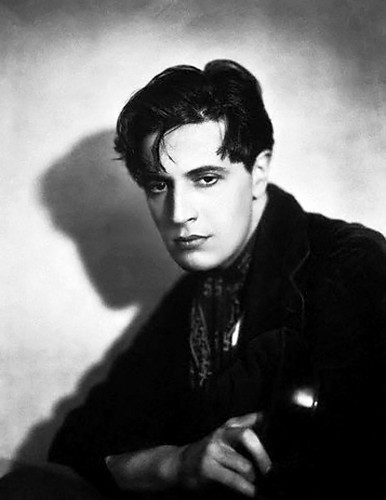
Polymath Ivor Novello, born David Ivor Davies in Wales in 1893, was one of interwar London’s prolific entertainers. Novello was his mother’s maiden name; choosing this as his professional title undoubtedly gave him greater name recognition than his paternal family name. Novello’s first success came as a songwriter during the Great War, with the popular tune ‘Keep the Home Fires Burning’.

During the interwar period, Novello was active as a composer, actor, playwright and screenwriter, occasional film producer, and all-round society figure. In 1926 he ran a nightclub together with actor Constance Collier, with whom he also regularly collaborated on creative projects. The club, the 50/50, was temporarily struck off the register of licensed premises after alcohol had allegedly been served after licensed hours.

Besides his collaborations with Constance Collier, Novello’s interwar projects read like a who’s who of creative Britain. He wrote songs for a play penned by P.G. Wodehouse, wrote songs for Jack Buchanan and had an affair with Siegfried Sassoon. His British film debut came in 1923 as the lead in Adrian Brunel’s The Man Without Desire; Novello also co-produced the film with Miles Mander. The Man Without Desire is a romantic historical melodrama set in Italy; it was the first in a series of roles in which Novello played foreigners, often of high birth. His dark features made him equally convincing as British, Mediterranean, or Eastern European.

After The Man Without Desire came The Rat, which proved so popular that it spawned two sequels. This film was based on a play which Novello had co-written with Collier. In The Rat Novello starred as Pierre Boucheron, a dashing figure in the Parisian underworld. His long-time friend Odile is clearly quietly devoted to him, but the Rat is seduced by the wealthy Zelie de Chaumet, before inevitably realising it is Odile who can provide him with true love. Zelie first sees the Rat in an underground dive bar, where he performs a passionate parody of the Apache Dance with a young woman.

The Apache Dance in The Rat exemplifies Novello’s sexual ambiguity on screen. In real life he lived quite openly as a gay man with his lifelong partner Bobbie Andrews. This was possible in the artistic circles in which Novello and Andrews moved, but clearly it was not possible to explicitly depict homosexuality on screen or stage. Instead, Novello is positioned as a romantic hero; sensual rather than virile, and sometimes surprisingly a-sexual.

Ivor Novello portrait

In Hitchcock’s Downhill, for example, Novello’s character Roddy is not seduced by Mabel, despite her best efforts. Whilst Roddy’s friend Tim is wooing Mabel in the back room of the shop in which she works, Roddy is chatting to some small children who have come to buy sweets. When Roddy later in the film marries the actress Julia Fotheringale, the film never shows any physical intimacy between the couple. Unlike many films of the period, Downhill does not end with the establishment of a heterosexual couple, but rather with Roddy’s restoration as the male heir to his family.

Novello collaborated with Hitchcock for a second film in 1927, The Lodger. This film, based on a popular novel by the same name, was inspired by the Jack the Ripper murders. Novello reprised his role as ‘the Lodger’ in a 1932 sound film remake, directed by Maurice Elvey. In both versions, Novello’s character courts Daisy, the daughter of his landlord. Daisy already has a suitor, a police officer in the 1927 film and a journalist in the 1932 version. Daisy’s original suitors are men of action, who expect that Daisy will marry them based on their previous courtship. Novello’s character, however, manages to win Daisy over through conversation and emotional sensitivity rather than by displaying any of the more traditionally ‘masculine’ traits.

A year after the first version of The Lodger, Novello starred as Lewis Dodds in one of the multiple adaptations of the bestselling novel The Constant Nymph.1 Here Novello was again directed by his friend Adrian Brunel to play the composer who marries one woman but finds that his wife’s young cousin, whom he has known since she was a child, is more devoted in her affections. Again, Novello’s character is linked in a coupling which cannot fulfil the expected template.

After film transitioned from silent to sound, Novello returned largely to the West End stage as a writer and actor of musical comedies. This may in part have been due to the limitations of his specifically recognisable voice and accent, which made him less convincing in the foreign character roles in which he was regularly cast. Novello’s contribution to the musical genre continues to be remembered in the song writing and composing awards named after him, which were established a few years after his death.

The theatre in the building where Novello kept a flat for most of his adult life was also named after him in 2005. It is situated across the road from the Aldwych Theatre, where Tom Walls and Ralph Lynn first became famous; another one of the countless connections that put Novello at the heart of London’s interwar entertainment industry.

[1] Lawrence Napper, British Cinema and Middlebrow Culture in the Interwar years, (Exeter: University of Exeter Press, 2009), pp. 35-79