Women and Public Transport

Public transport became part of daily life in the 19th century, particularly in urbanised areas. Almost from its inception, women were at risk in public transport spaces, and this risk is still present in the 21st century.[1] It is no surprise then that in London of the interwar period, too, there were countless attacks on women in public transport, ranging from relatively minor aggressions to murder. Newspapers of the period did report on such cases, but with a view to stress the human or sensational element of such cases without addressing any structural issues that may have led to violence against women.

In newspaper reports, attacked passengers were almost always young women travelling alone, and the reports stressed how the seemingly random attacks were carried out by strangers. A typical article appeared in the Daily Mirror in December 1929. It describes how a Miss Organ, who was in her mid-twenties, was “suddenly attacked by a youth who followed her into a compartment” on the suburban train from Bromley to Charing Cross.[2] The isolation of the train compartment meant that Miss Organ was quite seriously hurt, and her attacker managed to escape before other passengers could come to her aid.

Train compartments were designed to be like private domestic spaces, so that passengers would feel at ease in them. But their public accessibility made them dangerous, too.[3] The repeated attention on female victims reinforced the notion that travelling was especially dangerous for women, and implied that they were perhaps better off by avoiding using transport on their own, thus limiting women’s freedom to move around the city.

Earlier in the same decade, the Daily Express reported on a ‘mysterious outrage in a Tube train’.[4] Daisy Tyler, a 16-year-old from Barking, had her plait of hair cut loose in a crowded Underground train. Interestingly the hair wasn’t stolen – it was severed to the point that it was only held together by Miss Tyler’s hairclip, and it was only when the clip was removed that Miss Tyler realised what had happened. A ‘close friend’ confided to the Express that Miss Tyler was particularly distressed ‘as she was going to a dance’ that evening.

The article goes on to speculate that women with ‘golden’ hair may be at particular risk of these (attempted) hair robberies, alleging that several instances of women and girls having their hair forcibly cut off had taken place in recent months. Again in the words of Miss Tyler’s ‘friend’, it was ‘extraordinary’ that no-one in the packed Tube had noticed the attack. Anyone who has ever been harassed on a busy train or bus will note that busy carriages can actually create an environment in which it is easier to harass unnoticed, as the mass of commuters’ bodies can hide a lot of activity from view.

Far worse than the fate of Miss Tyler was that of an unnamed, unidentified girl whose body parts were found in a paper parcel on a train running from Waterloo to Windsor in 1922.[5] A ‘girl’s hand, arm, shinbone and foot’ were found wrapped up ‘on the rack of a third-class compartment’ in this suburban train. The parcel was initially handed in as lost property by an unsuspecting passenger before it was opened up by station staff the next day, and its contents were revealed.

Even in this initial report the Daily Mail reporter manages to hint at the horrors that may have led to the girl’s death. The police surgeon concluded that the body was dismembered ‘in the same way as anatomical specimens in a surgical laboratory’. The man who found the parcel was quick to allege that his fellow passenger, who had been sitting below the parcel for part of the journey, had been reading a book ‘which I believe was a work on surgery’. The mystery man supposedly also had a stethoscope in his attaché case. This fellow traveller may have had nothing to do with the case, but the description provided in the article allows the reader to fantasise about the supposed surgeon’s nefarious deeds. The article ends with a paragraph on a ‘bushel of human bones’ found by Scotland Yard in Hampstead, north London (miles away from Waterloo or Windsor) which included ‘a skull with the top sawn off, proving that it had been used for anatomical purposes.’

Like the article on Miss Tyler’s hair, the Daily Mail report is quick to draw a picture of a nebulous but nonetheless threatening presence in London, which is attacking young women (invariably referred to as ‘girls’). London’s transport network provided rapid connections to increasingly far-flung parts of the city. Whilst public transport provided a great benefit to Londoners wishing to travel from one part of the capital to the other, these swift connections could also allow criminals to quickly move around the city. Young women were increasingly using public transport to navigate to and from work, disrupting expected patterns of behaviour and movement. In the narratives of these newspaper articles, these women can expect to put themselves at risk of attack if they choose to use the public transport network.

You can read more about the representation of London’s transport network in interwar newspapers in my book: Interwar London After Dark in British Popular Culture.


[1] See Caroline Criado Perez, Invisible Women: exposing data bias in a world designed for men (London: Vintage, 2020)

[2] ‘Girl Attacked and Robbed in a London Train’, Daily Mirror, 5 December 1929, 3.

[3] Colin Divall, ‘Civilising velocity: Masculinity and the marketing of Britain’s passenger trains, 1921-39’, The Journal of Transport History, 32:2 (2011), 164-191, here 179.

[4] ‘Girl Robbed of Hair’, Daily Express, 20 April 1921, p. 5

[5] ‘Girl’s Limbs in a Parcel,’ Daily Mail, 18 September 1922, p. 7

Anthony Berkeley – Trial and Error (1937)

Crime novelist Anthony Berkeley (born Anthony Berkeley Cox in 1893) was one of the key crime writers of the interwar period, producing books both as Anthony Berkeley and as Francis Iles. Many of his books innovated the crime genre, such as The Poisoned Chocolates Case (1929) in which the members of an amateur crime detective club each put forward unique and plausible solutions to the same crime.[1] In Before the Fact (1932, written as Francis Iles) the female protagonist becomes gradually convinced that her husband is planning to murder her.

Berkeley’s main sleuth was Roger Sheringham, an amateur detective and author. It was common, indeed expected, for interwar crime writers to have a regular detective character, and Berkeley wrote ten novels starring Sheringham. His crime novels that do not include Sheringham, however, allowed him more flexibility in terms of plot development. This is also true of Trial and Error, which Berkeley wrote in the mid-1930s. Trial and Error does feature other characters from the Berkeley crime universe, such as the bumbling Ambrose Chitterwick who also stars in The Poisoned Chocolates Case and The Piccadilly Murder (1929).

The plot of Trial and Error is as typically convoluted and rewarding as can be expected from Berkeley, including a twist in the very final sentence of the book. Like other crime novels by Berkeley and his fellow writers, the plot is based on a historical crime, in this instance a case from 1864.[2] In Trial and Error, Lawrence Todhunter is told he is going to die of an aortic aneurysm at some point soon – as long as he does not exert himself, he may live another year, but anything that increases his heartrate may kill him.

Todhunter asks his friends a seemingly hypothetical question – what would they advise a man who has only a few months left to live, to do? The unanimous response is that such a man should kill someone – after all, the death penalty would form no deterrent. Although Todhunter at first entertains thoughts of killing Hitler or Mussolini (the latter of which was seen as a bigger threat in 1937)[3]; he eventually decides to kill an ‘ordinary’ person who makes the lives of those around them miserable. He finds his victim in Miss Jean Norwood, a stage actress who seduces married men and then financially drains them.

The selection of Miss Norwood as the victim and her eventual successful murder takes up less than the first half of Trial and Error. The second half of the book is concerned with the aftermath – and this is where it copies the historical case. After the murder Todhunter decides to go on a world tour, expecting to peacefully die somewhere en route. Several weeks into his trip, however, he is horrified to find out that another man has been arrested for the murder of Jean Norwood. Todhunter speeds back to England to prove his guilt – but he has been so thorough in hiding his tracks that there is no material evidence to convict him, and the police do not believe his confession.

With the other man tried and found guilty, Todhunter has very little time to prevent the execution of an innocent man (the time between conviction and execution was traditionally only three weeks). Together with his friends, he comes up with a plan. One of his friends, a civil servant, sues Todhunter for the murder under civil law. Whilst the police controlled who would be prosecuted in a criminal court, anyone could bring a case to anyone else a civil court. Todhunter actively works with the prosecution’s legal team to make the case against him as strong as possible. They also ensure that the case gets plenty of press attention, which in turn leads to political debate. The execution of the previously convicted man is paused until Todhunter’s case is completed. At the end of the book, Todhunter is victorious – he gets found guilty of the murder and sentences to death, whilst the other man walks free.  

In Trial and Error, Todhunter’s impending aneurism not only provides the catalyst for the plot, but it is also an effective tool to ratchet up the tension throughout the narrative. During the trial, Todhunter is increasingly worried he may die before he is convicted, and his friends shelter him away from the media circus to keep him alive. The tight timelines of the criminal court case and execution also put the pressure on Todhunter, which of course in turn makes him more likely to suffer his aneurism.

But beyond the race to save a condemned man, Trial and Error raises some questions about the British justice system. The man who is originally convicted is innocent – the police have been able to provide motive and circumstantial evidence and the jury has made its decision based on that. When Todhunter returns to Britain and makes a full confession, the police are unwilling to believe him.[4] A miscarriage of justice is a very real possibility in this scenario. Because Todhunter is initially unable to provide any material evidence to back up his confession, he is disbelieved. Technical advances in policing have made physical evidence so important that even a genuine confession holds no weight.

Like other Berkeley books, such as The Poisoned Chocolates Case and Before the Fact, there is no direct connection between those who commit murder and those who get punished for it. Whereas other crime novelists such as Dorothy L. Sayers and Agatha Christie often ensured that their criminals were either killed or arrested at the end of the novel, Berkeley’s books are much more ambiguous. This critical stance at the British justice system is perhaps one of the reasons why Trial and Error has only been transferred to the screen once, in a 1958 BBC miniseries. Berkeley’s satire still raises uncomfortable questions about the robustness of Western justice systems.


[1] Martin Edwards, The Golden Age of Murder (London: HarperCollins, 2015), pp. 85-86

[2] Ibid., p. 360

[3] Anthony Berkeley, Trial and Error (London: Acturus, 2012), pp. 12-13

[4] Ibid., pp. 125-129

Murder in Soho (1939)

Murder in Soho (1939)

On the eve of the Second World War, Associated British Picture Corporation produced Murder in Soho, a gangster flick starring American actor Jack La Rue (not his real name, obviously). The presence of Italian-American La Rue, with his cleft chin and strong jawline, brings Hollywood glamour to what is otherwise a crime film with an extremely thin plot. Murder in Soho appears to be a solitary British outing for the actor, although he did take the opportunity to get married whilst visiting London for the film’s shooting.

Like the almost contemporaneous They Drive By Night, Murder in Soho works hard to incorporate American slang into its dialogue, presumably to appeal to younger audiences. They Drive By Night, however, was produced by the British arm of American studio Warner Brothers. Murder in Soho comes from a British production company that was Hitchcock’s home for many of his silent films including Blackmail (1929); Murder! (1930)and The Skin Game (1931). Alongside these British thriller/crime films, ABPC (which previously operated as British International Pictures) also produced musical films such as Harmony Heaven (1930) and Over She Goes (1937). They did not have a strong background in producing American-style crime films – and it shows.

The plot of Murder in Soho is extremely thin. La Rue plays nightclub owner Steve Marco, who runs the ‘Cotton Club’ in Soho. He has just hired a new singer for the club, Ruby Lane. Steve is interested in Ruby as he thinks she has ‘class’. He doesn’t know, however, that Ruby is married (but separated from) Steve’s British associate Joe Lane. When Joe betrays Steve and steals £2000 off him, Steve kills Joe. Soon police inspector Hammond comes asking questions. He recruits Ruby to work with him and reveal Steve’s criminal activities. Also in the mix, although largely superfluous to the plot, are a journalist called Roy Barnes who frequently visits the club and falls in love with Ruby; Steve’s ex Myrtle who he has dumped in favour of Ruby; and performing duo ‘Green and Matthews’ who also work at the club.

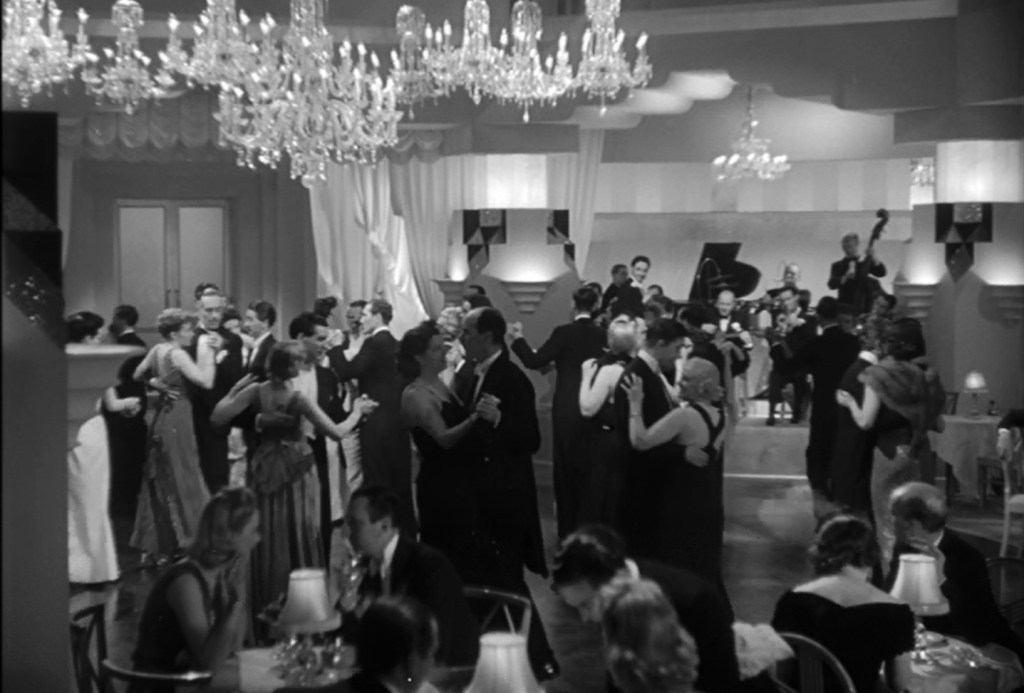
The ‘Cotton Club’ in Murder in Soho

Murder in Soho contains all the popular elements of a 1930s crime film: a nightclub; an international criminal gang; a singer; a police inspector; a journalist. Yet these elements are not fused together with a compelling plot or livened up by any original ingredient. Indeed, the film’s insistence to try and introduce Americanisms into the narrative detracts even more from the action. Steve and his henchmen speak in thick Italian-American accents. The character ‘Lefty’ in particular, who is the young comedy sidekick, litters his dialogue with references to ‘dames’ and ‘cops’. The name of the club obviously refers to the famous Harlem nightclub – but there were no British Cotton Clubs and the name does not have the resonance in Britain as it would do in the United States. Steve employs Black bartenders in his club – again a practice which was much more common in the States than it was in Britain. Compared to depictions of nightclubs in other British films of the 1930s, the Cotton Club in Murder in Soho feels more like a replica of a Hollywood set than of anything resembling British nightlife.

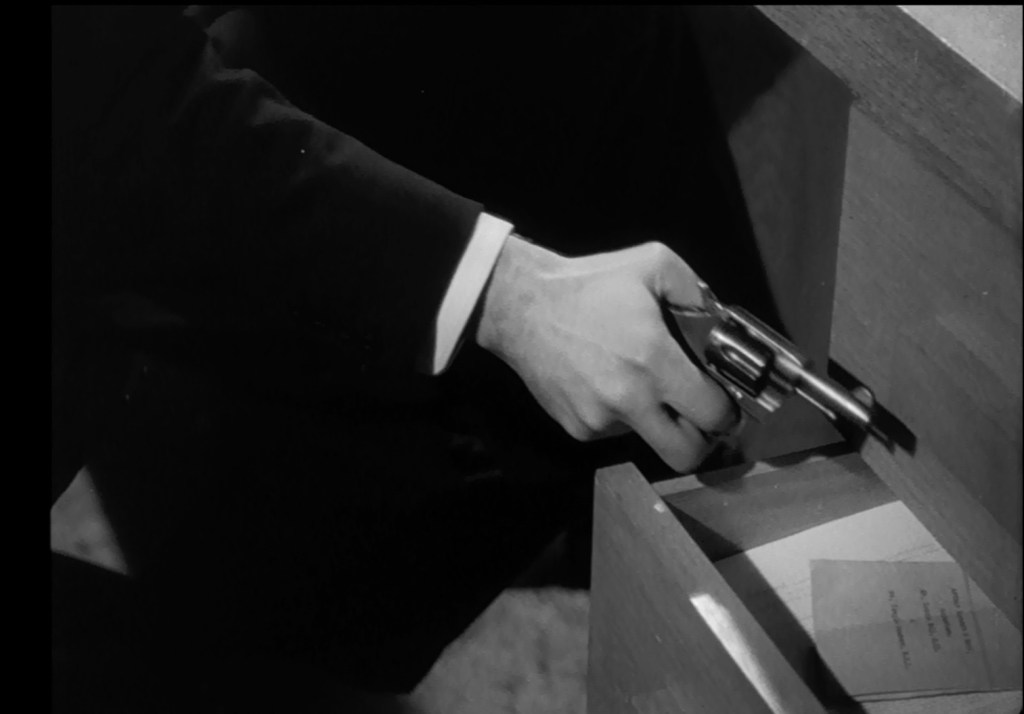
Gun-toting American gangsters in Murder in Soho

The very opening of Murder in Soho also presents a version of Soho that was much more deliberately criminal and seedy than what is usually presented in British films. Familiar shots of the neon lights of Piccadilly Circus are interspersed with a close-up shot of a roulette table; a shot of an underground dive bar; and a shot of two prostitutes propositioning a man in an alleyway. Unlike the majority of British films of the period, which worked to preserve an image of London and Londoners as ultimately adhering to the law and to a high moral code, Murder in Soho explicitly positions Soho as a criminal space. Granted, the main criminal element in the film is foreign, but Joe Lane is British, as is Myrtle, Steve’s scorned ex who ends up killing him. Soho here is a lot seedier than the Soho portrayed in, for example, Piccadilly (1929).

Rather surprisingly, then, Murder in Soho also contains plenty of comic notes, and a few secondary characters who are only included to provide comedy relief. Most notably, the performing duo Green and Matthews, which weave throughout the narrative. Lola Matthews is portrayed by Googie Withers, who this early on in her career already had made a name for herself as an excellent comic actress. As Lola she patters on non-stop, innocently flirting with every man and completely oblivious that her dance partner Nick Green is besotted with her. A frequent club visitor whose role is simply credited as ‘Drunk’ provides diversion in scenes when he tries to eat with chop sticks or enters the dancefloor for a solo performance. These interludes do undercut the drama and suspense that the film attempts to create at other points.

Murder in Soho is a late-interwar curiosity – a film that tries to appeal to British audiences by inserting American glamour; a film that tries to be both serious and funny at the same time; and that ends up feeling like a painting-by-numbers effort that adds up to less than the sum of its parts.

Typist or servant?

The Daily Mirror was originally launched in 1903 as a newspaper specifically for women.[1] Although its original format was a commercial failure, after a re-launch as a picture paper the Mirror continued to cater to female audiences. As well as covering news stories, the paper also contained feature articles on topics of interest to women.

In November 1934, author Ellen Dorothy Abb wrote up a three-column article for the Mirror under the heading ‘Which is better off, typist or servant?’.[2] Alongside adverts for Phillips Rubber Soled Shoes, antiseptic ointment and a Vaseline for children, Abb sets out to convince the reader that a young girl is better off working as a servant than as a typist. Before the First World War, domestic service was one of the few types of employment available to uneducated women. By the mid-1930s, women had a range of other jobs they could choose from, for example in factories or, as Abb suggests, in offices.[3] Nonetheless, about a quarter of working women were domestic servants at the beginning of the 1930s.

The tone of Abb’s article, however, suggests that women needed convincing to enter domestic service. There was certainly a perception that young women, particularly in the cities, were keen to work in offices instead. Abb’s argument is primarily an economic one. Two-and-a-half of the three columns discuss the supposed material advantages of the servant’s job. These mainly concern the savings servants make on not having to pay for rent, transport or food (pre-supposing the servant in question lives with their employers full-time, which was an increasingly rare occurrence). She neglects to mention that unlike typists, servants had no entitlement to National Insurance benefits.

In Abb’s telling, the servant’s life seems almost luxurious compared to that of the typist:

[The servant] eats her excellent meals at leisure and never has to scamp them to catch a train or fit in half an hour’s shopping at lunch hour.[4]

This may well be true, but the prospect of an employer who can ring for you at any time of the day or night, including during mealtimes, is not raised. Nor is the very frequent occurrence of servants being given poorer quality food than their masters, mentioned. When discussing the daily routine, Abb’s juxtaposition of the typist and the servant stretches credulity even more:

[The servant] has none of the tiring morning and evening rush the typist knows, with washing and mending making further inroads into her scanty leisure, even if she has not to start cooking and cleaning when she gets home.[5]

Again, the generally much longer working hours of the servant are ignored, and there is no suggestion why the servant would not be required to do her personal mending after the chores of the house have been completed. In Abb’s telling, however, the servant’s life seems to be one mostly of leisure, whereas the typist is presented as having to work in ‘noisy, dusty, crowded offices, badly ventilated and using artificial light all day.’[6]

Abb then moves to that sleight-of-hand beloved of interwar journalists, and references an anonymous example which the reader is assured refers to a real person. In this case, a 35-year-old typist decided to switch careers to domestic service. Unsurprisingly, this ‘person’ found that they had more money to spare as a domestic, and they were berating themselves for not starting in service earlier as that would have allowed them to have progressed to a more senior position by now.

After setting out the case for the servant’s superior financial and domestic comfort at such lengths, Abb finally turns to the reasons why the majority of young women choose to ‘accept the pinching and scraping that goes with the typist’s life’ – complete freedom during leisure hours, social recognition, and the opportunity to meet friends and potential partners. Being a servant carried a certain social stigma, as Abb concludes that for most girls it would be too shaming to admit to a potential partner if they worked in service.

At the end of the article there is a call to action for the readers, inviting them to write in and give their opinion on the matter. The invitation is specifically to female readers, as the editors want to know ‘Which would you sooner be? If you are one or the other – would you like to change – and why?’ There is no follow-up article but a short notice printed on the following Tuesday that due to the sheer number of responses received, letter writers will not be getting an individual response – a time-honoured convention to give the illusion of popularity without having to provide any evidence for it.[7]

Clearly, the article taps into a wider debate on what constituted an appropriate job for a women. Female typists were a relatively new phenomenon in the 1930s, an evolution of the 1920s flapper which had caused considerable consternation in the British press. Abb and the Daily Mirror carefully calibrated the article to elicit responses from both those who believed women should go into domestic service, and those who thought being a typist was the better option. Ultimately, however, the article sets up an artificial rivalry between two groups of women in order to generate debate. Although the Mirror may be aimed at women and provide articles written by women, it is far from supportive to women.


[1] Adrian Bingham and Martin Conboy, Tabloid Century, (Oxford: Peter Lang, 2015), pp. 8-9; Kevin Williams, Get me a murder a day!, 2nd ed. (London: Bloomsbury, 2010) p. 55

[2] Ellen Dorothy Abb, ‘Which is better off, typist or servant?’, Daily Mirror, 16 November 1934, p. 12

[3] Miriam Glucksmann, Women Assemble: women workers and the new industries in inter-war Britain (London: Routledge, 1990), pp. 52-3 

[4] Abb, ‘Which is better off’, p. 12

[5] Ibid.

[6] Ibid.

[7] ‘Typist or Servant’, Daily Mirror, 20 November 1934, p. 10