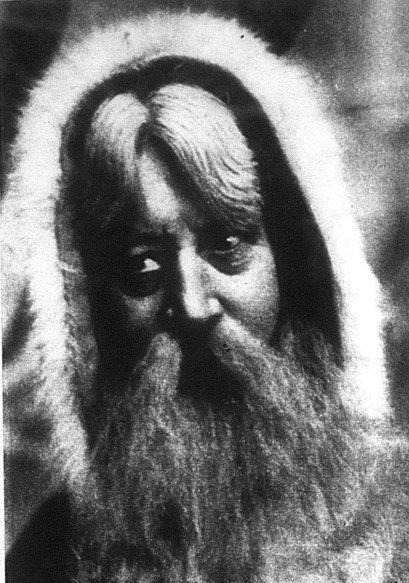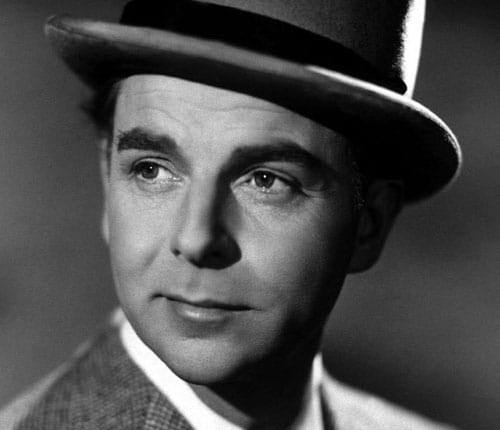
Madeleine Carroll

FeaturedMadeleine Carroll

Madeleine Carroll is known as the original ‘Hitchcock blonde.’ She blazed a trail for British female actors into Hollywood, where she had a successful career from the mid-1930s. Prior to her move, though, she made over twenty films in Britain. Carroll starred in some major titles opposite the likes of Brian Aherne, Miles Mander, and Ivor Novello. She was one of the most popular British film stars of the period.[1] This film success led to her being the world’s highest-paid actress by the end of the 1930s.

Unlike most other major stars of the period, and indeed, unlike most of the British population at the time, Madeleine Carroll attended university and obtained a bachelor’s degree in French from the University of Birmingham in 1926. Her mother was French, and after completing her degree Madeleine worked as a French teacher in Hove, on the English south coast. A career in school teaching was an extremely common route for women graduates in the interwar period.[2] However, during her time in Birmingham, Carroll had also engaged in the university’s drama club.

Shortly after graduating, she gave up the teaching job and pursued an acting career, starting off in a touring company and landing a first film role shortly thereafter. Her first proper leading role in a film was in the 1928 feature The First Born, directed by Miles Mander who also played the male lead. Carroll was cast as the female lead, playing wife to Mander’s character Sir Hugo Boycott. The script was co-written by Alma Reville, Alfred Hitchcock’s wife.

The First Born is a melodrama that provided a meaty role for Carroll. It is a marital drama about betrayal, illegitimate children, and deception. It opened the doors for other leading roles, such as in the 1929 film Atlantic. This was one of the earliest film adaptations of the Titanic disaster, and released as a very early sound film with French and German versions released simultaneously. It includes a particularly haunting scene at the very end of the film, when the audience can hear (but not see) the drowning of the hundreds of second- and third-class passengers who did not make it into the lifeboats.

After these two heavy, dramatic roles, Carroll starred in a Victor Saville-directed spy film, The W Plan, in which Brian Aherne played the lead. She followed this up with a supporting role in the Basil Dean-directed moral drama Escape!, a part in the Maurice Elvey-directed comedy School for Scandal and the female lead part in the drama The Kissing Cup Race, directed by Castleton Knight. As is clear from this list, Carroll was in constant demand during the late 1920s and early 1930s, and she was able to work with some of the biggest British directors of the period and work in a range of film genres.

She worked with Miles Mander again in 1931’s Fascination, this time playing the ‘other woman’ who tries to break up a happy couple. In 1933, she made another war film with Victor Saville, I Was a Spy, in which she played a nurse at the front who finds herself emotionally compromised whilst passing information back to the British authorities. Her co-star was Conrad Veidt, one of the biggest stars in British and German cinema of the time. In 1935 Saville directed her again, this time in the costume drama The Dictator. Set in 18th-century Denmark, Carroll plays Queen Caroline Mathilde, with Emlyn Williams starring as her husband, the King. It dealt with the real-life scandal of an affair between the Queen and the royal doctor, a story which was given an outing on the big screen as recently as 2012.

After The Dictator, Carroll made the film for which she is probably still most famous, and the one that launched her into international stardom: The 39 Steps, directed by Alfred Hitchcock. Playing opposite Robert Donat as Hannay, Carroll stars as Pamela. Hannay is the classic Hitchcock hero – a man falsely accused who must simultaneously go on the run and try to clear his name. He meets Pamela on the train up to Scotland as he is fleeing London, and immediately coerces her into helping him. Although initially unwilling, Pamela eventually believes Hannay’s claims to innocence.

Although her part in The 39 Steps is the one for which Carroll is most likely to be remembered, she was already a fully established film star when she made the film. It was Donat who was the less experienced, with only 5 film credits to his name prior to The 39 Steps. The film was well-received upon its release and also marked the start of a first career peak for Hitchcock, who went on to direct The Lady Vanishes and Rebecca in the following few years.

After The 39 Steps, Carroll moved to Hollywood and worked for Paramount studios. She continued to make films at the same rate, starring in 10 films before the outbreak of the Second World War – the last of which, My Son, My Son! again saw her star opposite Brian Aherne. During the war she used her language skills to facilitate between the US Army and the French Resistance. After her sister was killed in the London Blitz, Carroll stopped acting and worked as a war nurse in Italy during the later stages of the war. After the war, she only returned to the screen a handful of times, after which Madeleine Carroll opted for an early retirement and spent most of her time with her family in the south of Europe.


[1] Jeffrey Richards (ed.), The Unknown 1930s: An alternative history of the British cinema, 1929-1939 (London: I.B. Tauris, 1998), p. 18

[2] Mo Moulton, The Mutual Appreciation Society: How Dorothy L. Sayers and her Oxford circle remade the world for women (London: Corsair, 2020), p. 70

Featured

The Faithful Heart (1932)

This blog has previously discussed some of the films of Victor Saville, who is mainly remembered for his collaborations with musical comedy star Jessie Matthews. Yet before that collaboration started, Saville had directed over a dozen other films, some of them silent films in the1920s.

In 1932 he directed The Faithful Heart, a melodrama based on a stage play, like so many of the films of the period were. The male lead was played by Herbert Marshall, a famous stage and film star who later in the same year would play husband to Marlene Dietrich in Blonde Venus. The female lead in The Faithful Heart is played by Marshall’s real-life spouse at the time (he ended up marrying five times) Edna Best. Best also had a significant stage career and in this film plays a dual role as both mother and daughter.

The plot of The Faithful Heart is reasonably simple. In 1899, young sailor Waverley Ango lands in Southampton port and takes a liking to a local barmaid, Grace, who he calls ‘Blackie’. After some persuasion Grace falls in love with Waverley and the pair spend about a week together before Waverley is called up to go to Africa. Despite his promises that he will return to Southampton as soon as possible, Grace knows that his heart is in Africa and she will not see him again.

Then, about a third of the way into the film, the action moves to 1919, with Waverley established in an army career and returning from the front with decorations. He is engaged to Diana, a wealthy and sophisticated woman. Then a young woman called Blackie shows up, who tells him she is Grace’s daughter and that Grace died in childbirth. Waverley understands that he is Blackie’s father, and he feels responsible for helping her. Diana, however, persuades Blackie to emigrate to Canada to join her aunt. When Waverley finds out Blackie is about to travel to Canada, Diana tells him he must choose between them. The film ends with Waverley and Blackie boarding the ship to Canada together.

Under the terms of the BBFC censorship code at the time, films were not allowed to show sexual liaisons. As a result, many films use proxies to insinuated sexual interaction has taken place. In 1929’s Piccadilly, for example, we see a woman giving a man her house key, the two of them entering the house together, and then a close-up shot of the woman reclining on a bed with her hair loose. In Blackmail (also 1929), Hitchcock has two people enter a four-poster bed with the curtains drawn, with the implication that a sexual assault takes place in the bed, unseen by the viewer.

The Faithful Heart is a lot less explicit, to the point that one is left wondering when this baby was conceived. On their first date together, Grace tells Waverley that she has no expectations of him, and she kisses him first. However, we also see that on subsequent nights they go to the theatre every night, and they lodge in a house shared by Blackie’s aunt, cousin and an older male member of the family – hardly an environment that provides a lot of privacy. Yet the audience is asked to accept that the relationship was consummated. This then leads to an insinuated portrayal of extramarital sex, which is not roundly condemned by the film. It partially justifies this by making it clear that Grace and Waverley love each other, and possibly would have married if circumstances had allowed them. Crucially, the film’s ending, with Waverley choosing to ditch Diana in favour of looking after Blackie, re-confirms his commitment to the memory of Grace who is presented as his ‘true’ life partner.

The film’s message of staying true and committed to your first love is particularly ironic in light of the private lives of both Marshall and Best. Marshall, as mentioned above, married five times during his life; Best had a total of three marriages. They had both already been divorced once by the time The Faithful Heart was made. Best’s divorce came through 2 weeks before she married Marshall; Marshall’s own divorce was finalised only 3 days before his marriage to Best. This implies that they both left their first marriages legally intact long after they had decided to live separately from their first spouses. The same pattern repeats for their next marriages, with Best actually marrying her third husband on the day the divorce with Marshall came through.

Clearly, the reality was that it was not that uncommon, particularly in showbiz circles, to have multiple significant relationships in life, and there was no moral imperative to stay with one’s first partner. In The Faithful Heart, Diana, Waverley’s fiancée, also largely acts reasonably. She is not shocked or upset that he has a child from a previous relationship. However, quite understandably, she does want to be sure that he is no longer emotionally committed to Grace. The film gets away with positioning Diana as the ‘bad’ character because throughout the film, she uses her family to try and manipulate Waverley to do things he does not want to do, like live in a luxurious flat or accept an allowance from her father. This builds the pair up as fundamentally incompatible, which is reaffirmed when Diana asks Waverley to give up Blackie – something that goes against his core values.

A final note on the soundtrack, which is unusual in the first part of the film, set in 1899. This section includes many shots of boats and ships in Southampton dock, and much of the soundtrack consists of a male choir singing sea shanties. One particular sequence, when Waverley is waking up with a hangover, is scored by a very whisper-y and somewhat unnerving rendition of ‘Drunken Sailor’. Unlike during the silent film era, when each cinema had its own musicians and the scoring of a film would differ from venue to venue and even from screening to screening, with sound films directors could make creative decisions about the soundtrack as well. Victor Saville had a somewhat unusual approach to the music for this first section of the film, which makes it memorable and showcases Saville’s talent for musical direction which would become much more prominent in his later work.

The Faithful Heart ultimately purports to be a morality tale, but the incident that gets the plot underway has to be fudged because it does not align with what was considered morally acceptable to show on film at the time. It does not necessarily walk this tightrope successfully, leaving audiences to significantly suspend their disbelief while watching this film.

The Faithful Heart is available to watch for free on BFI Player, for viewers based in the UK.

Film Star Cigarette Cards (1934)

FeaturedFilm Star Cigarette Cards (1934)

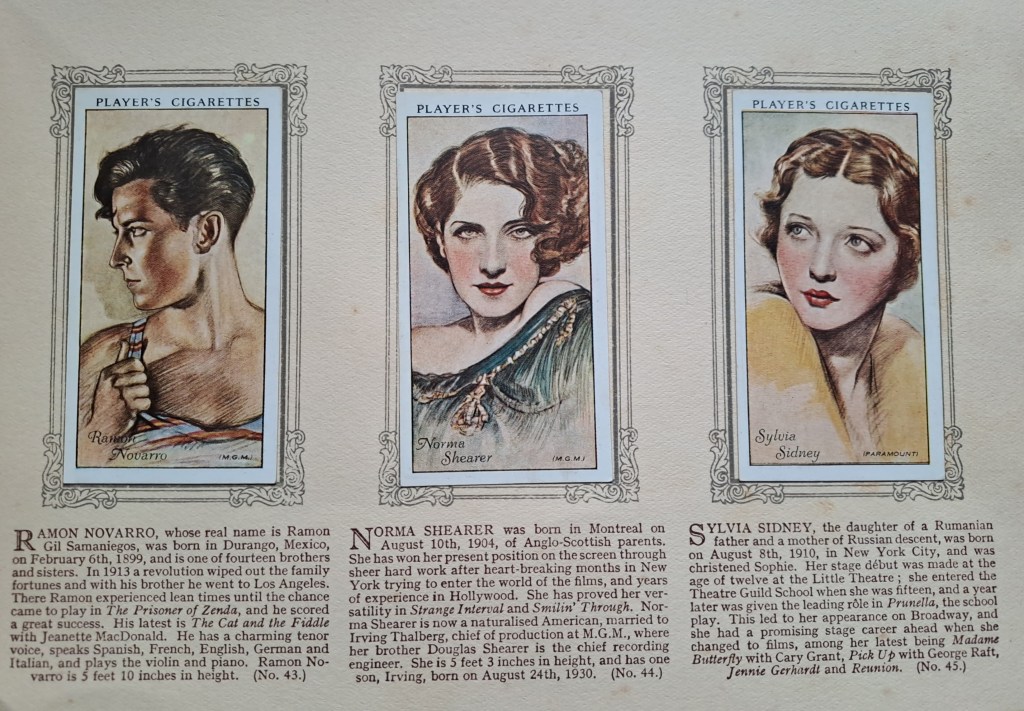
A recent trip to an antique shop delivered a great find: a complete album of film star cigarette cards, collected and collated some time in early 1934. Cigarette brands regularly put out series of cigarette cards, which young people could collect and paste into dedicated albums. In 1934, John Player & Sons, a branch of the Imperial Tobacco Company, published a 50-card series of portrait drawings of film stars. The reverse of each card had some information about the actor. All cards could be pasted into an album; the information that appeared on the reverse of each card was reprinted on the album pages.

My copy was put together by John MacLaren, who lived in Addison Gardens (between Shepherd’s Bush and Kensington Olympia) in West London. We can assume that John was a big film fan as the album is complete, all the cards are inserted into the album neatly, and he handled the album carefully. Nearly 90 years after its composition, it is still in excellent shape with very little wear and tear. The album reveals aspects of 1930s British film fan culture to us: which stars were included, what biographical information was included on them, and which stars were left out?

The first thing to note is that this album is all about the ‘film stars’: there is virtually no mention of directors or producers anywhere in the album. An exception is the entry given for Greta Garbo, which notes that producer Joseph Stiller, upon being given a Hollywood contract, took Garbo ‘along with him’ to the US. The entry for Jessie Matthews, however, makes no mention of Victor Saville, even though she had regularly worked with him by 1934. Similarly, under Marlene Dietrich’s picture there is no mention of Joseph von Sternberg, even though the pair had successfully collaborated several times at this point. Film fan culture in the interwar period was all about the ‘stars’ which appeared on the screen: although retrospectively directors like Hitchcock, Korda and Asquith are recognised as masters of the form, in the interwar period audiences would have been unlikely to seek out a film on the strength of its director alone.

The focus on ‘stars’ rather than ‘actors’ also means that the album mostly contains young, good-looking actors, although a few British ‘character actors’ are included. There are 30 female actors and 20 male actors included; although images of female stars were generally considered more commercially attractive, the album shows that male actors were by no means unimportant and could have considerable ‘sex-appeal’.

Some of the text descriptions, particularly those of male actors, include their height. This was clearly deemed to be important information for the film fan. The description of Johnny Weissmuller thus reads ‘The Olympic Swimming Champion, who stands 6 feet 3 inches in height, made his screen début in short sports films, and because of his magnificent physique was given the title role in Tarzan the Ape Man.’ Even if one had never seen a Johnny Weissmuller film, this description is graphic enough to let the imagination run wild. The drawing of actor Ramon Novarro (5 feet 10 inches) shows him in a vest top which he is tugging slightly to reveal his chest. His Mexican heritage no doubt played a part in this exoticized depiction: virtually all other male stars are shown wearing a suit.

Ramon Novarro in the cigarette card album

Out of the 50 actors included in the album, 29 are American, 11 are British, and the remaining 10 are from other countries – mainly European, but it also includes two Mexicans, a Canadian, and one star born in China to white expat parents (Sari Maritza ‘Her father was English, her mother Viennese’). ‘Talkie’ films were well-established by 1934, and the album shows that although the transition from silent to sound film had limited the international opportunities for non-native English speakers, it had not completely removed them. The aforementioned Garbo and Dietrich were celebrated for their European appearance and demeanour – and both had a powerful male industry figure supporting them. The range of actors included in the album also shows the popularity of Hollywood films in Britain, despite the British government’s attempts to boost the domestic film industry. American stars continued to exert their influence over British fans.

Johnny Weissmuller appearing alongside Mexican actor Raquel Torres and
British actor, producer and race-horse owner Tom Walls

Another reason for the popularity of film stars can be found in many of the narratives that accompany the pictures. Although they are only a short paragraph each, a significant number of them present the careers of film stars as being reached almost by accident. American star Jack Holt, for example, is described as having been ‘in turn a civil engineer, a prospector, a mail carrier in Alaska, a cow-puncher [a cowboy], and finally an actor.’ Madeleine Carroll first worked as a school teacher before taking to the stage; Frederic March was a bank clerk; and Robert Montgomery worked ‘in a mill, then on an oil tanker, and finally became prop man in a touring company.’ The implication is that it is possible to move from a blue-collar or white-collar job into film stardom, and that such a move may be open to the film fan collecting the cigarette cards. This reiteration of the humble origins of many stars, and the supposed open entry to film acting, was an important part of the film industry’s myth-making that constantly held out the possibility to fans that they too could join their favourite stars on the silver screen.

We have no way of knowing whether John Maclaren, the owner of this particular album, had any aspirations to become an actor. Nonetheless, the survival of this album and the care John took in pasting in the cards demonstrates how important film fandom was for him, as it was for thousands of other (young) people in Britain at the time. The cigarette cards gave film fans another accessible way to connect with their favourite actors, in addition to going to the cinema and reading fan magazines. It stands as a testament to (commercial) fan culture in interwar Britain.

Father Christmases of London

Father Christmases of London

After last week’s slightly political piece, this week we’re launching into proper festive content. Again we’re turning our attention to Picture Post, the weekly photojournalism magazine launched in October 1938. In it’s first December, Picture Post ran an article on the ‘Father Christmases of London.’ The reportage gives an insight in this enduring seasonal job and the backgrounds of the men who took it on.

The piece appeared in the Picture Post of 17 December 1938 and ran across four pages. It is an article of two parts; the bottom third of the pages is taken up by an article setting out the cultural and historical background of Santa Claus in detail. It recalls the original Catholic Saint Nicholas, and how the worship of this saint diverged across different countries over time. It notes that ‘Protestantism has rooted out St. Nicholas Day from the English ecclesiastical calendar’[1] but that Santa Claus got imported back from the US after the tradition was started there by Dutch settlers. The article even covers localised European customs such as the Krampus, the origin of Christmas trees and of Santa Claus’s traditional dress.

Alongside this thorough exploration of the origins of Santa Claus, Picture Post presents portraits of ten men who are playing Santa across various department stores in London in the winter of 1938. Each man is shown both in their Santa outfit, and as their ‘normal selves’. The article shows how important and well-known the tradition of live Santa’s was to London’s luxury shopping market.

The background of these men puts them in one of two camps: half of them work or have worked in the department stores in which they act as Santa; the other half are actors, models or other types of entertainers. In the case of the first group, playing Santa appears to be a nice break from their day job for the month of December, after which they move back to their regular duties in January. George Dixon, for example, ordinarily worked in the wallpaper department at Barker’s, a large department store in Kensington. He had acted as the store’s Santa every year since his appointment as salesperson. It is likely Dixon was chosen for the role because he had a background as an actor in travelling troops.

George Dixon as Father Christmas for Barker’s in Kensington

Henry Tapsell, who acted as Santa in the Thomas Wallis department store in Holborn, did not have an acting background. He was a porter in the furniture department of the shop, a job which appears to have been one in a line of various manual labour roles. He started playing Father Christmas at the tender age of 26, finding it ‘a pleasant relaxation after shifting furniture for eleven months.’ At the other end of the age range, Alfred Hibbard, who played Santa in the Clapham store of Arding & Hobbs, was already retired. Prior to his retirement he worked in the shop as a porter. He took up the Father Christmas role after his retirement, probably to supplement his pension payments. Harrods’ Santa was also a member of staff: Herbert Heslam, who had worked in the calico, cotton and rayon department for twelve years.

It obviously made financial sense for some department stores to use existing staff for this December engagement. These men were often long-term employees so proven to be reliable, and apparently they could be spared on the shop floor despite a likely Christmas rush. Their regular roles demonstrate that department stores regularly employed male staff, but that they were often placed in furniture and home furnishing departments which required more heavy lifting and manual handling.

Other shops went down a different route, hiring freelance actors and models for this seasonal employment. Selfridge’s, for example, opted in 1938 to hire actor and model Charles Mackenzie. Mackenzie, an Australian who had made it over to Britain after fighting as an Anzac in the First World War, estimated he had appeared in up to 200 feature films. Sydney Kempster, who played Santa at Gamage’s department store in Holborn, was also a film extra. Although he was less prolific, he had some high-profile credits to his name such as a small role in Victor Saville’s Sailing Along and the ensemble film O-Kay for Sound. According to the article, ‘in the old days of silent films’, Kempster also ran a cinema.

Charles Mackenzie as Santa for Selfridge’s

A similarly enterprising attitude was taken by Stanley Ross, who played Father Christmas at Whiteley’s in Bayswater. Prior to the First World War Ross was a producer of silent films, producing two films with the famous actor Lupino Lane. Ross also acted in films. The most varied showman playing Santa in 1938 was Hamilton Harvey, who took up the red mantle for Derry & Tom’s in Kensington. Harvey was a conjuror, ventriloquist, musician and composer with his own music hall act. According to the Picture Post article he played eight different instruments – it is not recorded whether he incorporated any of them in his Santa Claus act.

This Father Christmas article is typical of the things Picture Post printed in its early years. It combines fairly in-depth historical detail with contemporary reportage on a human interest topic. One can imagine the editorial pitch meeting in which a reporter suggests finding out who is behind the fake moustaches and beards of London’s Santa’s. The 1930s still saw a high number of large department stores in the capital, each willing to invest in a real, permanent Father Christmas for December to draw in the crowds.

At the same time the men taking up the elaborate robes in these opulent surroundings were largely of working-class backgrounds. For some, playing the role was a welcome break from a physically demanding job on the shop floor. For others, it represented a quasi-steady gig in an uncertain free-lance career in the developing entertainment industry. The Picture Post article not only gives an insight into Christmas traditions of the late 1930s, but also into consumer culture and working conditions of the time.


[1] ‘These are the Father Christmases of London’, Picture Post, 17 December 1938, pp. 34-37

Winifred Holtby – South Riding (1936)

Journalist, author, feminist and activist Winifred Holtby was a distinctive voice in interwar Britain’s press. In her journalism pieces she often challenged social inequalities and advocated for change. Aside from her journalistic output, Holtby also wrote seven novels. The most famous of these is South Riding, which was published posthumously after Holtby’s death at the age of 37. Vera Brittain, Holtby’s close friend and an accomplished author in her own right, edited the manuscript of South Riding and got it ready for publication.[1] The book met with critical success upon its publication, and was turned into a Victor Saville-directed film in 1938. The story’s enduring resonance is evidenced by the BBC adaptation which appeared as recently as 2011.

The scope and order of South Riding are ambitious: the novel opens with a list of characters no shorter than 6 pages in length. The story is set in the fictional South Riding of Yorkshire. A facsimile of a hand-drawn map by Holtby in the front of the Virago edition of the book shows that she imagined the Riding to be located in the triangle between York, Scarborough and the northern border of Lincolnshire.

South Riding is a novel concerned with local government. Across its 500 or so pages, the novel is divided into eight ‘books’, each named after a sub-committee of South Riding Council. Through ‘Education’; ‘Highways and Bridges’; ‘Public Health’ and others, Holtby weaves a tale of modernity and tradition, and the deep interconnectedness of rural communities.

In a book with such a vast range of characters, the closest thing South Riding has to a protagonist is Miss Sarah Burton, M.A. (Leeds), B.Litt (Oxon), the thirty-something new headmistress of the local girls school, whose return to the county of her upbringing kicks off the book’s narrative. Sarah has decidedly modern ideas about education and life in general. Her modernising spirit runs up against the traditions of the South Riding Aldermen, who sit on the Council and have been used to running things their own way.

These Aldermen also reflect a changing society, however: Anthony Snaith is a rich business owner and Mrs Beddows is the Riding’s first female Alderman. Holtby famously modelled Beddows on her own mother, Alice, who was the first woman Alderman in the East Riding of Yorkshire. Alice Holtby initially opposed the publication of South Riding, worried as she was to the damage it may do to local political relations.

The central relationship in South Riding is between Sarah Burton and Robert Carne, a gentleman farmer who occupies the local ‘Big House’, Maythorpe Hall, with his teenage daughter Midge. In an echo of Victorian Gothic literature, Carne’s wife is alive but insane and permanently locked up in an institution. The prohibitive medical costs for her care have led Carne to the brink of financial destitution. Maythorpe Hall is falling apart around him. Divorce is not an option for him, not because it is legally impossible but because he finds it morally unpardonable.

The emotional and intellectual connection between Sarah and Carne builds up throughout the novel. One of the key scenes of South Riding occurs when the pair find themselves staying over in the same hotel. Under the chapter heading ‘Two in a Hotel Find Themselves Temporarily Insane’, Holtby pens what was a decidedly modern and transgressive scene for mid-1930s Britain. A pleasant dinner turns into a night of dancing, and several drinks build the intimacy between the couple. As the evening draws to a close, Sarah invites Carne to visit her in her bedroom, room number ‘five hundred and seventeen.’[2] For a woman to invite a man to her bedroom was of course already frowned upon, but to do so to a married man broke all the rules of propriety. Equally, Carne’s grateful and enthusiastic response did not match behaviour expected of a gentleman.

Throughout the scene, Sarah remains calm and steadfast. Whilst awaiting Carne’s arrival in her room, she smiles at herself. When he asks her if she is really sure she wants to go ahead with it, she confirms ‘I know now I have never been sure of anything before in my life.’[3] The only reason the relationship does not get consummated is because Carne has an acute attack of a recurring heart problem. This rather disturbs the mood and the couple do not get a chance to be alone again for the night after that. Morally and emotionally, however, both Sarah and Carne were committed to an affair which neither of them believed to be wrong, despite it going against the generally espoused conservative values of the time.

South Riding conveys the effect of modern ideas on a traditional community, both for better and for worse. At the same time, it treats the local community and the Council with a deep respect. Everyone in the South Riding needs one another eventually, and progress, however difficult, does penetrate the region through the diligent work of the local representatives.


[1] Shirley Williams, ‘Preface, in Winifred Holtby, South Riding (London: Virago Press, 2010), p. x

[2] Winifred Holtby, South Riding, p. 367

[3] Ibid., p. 368

Sonnie Hale

Sonnie Hale

Sonnie Hale was born John Robert Hale-Munro in London in 1902. His father, Robert, was also an actor. After an education at the Roman Catholic Beaumont College, Hale turned to a career in show business. During the interwar years, he was one of the most recognisable comedy stars in British film, often co-starring with Jessie Matthews, who would become his wife in 1931.

Like other interwar comedy stars, such as Gracie Fields, Hale’s career in the 1920s was based on the stage. His brand of comedy was mainly verbal – Hale was great at the quick repartee. The silent films made during this decade demanded a different, more physical type of comedy. During the 1920s, therefore, Hale appeared in revues which allowed him to perfect his singing and dancing skills. Once sound film became an established medium in Britain in the early 1930s, Hale combined his theatre work with film appearances.

Musical comedy was a popular film genre in 1930s Britain, and Hale packed his schedule with film roles in the first half of the decade. He starred in two films each in 1932 and 1933, a whopping four films in 1934, and three in 1935. He then appeared in one film each in 1936, 1938 and 1939. His acting output slowed down in the second half of the decade because he had at that point also turned his hand to writing and directing, directing three films across 1937 and 1938.

Hale’s first feature film role was a leading part opposite star Jack Hulbert. In the musical comedy Happy Ever After, Hulbert and Hale star as two window cleaners, both named Willie, who try and help a young starlet who is hoping to break into Hollywood. Hale’s time on the stage had evidently given him good connections with stars such as Hulbert and Hulbert’s wife Cicely Courtneidge, who also starred in the film.

From 1933, Hale started appearing in films with Jessie Matthews, by that point his real-life wife. From 1926 to 1930 Hale had been married to actress Evelyn Lay. Matthews had been married to her first husband for the same period. The relationship between Matthews and Hale started when he was still married to Lay, and caused much publicity and controversy at the time. Matthews was cited as co-respondent in Hale’s divorce case against Lay and Matthews’ letters to him were read out in court. The press, naturally, lapped it up, and the judge saw it fit to make comments about Matthews’ conduct.

Public sympathy was with Lay, but Hale and Matthews proved to be a successful professional as well as personal couple, and the public did not reject their collaborations. They appeared together in the ensemble piece Friday the Thirteenth (Hale as a comic bus conductor, Matthews as a chorus girl) and Hale played a supporting role in the Matthews’ star vehicles Evergreen, First a Girl and It’s Love Again, all directed by Victor Saville.

In none of these films, however, does Hale play the love interest to Matthews; he lacked the traditional good looks that 1930s British cinema demanded for the part of the romantic lead. Instead, Hale is the funny, supportive sidekick to either Matthews herself, or to the male lead. In It’s Love Again, for example, he plays Freddie Rathbone, who helps his friend and gossip journalist Peter Carlton come up with his gossip column every day. When Peter’s job is on the line, the pair come up with a fictional society figure, Mrs Smythe-Smythe, about whom Peter can make up the most outrageous stories and thus scoop his rivals at other papers. Hale plays Rathbone as a bit of a waster, who mainly enjoys going to society parties for the free food and wine. He is also, however, loyal to Peter and supportive of Peter’s attempt to impress the aspiring actress Elaine Bradford, played by Matthews.

After It’s Love Again, Hale took over from Saville as director. He directed Matthews in three films: Head over Heels, Gangway and Sailing Along. All three are less accomplished than Saville’s turns directing Matthews, and Hale gave up directing after 1938.

He did not, however, give up acting. His next role after It’s Love Again was a move away from musical comedy. Hale starred as petty criminal Sam Hackett in the Edgar Wallace crime thriller The Gaunt Stranger. Although Hale’s performance still has comic touches to it, the film’s overall tone is much darker than his previous work. It was only a brief foray into a different genre – by 1939 Hale was back to comedy, in the Walter Forde-directed Let’s Be Famous.

The Second World War caused a hiatus in Hale’s film career, although he was able to pick up his stage career which had languished for most of the 1930s. He briefly returned to film and TV films in the second half of the 1940s – by now divorced from Matthews and married to his third wife, Mary Kelsey. Towards the end of his life, he wrote the comedy play The French Mistress which was a success in the West End and made into a film in 1960. Hale died in London in 1959.

Emlyn Williams

Emlyn Williams

George Emlyn Williams was born in the tiny Welsh village of Pen-y-ffordd in 1905. As a Welshman with dark colouring and an unusual name, Williams appeared very different from popular interwar actors such as Laurence Olivier and Brian Aherne, both of whom performed in West End theatre at the same time. Unlike that other famous Welshman of the period, Ivor Novello, Williams steered clear of musical theatre and nightclubs in favour of writing and performing in plays exploring murder and criminal psychology.

After attending grammar school and undertaking some schooling in France on a scholarship, Williams won a scholarship to Oxford, where he became involved with the Oxford University Dramatic Society (OUDS). Williams was supposed to graduate in 1926, but instead of studying for his exams he wrote a play, Full Moon, which was put on at the Oxford Playhouse under the management of J.B. Fagan. Williams decided to move to London without completing his degree when Fagan offered him a small walk-on part in the production And So To Bed, in which Edmund Gwenn and Yvonne Arnaud appeared as the principal players.[1]

This modest role marked the start of a long West End career, in which Williams combined acting with writing and directing, regularly casting himself as the lead for his own productions. In his autobiography, Williams presents the years from 1926 to 1935 as ones in which he finds his feet both professionally and in his personal life. After numerous failures and some mild successes, the book ends with the first West End performance of his play Night Must Fall, which Williams credits as his ‘first solid success’[2] – it ran for a year and a half before transferring to Broadway for another 64 performances.

Night Must Fall is based on a notorious murder case of the interwar period, the ‘Crumbles Murder’ case of 1924. Patrick Mahon, a charming Richmond-based salesman, struck up an extramarital affair with typist Emily Kaye. Kaye fell pregnant, and Mahon led her to believe that they would travel to South Africa to start a new life together. Instead, he murdered her in a cottage on the Sussex coast and dismembered and destroyed her body so thoroughly that very little of it was found during the police investigation. What particularly spoke to the public’s imagination is that, less than 48 hours after the murder, Mahon picked up another woman and spent a few days at the cottage with her, whilst Kaye’s partly-dismembered body was in the next room.[3]

Williams combined this story with the equally notorious murder perpetrated by Sidney Fox, who in 1929 killed his own mother by strangling her and subsequently set her hotel room on fire to cover his tracks. In Night Must Fall, Dan, a charming man (modelled on Patrick Mahon) strikes up a friendship with a rich but cranky old lady and her niece Olivia. Whilst the niece suspects that Dan is a murderer, she still falls in love with him and helps him stay out of the hands of the police. Eventually, Dan murders the old lady and steals her money – although Olivia wants to help Dan escape, the play ends with him being arrested.

In his autobiography, Williams states that he had initially been interested in adapting the story of Fritz Haarman, a German serial killer who murdered at least 27 boys and young men in Hanover, in 1924. Williams was bisexual and identified with Haarman’s young victims: poor or homeless men, in some instances selling sex for money, lured back to Haarman’s flat with promises of food and shelter. ‘Yes, it could have happened to me’, acknowledges Williams. Although the story is clearly close to his heart, British theatre censorship laws absolutely precluded the depiction of a homosexual, paedophilic murderer.[4]

Alongside this career as theatre author and actor exploring the darker side of life, Williams also appeared in films. One of his first appearances was as the comic best friend to the protagonist in the Oxford comedy Men of Tomorrow (1932). Although the film was a commercial failure, it did bring Williams exposure and he was voted the most popular British actor by the readers of Film Weekly, ahead of Leslie Howard and Jack Hulbert.[5] This in turn landed Williams with a contract at Gaumont-British, where he wrote as well as acted. His first gig with them was writing the dialogue, and starring in, Friday the Thirteenth (1933). He subsequently worked on the Jessie Matthews vehicle Evergreen and supplied dialogue for the 1934 Hitchcock film The Man Who Knew Too Much.

Although his contract with Gaumont was not renewed beyond 1935, Williams stayed active in film for the remainder of the interwar period, and beyond. As well as adapting Night Must Fall for the screen, he also acted in a range of genres such as the comedy Night Alone and the thriller They Drive By Night (both 1938). In 1936, he was cast as Caligula in Joseph von Sternberg’s unfinished I, Claudius, opposite other such greats at Charles Laughton, Flora Robson, and Merle Oberon.

Later in his career, Williams toured with an innovative one-man theatre show called Emlyn Williams as Charles Dickens, in which he delivered parts of Dickens’ novels in a manner similar to how Dickens himself toured in the 19th century. He remained interested in murder, and wrote a book about the Moors murders in 1968. Williams continued to be active as a writer and actor until close to his death in 1987.


[1] Emlyn Williams, Emlyn: A sequel to George (London: Penguin, 1976), p. 13

[2] Ibid., p. 449

[3] Colin Evans, The father of forensics: the groundbreaking cases of Sir Bernard Spilsbury and the beginnings of modern CSI (Thriplow: Icon, 2007), pp. 140-147

[4] Williams, Emlyn, pp. 213-221

[5] Ibid., 319

Edmund Gwenn

Edmund Gwenn

British actor Edmund Gwenn is internationally best-known for his role as Kris Kringle (‘Santa’) in the 1947 Christmas classic Miracle on 34th Street. This role earned Gwenn his only Oscar win (although he was nominated once more in 1950). Prior to his move to Hollywood at the start of World War II, Gwenn was a prolific stage and screen actor in interwar London. His instantly recognisable demeanour and voice made him a reliable choice for both leading and supporting roles.

Gwenn was born in 1877 and started his acting career on the late-Victorian and Edwardian stage, specialising in supporting roles of plays written by contemporary playwrights such as J.M. Barrie and John Galsworthy. He was a successful stage actor and did not make the transition to film acting until the start of the interwar period, when films were settling into the length and narrative types that we still recognise today.

Gwenn starred in only two feature-length silent films (Unmarried, opposite Gerald du Maurier, in 1920; and The Skin Game in 1921) before giving films a rest again until talkies became the norm in the early 1930s. Gwenn likely recognised that his power as an actor required him to be able to use dialogue as a means of expression. Once sound film work was available, he took to it with a vengeance, making no fewer than 36 films in the 1930s. No mean feat for an actor who was already 53 when the decade started.

In this film work, as in his stage roles, Gwenn continued to be associated with contemporary English writers. His first foray into sound film was a remake of The Skin Game, released ten years after the silent version in 1931. Both films were based on a Galsworthy play; the 1931 version was directed by Alfred Hitchcock.[1] Gwenn stars as Hornblower, a nouveau-riche industrialist who is looking to buy a piece of land from genteel landowner Hillcrist, to build industrial works. The conflict between ‘old England’ which values rural landscape, tranquillity and honour; and the new, industrial outlook which favours trade, progress and money, is at the heart of the film. The emotions between the two men and their families run so high that Hillcrist’s wife decides to reveal a damning secret about Hornblower’s daughter-in-law, as a result of which the young woman commits suicide. Hornblower, crushed with grief, decides to leave the area. Hillcrist’s victory is hollow, however, as he contemplates the moral depths to which his family has stooped to defend their way of life.

Gwenn played a man from a different social background a couple of years later in The Good Companions, a 1933 adaptation of a popular J.B. Priestley novel.[2] This Victor Saville-directed film remains a popular example of a British interwar comedy, and also stars Jessie Matthews and John Gielgud. In The Good Companions, Gwenn plays Jess Oakroyd, a Northern labourer who gets fired for speaking up against a malicious manager. Oakroyd decides to travel ‘south’ in search of work. In the Midlands, he stumbles across a faltering theatre troupe called the Dinky Doos. Simultaneously with Oakroyd’s arrival in the midlands, the film also follows teacher Inigo Jollifant and Miss Elizabeth Trant, who reach the Midlands from the East and West of England respectively. The three travellers join the Dinky Doos and help to make the troupe a success. The Good Companions was well-received by critics, who praised it as a ‘British’ picture at a time when the British film industry had been under considerable domestic pressure to prove it could stand up to the influence of Hollywood.[3]

Gwenn used his non-threatening appearance to great effect in 1936’s Laburnum Grove (directed by Carol Reed), which has been discussed in detail elsewhere in this blog. In this film, Gwenn plays Radfern, a seemingly innocent and typical suburban husband who is secretly involved in an international crime network. The film is, again, based on J.B. Priestley source material. Reed directed Gwenn again in 1938, as the working-class lead of Penny Paradise. This comedy-drama is set in Liverpool, and Gwenn plays Joe Higgins, a tug-boat captain who religiously enters the ‘penny pools’ – a postage betting system in which players try to guess the correct football scores for the entire league. Miraculously, Higgins guesses all the scores correctly, and he believes himself a rich man. However, his friend Pat, who was supposed to have posted in Higgins’ winning score, forgot to post it on time. Higgins gives up his job and throws a large party for the entire community before Pat has the courage to tell him what has happened.

Penny Paradise is a fairly typical 1930s British comedy, with the expected happy ending and moral lessons for the main characters. Gwenn rounded out the decade with a very different part, in what has commonly been called the ‘first Ealing Comedy’. Cheer Boys Cheer, produced by Michael Balcon and directed by Walter Forde, was released in 1939. It follows the plight of a small beer brewery which is up against a big, capitalist brewing corporation. The conviviality of the workers at the small brewery models how Balcon planned to run his new studio. Gwenn plays Edward Ironside, the head of the industrial brewer. The film’s most striking scene (to a modern audience) is a brief shot of Ironside reading Hitler’s Mein Kampf. In this last role of the decade, just before his move across the Atlantic, Gwenn came full circle with his performance as Hornblower in The Skin Game: that of an industrialist intent on undermining traditional British values. The changes which Britain underwent in the 1930s, however, meant that whilst at the beginning of the 1930s it was the life of the landed gentry that was worth protecting, by the end of the decade it was the working-class community spirit that was held up as the British ideal.

Gwenn continued to act almost up to his death at the age of 81, in 1959. His later roles increasingly included incidental parts in TV series. Whilst his later, American career may have brought him international and lasting fame and recognition, his frequent appearances in British films of the 1930s made him a key contributor to the interwar cultural landscape.


[1] Jeffrey Richards, The Age of the Dream Palace (London: IB Tauris, 2010) p. 316

[2] Laurence Napper, British Cinema and Middlebrow Culture in the Interwar Years (Exeter: University of Exeter Press, 2009), p. 81

[3] Ibid., p. 123

First a Girl (1935)

First a Girl (1935)

Musical star Jessie Matthews was at the prime of her career in 1935 when she starred as the lead in First a Girl.[1] This musical comedy directed by Victor Saville is one version of a popular film plot; it is a remake of the German comedy Viktor und Viktoria (1933), which was re-made in West Germany in 1957, and most famously adapted by Hollywood in 1982, as Victor/Victoria starring Julie Andrews.

The basic plot of all four films, including First a Girl, is similar. An aspiring stage actress (in the British film she’s called Elizabeth, and naturally is played by Matthews) meets Victor, an actor who aspires to Shakespeare but in reality performs as a female impersonator. When a bad cold prevents Victor from performing one evening, he persuades Elizabeth to take his place, by pretending to be a man who pretends to be a woman. This is a great success, and ‘Victoria’ quickly becomes an international star, forcing Elizabeth to appear as a man when in public. Things get complicated when Elizabeth falls in love with a (straight) man, who believes her to be a man also.

Whilst both the 1933 original and the 1982 American version are regularly interpreted as queer films, First a Girl underplays the homosexual possibilities of Elizabeth’s flirtation with her male love interest. This is partly due to Matthews’ own appearance. As The New York Times noted upon First a Girl’s US release in 1936:

Normally it is with sorrow and self-hatred that this column hints at the inadequacies of a star, but this time it is a distinct pleasure to call Miss Matthews’s acting performance hopelessly bad. In “First a Girl” she is pretending to be a man and making no headway at all, except with the members of her supporting cast, who swoon with astonishment upon discovering her sex. 

Quite beside Matthew’s obviously feminine appearance, First a Girl underplays any potential sexual tension between Elizabeth and her love interest, Robert, until Robert understands that Elizabeth is a woman. Prior to that point, the film focuses on the comedic potential of Elizbeth’s cross-dressing, rather than any transgressive possibilities in her relationship with Robert.

Jessie Matthews as ‘Victoria’, appearing with Sonnie Hale, in First a Girl

All versions of the film appear to include a similar sequence in which ‘Victoria’ is ‘forced’ to perform activities which are coded as specifically masculine, to comic effect. In First a Girl this sequence is set in a Parisian nightclub, where Victor and Elizabeth find themselves during their European tour. Elizabeth has to wear a tuxedo here, and hangs out at the bar with Robert – a part of the club only available to men. She quickly gets drunk when trying to keep up with Robert’s rate of drinking, and struggles when trying to smoke a cigar. Whilst these scenes give Matthews an opportunity to display her comedic talent, they also undermine her sexual capital whilst she is performing as a man. As soon as Elizabeth’s true gender identity is revealed to Robert, she turns from an unsophisticated youth into a charming young woman.

It is significant that these scenes of gender-bending performance are set in Paris – a location that invited connotations of licentiousness and sexual transgression in the British popular imagination of the 1930s. Interestingly, in the 1933 German film, ‘Victoria’ is in London when forced to undertake activities which may ‘out’ her as a woman. ‘Victoria’ finds herself in an environment that is both literally and figuratively foreign to her.

As Jeffrey Richards points out, male and female impersonation had a long tradition on the British theatrical and music hall stage.[2] The character of Victor, then, works well in this British film. He is portrayed as older than Elizabeth (although actor Sonnie Hale was only five years Matthews’ senior) and can easily be read as a music hall performer in the Victorian tradition. His female impersonation act is purely comic, whilst Elizabeth’s is sophisticated. He links the film’s plot to a specifically British performance tradition, whereas the glossy song-and-dance numbers performed by Elizabeth have more in common with Hollywood productions.[3] The film makes no explicit reference to its German origins.

First a Girl, then, significantly dilutes the queer and transgressive possibilities of the original source material, which allowed the film to flourish in interwar Britain. According to the BFI, it was a great commercial success when it was released (something also suggested by its export to the US the following year). It remains a very watchable and enjoyable film for modern audiences; and a good example of how British interwar filmmakers moderated both European and Hollywood influences to arrive at a British compromise between the two.

First a Girl is available for rental on BFI Player (UK only)


[1] Jeffrey Richards, The Age of the Dream Palace: Cinema and Society in 1930s Britain (London: IB Tauris, 2010), pp. 217-218

[2] Ibid., p. 218

[3] This is not unusual for Jessie Matthews films. See Sarah Street, ‘Got to Dance my Way to Heaven’: Jessie Matthews, art deco and the British musical of the 1930s, Studies in European Cinema, 2:1, (2005), 19-30