From investigation to trial

This is the fourth and final post of this year’s May Murder Month. You can read posts one, two and three elsewhere on the blog.

Most contemporary readers will get their knowledge about interwar murder stories from the realms of fiction – Hercule Poirot gathering together suspects for a drawing room reveal (a device which Agatha Christie actually only used sparingly) or a hard-boiled police officer picking up on a seemingly minute clue that unravels the whole case. Once the murderer is identified, interwar fiction is either silent about what happens next, or the perpetrator is given the opportunity to take the ‘honourable way out’ by committing suicide.[1]

In reality, of course, investigations were conducted by police inspectors. Unlike in modern criminal cases, there was no Crown Prosecution Service in interwar England. Instead, the police both conducted the investigation and prepared the documentation for the criminal trial. The Director of Public Prosecutions was ultimately responsible for bringing the case to trial in the interest of the people. England then, as now, had a two-tier criminal justice system. The magistrate courts were convened locally and dealt with most of the day-to-day criminal offences. Crown courts were reserved for jury trials, which included murder charges.

Before a case could be referred to the crown court, a prima facie case had to be established in the magistrate court that a crime had been committed and it was of a magnitude appropriate to be considered in the crown court. Interwar murder trials were therefore effectively heard twice: once in the magistrate court and then again in the crown court, where the sentencing would take place. It was generally the latter proceedings that drew the attention of the national press. In murder cases, the coroner’s inquest ran in tandem to the magistrate court proceedings. In the interwar period, coroner courts sat with their own juries, who were tasked with determining whether death had occurred naturally, through suicide, accident, or murder. Usually, if foul play was suspected but the police investigation was ongoing, the coroner would suspend the inquest to give the police more time to complete their investigations.

The reading public, then, were experiencing criminal narratives in two different ways. When reading newspapers, the reports mostly focused on the criminal trial, with its rhythm of prosecution, defence, cross-examination, witness statements, a possible statement by the accused, and the judge’s summing up, all cumulating to the jury’s verdict. In crime fiction, the narrative focused on the investigation, with witness statements noted as the investigation developed. Particularly in stories where the protagonist is an amateur sleuth as opposed to a police officer, the formal police and court procedures can be completely outside the scope of the narrative. As crime historian Victoria Stewart has noted: ‘Detective novels tend not to recount the trial of the individual whom the investigator identifies as the guilty party because the watertightness of the investigation itself acts as a substitute for the depiction of the judicial process. An account of the trial would simply reiterate the findings of the investigation that has formed the body of the narrative.’[2]

Other scholars have noted that trial reporting reveals contemporary attitudes to potentially contentious topics such as changing attitudes to gender identity and sexuality.[3] Newspaper historians have also argued that the increased popularity of crime fiction changed crime reporting, with journalists paying more attention to ‘human interest detail’ of the story as opposed to the judicial process. This, in turn, potentially obscured the public’s awareness of legal procedures.[4] Additionally, journalists on occasion played a very active role in gathering evidence that led towards a conviction, for example in the case of Buck Ruxton who murdered his wife and a servant.[5] Conversely, crime fiction novels which had a police inspector as their protagonist, such as the Inspector French novels by Freeman Wills Croft, potentially educated their readership about police procedures in more detail than newspaper reports did.

Whether fictional or factual, murder stories fascinated interwar audiences and allowed them to explore the limits of what was considered acceptable or transgressive behaviour; and how this changed over the course of the two decades. Newspapers and crime novels presented readers with two different lenses through which to consider the criminal justice process, from investigation to trial.


[1] Lord Peter Wimsey’s increasing mental distress at sending murderers to the gallows, which comes to a head at the end of the final Wimsey novel Busman’s Honeymoon, is a notable exception.

[2] Victoria Stewart, Crime Writing in Interwar Britain (Cambridge: University of Cambridge Press, 2017), p. 11

[3] Lucy Bland, Modern Women on Trial: sexual transgressions on the age of the flapper (Manchester: Manchester University Press, 2013), p. 2

[4] Judith Rowbotham; Kim Stevenson; Samantha Pegg, Crime News in Modern Britain (London: Palgrave, 2013), p. 140

[5] Shani D’Cruze, ‘Intimacy, Professionalism and Domestic Homicide in Interwar Britain: the case of Buck Ruxton’, Women’s History Review, vol. 16, no. 5 (2007), 701-722

Domestic homicides

This is the third post in a themed series for May Murder Month. You can read previous posts here and here.

A significant proportion of murders committed in the interwar period were committed in the domestic sphere, as they are today. Of the 130 women sentenced to death between 1900 and 1950, 102 had killed a child, usually their own and usually when the child was very young.[1] After the adoption of the 1922 Infanticide Act, women who killed their own children were tried for manslaughter rather than murder, which lessened their sentence.

The other significant group of domestic killings were perpetrated by men killing their wives, girlfriends, or ex-partners. Almost all of the famous murders of the interwar period fall into this category. Scholars have argued that the trial reporting on these ‘domestic homicides’ ‘provided significant moments when fractures in the values and aspirations of (often) respectable private lives were held up for exhaustive public scrutiny.’[2] These murder cases have therefore often been used by historians as vehicles for a wider understanding of private lives and the performance of masculinity and femininity.[3]

When considering homicide data, there are two datasets to work from: the people who were convicted of murder and given a death sentence; and those for whom their sentence was not commuted and who were actually executed. Around 60% of men who were sentenced to death were executed. Out of the 223 executions that took place in the interwar period, 118 (53%) were of individuals who had killed a partner or family member, so involved in a so-called ‘domestic homicide’. In the first year after the Great War, 1920, 21 people were executed – a much higher number than in any of the subsequent years of the interwar period. All 21 individuals were men who had killed their wife, girlfriend or ex-girlfriend. This suggests that the end of the war saw a spike in domestic violence as traumatised men returned from the front to partners who had had a completely different war experience, and indeed may have started relationships with others during the conflict.

Later into the interwar period, even less famous murder trials can reveal much about the private lives of marginalised groups of Londoners, such as those who were not British and those who lived in poverty. In 1934, a Cypriot man killed the landlord of his lodging house over a quarrel about a woman. Georgios Kalli Georgiou had lived with his girlfriend ‘as husband and wife’ in a different lodging house, meaning that they shared a bedroom and bed without being formally married. When they moved into the house run by Thomas James in Torrington Square, Georgios and the woman took separate rooms and she started working as a housekeeper for Thomas James. Georgios quickly became suspicious that his partner had moved her affections to Thomas, and the situation came to a head in a three-way quarrel during which Georgios stabbed Thomas to death. Although Georgios was found guilty of murder and sentenced to death, after an appeal the Home Secretary reprieved him and Georgios was held captive in a prison camp on the Isle of Wight for the next nine years, instead.

As this case reveals, interpersonal relationships and living arrangements could be the catalyst for violence. In this instance, however, the foreign identity of the perpetrator, and the relative acceptance of male-on-male violence as a ‘normal’ part of masculine behaviour, likely influenced the Home Office’s decision to grant Georgios a reprieve. In other cases, the perceived social and moral transgressions of perpetrators and/or victims, as revealed during trial hearings, were presented as ‘morality tales’ by the daily press.[4] The famous conviction of Edith Thompson has been covered numerous times in this blog; in 1935 the murder of Francis Rattenbury by his wife’s lover (and the couple’s chauffeur) gave audiences a similar ringside seat to a menage à trois between an older man, a middle-aged wife and a young lover. Although, unlike Edith Thompson, Alma Rattenbury was acquitted of the murder charge brought against her, she committed suicide a few days after her release from prison. The denouement of this case was therefore arguably almost as salacious as that of the Thompson-Bywaters trial some 12 years earlier.

Although domestic homicides constituted a large proportion of the homicides during the interwar period, only cases that were perceived to reveal something that was normally private became established in popular culture. Abusive relationships that escalated to murder rarely became notorious, but cases in which either the woman transgressed her traditional role and enacted violence on a man; or in which relationships were revealed to not be as harmonious as they had appeared, the murders became cemented as morality tales into the popular imagination.


[1] Annette Ballinger, Dead Women Walking: Executed women in England and Wales, 1900-1955 (Aldershot: Ashgate, 2000), p. 1

[2] Shani D’Cruze, ‘Intimacy, Professionalism and Domestic Homicide in Interwar Britain: the case of Buck Ruxton’, Women’s History Review, 2007, vol. 16 no. 5, 701-722 (702)

[3] See D’Cruze, ‘Intimacy, Professionalism and Domestic Homicide’; Julie English Early, ‘A New Man for a New Century: Dr. Crippen and the Principles of Masculinity’ in Disorder in the Court: Trials and Sexual Conflict at the Turn of the Century, ed. by George Robb and Nancy Erber (Basingstoke: Macmillan, 1999), 209-230; Ginger Frost ‘She is but a Woman’: Kitty Byron and the English Edwardian Criminal Justice System’ in Gender & History, 2004, Vol. 16, no. 3, 538-560; Lucy Bland, Modern women on trial: sexual transgression in the age of the flapper (Manchester: Manchester University Press, 2013)

[4] Bland, Modern women on trial, p. 216

Executions in interwar London

Continuing May Murder Month, this week we take a look at the ultimate outcome of a murder case – the execution. Last week’s May Murder Month entry on police memoirs can be found here.

If you were found guilty of murder in interwar Britain, you would automatically be sentenced to death, unless your legal team had managed to convince the jury that you were insane at the time you committed the murder. After the adoption of the Infanticide Act in 1922, women who killed their new-born babies were tried as for manslaughter rather than for murder, meaning they no longer received death sentences. Yet even those found guilty of murder could appeal to the King (via the Home Secretary) for a reprieve. Reprieves were fairly common: in the first half of the 20th century around 40% of convicted male murderers, and an astonishing 90% of convicted women murderers, were granted a reprieve of execution.[1] This usually meant their sentence was commuted to ‘penal servitude for life’.

The period of appeal following a death sentence was usually ‘three Sundays’, meaning that if an appeal or reprieve was not granted, execution usually followed within a month of the trial. Murder trials were much shorter than we are used to today and prisoners were committed to trial much more quickly. This meant that convicted murderers were usually executed within a year of the crime having taken place. In interwar London, condemned prisoners were held in a special ‘condemned cell’ adjacent to the prison gallows. During the 1920s and 1930s, there were never more than 21 executions in a single year across the whole of Britain; and in many years there were fewer than 10.[2] This meant it was extremely unlikely for two convicted murderers to be held at the same prison at the same time, unless they were both convicted for the same murder committed jointly. There was no concept like ‘death row’ as it currently exists in the US, where prisoners can spend years awaiting execution.

Since 1868, executions were no longer held in public but were conducted inside prison walls. In London, there were three prisons in which executions took place until capital punishment was formally abolished in 1969: Pentonville Prison for male prisoners who lived north of the Thames; Wandsworth Prison for male prisoners who lived south of the Thames; and Holloway Prison for female convicts. Gradually, over the course of the first few decades of the 20th century, capital punishment became less ritualistic and more bureaucratic. Until 1902, a black flag was raised over the prison after an execution had taken place. The tolling of a bell during an execution was abolished around the same time.[3] After the end of public executions, journalists were still regularly invited to attend, so that their newspaper reports could serve as a proxy for public scrutiny. The last time a journalist attended an execution was 1934.[4]

The only ritual elements of execution which remained in place is that they usually took place at 9am; and that an execution notice was posted on the prison door immediately after the event. This is depicted, for example, in the 1938 thriller They Drive By Night, where a small crowd of people is shown gathered around the prison entrance. Papers of record, such as The Times, usually posted brief notices of executions as they had taken place. How an actual execution unfolded was usually ‘shrouded in secrecy’, with official statements invariably confirming that nothing unusual had occurred.[5] This vacuum of official information allowed rumours to swirl. After the controversial execution of Edith Thompson it was suggested that ‘her insides had fallen out’ as she dropped through the trap door, suggesting she may have been pregnant at the time of her death. Thompson’s executioner, John Ellis, committed suicide nine years after Thompson’s death, and it was suggested that he had never been able to get over the horror of that particular hanging.

Hanging had been the principal form of execution in Britain for centuries. By the interwar period, the government prided itself on having perfected a highly efficient method, which was considered ‘humane’ because it aimed to be swift and accurate. The objective was to ensure the prisoner’s neck broke immediately, so that he or she did not have to suffer through asphyxiation. Around a decade after the last execution took place in Britain, one of the country’s most famous hangmen, Albert Pierrepoint, published his memoirs. This book finally revealed in detail how executions were conducted, although interwar fiction novels such as Trial and Error had given descriptions of the process decades earlier.

Pierrepoint described in detail how he would arrive at a prison the day before the execution to make his preparations, which included the crucial calculation of ‘the drop’: the length of rope required which depended on the prisoner’s weight and size. For the neck to break at the 4th or 5th vertebrae was considered ideal as it would cause instant death. If the drop was too short, the prisoner could end up suffocating rather than breaking their neck; if it was too long, the worst-case scenario would be that the prisoner was decapitated as they dropped.

Executions were conducted extremely quickly: the execution of Norman Thorne was reported to last no more than ten seconds ‘[f]rom the time that [he] emerged from his cell door until the moment he passed into eternity.’[6] After the execution, the prisoner was left hanging for an hour before being cut down and submitted to a post-mortem, during which a note was made of the exact cause of death and where the neck had broken. An official statement on a pre-prepared template, signed and sealed by a coroner and jury, would confirm the death of the prisoner under the 1868 Capital Punishment Amendment Act. The body would then be buried in a dedicated cemetery inside the prison walls the same day.[7]

Despite the relative rarity of executions in interwar Britain, the state had developed a highly polished routine to ensure that these executions were conducted as efficiently as possible. This efficiency was considered humane, as it would limit the prisoner’s suffering as much as possible. At the same time, however, it also incorporated capital punishment into the bureaucratic machinery of government. Treating capital punishment as a largely administrative process also minimised the scope for challenging its principles, as it was incorporated into the judicial system as ‘business as usual.’ The abolition movement consequently only gained momentum in Britain after the Second World War.


[1] Shani D’Cruze, ‘Intimacy, Professionalism and Domestic Homicide in Interwar Britain: the case of Buck Ruxton’, Women’s History Review, 2007, vol. 16, no. 5, 701-722 (706)

[2] Source: http://www.capitalpunishmentuk.org/

[3] Lizzie Seal, Capital Punishment in Twentieth-Century Britain: Audience, justice, memory (London: Routledge, 2014), p. 17

[4] Ibid., p. 36

[5] Lizzie Seal, ‘Albert Pierrepoint and the cultural persona of the twentieth-century hangman’, Crime, Media, Culture, 2016, vol. 12, no. 1, 83-100 (86)

[6] Seal, Capital Punishment, p. 41

[7] Albert Pierrepoint, Executioner: Pierrepoint (London: Coronet, 1998 [1974]), p. 175

Police memoirs

It’s May Murder Month again! Last year I covered a host of infamous interwar murder cases in three posts which you can find here, here and here. This year we’ll take a step back and review some of the institutions and trends connected to interwar homicides.

The Metropolitan Police was founded in 1829 to provide a cohesive policing structure for the entirety of London.[1] Initially the focus of the force was on uniformed bobbies patrolling their respective beats. As Kate Summerscale has demonstrated, in mid-Victorian English society, plain-clothes investigators were treated with suspicion.[2] A permanent Criminal Investigation Department staffed by plain-clothes detectives was not formed until 1878.[3] By the interwar period, the notion of an established ‘Scotland Yard’ detective branch of the Metropolitan Police was still relatively novel, and there had only been a few generations of high-ranking police investigators.

It is perhaps not surprising, then, that the 1920s and 1930s saw the publication of a host of police memoirs. The establishment of crime detection as an accepted part of police activity coincided with the increased popularity of crime fiction; and a rise in literacy levels across the population. Police historian Paul Lawrence has noted that ‘There was a marked bias towards memoirs written by officers from large urban forces, particularly detectives, although as a rule books written by most types of officer can be found.’[4]

These police memoirs indicate that there was a popular appetite for ‘true crime’ histories as well as crime fiction. They also reveal to us how police officers wanted to position themselves and their work in the public consciousness. Some of the memoirs were written by senior officers who had become personally famous, such as Frederick Porter Wensley who was Chief Constable of the Metropolitan Police from 1924 till his retirement in 1929.[5] Others were penned by detectives who reached mid-tier positions and whose names would not be familiar to the wider public.[6] Almost invariably, however, the memoirs primarily deal with murder cases, as these were clearly thought to hold the widest appeal for the readership.

Despite advances in forensic science, such as the use of fingerprinting to identify criminals, several officers insist throughout the interwar period that personal knowledge of habitual criminals is the most effective way of detecting and preventing crime. This is despite there having been some high-profile cases of mistaken identity in the Yard’s recent history.[7] Chief Constable Wensley confidently states early on in his book: ‘The only real method [to detect crime] is to employ detectives who know rogues by direct contact, know their habits, their ways of thought, their motives, and above all, know their friends and associates.’[8] CID Chief Inspector Frederick Sharpe similarly insists that a good detective has to know the local gangs and crooks in order to be able to solve crime.[9] This suggests that senior investigators were reluctant to let go of outdated methods; or that they sought to present a romanticised view of inner-city policing to their readership, favouring personal connections over anonymous forensic methods.

Another feature common across several memoirs is the author relating their start in the field in a particularly rough district of London. Tom Divall, another former head of the CID, started off in Southwark, which he claimed was the part of London that was most infected with vice.[10] Ex-superintendent G.W. Cornish had his start in Whitechapel, which he described as a ‘human rabbit warren’ housing ‘[e]very type of criminal, both men and women, from the meanest sneak thieves and pickpockets to the smart crooks who worked further “up West”.’[11] In all cases, poorer districts of London are described in emotive language, evoking images of dirt, squalor, and neglect. However, areas which were ‘rough’ at the turn of the century are described as much ‘cleaned up’ by the 1920s and 1930s, thanks to the unfailing efforts of the Metropolitan Police.

Unsurprisingly, these memoirs unfailingly present the Metropolitan Police and Scotland Yard as forces for good, keeping the public safe and apprehending criminals quickly and efficiently. Policing is described as a career which ‘will supply excitement, a good salary, sound companions, a healthy life and plenty of chances to make a mark’, although at this time generally open to men only.[12] Detection had come a long way since the days of Mr Whicher, who was derided in 1860 for his handling of the Road Hill House case but later proven correct in his deductions. By the interwar period, plain-clothes detectives were well-respected and could even be quite glamorous. The stream of police memoirs published in this period both attest to the popularity of real-life detectives and further strengthened their positive position in the public’s imagination.


[1] Except the City of London, which retained (and still retains) its own police force as part of its special administrative duties

[2] Kate Summerscale, The Suspicions of Mr Whicher (London: Bloomsbury, 2008)

[3] Robert Reiner, The Politics of the Police, 3rd edition (Oxford: Oxford University Press, 2000), pp. 56-57

[4] Paul Lawrence, ‘‘Scoundrels and Scallywags, and some honest men….’ Memoirs and the self-image of French and English policemen, c. 1870-1939’ In Comparative Histories of Crime, eds. Barry Godfrey, Clive Emsley, Graeme Dunstall (Uffculme: Willan Publishing, 2003) 125-144 (p. 127)

[5] Frederick Porter Wensley, Forty Years of Scotland Yard (New York: Greenwood Press, 1968 [1931]), p. xvi

[6] Herbert T. Fitch, Traitors Within: The Adventures of Detective Inspector Herbert T Fitch (London: Hurst & Blackett, 1933)

[7] Colin Beavan, Fingerprints: Murder and the race to uncover the science of identity (London: Fourth Estate, 2003), pp. 147-166

[8] Wensley, Forty Years of Scotland Yard, p. 12

[9] Frederick Sharpe, Sharpe of the Flying Squad (London: John Long, 1938), p. 11

[10] Tom Divall, Scoundrels and Scallywags (And Some Honest Men), (London: Ernest Benn, 1929), pp. 31-32

[11] G.W. Cornish, Cornish of the ‘Yard’: His reminiscences and cases (London: John Lane, 1935), pp. 2-3

[12] Fitch, Traitors Within, p. 249. The first female police inspector in the UK was Florence Mildred White, who rose to this rank in 1930 at Birmingham City Police.

The Passing of the Third Floor Back (1935)

The Passing of the Third Floor Back (1935)

Although rather awkwardly titled and largely forgotten today, the 1935 film The Passing of the Third Floor Back was very popular in Britain upon its release. It draws together two features of the interwar British film industry that have been discussed across various previous posts on this blog. Like, for example, Pygmalion and The Lodger it is based on existing source material. In this instance, this was a short story and play both written by popular writer Jerome K. Jerome before the First World War. The film also draws on high-profile European talent in its director, Berthold Viertel, and its star, Conrad Veidt. This highlights the ongoing international nature of the British film industry between the wars.

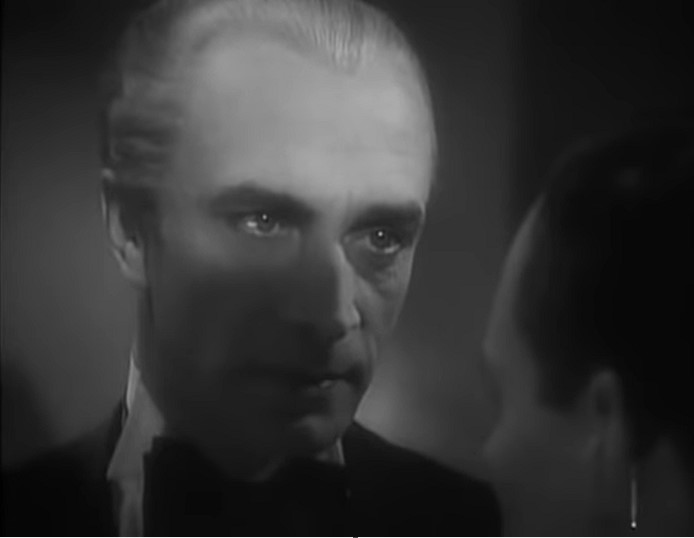
Conrad Veidt was a hugely popular and famous German actor with a long career in silent cinema, most notably with lead roles in such classics as The Cabinet of Dr Caligari (1920) and Anders als die Anderen (1919), the latter being a landmark of LGBTQ+ silent cinema. In 1933, Veidt left Germany in light of Hitler’s recent assumption of power; as well as him having politically opposing views to the nazi’s, Veidt’s wife was Jewish.[1] Veidt established himself in Britain and made twelve films for British studios until the outbreak of the Second World War. Film historian Sue Harper considers The Passing of the Third Floor Back ‘the apotheosis of [Veidt’s] acting career.’[2]

The film’s director, Berthold Viertel, was an Austrian émigré filmmaker and friend of Veidt’s. After making The Passing of the Third Floor Back, Viertel only made one more film, 1936’s Rhodes of Africa. Like Veidt, Viertel’s political sympathies were left-of-centre, which comes through clearly in their version of The Passing of the Third Floor Back. The short story and play on which the film were based did not foreground class issues in the same way, indicating that these were specifically scripted in for the film. Incidentally, the script of the film was co-written by Alma Reville, Hitchcock’s wife and frequent scriptwriter.

The film’s rather awkward title refers to the room Conrad Veidt’s character, an unnamed Stranger, takes in the boarding house of Mrs Sharpe. At the opening of the film, we see Stasia, the young housemaid, try and grow a flower in the house’s kitchen. She gets scolded by the stern Mrs Sharpe, and frequent allusions are made by both Mrs Sharpe and the other boarding house guests to Stasia’s background as a young ‘delinquent’. Then the Stranger arrives at the door, asking for a room. Mrs Sharpe leads him up to the back of the top floor, presenting him with a tiny room overlooking rooftops. Although Mrs Sharpe is expecting the Stranger to haggle and argue, he instead compliments the room and placidly accepts her terms.

The rest of the film takes place over three days only. On the evening of the Stranger’s arrival, two of the other boarders are due to get engaged. Young and pretty Vivian is entering into this engagement with the odious Mr Wright because it will save her family from financial ruin. In reality, Vivian is in love with a young architect who also lives in the house. During evening dinner, the Stranger stares intently at Vivian, and she decides not to go through with the engagement. Throughout the rest of the evening, the Stranger keeps using this ‘mesmerising’ stare to mentally force people to act in accordance with their true desires. Another boarder, keen to amuse everyone with superficial show tunes on the piano, is convinced to play classical music instead. A conversation the Stranger has with the architect leads the latter to admit that he too is in love with Vivian.

Conrad Veidt as the Stranger, using his ‘mesmerising’ power

The next day is a Bank Holiday Monday, and the Stranger generously offers to take the whole boarding house party out on a steamer to Margate. Mrs Sharpe allows Stasia to come along, and for the first time the servant girl is accepted as a full member of the house party. On the boat, everyone enjoys themselves. The Stranger has a conversation with Miss Kite, one of the lodgers who is ‘the wrong side of thirty’ and very insecure about her looks. When Stasia falls off the steamer, Miss Kite jumps into the water without hesitation to save her. Her conversation with the Stranger has (temporarily) allowed her to stop worrying about her appearance. Miss Kite’s heroic deed earns her the appreciation of the pianist.

Stasia moments before she falls off the steamer in The Passing of the Third Floor Back

Although everyone seems improved by the Stranger’s gentle attentions and insistence on good manners, one man is not impressed. Wright, who got spurned by Vivian, is a rich man who profits off slum housing. Having lost Vivian, he makes it clear to the Stranger that evening that he will do everything he can to swing the pendulum of change the other way. He explicitly addresses how the Stranger has influenced everyone to ‘do good’, and how he will remind everyone of their baser emotions. Indeed, the next morning, Wright’s influence leads to quarrels and frustrations across the house. People appear to have forgotten what kindness and politeness can do to make everyone’s life more pleasant.

Wright confronts the Stranger in The Passing of the Third Floor Back

At the end of that day, a burglar kills Wright. Initially, the house blame Stasia; then the Stranger. Their mob mentality, once its revealed they were wrongfully accusing their peers, provides a wake-up call to the Stranger’s kindness. He leaves the house, satisfied that he has now made a lasting impact on the lodgers’ worldviews.

Throughout, the Stranger is quite clearly analogous to a Christ-like figure, advocating kindness in every action. Wright appears to be set up as a sort of Lucifer, and the discussion between Wright and the Stranger tantalisingly suggests that Wright ‘recognises’ the Stranger and the two have been at odds before. Yet the film grounds these Christian analogies in practical class-based discussions, particularly by making Wright a profiteering landlord. Although the religious undertones make The Passing of the Third Floor Back a somewhat dated and unfamiliar viewing experience for modern audiences, its social commentary (unfortunately) still feels very relevant.

The Passing of the Third Floor Back can be viewed on YouTube; the short story on which the film is based can be read here.


[1] Sue Harper, ‘Thinking Forward and Up: The British films of Conrad Veidt’, in The Unknown 1930s: An alternative history of the British cinema, 1929-1939, ed. Jeffrey Richards (London: IB Tauris, 2000), 121-137 (p. 122)

[2] Ibid., p. 132

Freeman Wills Crofts – The 12.30 from Croydon (1934)

Freeman Wills Crofts – The 12.30 from Croydon (1934)

Freeman Wills Crofts today is not one of the more famous writers of the Golden Age of Detective Fiction. During the 1920s and 1930s, however, he was a prominent and early member of the Detection Club, a select circle of crime authors that included Agatha Christie, Anthony Berkeley, Dorothy L. Sayers and others. T.S Eliot rated Crofts as ‘the finest detective story writer to have emerged during the Twenties.’[1] An engineer by training, Crofts’ detective stories often include modes of transport which he describes in exact detail. In Mystery in the Channel, published in 1931, two dead bodies are found on a yacht in the English Channel. The eventual unravelling of the case by Crofts’ regular police protagonist, Inspector French, hinges on the exact timings several vessels embarked on their journey, their relative speeds, and the weather conditions.

The title of Inspector French’s 1934 outing, The 12.30 from Croydon, would have immediately communicated to a contemporary audience that airplanes, not boats, were the mode of transport under scrutiny this time. Like Christie’s more famous Death in the Clouds, published the following year, Crofts’ murder victim dies whilst up in the air.

The 12.30 from Croydon opens with a delightful chapter told from the perspective of the murder victim’s ten-year-old granddaughter Ruby, who is terribly excited that she will be flying for the first time. Ruby, her father Peter, her grandfather Andrew, and Andrew’s butler Weatherup are all due to fly to Paris because Ruby’s mother Elsie has been in a traffic accident in the French capital. Crofts’ engineer’s eye for detail is evident in this opening chapter, which describes the Imperial Airways plane the family board:

It was just a huge dragonfly with a specially long head, which projected far forward before the wings like an enormous snout. And those four lumps were its motors, two on each wing, set into the front edge of the wing and each with its great propeller twirling in front of it. And there was its name, painted on its head: H, E, N, G, I, S, T; HENGIST.’[2]

‘Hengist’ was the colloquial name for a real Imperial Airways plane which until 1934 (the year of the book’s publication) flew on the European routes. It was subsequently converted to fly long-distance and as far as Australia, until the plane was destroyed in an accident in 1937. Once up in the air, Ruby and her family are served a ‘four-course lunch followed by coffee, all very nice and comfortably served’.[3] When they land, disaster strikes: Andrew Crowther, Ruby’s grandfather, is found unresponsive and declared dead.

A contemporary photo of the real Hengist plane standing outside Croydon Aerodrome, taken from A Million Miles in the Air,
the memoirs of pilot Gordon P. Olley, published in 1934

After the murder in the opening chapter, Wills Crofts shifts perspective and takes the reader back in time. The 12.30 from Croydon is a ‘psychological crime novel’ – rather than the reader trying to work out who has committed the murder and how, the author takes the reader into the mind of the murderer as he plots out his murder and attempts to escape justice. Andrew Crowther’s murderer, as it turns out, is his nephew Charles Swinburn. Charles is the managing director of the Crowther Electromotor Works, a firm originally set up by Andrew and his business partner Henry Swinburn. Although modest in size, the firm had been flourishing under Andrew’s leadership.

By the early 1930s, however, Charles is finding it impossible to stay afloat in the challenging economic environment following the 1929 Wall Street crash. Having already sunk his personal capital and a bank loan into the business, Charles approaches his uncle for financial help. Andrew, however, is not willing to give more than £1000, when Charles needs at least £6000. Knowing that he is one of the two heirs to Andrew’s estate (alongside Andrew’s daughter Elsie), Charles devises his plan to kill Andrew.

Charles method for murdering Andrew is one also used on occasion in other crime novels of the period. Andrew takes a ‘patent medicine’ against indigestion after lunch each day. Patent medicine were mass-produced pills designed to remedy common ills. Unlike more traditional medicine which was prescribed by a doctor and then mixed up to order by a pharmacist, patent medicines were available in standardized bottles and could be purchased without a doctor’s prescription.

In novels of the 1920s and 1930s they are often treated with disdain and considered to be inferior to the personalised prescriptions that a doctor would give out. However, their wide availability and uniform appearance also made them an ingenious murder weapon. Charles buys a bottle of pills identical to the one Andrew uses, but replaces one of the pills with a pill filled with potassium cyanide, an extremely lethal poison. Like in the Poirot short story ‘Wasps’ Nest’, Charles manages to obtain the poison with the excuse that he needs to eradicate a wasps nest from his garden. When at dinner with Andrew, Charles distracts him and swaps the pill bottles, pocketing Andrew’s bottle and replacing it with the one that contains the one deadly pill. He then books himself onto a Mediterranean cruise to be out of the way when Andrew eventually takes the poisoned pill.

Although the murder plan works and Charles duly inherits half of Andrew’s estate, Charles swiftly finds out that murderers rarely rest easily. First Weatherup reveals that he has seen Charles swap the pill bottles, and starts blackmailing him. Charles swiftly decides to kill Weatherup, too. Then Inspector French arrives and starts asking some awkward questions. The arrest, when it inevitably comes, takes Charles by surprise. It is not until the final chapter of the book that the reader is shown how Inspector French conducted his investigation, and how his powers of deduction led him to correctly identify Charles as the murder. The perfect murder plan conceived by Charles is revealed to have had some rather large holes in it.

Charles is duly condemned to death and executed. There is less moral ambiguity in The 12.30 from Croydon than, for example, Anthony Berkeley’s Malice Aforethought, or even than in Henry Wade’s Heir Presumptive. Although Andrew Crowther is not a hugely sympathetic character, there is no doubt to the reader that Charles’ actions are wrong, and that the policing and justice systems will catch up with him and serve him the expected sentence. The book’s reversed structure allows Wills Crofts to reveal Inspector French’s intellect in the final chapter, transmitting the reassuring fiction to the reader that no matter how well one may think they have planned a crime, the men from Scotland Yard will always ensure that justice is dispensed.


[1] Martin Edwards, The Golden Age of Murder (London: Collins Crime Club, 2016), p. 75

[2] Freeman Wills Crofts, The 12.30 from Croydon (London: British Library, 2016), p. 16

[3] Ibid., p. 19

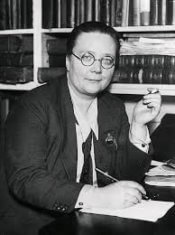
Dorothy L. Sayers

Dorothy L. Sayers

Agatha Christie is undoubtedly the most famous author of the ‘Golden Age of Crime Fiction’ (or indeed the most famous crime author of all time). She did not stand alone, however, but rather was part of a closely connected network of crime writers who worked in Britain and the rest of the Empire between the two wars. Some of the more illustrious authors organised themselves in the Detection Club, a group which was founded in the 1930s and still exists today. One of the founding members of the Detection Club was Dorothy L. Sayers, another female crime fiction writer who obtained widespread recognition during the 1920s and 1930s.

Sayers was born in 1893 in Oxford to a well-to-do couple; her father was a reverend and chaplain to Christ Church Cathedral in the city. Sayers herself studied at Somerville, the all-female College of the University of Oxford. She was there from 1912 to 1915, leaving before the arrival of Vera Brittain and, later, Winifred Holtby.[1] At Sommerville Sayers would also meet Muriel Jaeger, who eventually established her own literary career. Sayers would later draw heavily on her experiences at Somerville for the crime novel Gaudy Night, which appeared in 1935.[2]

After completing her degree, Sayers moved to London and briefly took up a teaching post: teaching was one of the career paths young women were strongly encouraged to enter into, with its associations of helping, caring and other supposedly typical feminine traits.[3] After the teaching stint, she briefly returned to Oxford and then travelled to France, only to eventually return again to London and take up a job as a copywriter.[4] She never lost sight of her literary ambitions and some time in 1920 she started to come up with the amateur detective who would become her most famous character: Lord Peter Wimsey.

Eventually, Sayers published eleven Wimsey novels as well as a series of short stories in which he featured. It can be argued that in Wimsey, Sayers created an ideal man, and part of the fun of the Wimsey stories lies in the interplay between their plots and Sayers’ private life. Wimsey is an aristocrat, the second son of the Dowager Duchess of Denver. He has a private income, a very steady butler named Bunter, an MA from Oxford and an interest in collecting rare books. He also appears to work for the British government on occasion, as he is sent across Europe to undertake diplomatic missions to try and avoid war. He is close friends with detective Charles Parker of the Metropolitan Police, who later in the series marries Wimsey’s sister. Wimsey’s intellect, financial independence, links with the police and elevated status in society make him the ideal amateur sleuth, as he has the means and ability to enter almost any situation.

In Strong Poison, the fifth Wimsey novel, Sayers started to really draw on her own life for the book’s plot. Although all the Wimsey novels contain intricately plotted crime puzzles which adhere to the rules of ‘fair play’, its in the interpersonal relationships of the characters where the clues are to Sayers’ private life. In the early 1920s, Sayers had a relationship with fellow writer John Cournos, which came to an end when Cournos wanted to sleep together outside of the marriage, which Sayers did not want.[5] In Strong Poison, Sayers introduces Harriet Vane, a clear alter-ego for herself. Vane is a crime fiction author who is on trial for the murder of her partner; in this fictional relationship the question of sex outside of marriage was also paramount. The victim in Strong Poison is clearly meant to be a stand-in for Cournos, and Sayers no doubt got great satisfaction from giving the character an extremely painful death from arsenic poisoning.

Wimsey falls in love with Harriet Vane in Strong Poison, and throughout the remainder of the Wimsey series their relationship takes on increased importance until, in the aforementioned Gaudy Night, Harriet feels that Peter is ready to enter into marriage on equal terms. In Sayers’ real life, no such happy ending was forthcoming. Shortly after the end of her relationship with Cournos, she met Bill White, a man who later turned out to be already married. By the time Sayers found that out, however, she had already agreed to a sexual relationship with him and she found herself pregnant in 1923. Sayers never even told her parents about her pregnancy, so convinced was she that they would not be able to accept it. Amazingly, though, Bill White’s wife came to her aid. Sayers gave birth to her son, John Anthony, in complete secret during a brief leave of absence from her copywriting job. Bill White’s wife, Beatrice, made arrangements for the birth. John Anthony grew up in a foster home run by Sayers’ cousin; during her lifetime Sayers only revealed his existence to five people and never told her parents they had a grandchild.[6]  

Aside from the Wimsey novels and stories, Sayers was a prolific reviewer of crime fiction and also contributed to several volumes written by a group of Detection Club members. The last full Wimsey novel, Busman’s Honeymoon, appeared in 1937. After this, Sayers mostly turned her attention to religious work, such as a translation of Dante’s Divine Comedy. [7] She remained a key member of the Detection Club until her death in 1957.[8] Her books remain in print and have been adapted for the screen several times.


[1] Francesca Wade, Square Haunting (London: Faber & Faber, 2020), pp. 96-101

[2] Mo Moulton, The Mutual Admiration Society: ow Dorothy L. Sayers and Her Oxford Circle Remade the World for Women (New York: Basic Books, 2019)

[3] Wade, Square Haunting, p. 107

[4] Martin Edwards, The Golden Age of Murder, (London: Collins Crime Club, 2016), p. 18

[5] Ibid., pp. 19-20

[6] Wade, Square Haunting, pp. 128-132

[7] Edwards, The Golden Age of Murder, p. 404

[8] Ibid., p. 410

Leonard Gribble – The Arsenal Stadium Mystery (1939)

Ahead of the 2022 World Cup starting in Qatar, there will be a couple of weeks of football-related content on the blog. Football was a popular sport for working-class spectators in interwar Britain, alongside (greyhound) racing and motor sports. Some historians even credit the popularity of football with bringing diverse social and ethnic groups togethers as neighbours went to support their local teams.[1] By the end of the interwar period, football clubs at the top end of the league were almost completely populated by professional footballers; but there were also still plenty of amateur clubs which delivered players of a high calibre. League matches were usually played on a Saturday afternoon, as most workers finished their weekly shifts at lunchtime on Saturday.

At the close of the 1930s, the Daily Express decided to capitalise on the increased popularity of professional football by commissioning author Leonard Gribble to write a serialised murder mystery which featured the real-life players and staff of Arsenal Football Club.[2] After serialisation, The Arsenal Stadium Mystery was published as a book and a film version was made almost immediately; both appearing shortly before the outbreak of the Second World War.

The plot of The Arsenal Stadium Mystery is fairly straightforward: Arsenal play an amateur team, the Trojans. During the match, one of the Trojan players, Doyce, collapses on the field and dies shortly afterwards. Scotland Yard are called in and conclude Doyce was poisoned; Inspector Slade methodically works through the possible suspects until the case is resolved. Although a number of Arsenal players appear as characters in the book (and the Arsenal manager, George Allinson, even got a speaking part in the film adaptation) they are naturally not implicated in the murder or its resolution.

The police investigation concentrates solely on the Trojan players and staff. The conceit of the football game provides the type of ‘closed circle’ which interwar detective fictions liked to use: a very limited number of suspects, a tightly controlled window in which the murder must have taken place; and limited ways in which the weapon could be disposed of.

Aside from the murder story, The Arsenal Stadium Mystery provides the modern reader with plenty of insight into 1930s professional football practices. Gribble was clearly given access to the Arsenal club players and grounds in the writing of the book – the parts of the stadium to which the public do not usually have access are described in detail. The rapid professionalisation of football is reflected in the vigorous training practices of the players: ‘The game to-day is faster than it has ever been (…) Only the fit can survive.’[3] Arsenal also apparently already had a youth academy set up, dubbed a ‘nursery’, to train up promising young players.[4]

When it comes to the game itself, Gribble provides a diagram reflecting the starting positions of both teams. Both Arsenal and Trojans are shown to play with five forwards, three midfielders and two defenders[5]; a formation that was much more common in the early days of professional football than it is today. The author also provides an almost play-by-play account of the match, in sections of the story clearly written with football-mad Daily Express readers in mind.

As well as details about the actual gameplay, Gribble pays substantial attention to convey the culture of football fandom. For example, he spends several pages describing the convivial atmosphere in the streets and train stations around the stadium after the match is over:

‘In the trains the corridors and entrance platforms are choked (…) The air is full of expunged breath, smoke, human smells, and heat. But there is plenty of laughter, plenty of Cockney chaff. Whatever happens, however great the discomfort, the crowd keeps its good-temper. This herded homegoing is just part of the afternoon’s entertainment.’[6]

Needless to say, this ‘entertainment’ is described as an innately masculine past-time. It would not be possible for women to enter this crush of human bodies. When Inspector Slade of Scotland Yard enters the story, he too enters in a social pact with the football players which excludes women. During his investigation, he questions one of the Trojan players, Morring, in front of a woman friend, Jill. Morring implies in guarded language that his fiancée, Pat Laruce, had had an affair with the victim, Doyce. Slade:

‘‘I take it you told him to be careful or next time he’d have more painful reason to regret his – um – interference?’ The two men grinned, while the girl looked from one to the other, wide-eyed, unable to appreciate a humour that was essentially masculine.’[7]

Phrases like this make it clear enough that Gribble was writing for a male audience; he also made the main female character, Pat Laruce, extremely unlikeable. Not only is Pat revealed as having cheated on her fiancé Morring, Gribble also portrays her as an extremely calculating woman who uses fake emotional outbursts to control men’s behaviour. He describes her as follows: ‘The daughter of a chorus girl who had married a publican after burning her fingers with a scion of the aristocracy, she [Pat] had imbibed her mother’s outlook on life.’[8]

Pat works as a model for advertisements; a job that entails her offering up her physical appearance for (male) consumption. Pat’s independence and modernity are unequivocally rejected by Gribble, and presented as intergenerational faults that are passed on from mother to daughter. There are several points in the book at which Pat is described as confused that her emotional manipulations are not working on men as she expects them to. Her friend Jill, by contrast, is presented as pure and innocent (as in the quote above which implies her complete ignorance about sex), and therefore a much more suitable life partner.

The Arsenal Stadium Mystery reveals much about the practicalities of professional football in 1930s Britain, as well as delivering a reasonably competent murder mystery story. It also carries its sexist gender views on its sleeve, by using the medium of football to promote a misogynist worldview in which professional sport is equated with male sociability.

The film version of The Arsenal Stadium Mystery (starring the real 1939 Arsenal squad) can be viewed for free on YouTube.


[1] Benjamin Lammers, ‘The Birth of the East Ender: Neighborhood and Local Identity in Interwar East London’, Journal of Social History, Vol. 39, No. 2, (2005), pp. 331-344 (pp. 338-9)

[2] Martin Edwards, ‘Introduction’, in Leonard Gribble, The Arsenal Stadium Mystery, (London: British Library, 2018), p. 7

[3] Gribble, The Arsenal Stadium Mystery, p. 123

[4] Ibid., p. 119

[5] Ibid., p. 19

[6] Ibid., p. 38

[7] Ibid., p. 171

[8] Ibid., p. 106

Interwar Spooky Stories

Interwar Spooky Stories

With Halloween nearly upon us, it is time for a review of spooky short stories written in interwar Britain. Although Halloween was not celebrated in the modern sense during the interwar period, All Hallows Eve was a longstanding feature of the Church calendar, originating out of pagan Samhain celebrations. Short stories were an immensely popular format in the interwar years, with many short stories published in newspapers and dedicated magazines such as Strand Magazine. Many journalists and authors worked in the genre, which could be lucrative.

In recent years, the British Library publishing arm has re-issued many original stories of the 1920s and 1930s in various edited collections. Spooky short stories of the period often crystallise contemporary fears about technology, alienation, and modernity. They can also address social inequalities in a pointed way. For example, F Tennyson Jesse’s story ‘The Railway Carriage’, published in Strand Magazine in 1931, hinges on the third-class railway carriage as a democratic space that forces together people from wildly different backgrounds.[1]

The story’s protagonist, a young woman named Solange, finds the closed nature of the railway carriage oppressive: ‘she would have given a great deal to be out of that little third-class carriage, to be in a modern corridor train, to be – this, above all – away from her travelling companions.’[2] The design of the train means that Solange cannot change carriages whilst the train is in motion, heightening her feeling of being trapped with two unusual companions. Solange ‘had to stay with them whether she would or no. It was really an outrage, she thought to herself, that such a thing as a non-corridor train should still exist.’[3]

Solange is a modern, somewhat entitled young woman, who by the end of the story has to accept that there are things beyond the rational realm and that she cannot always control the world around her in the way she would like. When the train crashes, Tennyson Jesse introduces a supernatural element to the story and meditates on the justness of capital punishment, a practice that was under much debate during the interwar period. Despite the introduction of a possible ghost, the true horror of the story lies in the very real judicial practices of interwar Britain.

Another story which effectively conveys the terror that the proximity of strangers can bring is E.M. Delafield’s ‘They Don’t Wear Labels.’[4] It also demonstrates how the anonymity of the big city can be exploited, and how patriarchal structures can put women in danger. The story’s protagonist is Mrs Fuller, a boarding house keeper, who takes in a couple, Mr and Mrs Peverelli. Mr Peverelli is very charming, but his wife is sickly. From the moment the couple enter the house, Mr Peverelli plays on sexist stereotypes which Mrs Fuller is very happy to accept. He implies that his wife’s ailments are nervous disorders; Mrs Fuller then tells Mrs Peverelli ‘shed’ a good deal to be thankful for, with her husband in a good job, and always ready to do what would please her.’[5]

When Mrs Peverelli tries to tell Mrs fuller that Mr Peverelli is forcing her to eat and drink things against her will, and that she thinks her husband is trying to poison her, Mrs Fuller naturally rubbishes the suggestion. E.M. Delafield neatly demonstrates the pervasive assumptions about domestic violence: ‘If you really believed it, why – you’d left him. It’s surely the very first thing you’d have done’ huffs Mrs Fuller. ‘You don’t understand’, responds Mrs Peverelli. ‘I love him.’[6]

Shortly thereafter, the Peverelli’s move on, the wife looking ‘worse than ever – sallower and more frightened.’ The true horror of Mr Peverelli’s designs is revealed at the close of the story, when Mrs Fuller realises he has ground up a Christmas bauble and fed the powdered glass to his wife.[7] Murder by ground glass was, incidentally, one of the ways in which Edith Thompson suggested murdering her husband in her letters to her lover Freddie Bywaters. E.M. Delafield had followed the Thompson-Bywaters case closely, and is surely referencing it in this story. Mrs Fuller, and the reader, are confronted by their willingness to believe strangers at face value, and to believe men over women. The horror here is not supernatural, but rather the by-product of an inherently unequal society.

A final female-penned, London-based, spooky short story appeared slightly after the interwar period, at the close of the Second World War. In 1945, Elizabeth Bowen published the (very short) story ‘The Demon Lover’.[8] It effectively uses the bombed-out locales of war-torn London. Bowen’s protagonist, Mrs Drover, is checking up on her Kensington house after an extended stay in the country, away from the Blitz.

Things take a dark turn when Mrs Drover discovers a mysterious letter from a past lover, which warns her that today is ‘our anniversary, and the day we said. (…) I shall rely upon you to keep your promise.’[9] It transpires that Mrs Drover had a soldier lover during the First World War, who went missing. In fear of him, she decides to get a taxi as quickly as possible before the man can come to the house and claim her. Yet rather than a means of escape, the taxi becomes her prison, as she realises too late that the man behind the wheel is the very man she is fleeing from.

As in ‘The Railway Track’, in ‘The Demon Lover’ a means of transport traps a woman rather than give her freedom. The latter story also includes ample reflections on ageing and the compromises made by women: marriage, children and a big house in Kensington versus the excitement of a passionate love affair. Like Mrs Peverelli, Mrs Drover ultimately is unable to escape masculine power. The scariest thing for women turns out to be the patriarchy itself.

All of the stories and books mentioned in this post are available to purchase through the British Library online shop.


[1] F Tennyson Jesse, ‘The Railway Track’, in Blood on the Tracks: Railway Mysteries, edited by Martin Edwards (London: British Library, 2018), pp. 267-286

[2] Ibid., p. 272

[3] Ibid., p. 277

[4] E. M. Delafield, ‘They Don’t Wear Labels’, in Capital Crimes: London Mysteries, edited by Martin Edwards (London: British Library, 2015), pp. 265-273

[5] Ibid., p. 268

[6] Ibid., p. 270

[7] Ibid., p. 273

[8] Elizabeth Bowen, ‘The Demon Lover’, in Into the London Fog: Eerie Tales from the Weird City, edited by Elizabeth Dearnley (London: British Library, 2020), pp. 81-91

[9] Ibid., p. 85