Interwar Spooky Stories

Interwar Spooky Stories

With Halloween nearly upon us, it is time for a review of spooky short stories written in interwar Britain. Although Halloween was not celebrated in the modern sense during the interwar period, All Hallows Eve was a longstanding feature of the Church calendar, originating out of pagan Samhain celebrations. Short stories were an immensely popular format in the interwar years, with many short stories published in newspapers and dedicated magazines such as Strand Magazine. Many journalists and authors worked in the genre, which could be lucrative.

In recent years, the British Library publishing arm has re-issued many original stories of the 1920s and 1930s in various edited collections. Spooky short stories of the period often crystallise contemporary fears about technology, alienation, and modernity. They can also address social inequalities in a pointed way. For example, F Tennyson Jesse’s story ‘The Railway Carriage’, published in Strand Magazine in 1931, hinges on the third-class railway carriage as a democratic space that forces together people from wildly different backgrounds.[1]

The story’s protagonist, a young woman named Solange, finds the closed nature of the railway carriage oppressive: ‘she would have given a great deal to be out of that little third-class carriage, to be in a modern corridor train, to be – this, above all – away from her travelling companions.’[2] The design of the train means that Solange cannot change carriages whilst the train is in motion, heightening her feeling of being trapped with two unusual companions. Solange ‘had to stay with them whether she would or no. It was really an outrage, she thought to herself, that such a thing as a non-corridor train should still exist.’[3]

Solange is a modern, somewhat entitled young woman, who by the end of the story has to accept that there are things beyond the rational realm and that she cannot always control the world around her in the way she would like. When the train crashes, Tennyson Jesse introduces a supernatural element to the story and meditates on the justness of capital punishment, a practice that was under much debate during the interwar period. Despite the introduction of a possible ghost, the true horror of the story lies in the very real judicial practices of interwar Britain.

Another story which effectively conveys the terror that the proximity of strangers can bring is E.M. Delafield’s ‘They Don’t Wear Labels.’[4] It also demonstrates how the anonymity of the big city can be exploited, and how patriarchal structures can put women in danger. The story’s protagonist is Mrs Fuller, a boarding house keeper, who takes in a couple, Mr and Mrs Peverelli. Mr Peverelli is very charming, but his wife is sickly. From the moment the couple enter the house, Mr Peverelli plays on sexist stereotypes which Mrs Fuller is very happy to accept. He implies that his wife’s ailments are nervous disorders; Mrs Fuller then tells Mrs Peverelli ‘shed’ a good deal to be thankful for, with her husband in a good job, and always ready to do what would please her.’[5]

When Mrs Peverelli tries to tell Mrs fuller that Mr Peverelli is forcing her to eat and drink things against her will, and that she thinks her husband is trying to poison her, Mrs Fuller naturally rubbishes the suggestion. E.M. Delafield neatly demonstrates the pervasive assumptions about domestic violence: ‘If you really believed it, why – you’d left him. It’s surely the very first thing you’d have done’ huffs Mrs Fuller. ‘You don’t understand’, responds Mrs Peverelli. ‘I love him.’[6]

Shortly thereafter, the Peverelli’s move on, the wife looking ‘worse than ever – sallower and more frightened.’ The true horror of Mr Peverelli’s designs is revealed at the close of the story, when Mrs Fuller realises he has ground up a Christmas bauble and fed the powdered glass to his wife.[7] Murder by ground glass was, incidentally, one of the ways in which Edith Thompson suggested murdering her husband in her letters to her lover Freddie Bywaters. E.M. Delafield had followed the Thompson-Bywaters case closely, and is surely referencing it in this story. Mrs Fuller, and the reader, are confronted by their willingness to believe strangers at face value, and to believe men over women. The horror here is not supernatural, but rather the by-product of an inherently unequal society.

A final female-penned, London-based, spooky short story appeared slightly after the interwar period, at the close of the Second World War. In 1945, Elizabeth Bowen published the (very short) story ‘The Demon Lover’.[8] It effectively uses the bombed-out locales of war-torn London. Bowen’s protagonist, Mrs Drover, is checking up on her Kensington house after an extended stay in the country, away from the Blitz.

Things take a dark turn when Mrs Drover discovers a mysterious letter from a past lover, which warns her that today is ‘our anniversary, and the day we said. (…) I shall rely upon you to keep your promise.’[9] It transpires that Mrs Drover had a soldier lover during the First World War, who went missing. In fear of him, she decides to get a taxi as quickly as possible before the man can come to the house and claim her. Yet rather than a means of escape, the taxi becomes her prison, as she realises too late that the man behind the wheel is the very man she is fleeing from.

As in ‘The Railway Track’, in ‘The Demon Lover’ a means of transport traps a woman rather than give her freedom. The latter story also includes ample reflections on ageing and the compromises made by women: marriage, children and a big house in Kensington versus the excitement of a passionate love affair. Like Mrs Peverelli, Mrs Drover ultimately is unable to escape masculine power. The scariest thing for women turns out to be the patriarchy itself.

All of the stories and books mentioned in this post are available to purchase through the British Library online shop.


[1] F Tennyson Jesse, ‘The Railway Track’, in Blood on the Tracks: Railway Mysteries, edited by Martin Edwards (London: British Library, 2018), pp. 267-286

[2] Ibid., p. 272

[3] Ibid., p. 277

[4] E. M. Delafield, ‘They Don’t Wear Labels’, in Capital Crimes: London Mysteries, edited by Martin Edwards (London: British Library, 2015), pp. 265-273

[5] Ibid., p. 268

[6] Ibid., p. 270

[7] Ibid., p. 273

[8] Elizabeth Bowen, ‘The Demon Lover’, in Into the London Fog: Eerie Tales from the Weird City, edited by Elizabeth Dearnley (London: British Library, 2020), pp. 81-91

[9] Ibid., p. 85
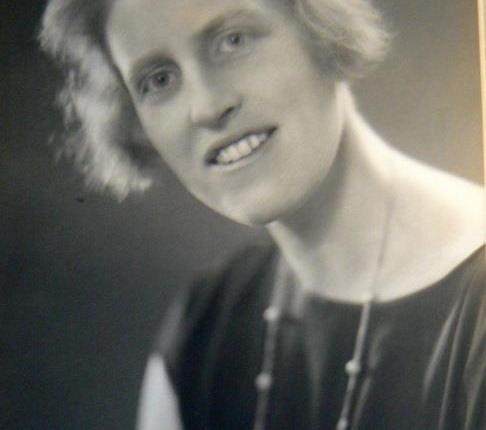
Winifred Holtby

<strong>Winifred Holtby</strong>

Winifred Holtby (1898-1935) was a Yorkshire writer, journalist and activist who remains primarily remembered for her final, posthumous novel South Riding. She is also frequently linked to her closest friend, writer and journalist Vera Brittain, who penned the influential First World War memoir Testament of Youth. Holtby and Brittain studied together at Oxford’s all-female college, Somerville, and subsequently shared households for most of the remainder of Holtby’s life.

Although Brittain remains the better-known of the pair (arguably partially because her life was not cut short like Holtby’s), Winifred Holtby was more than a friend and companion to Brittain. She had her own strong political and feminist views, which were expressed in her journalism and activism. After a visit to South Africa in 1926, Holtby actively supported the Black South African community for the rest of her life.[1]

Winifred Holtby was born in Rudston, a small Yorkshire village between Hull and Scarborough. She came of age during the First World War and briefly served in the Women’s Army Auxiliary Corps (WAAC) before starting her studies at Somerville in 1919. Here she met Brittain, who was some five years older than her. After the war, Holtby lectured for the League of Nations, the ‘first worldwide intergovernmental organisation whose principal mission was to maintain world peace.’ She also became involved in the Six Point Group, a feminist collective set up by Lady Rhondda. The latter also co-founded Time and Tide, a feminist interwar publication to which both Holtby and Brittain became regular contributors.[2] (E.M. Delafield’s Diary of a Provincial Lady also started as a column in Time and Tide).

Committed feminist as Holtby was, her journalistic writings of the time are striking both because they address some issues that remain unresolved, and because they reveal a sharp sense of humour. The overall tone of Holtby’s writing in this area demonstrates optimism. After the expansion of the vote to all men and women in 1928, interwar feminists seemed to believe that equality between men and women on all fronts was just a matter of time. Nearly a hundred years on, such optimism seems naïve. However, it does mean that Holtby’s writing on inequality remains recognisable and accessible.

In ‘Should a Woman Pay?’, which appeared in the Manchester Guardian in October 1928, she tackles the social dilemma of who should pay the bill when a man and woman go out together. Introducing us to the fictional Jack and Jill, Holtby demonstrates how a clinging to the social custom of the man paying can lead to resentment between modern couples – Jack insists on paying for Jill’s lunch because ‘his masculine honour is affronted’ by the suggestion she pays, or they split the bill. When both return to their respective jobs for the afternoon, they are distracted, make mistakes, and ‘they both hate everything.’

Holtby links this very relatable scenario to ‘the industrial revolution, the introduction of factory labour, the divorce of women from domestic industry’ and the subsequent removal of women from any source of substantial income.[3] A quick internet search reveals that the question ‘Should the woman pay?’ remains unresolved – Harvard Business Review devoted an article to it in April 2021 and a live WikiHow page talks readers through the ‘problem’ (which remains presented in heteronormative terms).

In ‘Counting the Cost’, also published in the Manchester Guardian in the same year, Holtby responds to a letter to the editor submitted by a man who is frustrated that his wife is undertaking too many activities in the community and does not have enough time to manage the household. ‘If I came home from work at six (which I don’t) and had to get my own tea [dinner], things would happen’ fumes the man. Holtby gently pokes fun at the man’s worked-up tone: ‘He really is very cross indeed. He makes you feel that the first of those things which would happen would be a very bad tea. Bad temper never fries good bacon.’[4] She ends the article by acknowledging that whilst some things may be lost when women go out of their home, both economy and society gain much by women actively participating in it.

Holtby herself was one such woman actively participating in public life during the interwar period. Although she never married, she did undertake caring responsibilities for Vera Brittain’s family, whom she lived with for large proportions of her life.[5] Holtby repeatedly referred to herself as ‘50% a politician’ and she tirelessly raised funds to help unionise Black workers in South Africa.[6] Despite only being ‘50% a writer’ in her own perception, Holtby produced seven novels, two volumes of poetry, two short story collections, a play, and four works of non-fiction including a memoir of Virginia Woolf. As a witty and gifted writer and commentator, her work deserves continued recognition.


[1] Testament of a Generation: The journalism of Vera Brittain and Winifred Holtby, edited by Paul Berry and Alan Bishop (London: Virago, 1985), pp. 21-23

[2] Marion Shaw, ‘Introduction’, in Winifred Holtby, South Riding (London: Virago, 2011), p. xi

[3] Winifred Holtby, ‘Should a Woman Pay?’, reproduced in Testament of a Generation, pp. 57-60.

[4] Winifred Holtby, ‘Counting the Cost’, reproduced in Testament of a Generation, pp. 54-57

[5] Shirley Williams, ‘Preface’, in Winifred Holtby, South Riding (London: Virago, 2011), p. ix

[6] Marion Shaw, ‘Introduction’, in Winifred Holtby, South Riding (London: Virago, 2011), p. xii; Testament of a Generation: The journalism of Vera Brittain and Winifred Holtby, edited by Paul Berry and Alan Bishop (London: Virago, 1985), pp. 22

F. Tennyson Jesse – A Pin To See The Peepshow (1934)

The trial and execution of Edith Thompson have been discussed several times on this blog. The 1922 trial was extensively covered in the press of the period. In short, Edith Thompson was tried and executed alongside her lover Frederick Bywaters, for the murder of Edith’s husband Percy. At the time, newspapers judged Edith harshly for her affair with a younger man (she was nine years older than Frederick). Current scholarship is generally of the opinion that Edith probably knew nothing about the planned murder and should not have been found guilty. You can read a fuller account of the case here.

Due to the high profile nature of the case, it is no wonder that contemporary authors drew on the case for inspiration. I’ve previously discussed E.M. Delafield’s 1924 novel Messalina of the Suburbs which was based on the Thompson-Bywaters case. Where Delafield’s interpretation of the case was fairly loose, a novel published a decade later took a more forensic approach to recreate the story.

The extra years which had passed since the case no doubt help F. Tennyson Jesse to gain more perspective when she wrote A Pin To See The Peepshow, a novel frequently referenced as the definitive fictionalisation of the case. Tennyson Jesse was a prolific writer across several genres including novels, plays, poetry and non-fiction.[1] Some of her work is available to read for free online. She had a definite interest in true crime: in 1924 she wrote a non-fiction work Murder and its Motives and throughout her career she contributed to the long-running book series Notable British Trials. One of the volumes she was responsible for was the trial of Sidney Fox, who was found guilty of killing his own mother.

In A Pin To See The Peepshow Edith Thompson is transformed into Julia Almond, a young, somewhat pretty woman who, like Edith Thompson, works in a women’s fashion boutique and ends up marrying to a man she finds dreadfully dull. The strength of the book is that Julia is not necessarily a sympathetic character, the reader does sympathise with her. Like E.M. Delafield before her, Tennyson Jesse leaves no doubt that her fictional heroine had no involvement in the plot to murder her husband.

The novel starts when Julia is a school girl, living in West London with her parents and counting down the days to her adulthood. When she is ordered to mind a class of younger children one day, one of the younger boys, Leonard Carr, has a ‘peepshow’: a cardboard box with a decorative interior that can be seen through a small hole. Julia is enchanted by this portal into another world: a first indication of her romantic nature which is reiterated throughout the book. Leonard Carr, when he grows up, becomes the fictional version of Frederick Bywaters. In Tennyson Jesse’s narrative, Julia and Leonard’s relationship is marked by make-believe from its inception.

During the real Thompson-Bywaters trial, much was made of Edith’s letters to Frederick. He had kept these letters despite the couple’s agreement that they would destroy each other’s epistles – Edith did destroy Frederick’s letters to her. The letters alluded to supposed plots to kill Percy. The prosecution at the time used them as evidence that Edith wanted her husband to die, and that she was manipulating Frederick to commit the act for her. From the novel, it appears that F Tennyson Jesse agreed with scholars such as Lucy Bland that the letters were works of fiction, written by a woman with a vivid imagination.[2] Another feature that Tennyson Jesse awards her heroine, which may not be entirely historically accurate, is that Julia is terribly short-sighted. This gives her a plausible defense when she claims she did not recognise her husband’s killer, as the real Edith Thompson also initially said.

The heart of the case is, of course, extramarital relationship which Edith Thompson deigned to embark on. In Delafield’s novel, the heroine is sexually active at a young age, but also gets sexually abused by a series of men who are in positions of power over her. Tennyson Jesse’s Julia is less obviously interested in men, but the brief affair she has with a young man at the start of the First World War is described as completely natural and nothing to be ashamed about.

Julia’s eventual marriage to family friend Herbert Startling is primarily motivated by her desire to leave her parents’ home, and her inability to afford her own living space. When Leonard Carr re-appears on the scene as a young adult, Tennyson Jesse makes it clear that sexual relations with Leonard are extremely satisfying to Julia, again without judging or moralising about it.

Julia is less obviously a victim than Delafield’s heroine. Throughout A Pin To See A Peepshow, Julia is often in command. She earns more money than Herbert and is largely able to dictate when she allows him to sleep in her bed. Nonetheless, Tennyson Jesse makes clear that ultimately, Julia is too naïve to understand the passions she’s unleashed in Leonard which drive him to his ultimate act. Her subsequent foolish attempt to cover up Leonard’s involvement to make the murder seem like an accident, seals her fate in a patriarchal justice system. Tennyson Jesse’s Julia probably comes close to the real Edith Thompson: a woman not without faults, whose options in life were narrowly determined by her sex and who paid the price for transgressing accepted norms.

A Pin To See The Peepshow was recently re-issued as part of the British Library Women’s Writers series. Copies can be bought here.


[1] Lucy Evans, ‘Preface’, in F. Tennyson Jesse, A Pin To See The Peepshow (London: British Library, 2021), p. viii

[2] Lucy Bland, ‘The Trials and Tribulations of Edith Thompson: The Capital Crime of Sexual Incitement in 1920s England’, Journal of British Studies, Vol. 47, no. 3 (2008), 624-648

Hints and Hobbies (1926)

By 1926, cinemagoing was firmly established in Britain, and it was transforming from a working-class hobby to something rather more respectable. Super cinemas, which offered lounges and tearooms as well as screenings, were designed to attract middle-class women. Film historian Ina Rae Hark has argued that cinemas tried to draw in female customers by “attempting to create a dream home in which the woman could (…) enjoy complete freedom from responsibility for its maintenance.”[1] Like the department stores that appeared in Britain at the end of the nineteenth century, super cinemas gave women a respectable place to go when they were out in town: a female equivalent for male clubland.

Inside the screening room, audiences did not just see a single film, but rather a varied programme of features, cartoons, informational films and advertisements. In 1926, silent film director A.E. Coleby, who had previously directed morality tales such as The Lure of Drink (1915) produced a series called Hints and Hobbies. Twelve episodes of this weekly bulletin survive in the BFI National Archives and are available to view online for UK-based audiences. These amusing films provide insight to the range of topics which were deemed relevant and suitable to a largely female audience.

Each episode of the series is about fifteen minutes long and covers a series of topics for a few minutes each. The very first Hints and Hobbies starts with a ‘Pets Column’ featuring kittens and puppies, showing that a version of the cat video has been a crowd pleaser for over a century. It then moves to a woman demonstrating how you can make a large decorative vase out of cardboard – for the use of dried flowers only one presumes! It is introduced with the title: ‘An Interesting Hobby which can be made to help pay the rent (?)’ It is evidently not going to be the most effective way to earn extra cash, but this does show that the target audience for this segment are women who are not poor but still could do with some more disposable income.

The penultimate sketch included in episode one is clearly aimed at the same audience. Titled ‘If only husbands were like this!’, it shows a married couple at the breakfast table. The woman receives a number of bills for recent clothes purchases: £8 8s for two hats, £10 10s for a ‘costume’, and £21 for an evening dress. This was serious money in 1926, but the fictional husband is unperturbed. ‘Quite alright, darling’, he says, and even says his wife should have treated herself to a second gown. E.M. Delafield’s Provincial Lady, no stranger to the lure of the boutique and the subsequent bank overdraft, would no doubt have appreciated this scene.

Hints and Hobbies also reflected modern concerns of the time, such as road safety. As this blog has noted previously, the interwar period saw a huge increase in car ownership but little in the way of safety regulations. In lieu of driving licenses or instructors, poor driving was rife. The first episode of the series exhorts drivers to be mindful of others when overtaking one another; the second episode asks female drivers specifically to not be ‘Miss Kareless Kornerer’ when taking a left-hand turn.

Along with the household and cooking tips included in each episode, Hints and Hobbies also took the traditionally feminised profession of nursing and used it to teach first aid to a wide audience. Lady Superintendent Mrs Webb from the St John’s Ambulance Brigade was on hand to demonstrate how to dress a wound in the palm of one’s hand, or how to make a splint for a fractured leg. Seven years after many women had trained as nurses during the First World War, these segments taught a new, younger generation of women the principles of emergency care. Mrs Webb appears in her uniform, capably handling the tools of her trade to fix up male patients.

The penultimate surviving episode of Hints and Hobbies veered away from accepted femininity and treated its audiences to something rather more transgressive: jiu-jitsu for women. The alarmist intertitle ‘You never know when the following may happen to you’ is followed by a sequence showing a young woman being attacked by a male loafer, who tries to steal her handbag. Luckily for the victim, a capable female motorist steps out of her car, grabs the man, retrieves the handbag, and ends with throwing the attacker to the ground. When returning the bag to the first woman, she tells her ‘My dear, it behoves every girl to-day to be able to protect herself…If you will come to the address I will give you at 7 o’clock to-night I will give you a few hints.’

It’s no surprise that this particular episode of Hints and Hobbies has been embraced by some LGBTQ viewers as representing an example of ‘lesbian erotica.’ Dressed in short tunics and standing on mattresses, the two women demonstrate several self-defence moves on one another. This no doubt also gave straight male viewers plenty of ‘visual pleasure’ but the casting of the man as the villain rather than hero in this segment, and a final shot of the two women embracing and leaving the room with their arms around one another, give plenty of space for a queer reading.

Little else appears to be known about Hints and Hobbies – who decided which topics to include, which cinemas they were shown at, or why the series did not last. However, even without any additional information the series provides plenty of insight into what the producers thought would entertain and inform their mostly female audiences. The changing gender norms of the period are reflected in the content that veers from tips on how to remove ink stains from aprons to improvising fancy dress for your next flapper party.  

The full Hints and Hobbies series can be viewed for free by UK-based viewers on the BFI Player.


[1] Ina Rae Hark, ed, Exhibition: The Film Reader (London: Routledge, 2001), chapter 12, Ina Rae Hark, ‘The “Theatre Man” and the “Girl in the Box Office”, pp. 143-154 (p. 145)

E.M. Delafield – Messalina of the Suburbs (1924)

In 1924, six years before she would become a household name with her Diary of a Provincial Lady, E.M Delafield penned Messalina of the Suburbs, a fictionalised take on one of the most notorious murder trials of interwar Britain. In December 1922, Edith Thompson and her lover Frederick Bywaters were convicted of the murder of Edith’s husband, Percy. They were both hanged, despite the fact that it was Bywaters who stabbed Percy Thompson, and Edith claimed not to have any knowledge that he would do this. At the time, some newspapers launched a campaign to have Bywaters’ sentence commuted or quashed; as historian Lucy Bland notes drily: ‘No public steps were taken at the time on behalf of Edith.’[1] More recently, the case has been re-assessed in favour of Edith’s innocence; there is even a dedicated website that argues her conviction was a miscarriage of justice.

In Messalina of the Suburbs book, Delafield imagines one version of events that could have led to Edith (Elsie in the book) ending up in an unhappy marriage, with a lover who kills her husband. Against the prevailing attitude of the time, Delafield is surprisingly sympathetic to Elsie, without shying away from her more questionable decisions.

The book starts with Elsie as a teenager, living with her sister in the boarding house run by their mother. Elsie is already aware that men find her attractive; in the book’s opening she agrees to go to the cinema with an (older) male lodger, and does not protest when he kisses her. Delafield describes going to the cinema as a sensual experience for Elsie, foregrounding her sexuality:

To-night, as she entered the hot, dark, enervating atmosphere of the cinema theatre, she thrilled in response to the contrast with the street outside. When she heard the loud, emphasised rhythm of a waltz coming from the piano beneath the screen, little shivers of joy ran through her.[2]

After this escapade with the lodger, Elsie ends up working as a live-in help with a doctor and his wife. Before long, the doctor makes advances to her, which culminates in the pair having sex several times. Needless to say, even describing sexual relations between a married man and a younger woman was daring on the part of Delafield. But the scenes also make clear that the doctor is using Elsie for his gratification, with little regard for her well-being. When the doctor’s wife starts to realise what is going on, it’s Elsie who has to pack her bags.

Her next job is as a clerk in the office of Mr Williams, a lawyer. Initially, Elsie thinks the job will be very boring, but she cheers herself up by dressing up for her first day of work:

Elsie spent the week-end in cutting out and making for herself a blue crepe blouse, which she intended to wear on Monday morning. She also made a pair of black alpaca sleeves, with elastic at the wrist and at the elbow, to be drawn on over the blouse while she was working. She put the sleeves, her shorthand pad and pencil, a powder-puff, mirror, pocket-comb, and a paper-covered novel in a small attaché case on Monday morning, pulled on the rakish black velvet tam-o’-shanter, and went off to Mr. Williams’ office.[3]

This quote captures how Delafield consistently presents Elsie as a slightly childish innocent. Although she is aware of her effect on men, and enjoys physical relations with them, she is hardly a calculating vamp.

At the law office, Williams, too, starts flirting with Elsie, and suggests that she go with him on a weekend to the seaside. At this point, Elsie’s friend Irene advises her that she should hold out, as that will persuade Williams to marry her. Marriage represents safety and stability, and both the doctor and Williams indicate to Elsie that her sexual experience lowers her ‘value’. Elsie manages to persuade Williams to marry her by holding off all his sexual advances. Williams tells her that he respects her propriety – but as soon as they get married he makes it clear that she is now his property and he gets to decide what she does, when, and with whom.

Trapped in this stifling marriage with a man she does not find attractive, Elsie eventually meets ‘Morrison’, a friend of her sister’s. From this point, Messalina of the Suburbs largely follows the real-life narrative of Thompson and Bywaters, including the romantic letters they wrote (she destroyed his letters, he didn’t destroy hers – something that weighed heavily against her during the trial) and the fateful events of the final evening. It is here, at the end of the novel, that Delafield makes her sympathies most clear. There is no doubt at all for the reader that Elsie has no idea that Morrison is going to kill Williams. There is no suggestion that she is the mastermind behind the plan, or that she spurred him on to do it, which were suggestions made during the trial. Instead, Elsie’s naiveté and her repeated abuse by men land her in the dock, where the novel ends.

That Messalina of the Suburbs was somewhat controversial is clear from the reviews it received. It was not reviewed very widely, and mostly in the local papers. The most positive review appeared in the Yorkshire Post & Leeds Intelligencer on 16 April 1924:

a powerful psychological reconstruction of the woman in a recent murder case. (…) Miss Delafield does more to make comprehensible the motives of the unhappy and blundering woman than any of the more scientific analyses have succeeded in doing.(…) The story is not pleasant, but it is well told. Miss Delafield knows with incredible intuition the hearts of the lower middle classes’[4] 

The review implies that the writer and readers of the book are of a different species than the ‘lower middle classes’ which populate the novel. Nonetheless, the reviewer appears to grasp and approve of the ultimately sympathetic portrayal at the novel’s core. Other reviewers were not so generous, instead protesting that the novel had no reason to exist. The review in the Westminster Gazette stated

Miss Delafield tells the story very well; but, whether, merely as an exercise in fiction, it was worth telling or not is another matter[5]

and the Birmingham Daily Gazette grumbled that

Whether it was worthwhile thus recalling a sordid tragedy eighteen months afterwards is a little doubtful, but the analysis of indiscipline is very skilful.[6]

Somewhat surprisingly, the most negative review appeared in Common Cause, the newspaper of the National Union of Women’s Suffrage Societies:

the characters in this novel are so unrelievedly sordid that there is little pleasure to be derived from their acquaintance.[7]

Delafield’s psychological analysis did not win her many fans, and her career did not take off until she returned to writing the comic works for which she is now best known. With Messalina of the Suburbs, however, she demonstrated a real sensibility for the complex character of Edith Thompson, and an acute awareness of the structural exploitation young women faced, which could lead to devastating consequences.


[1] Lucy Bland, ‘The Trials and Tribulations of Edith Thompson: The Capital Crime of Sexual Incitement in1920s England’, Journal of British Studies, Vol. 47, No. 3 (Jul., 2008), p. 645

[2] E.M. Delafield, Messalina of the Suburbs (London: Hutchinson, 1924), p. 16

[3] Ibid. p. 64

[4] ‘Messalina of the Suburbs’, Yorkshire Post & Leeds Intelligencer, 16 April 1924, p. 4

[5] ‘A Bold, Bad Girl’, Westminster Gazette, 4 June 1924, p. 5

[6] ‘An Ilford Novel’, Birmingham Daily Gazette, 14 April 1924, p. 4

[7] ‘Messalina of the Suburbs’, Common Cause, 16 May 1924, p. 6

Diary of a Provincial Lady (1930-1940)

E.M. Delafield wrote four instalments of the Diary of a Provincial Lady, which were published in book-form in 1930; 1932; 1934 and 1940. The book started out as a weekly serial in Time and Tide magazine. As the title suggests, the books are fictionalised diary entries by an unnamed, upper-class woman who lives in Devon with her husband Robert and children Robin and Vicky. The books get a lot of their comic mileage out of the Provincial Lady’s attempts to keep her family afloat and keep up appearances whilst feeling decidedly out of her depth.

The characters are loosely based on Delafield and her own family, and the Provincial Lady becomes a writer like Delafield. In the first instalment the Provincial Lady writes a book which is well received, and which leads the character to become increasingly invested in her writing career.

Whilst a large part of the books is set in rural Devonshire, at choice moments the Provincial Lady visits London. This increasingly happens in the second instalment, The Provincial Lady Goes Further, when the protagonist rents a small flat in London as a base for her to focus on her writing. Throughout the books, London is presented in a very specific manner. It is not ever negative; there is no sense of the ‘country’ being superior over the city. Rather, London offers the Provincial Lady different opportunities and activities that broaden her horizons.

From the start, the Provincial Lady’s London life is largely coordinated by her friend Rose (or ‘dear Rose’ as she’s often referred to) whom the Provincial Lady knows from her ‘Hampstead days’, which were evidentially before her marriage to Robert. Rose remains unmarried and lives in a flat in London when not travelling abroad. From the outset, the Provincial Lady’s trips to stay with Rose in London are marked by recurring activities: shopping; attending beauty salons; visiting the theatre; and attending ‘Literary Parties’.

Early on in the first novel, Rose takes the Provincial Lady to a ‘Literary Club dinner’:

‘Am much struck by various young men who have defiantly put on flannel shirts and no ties, and brushed their hair up on end. They are mostly accompanied by red-headed young women who wear printed crêpe frocks and beads.’[1]

This passage immediately encapsulates both the appeal of London to the Provincial Lady, where she can mix with a wider range of people than in Devon; and the distance between her own life and that of the ‘literary crowds’ in London. The gentle mocking of London’s literary society continues throughout the novels even when the Provincial Lady herself becomes a successful author; her continued base in Devon ensures that she never feels fully part of the ‘smart set’. Indeed this is made explicit in The Provincial Lady Goes Further, when she attends another literary party where a friend gives her the details on other attendees:

‘Emma gives me rapid outline of many rather lurid careers, leading me to conclusion that literary ability and domestic success not usually compatible. (Query: Will this invalidate my chances?’[2]

The diaries are self-aware about the stereotypes that existed about both London and writers. Delafield on the one hand gives credence to the belief that writers must be based in London, by giving her character a Bloomsbury flat to write from. On the other hand, she challenges the notion that writers must be eccentric or have unconventional personal lives in order to be successful. Indeed, later on in The Provincial Lady Goes Further she finds that the constant stream of Literary Parties is keeping her from doing any writing at all. Because the Provincial Lady is always able – indeed, required – to return to Devon to deal with domestic concerns, she never gets sucked into the fast and bright life in London. Literary circles are shown to be fun but also shallow and self-centred.

Not everything about London is presented as trivial, however; the capital also allows the Provincial Lady to engage with culture in a way not available to her in Devon. Rose frequently takes her to theatre shows, although these also become an opportunity to show off one’s sophistication:

‘We go to see Charles Laughton in Payment Deferred, and am confirmed in previous opinion that he is the most intelligent actor I have ever seen in my life. Rose says, On the English stage, in cosmopolitan manner, and I say ‘Yes, yes’, very thoughtfully’[3]

London is also a place where the Provincial Lady can nurture a part of herself that gets neglected in Devon. Almost every time the Provincial Lady visits the capital, she makes sure to go to a hairdresser or beauty parlour, and to buy some new clothes. These visits are accompanied by apprehension and guilt at the expense, but ultimately they increase the Provincial Lady’s confidence. After a ‘very, very painful’ time at a beauty parlour:

‘Eventually emerge more or less unrecognisable, and greatly improved.’[4]

Similarly, after a visit to the hairdresser’s:

‘Undergo permanent wave, with customary interludes of feeling that nothing on earth can be worth it, and eventual conviction that it was. (…) am told that I look fifteen years younger – which leaves me wondering what on earth I could have looked like before, and how long I have been looking it.’[5]

In London, the Provincial Lady can spend time and money on her appearance, without being stopped by the thought that this is frivolous or a waste of money. When she’s in Devon, she is scrupulously careful with money and puts household and family expenses before her own. In London, she reclaims some of her own identity separate from her roles as wife and mother. This culminates in her taking out the rent on a flat in Doughy Street, Bloomsbury, under the encouragement of Rose.

This becomes her ‘room of ones own’ where she can write; although in true Provincial Lady fashion the diaries make more of the domestic and social concerns that the flat commits her to, than the writing she is able to produce in it. Yet throughout the series the Provincial Lady gains increasing literary success, quietly and committedly working away at something that gives her more space and time for herself.

By the end of the third book, there is not so much difference between her life and that of ‘dear Rose’, who she initially held in such awe and admiration. They can both hold their own at Literary Parties, they both travel and have acquaintances all over the world. London has given the Provincial Lady the opportunities to build this life for herself; the city allows her to assert her own identity as an individual and to meet a much wider range of people than she sees in Devon. For the Provincial Lady, it is not a matter of town versus country, but rather of balancing both.


[1] E.M. Delafield, Diary of a Provincial Lady (London: Penguin, 2013), p. 27

[2] Ibid., p. 186

[3] Ibid, pp. 138-139

[4] Ibid., p. 51

[5] Ibid. p. 140