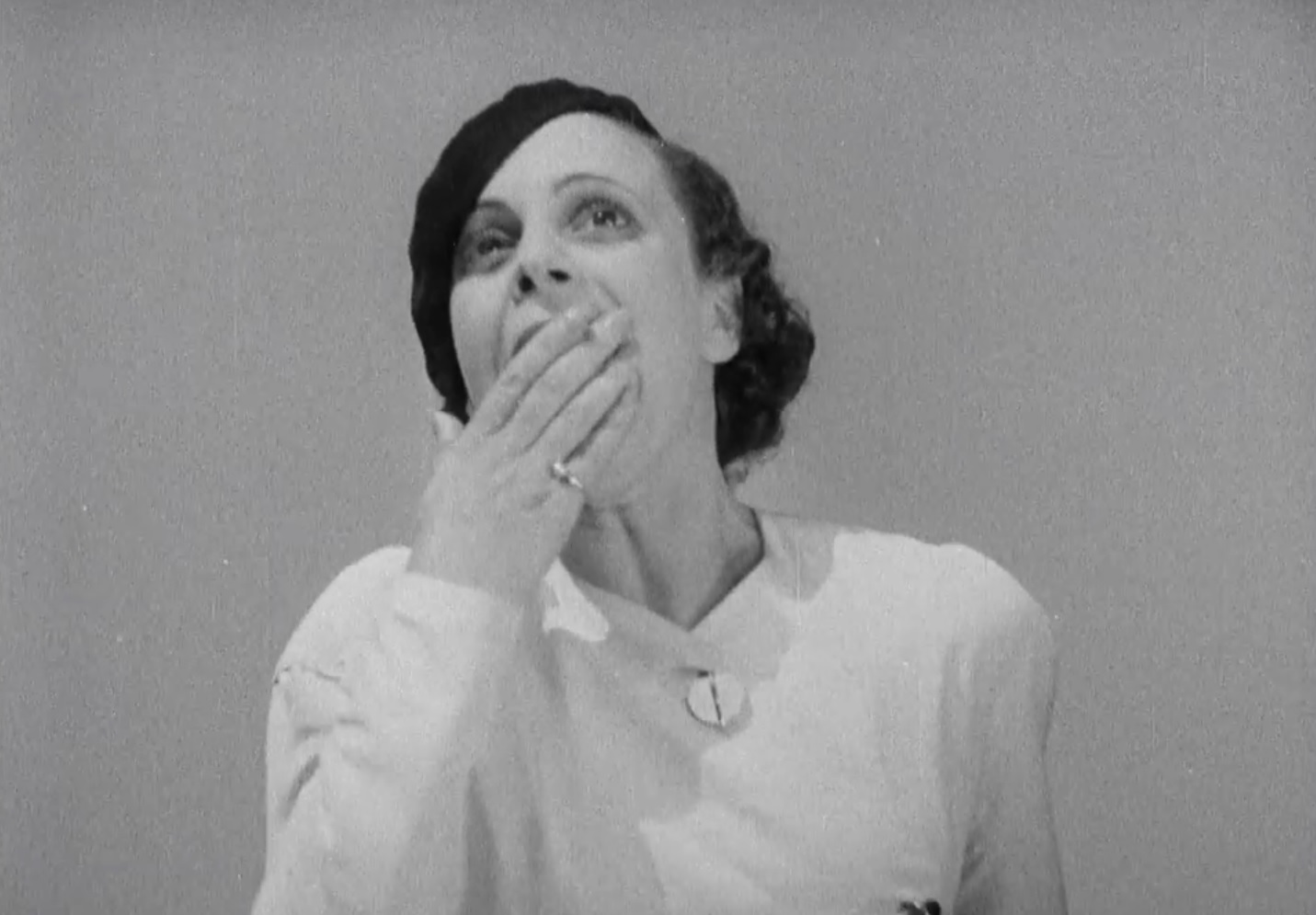
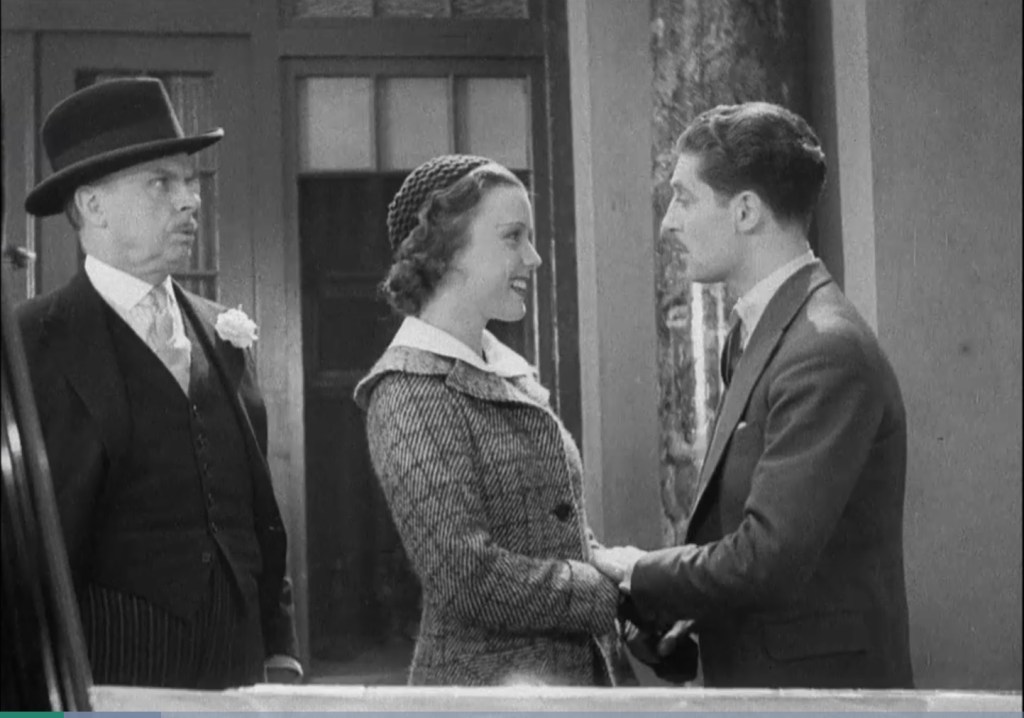
Anthony Berkeley – Trial and Error (1937)

Crime novelist Anthony Berkeley (born Anthony Berkeley Cox in 1893) was one of the key crime writers of the interwar period, producing books both as Anthony Berkeley and as Francis Iles. Many of his books innovated the crime genre, such as The Poisoned Chocolates Case (1929) in which the members of an amateur crime detective club each put forward unique and plausible solutions to the same crime.[1] In Before the Fact (1932, written as Francis Iles) the female protagonist becomes gradually convinced that her husband is planning to murder her.

Berkeley’s main sleuth was Roger Sheringham, an amateur detective and author. It was common, indeed expected, for interwar crime writers to have a regular detective character, and Berkeley wrote ten novels starring Sheringham. His crime novels that do not include Sheringham, however, allowed him more flexibility in terms of plot development. This is also true of Trial and Error, which Berkeley wrote in the mid-1930s. Trial and Error does feature other characters from the Berkeley crime universe, such as the bumbling Ambrose Chitterwick who also stars in The Poisoned Chocolates Case and The Piccadilly Murder (1929).

The plot of Trial and Error is as typically convoluted and rewarding as can be expected from Berkeley, including a twist in the very final sentence of the book. Like other crime novels by Berkeley and his fellow writers, the plot is based on a historical crime, in this instance a case from 1864.[2] In Trial and Error, Lawrence Todhunter is told he is going to die of an aortic aneurysm at some point soon – as long as he does not exert himself, he may live another year, but anything that increases his heartrate may kill him.

Todhunter asks his friends a seemingly hypothetical question – what would they advise a man who has only a few months left to live, to do? The unanimous response is that such a man should kill someone – after all, the death penalty would form no deterrent. Although Todhunter at first entertains thoughts of killing Hitler or Mussolini (the latter of which was seen as a bigger threat in 1937)[3]; he eventually decides to kill an ‘ordinary’ person who makes the lives of those around them miserable. He finds his victim in Miss Jean Norwood, a stage actress who seduces married men and then financially drains them.

The selection of Miss Norwood as the victim and her eventual successful murder takes up less than the first half of Trial and Error. The second half of the book is concerned with the aftermath – and this is where it copies the historical case. After the murder Todhunter decides to go on a world tour, expecting to peacefully die somewhere en route. Several weeks into his trip, however, he is horrified to find out that another man has been arrested for the murder of Jean Norwood. Todhunter speeds back to England to prove his guilt – but he has been so thorough in hiding his tracks that there is no material evidence to convict him, and the police do not believe his confession.

With the other man tried and found guilty, Todhunter has very little time to prevent the execution of an innocent man (the time between conviction and execution was traditionally only three weeks). Together with his friends, he comes up with a plan. One of his friends, a civil servant, sues Todhunter for the murder under civil law. Whilst the police controlled who would be prosecuted in a criminal court, anyone could bring a case to anyone else a civil court. Todhunter actively works with the prosecution’s legal team to make the case against him as strong as possible. They also ensure that the case gets plenty of press attention, which in turn leads to political debate. The execution of the previously convicted man is paused until Todhunter’s case is completed. At the end of the book, Todhunter is victorious – he gets found guilty of the murder and sentences to death, whilst the other man walks free.  

In Trial and Error, Todhunter’s impending aneurism not only provides the catalyst for the plot, but it is also an effective tool to ratchet up the tension throughout the narrative. During the trial, Todhunter is increasingly worried he may die before he is convicted, and his friends shelter him away from the media circus to keep him alive. The tight timelines of the criminal court case and execution also put the pressure on Todhunter, which of course in turn makes him more likely to suffer his aneurism.

But beyond the race to save a condemned man, Trial and Error raises some questions about the British justice system. The man who is originally convicted is innocent – the police have been able to provide motive and circumstantial evidence and the jury has made its decision based on that. When Todhunter returns to Britain and makes a full confession, the police are unwilling to believe him.[4] A miscarriage of justice is a very real possibility in this scenario. Because Todhunter is initially unable to provide any material evidence to back up his confession, he is disbelieved. Technical advances in policing have made physical evidence so important that even a genuine confession holds no weight.

Like other Berkeley books, such as The Poisoned Chocolates Case and Before the Fact, there is no direct connection between those who commit murder and those who get punished for it. Whereas other crime novelists such as Dorothy L. Sayers and Agatha Christie often ensured that their criminals were either killed or arrested at the end of the novel, Berkeley’s books are much more ambiguous. This critical stance at the British justice system is perhaps one of the reasons why Trial and Error has only been transferred to the screen once, in a 1958 BBC miniseries. Berkeley’s satire still raises uncomfortable questions about the robustness of Western justice systems.


[1] Martin Edwards, The Golden Age of Murder (London: HarperCollins, 2015), pp. 85-86

[2] Ibid., p. 360

[3] Anthony Berkeley, Trial and Error (London: Acturus, 2012), pp. 12-13

[4] Ibid., pp. 125-129

Murder in Soho (1939)

Murder in Soho (1939)

On the eve of the Second World War, Associated British Picture Corporation produced Murder in Soho, a gangster flick starring American actor Jack La Rue (not his real name, obviously). The presence of Italian-American La Rue, with his cleft chin and strong jawline, brings Hollywood glamour to what is otherwise a crime film with an extremely thin plot. Murder in Soho appears to be a solitary British outing for the actor, although he did take the opportunity to get married whilst visiting London for the film’s shooting.

Like the almost contemporaneous They Drive By Night, Murder in Soho works hard to incorporate American slang into its dialogue, presumably to appeal to younger audiences. They Drive By Night, however, was produced by the British arm of American studio Warner Brothers. Murder in Soho comes from a British production company that was Hitchcock’s home for many of his silent films including Blackmail (1929); Murder! (1930)and The Skin Game (1931). Alongside these British thriller/crime films, ABPC (which previously operated as British International Pictures) also produced musical films such as Harmony Heaven (1930) and Over She Goes (1937). They did not have a strong background in producing American-style crime films – and it shows.

The plot of Murder in Soho is extremely thin. La Rue plays nightclub owner Steve Marco, who runs the ‘Cotton Club’ in Soho. He has just hired a new singer for the club, Ruby Lane. Steve is interested in Ruby as he thinks she has ‘class’. He doesn’t know, however, that Ruby is married (but separated from) Steve’s British associate Joe Lane. When Joe betrays Steve and steals £2000 off him, Steve kills Joe. Soon police inspector Hammond comes asking questions. He recruits Ruby to work with him and reveal Steve’s criminal activities. Also in the mix, although largely superfluous to the plot, are a journalist called Roy Barnes who frequently visits the club and falls in love with Ruby; Steve’s ex Myrtle who he has dumped in favour of Ruby; and performing duo ‘Green and Matthews’ who also work at the club.

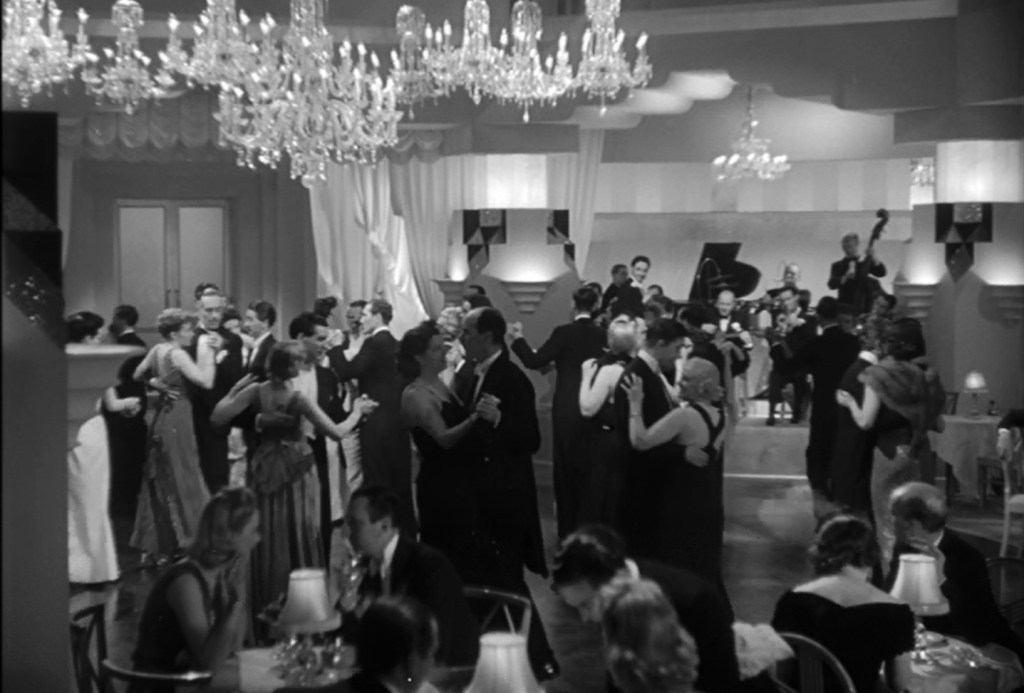
The ‘Cotton Club’ in Murder in Soho

Murder in Soho contains all the popular elements of a 1930s crime film: a nightclub; an international criminal gang; a singer; a police inspector; a journalist. Yet these elements are not fused together with a compelling plot or livened up by any original ingredient. Indeed, the film’s insistence to try and introduce Americanisms into the narrative detracts even more from the action. Steve and his henchmen speak in thick Italian-American accents. The character ‘Lefty’ in particular, who is the young comedy sidekick, litters his dialogue with references to ‘dames’ and ‘cops’. The name of the club obviously refers to the famous Harlem nightclub – but there were no British Cotton Clubs and the name does not have the resonance in Britain as it would do in the United States. Steve employs Black bartenders in his club – again a practice which was much more common in the States than it was in Britain. Compared to depictions of nightclubs in other British films of the 1930s, the Cotton Club in Murder in Soho feels more like a replica of a Hollywood set than of anything resembling British nightlife.

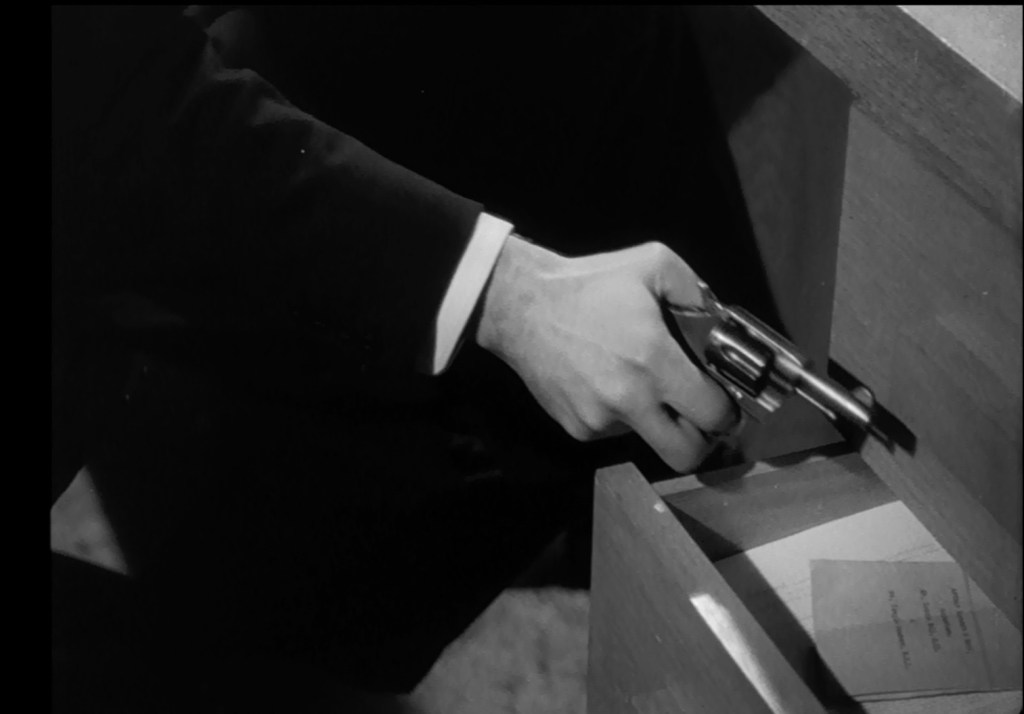
Gun-toting American gangsters in Murder in Soho

The very opening of Murder in Soho also presents a version of Soho that was much more deliberately criminal and seedy than what is usually presented in British films. Familiar shots of the neon lights of Piccadilly Circus are interspersed with a close-up shot of a roulette table; a shot of an underground dive bar; and a shot of two prostitutes propositioning a man in an alleyway. Unlike the majority of British films of the period, which worked to preserve an image of London and Londoners as ultimately adhering to the law and to a high moral code, Murder in Soho explicitly positions Soho as a criminal space. Granted, the main criminal element in the film is foreign, but Joe Lane is British, as is Myrtle, Steve’s scorned ex who ends up killing him. Soho here is a lot seedier than the Soho portrayed in, for example, Piccadilly (1929).

Rather surprisingly, then, Murder in Soho also contains plenty of comic notes, and a few secondary characters who are only included to provide comedy relief. Most notably, the performing duo Green and Matthews, which weave throughout the narrative. Lola Matthews is portrayed by Googie Withers, who this early on in her career already had made a name for herself as an excellent comic actress. As Lola she patters on non-stop, innocently flirting with every man and completely oblivious that her dance partner Nick Green is besotted with her. A frequent club visitor whose role is simply credited as ‘Drunk’ provides diversion in scenes when he tries to eat with chop sticks or enters the dancefloor for a solo performance. These interludes do undercut the drama and suspense that the film attempts to create at other points.

Murder in Soho is a late-interwar curiosity – a film that tries to appeal to British audiences by inserting American glamour; a film that tries to be both serious and funny at the same time; and that ends up feeling like a painting-by-numbers effort that adds up to less than the sum of its parts.

Typist or servant?

The Daily Mirror was originally launched in 1903 as a newspaper specifically for women.[1] Although its original format was a commercial failure, after a re-launch as a picture paper the Mirror continued to cater to female audiences. As well as covering news stories, the paper also contained feature articles on topics of interest to women.

In November 1934, author Ellen Dorothy Abb wrote up a three-column article for the Mirror under the heading ‘Which is better off, typist or servant?’.[2] Alongside adverts for Phillips Rubber Soled Shoes, antiseptic ointment and a Vaseline for children, Abb sets out to convince the reader that a young girl is better off working as a servant than as a typist. Before the First World War, domestic service was one of the few types of employment available to uneducated women. By the mid-1930s, women had a range of other jobs they could choose from, for example in factories or, as Abb suggests, in offices.[3] Nonetheless, about a quarter of working women were domestic servants at the beginning of the 1930s.

The tone of Abb’s article, however, suggests that women needed convincing to enter domestic service. There was certainly a perception that young women, particularly in the cities, were keen to work in offices instead. Abb’s argument is primarily an economic one. Two-and-a-half of the three columns discuss the supposed material advantages of the servant’s job. These mainly concern the savings servants make on not having to pay for rent, transport or food (pre-supposing the servant in question lives with their employers full-time, which was an increasingly rare occurrence). She neglects to mention that unlike typists, servants had no entitlement to National Insurance benefits.

In Abb’s telling, the servant’s life seems almost luxurious compared to that of the typist:

[The servant] eats her excellent meals at leisure and never has to scamp them to catch a train or fit in half an hour’s shopping at lunch hour.[4]

This may well be true, but the prospect of an employer who can ring for you at any time of the day or night, including during mealtimes, is not raised. Nor is the very frequent occurrence of servants being given poorer quality food than their masters, mentioned. When discussing the daily routine, Abb’s juxtaposition of the typist and the servant stretches credulity even more:

[The servant] has none of the tiring morning and evening rush the typist knows, with washing and mending making further inroads into her scanty leisure, even if she has not to start cooking and cleaning when she gets home.[5]

Again, the generally much longer working hours of the servant are ignored, and there is no suggestion why the servant would not be required to do her personal mending after the chores of the house have been completed. In Abb’s telling, however, the servant’s life seems to be one mostly of leisure, whereas the typist is presented as having to work in ‘noisy, dusty, crowded offices, badly ventilated and using artificial light all day.’[6]

Abb then moves to that sleight-of-hand beloved of interwar journalists, and references an anonymous example which the reader is assured refers to a real person. In this case, a 35-year-old typist decided to switch careers to domestic service. Unsurprisingly, this ‘person’ found that they had more money to spare as a domestic, and they were berating themselves for not starting in service earlier as that would have allowed them to have progressed to a more senior position by now.

After setting out the case for the servant’s superior financial and domestic comfort at such lengths, Abb finally turns to the reasons why the majority of young women choose to ‘accept the pinching and scraping that goes with the typist’s life’ – complete freedom during leisure hours, social recognition, and the opportunity to meet friends and potential partners. Being a servant carried a certain social stigma, as Abb concludes that for most girls it would be too shaming to admit to a potential partner if they worked in service.

At the end of the article there is a call to action for the readers, inviting them to write in and give their opinion on the matter. The invitation is specifically to female readers, as the editors want to know ‘Which would you sooner be? If you are one or the other – would you like to change – and why?’ There is no follow-up article but a short notice printed on the following Tuesday that due to the sheer number of responses received, letter writers will not be getting an individual response – a time-honoured convention to give the illusion of popularity without having to provide any evidence for it.[7]

Clearly, the article taps into a wider debate on what constituted an appropriate job for a women. Female typists were a relatively new phenomenon in the 1930s, an evolution of the 1920s flapper which had caused considerable consternation in the British press. Abb and the Daily Mirror carefully calibrated the article to elicit responses from both those who believed women should go into domestic service, and those who thought being a typist was the better option. Ultimately, however, the article sets up an artificial rivalry between two groups of women in order to generate debate. Although the Mirror may be aimed at women and provide articles written by women, it is far from supportive to women.


[1] Adrian Bingham and Martin Conboy, Tabloid Century, (Oxford: Peter Lang, 2015), pp. 8-9; Kevin Williams, Get me a murder a day!, 2nd ed. (London: Bloomsbury, 2010) p. 55

[2] Ellen Dorothy Abb, ‘Which is better off, typist or servant?’, Daily Mirror, 16 November 1934, p. 12

[3] Miriam Glucksmann, Women Assemble: women workers and the new industries in inter-war Britain (London: Routledge, 1990), pp. 52-3 

[4] Abb, ‘Which is better off’, p. 12

[5] Ibid.

[6] Ibid.

[7] ‘Typist or Servant’, Daily Mirror, 20 November 1934, p. 10

Should journalists go to university?

The interwar period saw the continued rapid expansion of print media, which started in the Victorian and Edwardian period. A host of tabloid newspapers launched between 1896 and 1910, including the Daily Mail, Daily Mirror and Daily Express. During the 1920s and 1930s national newspapers aggressively sought to expand their readership. In addition to the national morning papers, British readers could also enjoy Sunday and evening papers, as well as local newspaper titles. The magazine and periodical market also continued to expand, providing content catered to specialist interests.

This ever-growing market required a constant and increased supply of journalists to provide content to all these publications. Journalism was an occupation without formal entry requirements, and traditionally journalists were trained on the job. The sheer size of the print media sector meant that most British people learnt about current affairs, and the world around them, through journalists’ reports. As the interwar period progressed, there were increased concerns about the influence that this group of writers, who often lacked formal qualifications, yielded over the British public. These concerns crystallised in a debate which has continued for the remainder of the twentieth century: should journalists receive a formal university qualification, or is it better to receive on the job training?

As a government-issued report in 1938 noted,

Most London journalists are still recruited from the ranks of the provincial Press. In the past this has meant that reporters and sub-editors on Fleet Street were men whose formal education ceased when they left school at the age of 14 or 15, and this has been a considerable obstacle to the raising of the cultural standards of the Press.[1]

The raising of the ‘cultural standards’ of the press is closely linked to the level of formal education received by journalists, and there was a real concern that journalists ended up having to report on items that they would not understand, which could lead to incorrect reporting. Formal education for journalists, then, seemed to be the answer, but the sector continued to be sceptical about the value of this.

Recent studies suggest that journalism was not established as a university subject in Britain until the 1970s, and that compared to other English-speaking countries, journalism has not been considered a subject worthy of study in Britain.[2] It is true that journalism enjoys a much longer history as a university subject in the USA, and that Australian universities and journalism professional bodies collaborated in the interwar period to build a recognised and respected curriculum.[3] Although developments in Britain were less structured or widespread, here too, the first university course in journalism was established in 1919.

This Diploma for Journalism was established at the University of London, initially as a training course for ex-servicemen who were entitled to government funding for their education.[4] The diploma course existed up until 1939 and throughout the interwar period was the only university course in journalism.[5] Its creation suggests that there was an appetite for university-educated journalists. However, from the start, the diploma was ambivalent about its purpose, and had detractors as well as supporters in the journalism sector.

Initially, students on the diploma took only academic subjects which were part of degree courses delivered by the University of London, such as general history, languages and composition.[6] Unlike students on degree courses, however, the diploma was open to students who had not passed the matriculation exam, the general entry exam for entry onto University degrees.[7] From the start, the academic nature of the course drew criticism from, amongst others, the National Union of Journalists. Throughout the interwar period the syllabus was revised, including a significant update in 1933 after which students spent at least a third of their time on ‘practical journalism.’[8]

According to surveys undertaken by the diploma’s own lecturers, a significant number of graduates landed jobs in the regional or national press, and graduates were generally positive about their experiences on the course.[9] It should also be noted that the diploma welcomed a significant number of female students, who may have experienced barriers entering other types of university education. However, the course delivery team did not unpick whether the diploma was the deciding factor in graduates obtaining employment.

Teaching on the diploma was delivered by journalists, and guest lectures were delivered by high-profile industry names. Needless to say, none of them had themselves undertaken any formal journalism training, and even those involved with the diploma hesitated to state categorically that it was a necessary pre-requisite to employment in the newsroom. When Frederick Peaker, president of the Institute of Journalists, delivered an address on ‘The Training of the Journalist’ to the International Association of Journalists in 1927, he talked at length about the diploma course, but still concluded that ‘the real training of the journalist must be inside a newspaper office.’[10] According to Peaker, the diploma gave the complete novice a general sense of what is required of the role, but the real training began once they are in the newsroom.

Interestingly, graduates of the diploma mostly praised the solid grounding in general knowledge that they received, which expanded their analytical skills.[11] This implies a tacit acknowledgement that practical skills were better learnt in the work environment, a sentiment echoed by Scottish journalism graduates nearly 100 years later.[12] Despite the diploma course, which saw healthy enrolments throughout its twenty years of existence, the 1938 government report still raised concerns about the general lack of education of journalists. As a profession without entry requirements, journalism was difficult to regulate, despite the government’s efforts in stimulating the diploma course. The persistent ethos that the best route into journalism was that of starting at the bottom and working your way up, further hindered acceptance of formal qualifications for journalists. Although those taking the diploma clearly benefited from it, the general view remained that journalists should not go to university.


[1] Political and Economic Planning, Report on the British Press: a survey of its current operations and problems with special reference to national newspapers and their part in public affairs (London: PEP, 1938), p. 14

[2] Mark Hanna and Karen Sanders, ‘Journalism Education in Britain: Who are the students and what do they want?’, Journalism Practice, vol. 1, no 3 (2007), 404-420 (p. 405); Simon Frith and Peter Meech, ‘Becoming a Journalist: Journalism education and journalism culture’, Journalism, vol. 8, no 2 (2007), 137-164 (p. 138)

[3] Kate Darian-Smith and Jackie Dickenson, ‘University Education and the Quest for the Professionalisation of Journalism in Australia between the World Wars’, Media History, vol. 27, no. 4 (2021), 491-509

[4] Frederic Newlands Hunter, ‘Grub Street and Academia: The relationship between journalism and education,1880-1940, with special reference to the London University Diploma for Journalism, 1919-1939’, unpublished PhD thesis (City University, 1982), pp. 160-161; PEP, Report on the British Press, p. 14

[5] Ibid., p. 205

[6] Ibid., p. 164

[7] Ibid., p. 167

[8] Ibid., p. 188

[9] Ibid., p. 184

[10] Frederick Peaker, The Training of the Journalist. An Address (London: International Association of Journalists, 1927), p. 14

[11] Newlands Hunter, ‘Grub Street and Academia’, pp. 183-184

[12] Frith and Meech, ‘Becoming a Journalist’, p. 152

Mr Smith Wakes Up (1937)

Although the 1930s are primarily remembered for the rise of right-wing politics across Europe, including the increased popularity of the British Union of Fascists (see blog posts here and here), there were of course also activists on the left of the political spectrum. Although the Labour party served in the opposition rather than the Government from 1931 until the outbreak of the Second World War, the 1930s saw the start of some social reforms, particularly in housing and medical care.

In 1937, the Co-op sponsored a short film designed to encourage viewers to question some of the tenets of capitalism and free markets. This information film, Mr Smith Wakes Up, would have been shown in cinemas as part of a mixed programme of features, newsreels and cartoons. Advertisement films from the period were often also lengthy and designed as mini-narratives, making them quite close in appearance to this short film. Mr Smith Wakes Up, however, does not aim to sell goods but rather to influence people’s political thinking.

In Mr Smith Wakes Up, we are introduced to William and Elizabeth, a middle-aged and fairly wealthy couple who live in a nice suburb in a house called ‘Utopia’. Their house is worth a couple of thousand pounds and all the other people in the area are of the ‘better class’ which William defines as them being ‘mostly on the stock exchange.’ The vast majority of houses sold in 1930s Britain were worth less than a thousand pounds, so it would have been immediately clear to the contemporary viewer that William and Elizabeth are well-off. They also still keep a parlour maid and a cook, despite the ever-increasing servant problem significantly raising the cost of keeping servants.

William and Elizabeth are unexpectedly visited by Mr Smith, a friend of their son who had been to Africa. We never learn Mr Smith’s first name or which part of Africa he is from. By his own accord, he has come to the ‘great civilization’ of Britain to learn how it is set up, so that he can take it back to his tribe which he himself describes as ‘very primitive people’. For the remainder of the film, Mr Smith asks William and Elizabeth about how things like housing, medical care and food distribution are arranged in Britain. William consistently takes the position defending capitalism and the free market, whereas Elizabeth acknowledges that there are problems with wealth distribution in the country.

When discussing housing, for example, Mr Smith asks if all people in England own their own homes. William admits that this is not the case, but that the working classes can live in rental homes on ‘nicely planned’ housing estates. His arguments are accompanied by shots of one such an estate. Elizabeth then points out that there is still a housing shortage and that the new estates may lead people to have long and expensive commutes. She also raises the prospect of slums, which were still commonplace in pre-War British cities. The audience is duly presented with shots of slum housing, followed by images of very skinny children being examined by a doctor, when Elizabeth points out that slum living makes people ill.

Later on in the discussion the three actors discuss food distribution, re-armament and the ‘cost of living’. Wages have risen, but so have the costs of food, housing and heating, meaning many people are still struggling to make ends meet. In phrases that will sound very familiar to viewers in the early 2020s, William argues that people need to economise more, while Elizabeth points out that for large, low-income families there is nothing left to economise on.

Unfortunately, there are no opening credits preserved to the film so it is not possible to identify the actor playing Mr Smith, but it is safe to presume he was either born in Britain or one of Britain’s overseas territories in the Caribbean. Like American actor and activist Paul Robeson, who was often forced to portray stereotypical African tribesmen, the character of Mr Smith supposedly comes straight from an African rural tribe. At the same time, he also wears a very smart suit and overcoat when arriving at Utopia, and his English is flawless. Although his skin colour causes some consternation when he first arrives at the house, Mr Smith is accepted because he is able to pass as a gentleman, and he does not criticise any aspect of Britain. He even praises the food available in Britain as superior to African food, which stretches credibility.

At the end of the film, Mr Smith states that a nation should give its people food, health and protection. The preceding discussion has made clear to him that Britain is failing to provide this to all its citizens. His voice is accompanied by idyllic scenes of African tribes working and playing together. He argues that African tribes do not go to war as long as there is sufficient food available; and that if they do go to war, their methods of combat are more equal than those of Western nations. Nonetheless, he remains grateful for what William and Elizabeth have ‘taught’ him, and takes his leave.

After he has gone, Elizabeth looks in on the kitchen. Cook is just packing her bag to go home, and decides to take left-over meat to cook for her husband, as otherwise it will only go to waste. Elizabeth indulgently smiles and lets her take the food, and then tells the parlour maid she can go up to bed even though the washing up has not been completed. From her position of privilege, Elizabeth generously allows her staff these luxuries. William sits in the study pondering whether ‘peace and plenty’ are as adequately provided for in Britain as he had assumed. There is no indication, however, that either will take any further-reaching political action as a result of their conversation. Instead, their actions stay on the personal plane.

Despite the leading role of Mr Smith, and the film’s sympathetic portrayal of ‘African’ culture, it is clear that its target audience is white. Contemporary audiences for Mr Smith Wakes Up were unlikely to have recognised themselves in William and Mary – cinema viewing remained largely an activity for the working- and lower-middle classes, who were more likely to already be sympathetic to the left-of-centre views the film espouses. Although the filmmakers may have wanted to encourage people like William and Mary to re-consider their political views, it is doubtful whether many wealthy people would have seen the film or taken any notice of it. Although Mr Smith Wakes Up gives modern audiences insight into the socio-political debates and concerns of the late 1930s, it possibly was not effective in generating political change at the time it was created.

Mr Smith Wakes Up is available to view on YouTube.

Henry Wade – Heir Presumptive (1935)

In the Golden Age of crime fiction, many authors were tempted by the ‘perfect murder’. In Dorothy L. Sayers’ Unnatural Death, Lord Peter Wimsey ruefully states that the perfect murder would never be considered a murder, and would therefore necessarily go undetected. In 1936, six writers of the Detection Club each wrote a short story containing the ‘perfect crime’. Each story was then followed by an analysis of a retired CID inspector, who unpicked whether the crime would be detected in real life, or not.[1] The inspector concludes that in each case, the police would eventually identify the killer – not surprisingly, he probably felt that to admit otherwise was to invite readers to have a go at replicating the ‘perfect murder’!

This is how it ends up in most interwar crime stories – no matter how ingenious the plot, usually the killer gets caught and either brought to justice, or given the option to take the ‘honourable way out’ and commit suicide. Not so, however, in Henry Wade’s Heir Presumptive. In this inverted murder story, the murder central to the book is judged to be an accident.

Henry Wade was one of the original members of the Detection Club. An ex-soldier, he turned to crime fiction writing after the Great War. Unlike most other crime writers of the period, he was genuinely part of the landed gentry – his real name was Henry Lancelot Aubrey-Fletcher.[2] Wade used his insider knowledge of entailed estates to concoct the plot of Heir Presumptive, which features a family tree so intricate that a diagram is provided on the first page of the book (and to which this reader, for one, grateful referred back to multiple times).

The main character of the book is Eustace Hendel, a 35-year-old member of the secondary branch of descendants of the 1st Baron Barradys. The Baron’s title and estate are being passed down the male line and Eustace is far removed from them. He trained as a doctor, but after meeting ‘a rich widow’ who then ‘conveniently died’ (through natural means) Hendel came into an inheritance that allowed him to live as a man of independent means.[3] At the opening of the book, these means have nearly run out, debts are racking up, and Hendel is on the look-out for a way to continue his lifestyle without having to work. He also has a relationship with Jill, an actress who makes it clear that she will not stick around if Eustace can’t afford her.

When Hendel reads in the paper that the son and grandson of the current Baron Barradys have both died in a mysterious swimming accident, he makes sure to attend the funeral, in the hope of mending relationships with his wealthy family. Hendel re-acquaints himself with his cousin David, who is now unexpectedly the next heir to the family name and estate. David’s only son is a 20-year-old invalid who is expected to die soon. However, David is young enough to remarry, and there is a general expectation that he will do so now that he is next in line for the inheritance.

It is at this point that Eustace formulates his plan. After David and his invalid son, he believes he himself is the next male heir. If he kills David and the son dies as expected, then he would become the next Baron, and inherit the sizable estate attached to that title. And even until the current Baron dies, being next in line to inherit would be sufficient to secure loans and favours.

It is clear at this point in the book, about six chapters in, that Eustace Hendel is not a sympathetic character. He is greedy, lazy, and openly contemplating murdering his next of kin for his own benefit. Wade surprises, then, by allowing Hendel to execute the perfect murder. David invites him up to his lodge in Scotland, to go deerstalking. On the final day of the trip, David and Eustace go off without assistance to a remote part of the estate. After Eustace shoots a stag, he asks if he can also be the one to cut its throat to allow it to bleed out quickly. Feigning a slip, Eustace instead plunges the knife into David’s femoral artery.[4] After that, the remote spot and lack of onlookers make it easy for Eustace to ensure David bleeds to death before help can be found.

Although there is of course an investigation by the Scottish authorities, who are presented as more thorough and less obliging than their English counterparts, in the end, they decide not to pursue a criminal investigation. Although Wade allows Eustace to get away with the perfect murder from the perspective of a prosecution, he does not get the enjoy the expected benefits of his deed. The current Baron starts exploring options to cut Eustace out of the line of succession altogether, based on the general unfavourable impression he has of him.

In order to change the line of succession, the Baron needs the agreement of the current heir, David’s sick son Desmond. Eustace starts visiting Desmond and, under increasing pressure of Jill and various moneylenders, starts planning a second murder. Before he has time to execute it, however, Desmond dies. It is here that the reader starts to realise that Wade has been stringing them on all along. Although the focus has been almost exclusively on Eustace Hendel, it turns out he has been nothing but a pawn in someone else’s plan.

All along, the real mastermind has been David’s brother-in-law, lawyer Henry Carr. Henry orchestrated the swimming accident of the original heirs; Henry killed Desmond; and, after offering legal advice to Eustace, Henry frames Eustace for Desmond’s murder and then kills Eustace himself, making it look like a suicide. As if this isn’t enough, Eustace finds out just before he dies that whilst he is due to inherit the title of Baron, the estate and money are not passing through the male line and will instead be inherited by Henry’s wife (who is completely oblivious as to her husband’s murdering schemes).

For the final few pages of the book, after Eustace has died, the perspective switches to that of Henry Carr. We move from a world of country houses and independent incomes to suburbia – Carr travels by Underground to Waterloo as a seasoned commuter. ‘It was past the hour of the daily rush return from work, though the third-class carriages were fairly full; he himself never travelled first-class on ordinary occasions, but this was one on which he thought the luxury was justified.’[5] The motive for his murdering was to allow his wife to move out of the ‘semi-detached villa’ and to be able to afford the school fees for the children – middle-class aspirations if ever there were some.[6]

In the end, then, it is not the lazy, good-for-nothing playboy who is the threat to the upper classes, but rather the ambitious professional man who stops at nothing to give his wife and children a better future. Heir Presumptive is a cynical book, perhaps reflecting Wade’s ‘pessimism about the state of Britain’.[7] Eustace, Henry, even Jill – all are grasping for more than they have, without wanting to work for it. But whilst Eustace manages to orchestrate the perfect murder, he is too naïve to see the trap he walks into himself. Henry Carr, for all his cleverness, also has to reckon with justice – the final line of the book announces that ‘In the hall stood Chief-Inspector Darnell, accompanied by a uniformed police officer.’[8] Ultimately, Wade reassures the reader that no matter how clever the crime, justice will eventually be served.


[1] Published as Six Against the Yard (London: Selwyn & Blount, 1936). See Martin Edwards, The Golden Age of Murder (London: Collins Crime Club, 2016), pp. 285-6

[2] Edwards, The Golden Age of Murder, p. 194

[3] Henry Wade, Heir Presumptive (London: Remploy, 1980), p. 3

[4] Ibid., p. 77

[5] Ibid., p. 203

[6] Ibid. pp. 203-7

[7] Edwards, The Golden Age of Murder, p. 197

[8] Wade, Heir Presumptive, p. 209

Brooklands

Brooklands

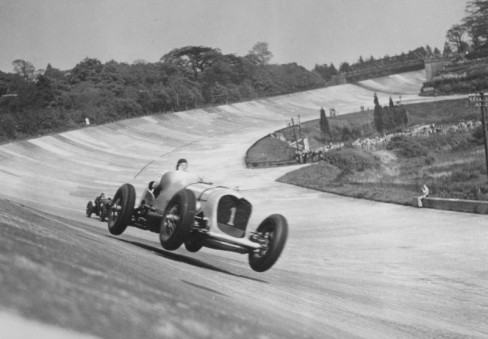
Brooklands race course was an institution in interwar England. Opened in 1907 in Weybridge, just south of London, it was the world’s first purpose-built, permanent racing circuit. Coinciding with the rise of car manufacturing in England, Brooklands was used to test out and perfect new car models. Like greyhound racing and horse racing, Brooklands races became a popular entertainment. Each race held the potential for injury and death, which piqued the audiences’ interest.

Still from Death Drives Through (1935) which was shot at Brooklands

The Brooklands track could be shaped into different configurations, but was mostly used as a long oval lap, made of concrete, and concave, so that the outer edges of the track were higher than the middle (like a modern indoor speed cycling circuit). Footage shot in 1928 shows how cars started on a flat section, and how drivers were positioned outside their vehicle at the start of a race. Pit stop booths were available for technical check-ups during the race. Although the cars in this particular footage look fairly similar to normal road cars, there were plenty of racing cars being developed also.[1]

Examples of these racing cars are on display in the 1935 film Death Drives Through, directed by Edward L. Cahn. Most of the action of this film is set in and around Brooklands, as the main characters of the film are two rival race car drivers. Kit Woods (Robert Douglas) is an up-and-coming driver who built his own race car and used to drive on local tracks before being talent-spotted and contracted to appear at Brooklands. Once he arrives there, established racer Garry Ames (Miles Mander) does everything within his power to destroy Kit’s reputation, including causing accidents on the race track. Death Drives Through features a staged crash at Brooklands which ends in the death of a driver, highlighting the potential for danger which was contained in each race.

A 1938 Gaumont newsreel features footage of a real Brooklands crash. Because the driver in that instance survived the accident, the newsreel commentator can play the incident up as thrilling entertainment, which was ‘filmed exclusively by Gaumont British News’.

‘Mr Clayton was flung out into the trees….miraculously he escaped death although he was seriously injured…his car was reduced to wreckage…below the banking outside the track it was a crumpled mess…hardly to be recognised as a car.’

The newsreel as a whole is titled ‘120 M.P.H CRASH AT BROOKLANDS’, making no bones about the fact that the crash, rather than the overall race, was what was expected to be of interest to audiences.

Racing drivers became celebrities, to the point that by the mid-1930s, their endorsements were featured in Castrol car oil adverts. Drivers not only competed in England, but also participated in European competitions which potentially increased their profile even more.[2] The British Government gratefully used the fame and prestige of some drivers in its own ‘Safety First’ campaign, launched in 1934. The purpose of this campaign was to increase road safety. In the absence of any formal driving test, racing driver the 5th Earl of Howe patiently explains to viewers how to indicate and overtake, and advises against canoodling with a lover whilst driving a car. Although none of the regular traffic rules would apply on a race track, the audience is still asked to presume the Earl to be an expert adviser, both due to his title and his status as a racing driver.

Racedriver John Cobb endorsing Castrol XXL – Front page of the Daily Express, 11 August 1934

There were plenty of women racing at Brooklands too – like aviation, car racing was a sport in which technical skill, rather than physical strength, were paramount. Despite initial opposition, from 1932 onwards women were allowed to compete in the same races as men. One of the most famous female drivers, Kay Petre, appears in the 1938 video showing a crash, referred to above. There are plenty of stories about other female drivers available on the Brooklands Museum website.

A final note on the audiences to these races. The 1928 footage referred to at the top of this blog shows an audience apparently exclusively made up of middle-aged men in three-piece suits and top hats. By 1938, the audience is much more mixed both in terms of gender and (judging by the clothes) social status. There are plenty of men visible in flat caps, or even, no hats at all. There also appears to be a much larger crowd than ten years’ prior.

This change reflects the overall change to car ownership which happened in parallel, away from the race track. Whereas car ownership had started off as something exclusive and only available to the very wealthy, by the end of the 1930s cars were affordable to most middle-class families. This greater exposure to car driving likely also increased interest in car racing. Although most racing drivers came from privileged backgrounds (if not from the actual aristocracy, then at least from wealthy families), there was always the possibility for a ‘regular’ person with technical knowledge and talent to establish him- or herself. Death Drives Through pandered to this fantasy, as Kit is exactly the kind of enterprising and plucky hero whom audience members could relate to. The tracks of Brooklands become not just a space for thrills and entertainment, but also a site of dreams of social mobility.


[1] Bart H. Vanderveen (ed), British Cars of the Late Thirties, 1935-1939, (London: Frederick Warne & Co, 1973)

[2] Bernhard Rieger, ‘Fast  couples’:  technology,  gender  and  modernity  in  Britain  and  Germany  during  the  nineteen-thirties”, Historical Research, vol. 76, no. 193 (August 2003), 370

Fascination (1931)

Fascination (1931)

Three years after his directorial debut, the silent film The First Born (1928), Miles Mander tried his hand on two sound films. The first, The Woman Between, was an adaptation of his own stage play ‘Conflict’. The second, Fascination, was based on another writer’s script. Unlike some actor-directors, like Tom Walls, Mander decided to restrict his duties to directing only and did not appear in either film.

Fascination’s main attraction for modern audiences is the starring role of future ‘Hitchcock Blonde’ Madeleine Carroll, appearing here four years before her famous role in The 39 Steps opposite Robert Donat. According to the DVD sleeve notes, only one 35mm copy of Fascination survives in Britain, of which the sound and image quality leave something to be desired. It is, however, eminently watchable, not only for Carroll’s performance, but also as an interesting counterpoint to The Divorce of Lady X which was released seven years later. Both films deal with marital fidelity, but whereas the later film treats infidelity as a comic subject and accepts its existence as a matter of course, Fascination is much more moralistic on the subject.

Madeleine Carroll as Gwenda Farrell in Fascination

Fascination opens with a scene in a children’s playroom, where a little boy and girl are playing with a toy train set. They are Larry and Vera, the protagonists of the film. Mander’s directorial style comes across immediately in the close-up shots of various toys, which give an emotive impression of the room from a child’s perspective. He shuns any establishing shot of the space. In foreshadowing of Larry and Vera’s later troubles, the toy train runs of the rails and Larry, in trying to fix it, breaks the tracks altogether. However, the children quickly make up and a third boy, who had been playing in a corner, orders that they should be ‘married’; a mock ceremony ensues.

The film then briefly moves to Larry and Vera’s courtship as young adults (Larry is ‘in his last term at Oxford’ studying to be an architect) before moving on to a time three years into their marriage, when the main action of the film begins. Vera and Larry have been established as a devoted couple, who laugh and play together and commit to a series of ten ‘commandments’ of marriage, which include ‘telling the other everything that matters’ rather than the more traditional expectation for the wife to obey the husband.

Vera and Larry courting in Fascination

Three years into the marriage, there are no children yet (more on that later) but Larry has established himself as an up-and-coming architect/interior designer and Vera is a content housewife. Larry has received a request to do the interior design of an apartment for a famous stage actress, Gwenda Farrell, who is currently starring in the hit play ‘Fascination’. Gwenda, of course, is played by Madeleine Carroll. Reeling from a recent break-up, Gwenda is taken by Larry and he is smitten by her. The reasons for his attraction to Gwenda are never explained; the audience is asked to assume that it is inevitable for a happily married man like Larry to fall in love with another women based on her looks and glamour alone.

After an initial meeting in a cafeteria, ostensibly to discuss the business of the flat, it is Larry who suggests that they go out on the river for the rest of the day and have a picnic. Once outside, he starts flirting with Gwenda and she calls him a ‘silly boy’ and tells him not to ‘spoil things’. However, she immediately follows this up with an invitation to supper in her flat – and as if the audience needs reminding, Mander here inserts a shot of a sign in the adjacent pond which announces ‘Danger’.

Although Larry is clearly an active and willing participant in the affair, it is no surprise that Gwenda is presented as the primary guilty party, as she reciprocates his attention and moves the relationship along. At the night of the supper (where we can assume the relationship is consummated), Vera is starting to get upset with Larry’s frequent absences from home. Her suspicions are confirmed when Gwenda sends Larry an intimate letter which Vera reads. But even here Vera has not done anything illicit or objectionable: Larry has eye trouble and asks Vera to read his letters out to him, even encouraging her to open the one marked ‘Personal’. Vera does not reveal to Larry what she has read and burns the letter without him being any the wiser.

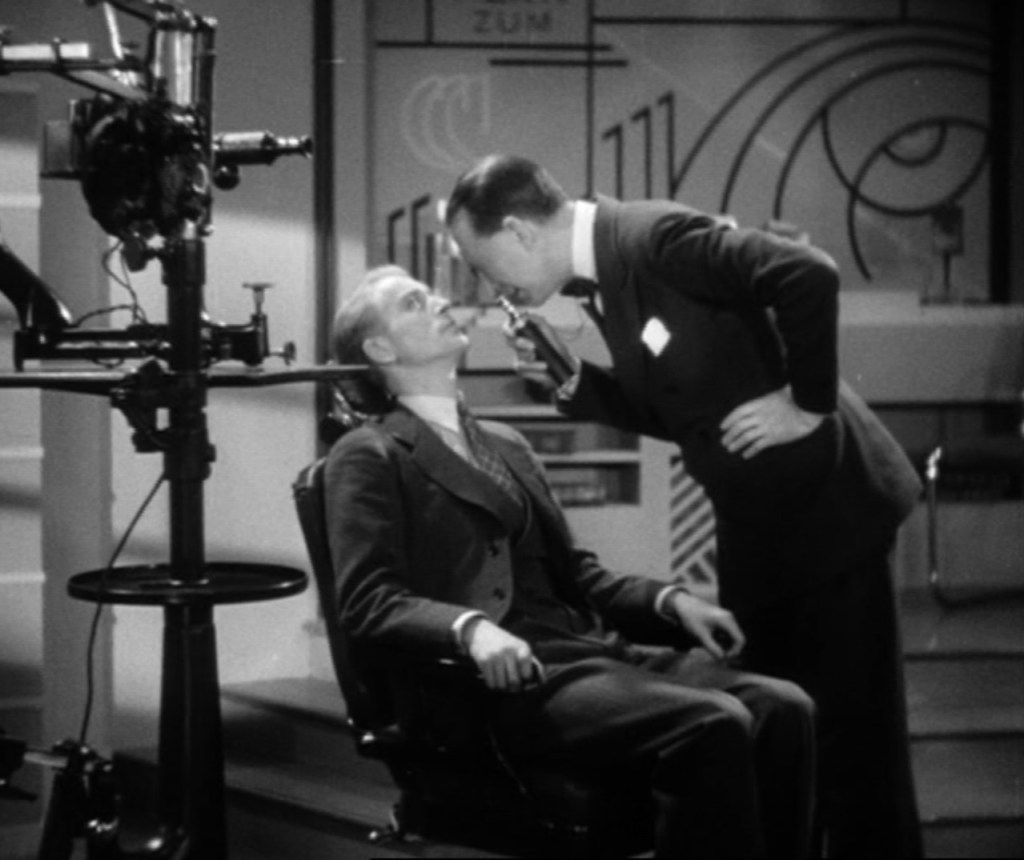
Larry visiting a very modernist optician in Fascination

Although Larry by this point is starting to feel very conflicted about his affair and wants to end it, Gwenda ostensibly still has too much of a hold on him to enable him to break things off. Thankfully for him, his wife has found a solution. Vera writes to Gwenda under false pretences and invites the other woman to her marital home. Here, rather than having an argument, Vera explains that she loves Larry and wants to protect her marriage, so she is happy to silently consent to his affair with Gwenda. In Vera’s reasoning, if she were to cause a big fuss, Larry would be driven into Gwenda’s arms more.

Before Gwenda has a chance to respond to this proposal, Larry comes home – Vera hides Gwenda quickly behind a curtain. Larry confesses his affair to Vera, begs her forgiveness and offers to write to Gwenda immediately to break off the relationship. Gwenda decides to reveal herself and explains to Larry that Vera, in her generosity, had agreed to him continuing the affair just to keep her marriage intact. She insists on ending her relationship with Larry now that she has met Vera.

Vera warmly says goodbye to Gwenda in Fascination

Fascination ends with the contrast of Gwenda, smoking alone in her dressing room and forcing herself to get ready for yet another night’s performance; and Vera and Larry, cuddled together in a chair where Vera reveals to him that she is pregnant.

Larry and Vera happily reunited at the end of Fascination

Unlike in The Divorce of Lady X, then, divorce is an impossible outcome in Fascination. If Vera had opted to divorce Larry, she would have had to stand the shame and exposure of the divorce court, with a famous actor cited as co-respondent in the case. Clearly, for a respectable middle-class woman this was not really a route to contemplate, even without the added complexity of pregnancy or children. Her willingness to allow the affair to continue, then, is perhaps less magnanimous than the film presents, and more pragmatically her only option.

Yet, by perpetuating the narrative that single women ‘steal’ husbands away from faithful wives; and faithful wives should accept this and allow husbands to come back in their own time, Fascination clearly sides with patriarchal norms. Vera’s ostensible agency is in fact non-existent- something also stressed by a scene where she visits Larry’s office to ask him for household money. Fascination presents marriage as the route to a woman’s happiness, and independence and professional success as poor substitutes. Despite the increasingly progressive position of women in British society by the early 1930s, this film demonstrates that cultural texts often still expounded traditional viewpoints.

Pa Puts His Foot Down (1934)

Pa Puts His Foot Down (1934)

With the rapid increase of car ownership in interwar Britain, it is no wonder that car production companies started to produce high-end advertisements to persuade the public that their cars were superior to all others. In 1934, Zoltan Korda, brother of Alexander Korda, produced a 15-minute advert for Daimler subsidiary company BSA cars. As with other adverts produced in this period, this film would have been shown in cinemas as part of a mixed programme.

Pa Puts His Foot Down starts with several high-angle establishing shots of Piccadilly Circus. There are few road markers and vehicles are seemingly randomly moving around the roundabout. By 1934, the majority of vehicles on the road are motorised: double-decker buses, private cars, taxis, and trucks. Closer shots of traffic, however, also reveal cyclists, bike couriers and the occasional horse-drawn cart. Pedestrians do their best to avoid traffic as they cross the road. These shots are clearly taken on location in Central London.

We are then introduced to Pa and his daughter Betty, who are standing on a pavement trying to cross. For the shots in which the characters are talking, they are clearly on a sound stage mocked up to look like a pavement with a series of shop-fronts. Betty tries to persuade her father several times to cross the road. Each time the shot of her stepping off the pavement in the studio is followed by a shot of a vehicle rushing close by, clearly shot on location. This gives the illusion that the actors really are in Piccadilly Circus.

Betty tells her dad he should ‘just cross over’, after which he starts grumbling about the dangers of modern traffic. It transpires that Pa used to drive a car in the past but now is too nervous to drive. Rather than owning up to his fear, he pretends that modern cars are too expensive, which of course gives his daughter the opportunity to tell him (and the audience) that ‘good cars are quite cheap nowadays’ and ‘the best people drive themselves nowadays’.

After this exposition dialogue which has placed the notion of cheap, reliable cars in the audience’s mind, Pa tries to cross the road himself. In quick succession we see Pa stepping off the pavement; a police officer directing traffic; a close-up of a car; the daughter shouting at Pa; the police officer looking alarmed; Pa’s hat on the asphalt; a female passer-by screaming; and Pa gathering his hat off the road. The final shots are overlaid with the sound of a car horn honking. Korda effectively conveys the illusion of a near-miss without having to stage a stunt or even have any of the actors get close to a moving vehicle. Although Pa Puts His Foot Down is a sound production, this sequence is heavily indebted to silent cinema conventions.

Once Pa is safely back on the pavement, a car pulls up and a young man jumps out, who immediately greets Betty in a very familiar way. She explains to Pa that they met ‘at a dance somewhere’ and that the man has a ‘good job in the motoring business’. The young man promptly offers to drive the pair to their destination – home in the country, 30 miles outside of London. Pa gets bundled in the back seat whilst Betty sits next to the driver.

Immediately after they set off, the young man starts explaining to the daughter that his Daimler BSA has gears but no clutch, because of the Daimler Fluid Flywheel. With a rather dreamy voice, the man starts talking about this innovation, at which point the image cuts away to a diagram demonstrating to the audience the inner workings of this novel gearbox. The Daimler BSA essentially was halfway between a car with a manual clutch and an automatic car. It still had gears, but rather than having to manipulate the clutch pedal and gear change at the same time, the driver could ‘pre-select’ the next gear and then press the clutch pedal at their leisure.

After a minute and a half of diagrammatic explanation, we cut back to the trio in the car where the daughter asks some more detailed questions about how the gearbox works in practice. After several more minutes of explanation, the man invites Betty to try it for herself. Although she previously stated quite confidently to her father that she drove cars, she now minimises her abilities by hastening to add she drives ‘very little’. Naturally, this is no impediment to her being able to drive the Daimler BSA with ease. When Pa wakes up and is alarmed to see that his daughter is driving, the man says it’s quite alright, as ‘this car would be safe in the hands of a child’. The fluid flywheel is so successful that even Pa is starting to get interested in its operation.

After a few more demonstrations of gear changes and brakes, the trio arrive at their destination. While the daughter invites the man in for a drink, Pa subjects the car to a closer inspection. Over a drink, Betty states she is determined to raise the money to get herself a Daimler BSA car. The man immediately ups the ante by suggesting they get engaged. Although Betty quite reasonably counters that they hardly know one another, she falls in with the plan quite readily. Clearly half an hour’s conversation about fluid flywheels has convinced her of the match.

When the couple try to find Pa to get his consent, they realise that he’s driven off with the car and is driving it round the common. When Pa returns he tells the man ‘I thought, if you go off with my daughter, I’ll go off with your car.’ He follows it with saying that he’d always heard the pre-selector gearbox described as an ‘effeminate thing’ but that this was ‘utter rubbish’. When Betty asks him if she may get engaged to the man, Pa jokes that he won’t ‘find her as easy to control as the car’ and then suggests a ‘bargain’: ‘You take the girl, I take the car’.

At this, the end of the advert, both car and woman are commodified and put on equal footing with one another. At the same time, the advert has taken great pains to portray the BSA car as both easy to handle for inexperienced / female drivers, and robust and ‘masculine’ enough for male or experienced drivers who wanted to show off their driving skill. The diagrammatic explanation of the flywheel may appeal to technically-minded viewers, whilst the subsequent practical demonstration demonstrates its benefits to a less specialised audience. Rather implausibly, extensive talk about car technology is also presented as the way to a woman’s heart.

Pa Puts His Foot Down can be viewed on the BFI Player (UK only)