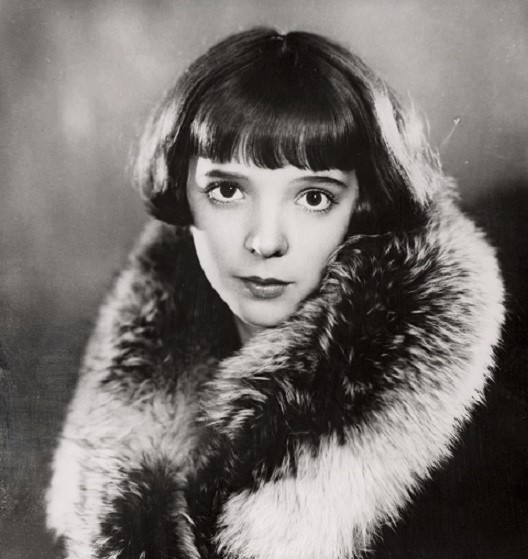
Tom Walls

Earlier this year this blog had a look at the comedy actor Ralph Lynn. Today we are going to discuss the other half of the ‘Lynn & Walls’ comedy duo: Tom Walls. Walls was born in 1883 and had a prolific career as actor, director and producer of plays and films; followed by a second career as the owner of a race horse stable in Epsom. As a young man, Walls attempted a career as an officer in the Met, but this did not last – allegedly, he spent rather too much time ‘interrogating prostitutes’ on duty.[i]

Tom Walls and Ralph Lynn first worked together on the farce Tons of Money in 1922.[ii] Prior to that time, Walls had been managing and acting in shows in seaside towns. Walls and his business partner Leslie Henson scored a big success with Tons of Money, which started out at the Shaftesbury Theatre but transferred to the Aldwych. Walls would remain at the Aldwych for the remainder of the decade, putting on a series of wildly successful farces with a largely stable cast and crew consisting of Ralph Lynn, Yvonne Arnaud, Mary Brough, and Ben Travers as the writer for most of them.

Whereas Lynn was remembered as the ‘ideal farce actor to work with’[iii], Walls tends to invoke phrases like ‘no shame’; ‘contemptuous’; ‘peculiar’ and ‘a dictator’.[iv] He was also undoubtedly a man with a lot of energy. He acted in a lead part in all of the Aldwych farces, as well as directing them. Walls was also the driving force behind getting the farces translated to film in the 1930s, when he wanted a new challenge. Not having worked in the medium before was no barrier to Walls; he acted as both director and actor from the first Aldwych film, Rookery Nook, in 1930. In total, Walls directed 23 films in the 1930s, and acted in most of those as well as in some other productions.

Most of Walls’ film roles, thankfully, remain available to us today. Due to the long-lasting partnership between Walls, Travers and Lynn; and Walls’ considerable control over the productions, many of the Aldwych farces are written to play to his strengths. Generally, Walls played older men who have charm and wits, against Lynn’s younger, naïve characters. One obituary of Walls described his roles as ‘the dominating man supremely confident in himself’ – probably not too much of a stretch for Walls to play.

Walls’ role as Mr Tutt in A Cup of Kindness is a prime example of this type – Tutt is a patriarch who bosses about his wife, sons, and neighbours – but the role also gives Walls a chance to show off his charms in the scene where Tutt takes the young nurse Tilly  out to a West End Restaurant. Toeing the line of marital fidelity is a recurring theme in the Aldwych farces, as it is in Walls’ later film roles.

In the 1934 film Lady in Danger, Walls directed himself as the lead opposite Yvonne Arnaud. In this comedy, Arnaud plays the unnamed Queen of a (fictional) European micro-state, who has to flee a revolution. Walls is tasked with smuggling her to Britain, whilst Arnaud’s husband the King is staying in Paris. ‘The King is always in Paris’ is used as a knowing short-hand throughout the film to refer to the King’s regular infidelities. Walls’ character Richard is engaged to be married, but that does not stop him from flirting with the Queen.

Unlike in the Aldwych productions, where Walls’ characters flirt but never go any further, Richard and the Queen do share at least a kiss. The film makes is clear that it is permissible for the Queen to engage in this affair because her husband is also unfaithful. It does not deem it necessary to give any justification to Richard; it is a given that he must be able to have a dalliance with another woman before he is married. At the end of the film, the monarchy in the micro-nation is restored and the Queen returns to her husband’s side, and Richard returns to his fiancée, and neither of them face any repercussions. As the film’s director, Walls could ensure that his characters could have their cake and eat it, too. The conventions of farcical comedy allowed him to entertain such potentially transgressive behaviours.

Although his directing career ended with the outbreak of the Second World War, Walls appeared in a dozen or so films in the 1940s. At that stage, however, his main occupation was the breeding and training of race horses in Epsom. He achieved a high point in this career in 1932 when his horse April the Fifth won the Epsom derby – Walls was the only Epsom-based owner to win that derby in the whole of the 20th century. This 1933 Pathé newsreel includes some shots of Walls’ stables and home:

Walls was a very influential and well-known player of the interwar London entertainment industry, with business interests in theatre, cinema and racing. His surviving film performances capture his persuasive charm as well as his dominant personality. That is fame faded after his death in 1949 seems fitting for a man who preferred seizing the day over careful planning.


[i] Ben Travers, A-Sitting on a Gate (London: WH Allen, 1978), p.99

[ii] Ibid., pp. 87-88

[iii] Ibid., 91

[iv] Ibid., pp 89-90
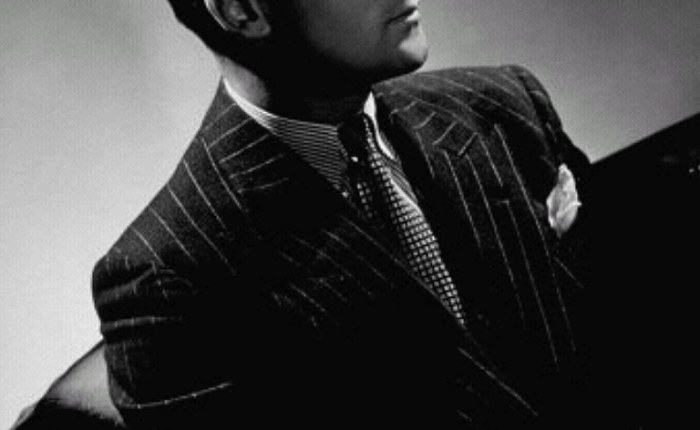
Brian Aherne

Brian Aherne

Like other actors featured on this blog, Brian Aherne started his career in English film in the 1920s, before moving to Hollywood in the 1930s. Unlike some of his contemporaries, however, he was able to establish a long and successful career in the US, which lasted until the 1960s. He was nominated for an Academy Award for Best Actor in a Supporting Role for his portrayal of Emperor Maximilian I of Mexico in the 1939 US production Juarez. The seeds of this career were sown in interwar London.

Aherne’s full name was William Brian de Lacy Aherne, which hints at his upper middle-class background. His father was an architect, his mother an actress; Aherne trained in his father’s profession before deciding to follow into his mother’s footsteps instead and pursue acting. He started out on the stage and landed his first film role in 1924, in a supporting role in the no longer extant film The Eleventh Commandments (dir. George A Cooper).

Aherne quickly moved into leading man parts and working with established directors; he was directed by Sinclair Hill in The Squire of Long Hadley and by veteran director Henry Edwards in King of the Castle, both released in 1925. He returned to work with Hill two years later in A Woman Redeemed. However, modern audiences are most likely to have seen Aherne in one of the two silent films he made with Anthony Asquith: Shooting Stars (1928) and Underground (1928). Both have been restored and re-released by the BFI in the last ten years so are readily available to us.

Brian Aherne in 1938

In both films, Aherne plays a good, kind and dependable man who has to endure adversity in his romantic relationships. His even features and a slightly dreamy look in his eyes made him a suitable romantic hero. In Shooting Stars, he plays Julian Gordon, an actor married to actress Mae Feather. Julian and Mae often act together in genre flicks in which he is the hero to her damsel in distress. Off set, however, their relationship is far from happy, and Mae enters into an affair with another actor, the comedian Andy Wilkes.

Mae worries that she will suffer professionally if she were to divorce Julian, so instead she hatches a plan. The couple are recording a western film, and are due to record a scene in which a stooge has to shoot at Julian with a shotgun. Mae secretly puts a live bullet in the gun, hoping that Julian will die and she can pass it off as a freak accident. Of course, the plan goes wrong; the bullet instead hits Andy, who is filming on an adjacent sound stage. Julian realises what Mae was planning and leaves her; her career is destroyed as a result, whilst Julian becomes a successful director.

Much of the joy from viewing Shooting Stars is derived from its tongue-in-cheek knowingness about the film industry, which is perfectly encapsulated by its double-entendre title. Julian’s graduation from actor to director reflects (not very subtly) his journey from a naïve young man to someone who literally calls the shots. Shooting Stars includes a telling scene in which Julian, as yet unaware of Mae’s infidelity, goes to the cinema to watch one of their own films, a typical action flick. He sits among the young boys in the audience and becomes completely engrossed in the fantasy-world in which he is Mae’s hero, saving her from danger. Although Mae is certainly positioned as a cold-hearted, manipulating woman, Aherne’s performance also initially shows Julian as gullible and a bit foolish. By the end of the film, director Julian is hardened and unmoved by Mae’s distress.

Aherne followed Shooting Stars immediately with a lead role in Underground, in which he played London Underground employee Bill. Underground portrays the romantic entanglements between four individuals, and uses the space of a London Underground station to link them together. Bill works as an attendant in the station, helping travellers to find the right trains, making sure they do not fall of the escalator, and answering any queries they may have. He meets Nell when she drops her glove whilst travelling up the escalator. It is love at first sight, but Nell is already being pursued by Bert, a worker at Lott’s power station. Bert in turn has an admirer in the seamstress Kate, who lives in the same boarding house as him.

As soon as Bert realises that Bill is his rival for Nell’s interests, he sends Kate to the underground station; she does as Bert says in the vain hope she will win his affection. Kate manages to lure Bill to an emergency staircase off the main Tube platform, under false pretences. She then waits for the platform to fill up before running out of the staircase and accusing Bill of assaulting her. As planned by Bert, Nell witnesses the incident and she (temporarily) withdraws from Bill as a result. To resolve the misunderstanding and win back Nell, Bill must fight Bert, in this case physically. He succeeds, and the film ends with Nell and Bill united in matrimonial bliss. Like Julian in Shooting Stars, Brian Aherne’s character in Underground starts out as an innocent, but matures through adversity and by tapping in to more traditionally ‘masculine’ behaviours.

After the transition to sound film, Aherne’s last notable British film appearance was his role as Lewis Dodd in the 1933 version of The Constant Nymph (directed by Basil Dean). The 1928 silent film based on the same source material, in which Ivor Novello played Dodd, is the one that is best remembered today. By the time the version with Aherne was released in cinemas, he was already across the Atlantic and appeared opposite Marlene Dietrich in Song of Songs (Rouben Mamoulian, 1933). By the time of his death, Aherne was generally remembered as a Hollywood actor first; but as his appearance in two of the best-known British films of the late silent period testifies, he was also a part of the cultural scene in interwar London.

Jameson Thomas

Jameson Thomas

Jameson Thomas was born in London in 1888 as Thomas Jameson – he swapped his name around for his professional career, presumably to either give him more recognisability or to hold his career at one remove from his family. As the BFI Screenonline entry on Thomas has noted, he is a ‘curiously overlooked star of 1920s British cinema.’ His film career started in 1923 in the Hebert Wilcox vehicle Chu Chin Chow.

At the turn of the next decade Thomas moved to Hollywood, where he appeared in approximately 50 films during the 1930s. The high-watermark of his Hollywood career was in 1934, when he played Claudette Colbert’s playboy lover King Westley in It Happened One Night. Thomas’ career came to an early end with his death of tuberculosis in 1939 – as a final testament to his ability to mould his public persona, his New York Times obituary shaves a whole five years of his age.[1]

Thomas was a prolific actor on both stage and screen, and his singular appearance makes him an instantly recognisable actor of the interwar period.

By Source (WP:NFCC#4), Fair use, https://en.wikipedia.org/w/index.php?curid=55030210

His best-known appearance in British film is as the male lead in E.A. Dupot’s Piccadilly (1929), in which he plays nightclub owner Valentine Wilmot. Thomas worked across genres and also appeared in Adrian Brunel’s historical drama Blighty (1927), the 1929 sci-fi High Treason (directed by Maurice Elvey), the crime thriller Night Birds (directed by Richard Eichberg, 1930). He even appeared as himself in the variety sketch compendium Elstree Calling (1930).

Piccadilly remains popular with modern audiences for its beautiful cinematography and the star turn of Anna May Wong as Shosho, the Chinese scullery-maid turned nightclub dancer.[2] Thomas plays Wilmot as debonair and detached, coolly surveying the activity inside his Piccadilly club. Yet beneath the surface smoulders an intensity which comes to the fore once he sets eyes on Shosho, dancing on the table in the club’s kitchens. Wilmot’s point of view serves as the literal male gaze that allows the camera its slow pan down Shosho’s body, lingering on her hips and legs. The construction is repeated in a later scene when Shosho, now opulently dressed in furs, descends from a spiral staircase at which Wilmot stands at the bottom.

Throughout Piccadilly, Thomas continues to restrain Wilmot’s passion for Shosho behind the trappings of an English gentleman’s conduct. One of the film’s more passionate moments occurs when he dares to grab and hold her hand in the middle of a rowdy Limehouse pub. Yet through his intense gazes at Shosho, which he does not bestow on the (white) dancer Mabel, Thomas makes clear where Wilmot’s passions lie.

Thomas used a similar restraint in his role in Brunel’s Blighty. This 1927 films follows the experiences of one upper-class family during the Great War. Thomas plays David Marshall, the family’s driver who secretly loves the family’s daughter. Marshall is quiet, steady and responsible, and is presented in juxtaposition to the family’s young and idealistic son Robin. Whereas Robin dies at the front, Marshall survives the war and ends up supporting the mother and daughter of the family. Blighty presents Marshall’s maturity as more desirable and useful to the family than Robin’s naivety, even though he is a servant. In line with the prevailing notion that the common experience of war allowed class boundaries to be broken down, Marshall is ultimately able to marry Ann, the family’s daughter.

Thomas put yet another spin on the type of the responsible and restrained man in Maurice Elvey’s 1929 science-fiction film High Treason, of which both a silent and a sound version exist. The events of this film take place in 1940, when a war threatens to break out between the ‘United States of Europe’ and the ‘Empire of the Atlantic States’. Benita Hume plays the lead as Evelyn, the daughter of the leader of the Peace League who is trying to prevent war. Thomas takes the role of Michael Deane, Evelyn’s boyfriend and the commander of the European Air Force. Evelyn tries to persuade Deane that he should not instruct his troops to take off towards America, as that would surely start hostilities. Deane, however, is adamant he must do his duty to protect Europe.

In the film’s visually striking climax, Evelyn leads hundreds of female Peace League members, all dressed in white, into confrontation with Deane’s air force troops, all dressed in black. Evelyn instructs the women to go onto the airfield to stop the planes from being able to take off; Deane instructs his men in turn to ready their firearms. Evelyn calls his bluff (‘They’ll never fire on women!’) before they are interrupted by a national broadcast which asks all activities to cease pending a government announcement. High Treason reflects the real-world anti-war sentiment which was promoted by the League of Nations. Whereas in Blighty Thomas’ character is praised for his sense of duty and responsibility, in High Treason he showcases what happens if that sense of duty becomes blind to reason.

In his British productions, Thomas proved himself a versatile actor who was not afraid to work across genres. He avoided getting typecast and tended to inject a sense of gravitas and responsibility in his roles. Along the way, he worked with some of the most famous directors and actors. However, he also had time to advertise the benefits of growing cacti, in this surviving clip which shows him from a different side:

You can watch High Treason for free on the BFI Player in both sound and silent versions (within UK only)


[1] ‘JAMESON THOMAS, HOLLYWOOD ACTOR; Londoner, Who Entered Films After Career on Stage, Is Dead at 45’, New York Times, 11 January 1939, p. 25

[2] Indeed, a new Blu-Ray edition is due to be released in June 2021.

Ralph Lynn

Ralph Lynn was born in 1882 in Salford and became one of the most popular comic actors in interwar Britain. Together with Tom Walls, Ralph Lynn formed the heart of a comedy ensemble that put on 10 plays and adapted 9 of those into films. The plays were put on in the Aldwych theatre, which Walls co-owned. During the interwar period, the term ‘Aldwych farce’ signified a very specific type of comedy production.

A version of Lynn’s performances in these shows are still available to us through his film work, which in addition to the nine adaptations of stage productions also include another eight films with Walls, not based on an existing stage production. These seventeen films were all made in the period 1930-1937, during which Lynn was also still acting on stage productions. After this enormously productive period Lynn mostly turned his back on film work, although he continued to appear on the London stage until 1958.[1]

The celebrity power that ‘Lynn and Walls’ had during the interwar period is still evident, for example in A Night Like This (1932), where the song that plays over the opening credits repeatedly reminds the audience “It’s Lynn and Walls.” There is also a newsreel of Ralph Lynn crowning the winner of an international beauty contest in 1935. This shows he was well-known enough to be asked to perform such minor public duties; the clip also gives a flavour of his comic talents:

This British Pathé newsreel of 1927, which shows clips from the stage production of Thark at the Aldwych, quickly dispenses with character names and refers to the characters as “Tom and Ralph”. Coincidentally, the clip also demonstrates why the Aldwych crew waited until 1930, when sound film started to become available, before they made their first film: the plays’ reliance on witty dialogue does not translate to silent film.

Modern audiences, then, can best experience Lynn as an actor through the film work he produced in interwar London. His character is invariably the ‘silly ass’, a foppish, hapless man who never tries to get into problems, but always ends up there. Ben Travers, the Aldwych’s regular script writer, remembers Lynn saying of one of his characters “[he] didn’t try to be funny but just walked rationally and naturally into trouble.”[2]

In A Night Like This (1932) for example, Lynn plays the upper-class, dim Clifford Tope, who decides to visit a nightclub in London. On the same evening, undercover police officer Michael Mahoney, played by Tom Walls, is undertaking an observation of the club because he suspects that the (legal) nightclub is a front for an illegal gambling club. Once inside, Tope gets inadvertently caught up in Mahoney’s investigation, primarily by physically getting in his way. In his apparent incompetence and naivete, Tope keeps unintentionally assisting Mahoney. In the end, of course, the men manage to bust the illegal gambling operation that is running upstairs. Mahoney is rewarded with praise from his superior officer; Tope has made an impression on nightclub dancer Cora (Winnifred Shotter).  

The stage production of A Night Like This, which had been put on in 1930, had benefited from a comfortable budget, which shows in the use of the elaborate nightclub setting. It had even been planned to use a real horse on stage.[3] The film version confidently uses the attractive nightclub setting and uses the cinematic medium to its advantage, for example through the insertion of lengthy sequences of Cora’s dance performances (which was a common trope in interwar films set in nightclubs) and in its focus on action over dialogue.

In other films that were adapted from stage plays, the action is more static and much of the enjoyment derives from the quick dialogue. Take for example this clip from Dirty Work (1934) which had been performed at the Aldwych Theatre in 1932:

Here, Jimmy Milligan (played by Lynn, on the right) and Nettle (played by Gordon Harker, on the left) are trying to convince Clement Peck (Robertson Hare) to don a disguise, in order to stage a fake burglary in the jewellery shop in which Milligan and Peck work. This short description adequately captures the absurdity of the plot, which, like many of the Aldwych farces, hinges on deception, disguise, and misunderstanding.

The pleasure of these films is not in their intricate narratives, well-developed characters or their ability to transport audiences to fantasy worlds. Instead, they provide a constant stream of witty gags, mix-ups and farcical situations right up until the happy resolution of the narrative. Ralph Lynn’s talents were strongly geared towards improvised comedy and wordplay, and in the Aldwych farces he had a perfect medium to display his craft. However, the historic and cultural specificity of comedy, as well as its perceived lower cultural value, has meant that the films have been relegated to relative obscurity. Because Lynn did not work in any other genre, he, too, has been largely forgotten; but his comic instinct and timing still work for twenty-first century audiences.

Most of the Aldwych farces are available on DVD via Network On Air.


[1] Morley, S.  (2020, November 12), ‘Lynn, Ralph Clifford (1882–1962), actor’ Oxford Dictionary of National Biography, https://doi.org/10.1093/ref:odnb/37702

[2] Ben Travers, A-Sitting on a Gate (London: WH Allen, 1978), p. 90

[3] Ibid., p. 110

Miles Mander

Miles Mander was a film actor and director in interwar Britain, whose legacy was somewhat forgotten until the BFI restored his directorial debut feature The First Born (1928) in 2011. Anyone who has seen Mander on screen is unlikely to forget it; his features – which have earned him the description of a ‘character actor’ on his Wikipedia page – are not those of the square-jawed, chiselled romantic hero. Instead there is usually a hint of untrustworthiness to his performances, a slyness that gives the viewer pause. Directors used this ambiguity when casting Mander in roles as the emotionally manipulative antagonist.

Mander was born in Wolverhampton in 1888 to a prominent local family. His brother Geoffrey became a Liberal MP for Wolverhampton in 1929. As an MP, Geoffrey played a prominent role in film censorship debates in the 1930s, passionately arguing against the implementation of a strict, state-run censorship body on the premise that that would unduly infringe on the right to freedom of expression.[1] The potential conflict of interest of an MP influencing legislation that would directly impact his brother’s career appears not to have been a concern.

Miles Mander attended the prestigious public school in Harrow in line with the family tradition, but in his twenties he decided to take a different path. He spent some time in New Zealand as a sheep farmer and learnt how to fly planes – during the Great War he served in the Air Auxiliary Corps.[2] He was first married to the daughter of a Maharaja; in 1923 he married a second time to an Australian woman, Kathleen French. In 1925 she starred alongside him in an Adrian Brunel-directed comedy short where she was billed as ‘Mrs Miles Mander’ – but this appears to have been the extent of her acting career. Kathleen and Miles had a son, Theodore, who starred as the son of Mander’s character in The First Born.

Mander started his acting career in the 1920s, and he was able to use his colourful life experience up until that point in his work. As noted above, early on in his career he collaborated with fellow old Harrovian, director Adrian Brunel – Mander produced Brunel’s first feature film The Man Without Desire (1923). In 1925, Mander was cast in a lead role in Alfred Hitchcock’s first feature, The Pleasure Garden.

In this role, Mander could draw on the experiences he had in his twenties, living abroad. His character, Levet, becomes romantically involved with a British woman, Patsy, in London and convinces her to marry him. Shortly after the marriage, Levet has to move to Africa for work. After a while, Patsy hears that Levet has been very ill, so she decides to travel to Africa to look after him. When she arrives, however, she finds out that Levet has entered into a relationship with a local woman, who was unaware that he was married. The local woman (who is only known as ‘Native Girl’ and who does not appear on the film’s credits) becomes understandably upset with Levet; the argument culminates with Levet drowning the woman in the sea. Levet becomes wrecked with guilt and paranoia and becomes convinced that he must murder Patsy, too, in order to find peace. Before he can follow through with it, he himself is shot dead. Levet’s overall part in The Pleasure Garden is actually relatively minor; the scenes in Africa all take place in the final five minutes of the film. For most of the film’s running time Mander is not on screen, but this early role sets the tone of his later parts.

After The Pleasure Garden Mander took on some more acting roles, playing the part of upper-class British gentlemen. He also spent some time in Germany where he acted in about half a dozen films in 1927 and 1928. In 1928 however, he tried his hand at directing himself, for the first time. The result was The First Born, in which Mander also played the protagonist, Sir Hugo Boycott. The world of The First Born is one which Mander was familiar with through his family’s background: Sir Hugo is an aspiring MP and the film’s climax takes place on election night.

The First Born is a melodrama: Sir Hugo is married to Madeleine, but the couple are unable to conceive a son and heir. Madeleine becomes increasingly desperate and considers having an affair with a friend in order to get pregnant, and pass the baby off as Hugo’s. Eventually Madeleine has a son; the audience is kept in the dark as to his parentage. Hugo, in the meantime, is having an extramarital affair. On election night, Hugo and his mistress have an argument in the corridor of her apartment building; in the midst of it, Hugo stumbles and falls to his death down the lift shaft. In an ironic twist, is revealed to the audience that Madeleine’s son was Hugo’s, after all.

In The First Born Mander cast himself in the role of an unpleasant, privileged man; the audience’s sympathies are squarely with Madeleine. Mander apparently had no desire to present himself as the romantic hero, instead opting for a role with complexity. After The First Born Mander directed another five features, but he never cast himself in them again. He did continue to act in others’ films, for example playing an older, wealthy man who attempts to break up a young romance in Bitter Sweet (1933); taking the part of the sly private secretary Wriothesley in Korda’s Private Life of Henry VIII (1933); playing the rival race driver to the hero in Death Drives Through (1935); and portraying King Louie XIII in The Three Musketeers (1935).

Mander directed his last feature, The Flying Doctor, in 1936, after which he made the move to Hollywood. In his first American film, Lloyds of London, he acted alongside Madeleine Carroll, who he had given her big break in The First Born (and also cast in his third feature, Fascination). He continued to find opportunity to play British roles in American films, such as playing Benjamin Disraeli in Suez (1938) and acting alongside Merle Oberon and Laurence Olivier in a US production of Wuthering Heights (1939). The Three Musketeers story also continued to give him employment; he appeared as Cardinal Richelieu in The Three Musketeers (1939) and as Aramis in The Man in the Iron Mask later that same year. Mander continued to act in films until his unexpected death in 1946.

On the one hand, Miles Mander’s career is unusual; particularly in his early career he had a wide range of interests and seemed reluctant to follow a set career path. On the other hand, his family background and education ensured he had access to great connections; aside from Adrian Brunel and Alfred Hitchcock, he also worked closely with Leslie Howard, A.A. Milne, Ivor Novello, and other familiar names. Ultimately, Mander’s career shows that even in an industry as new and dynamic as the film industry in the 1920s, coming from an established family background did have its advantages.


[1] Jeffrey Richards, The Age of the Dream Palace: Cinema and Society in 1930s Britain (London: IB Tauris, 2010), pp. 92-96

[2]The First Born (1928) dir. Miles Mander: Rediscovery of a stunning late 1920s melodrama’, British Film Institute. Accessed 20 February 2021.

Grace Blackaller

Grace Blackaller

Grace Blackaller was born in 1909 and murdered on 9 April 1925. She was a sixteen-year-old amateur dancer who loved going to the cinema. Her murderer was her boyfriend, Ernest Rhodes, aged nineteen. Grace’s murder provided tabloid fodder for about two weeks in April 1925 and has since been completely forgotten.[1] The murder of women by their partners sadly remains so commonplace that it is still treated as ‘normal’. In Grace’s case, newspapers were also quick to suggest her own behaviour was somehow at fault.

The newspaper reports immediately after the murder, which are reasonably sympathetic to Grace, hint at a family set-up that is not straightforward. Grace lived in a lodging in Nevern Square, a few minutes from Earls’ Court tube station; according to her landlady she had lived there for four years so since they age of 12.[2] Her mother, however, lived on Challoner Street, which is on the other side of Warwick Road near West Kensington tube. Both locations are about a 15- minute walk apart.

It was on the corner of Challoner Street that Grace was attacked on that Thursday evening. She managed to get to her mother’s doorstep where ‘Her mother found her on the doorstep of her flat with a wound in her throat. Miss Blackaller could only mumble “a man attacked me” and died in hospital without revealing the secret of her murderer’s identity or any detail of the attack.”[3]

The mystery of the attack was sufficient for a number of tabloids to give the story front-page news, and to include a picture of Grace with the reports as well. Grace’s landlady told the Daily Mirror that Grace was working as a dressmaker and a dance teacher, and although ‘she went out a great deal at night to dances and things’ this was ‘like most girls these days’ and Grace had ‘never seen (…) with a boy.’[4] The Express printed a similar line, that ‘Miss Blackaller was not known to be on friendly terms with any particular man.’[5] In these initial reports, when it is assumed that the attack was conducted by a random stranger, Grace’s behaviour is represented as normal for the period and no moral judgements are made about her.

Grace Blackaller,
Daily Mirror, 11 April 1925, front page

The newspapers only changed their tune about Grace when the story developed further, and a murderer came forward. Press reports no longer presented Grace as a wholesome girl who had fallen victim to a random attack when it became apparent that Grace had been killed by her boyfriend, Ernest. Ernest turned himself in to the police on 11 April, when he read in the newspaper that Grace had died – he claimed that he had thought he only injured her.[6]

According to his account, on the 9th of April the couple went to the Blue Hall Cinema in Ravenscourt Park. They got back to West Kensington at about 11pm, and Ernest walked Grace home. Ernest thought his girlfriend had been stringing him along, and he suspected her of seeing other boys. When she did not take his concerns seriously, he took a razor from his pocket and slashed her throat while they were kissing.

This revelation changed the press’s coverage of the case. Sympathy for the ‘pretty young dancer who was fond of gaiety’ gave way to concerns about young girls’ ‘double lives.’[7]  At the final day of the inquest, the coroner read out a letter he had received from a concerned citizen. According to the coroner, the letter expressed ‘common-sense views,’ including the notion that girl murder victims ‘were forward minxes and made advances to young men, stayed out late at night, frequented cinemas and dance places, and had evidently been allowed to run loose.’[8] Suddenly, the previous reports that Grace’s interests in dancing and cinema were normal for girls her age, were inverted to suggest that the fact that these habits were normal was an indication of a moral and social problem.

The text of the letter was uncritically reprinted in several daily newspapers. The Director of the Liverpool Women’s Patrol stated publicly that she agreed with the letter-writer’s assessment of young girls’ lives.[9] The coroner’s decision to read out this letter during the inquest demonstrates that it was accepted that he would have an opinion on the moral aspects of the case as well as on forensic facts.

The opinion of a single member of the public was presented by the coroner as the belief of the general public, and its subsequent endorsement by the conservative press cemented it as the commonly held view. According to a contemporary journalism trade journal, voicing concerns about the modern girl sold newspapers in the interwar period the way a sensational murder sold them before the First World War. [10] In the reporting on Grace Blakaller, the popular press had managed to combine both ingredients into a successful multi-part story which reaffirmed that it was safer for a woman to stay at home and not have romantic relationships.

To further demonstrate how deeply the narrative that Grace was at fault for her own plight was embedded, these were Ernest Rhodes’ lawyer’s comments when Rhodes was committed for trial: ‘without eliminating the question of provocation, (…) my defence will be – and I shall call on the highest medical evidence to support it – that he [Rhodes] did not know the nature and quality of the act or that, if he did know, he did not know he was doing wrong.’[11]

In other words, the first line of defence was that Grace provoked Ernest, which, it was implied, would diminish his culpability. The second line was that Rhodes did not know that running a razor across someone’s throat could lead to that person dying; and the third line was that Rhodes did not realise that committing an act of violence was wrong. It was this final argument that would be successful; Rhodes was committed to an asylum rather than prison and was released for good behaviour in 1933.

Again, the press reporting partially paved the way for this, as Rhodes was described as ‘a boy with rather a lot of peculiarities’ who was ‘constantly talking about Norman Thorne’ – a young man who had killed his girlfriend in December 1924 and who was awaiting his execution in April 1925.[12] Obsession with a killer was presented as a sign of insanity which, in combination with the narrative that had been constructed around Grace’s ‘provocative’ lifestyle, allowed Rhodes’ legal counsel to mount a successful defence. The daily press was instrumental in influencing the public’s opinion about this case which limited public sympathy for Grace and painted her as culpable for her own murder.

You can read more about Grace Blackaller in my book, Interwar London after Dark in British Popular Culture.


[1] Except by amateur historians and true crime enthusiasts who have pored over the story on internet fora

[2] ‘Murdered Girl: Woman’s Story’, Daily Mirror, 11 April 1925, p. 15

[3] ‘Dance Girl Murdered in London’, Daily Express, 11 April 1925, p. 1

[4] ‘Murdered Girl: Woman’s Story’

[5] ‘Girl Murdered in London’, Daily Express, 11 April 1925, p. 7

[6] ‘Dead Girl Dancer: Story of Youth’s Written Confession’, Daily Mirror, 14 April 1925, p. 2

[7] ‘Murdered Girl: Woman’s Story’; ‘Double-Life Girls’, Daily Express, 23 April 1925, p. 2

[8] ‘Dancing Girl’s Death’, The Times, 23 April 1925, p. 14; ‘Dead Dancer: Boy For Trial’, Daily Mirror, 23 April 1925, p. 21; ‘Double-Life Girls’.

[9] ‘Girls’ Double Lives’, Daily Mirror, 24 April 1925, p. 2

[10] Newspaper World, April 1927, as quoted in Adrian Bingham, Gender, Modernity, and the Popular Press in Inter-War Britain (Oxford: Oxford University Press, 2004), p. 48

[11] ‘Dance Girl Drama’, Daily Mirror, 29 April 1925, p. 2

[12] Ibid.

Jessie Matthews

Jessie Matthews

Jessie Matthews was one of the biggest British screen stars of the 1930s. She achieved success not only in Britain, but also in the US, even though she never made a Hollywood film.[1] Matthews starred in a whopping fourteen films between 1931 and 1938; yet most contemporary articles foreground her private life over her film career. The BFI article linked to above references her ‘generally loveless marriages’; many sources refer to the details surrounding her second marriage to co-star and director Sonnie Hale.

Such interest in Matthew’s romantic life, with its undertones of tragedy and disapproval, undermine her considerable professional success. Matthews was not only an actress, but also a singer and dancer; her films showcase her considerable talent and the hard work she put in to master her craft.

Matthews was a commercial success almost from the start of her film career, but her establishment as a real star originated from the beginning of her collaboration with director Victor Saville. Saville and Matthews first worked together on The Good Companions; followed by Friday the Thirteenth (both 1933); Evergreen (1934); First a Girl (1935); and It’s Love Again (1936).

The Good Companions was based on a J. B. Priestley novel[2]; the text, as Lawrence Napper has argued, seeks to “express ‘modernity’ (…) without a retreat either away from the popular audience or into cultural pessimism.”[3] In other words, it seeks to create a balance between literary intellectualism and popular entertainment. By casting Matthews in a prominent role in the film, Saville picked an actor who herself embodied this duality. Matthews was born in a large, working-class family in Soho but much-commented-on elocution lessons allowed her to shape an upper-middle-class star persona.[4]

After The Good Companions, in which Matthews plays an ambitious actress from a humble background, Saville continued to cast Matthews in similar roles. The seemingly upper-class actress repeatedly played aspiring stage stars from common backgrounds:

  • In Friday the Thirteenth, as related in the post about that film, she’s an aspiring stage star caught in a bus crash.
  • In Evergreen Matthews is the daughter of a famous turn-of-the-century music hall star, who decides to impersonate her mother to achieve fame and success.
  • In First a Girl – an adaptation of the German film Viktor und Viktoria (1933) – she is an aspiring stage star who pretends to be a female impersonator to achieve fame and success.
  • In It’s Love Again she’s an aspiring stage star who pretends to be a socialite to achieve fame and success.

It was not unusual for 1930s actors on either side of the Atlantic to have such a defined star persona and to appear in a number of films along the same formula. In fact, in this respect Matthews had much in common with the other big British female star of the time, Gracie Fields. Although one of Fields’ key characteristics was her strong Northern accent, which was diametrically opposed to Matthew’s ‘plummy’ pronunciation, Fields also starred in a number of films in which she is a performer from a humble background who ends up achieving great success. As a female film viewer the message you received remained the same, regardless of whether you identified more with Matthews or Fields: being a stage performer was a desirable and exciting career through which you could find romantic love.

However, whereas Fields’ films were grounded in a very British, very working-class environment, with a strong emphasis on community, collaboration and staying positive in the face of adversity; Matthews’ films on the other hand presented the viewer with a glamourous and consumerist fantasy.[5] The sets are bright and light, with smooth floors that are perfect for impromptu dance performances. In Evergreen, Matthews’ character and her would-be love interest stay in a modern mansion in which she can showcase the latest luxury homeware whilst waltzing across the rooms.

To the modern viewer, the Matthews/Saville musicals feel akin to Hollywood films of the same period. Although the films are (mostly) set in Britain, they express a cosmopolitan outlook. They contain handsome, worldly men; art deco architecture; cocktails; and trips to the French Riviera. Contemporary audiences were already familiar with this fantasy world through the American films also available at the British box office. Matthews’ films brought that glamour to a British setting, suggesting that the same level of sophistication and modernity was also within reach on this side of the Atlantic. Although intellectual circles in interwar Britain retained a stubborn anti-Americanism, the popular success of Matthews as a film star indicates that the mass audience had no such qualms.

Today, however, Gracie Fields has remained relatively prominent in the public imagination, whereas Matthews is largely forgotten. Fields body of work evokes supposedly fundamental British qualities which appear to reflect the ‘good old days’ of community, common sense and national pride. Matthew’s oeuvre, on the other hand, shows only how much 1930s British culture was also about international cultural exchange and a dissolution of national identity. In the current times, which seem to be a near-constant quest of what it means to be ‘British’, it is Field who provides the more appealing answer to most; but the films of Jessie Matthews show that even a hundred years ago, being British was as much about having an international outlook as it was about celebrating local culture.

Jessie Matthew’s films are available on DVD from Network On Air.


[1] Jeffrey Richards, The Age of the Dream Palace: Cinema and Society in 1930s Britain (London: IB Tauris, 2010), p. 207

[2] For more on J.B. Priestley see the post on Laburnum Grove (1933)

[3] Lawrence Napper, British Cinema and Middlebrow Culture in the Interwar Years (Exeter: University of Exeter Press, 2009), p. 83

[4] Richards, The Age of the Dream Palace, pp. 208-209

[5] Sarah Street, ‘‘Got to Dance my Way to Heaven’: Jessie Matthews, art deco and the British musical of the 1930s’, in Studies in European Cinema vol 2. no. 1 (2005), 19-30

George Formby

George Formby

George Formby (1904-1961) was one of the top-grossing and most popular British film stars of the late 1930s, both in Britain and abroad. Like many other British film stars of the period, he started out as a variety stage performer; he also had a prolific music output. Born in Wigan, Formby’s trademark features were his strong Lancashire accent, his ukulele, and a consistent presentation as an honest, simple, hapless man finding his way through a complicated world.

Formby entertaining the troops in France in 1940. By War Office official photographer Puttnam L A (Lt) – Public Domain photograph

Formby started his career on the regional stage in 1921 and made his West End debut at the Alhambra in 1924.[1] As a variety performer, he would sing songs and perform short skits, usually on a bill with other acts. He recorded many of his stage songs as records; he put out a total of 189 songs during his lifetime.[2] Many of his most famous songs contain liberal sexual innuendo; film historian Jeffrey Richards has pointed out that sex was ‘a subject of fundamental importance which was not allowed to surface (…) in popular culture’ during the 1930s.[3]

Richards builds on connections initially drawn by George Orwell, between working class culture, seaside postcards, music hall, and sex. For example, Formby songs like ‘Delivering the Morning Milk’ and ‘In My Little Snapshot Album’ are narrative songs that could be part of a music hall show; the lyrics of both are brimming with sexual innuendo and references to voyeurism. Songs like this were a key part of Formby’s brand, but when he moved into film production, he had to balance them with the conventions and expectations of a wider audience.

Formby and his wife Beryl, who had been a stage performer in her own right prior to their marriage, decided to dip their toes into the world of cinema in 1934. The resulting film, Boots! Boots! and its successor in 1935, Off the Dole, were low-budget productions which proved successful in the north of England.[4] On the back of that success, Basil Dean at Associated Talking Pictures offered Formby a contract for eleven films at his studio in Ealing.[5]

It is at this point that Formby’s explicit northern brand, so heavily dependent on saucy jokes and working-class culture, needed to be made palatable for a wider audience. Like that other Lancashire star whose popularity had preceded Formby’s – Gracie Fields – the film producers at ATP had to find a way to make Formby appealing to those in London and the Home Counties, who represented a large slice of the domestic cinema market, whilst not alienating his original fanbase.

That the innuendo-heavy content of Formby’s songs was not a comfortable fit for the protectors of good taste is evidenced by the fact that John Reith, the original BBC director-general, banned ‘When I’m Cleaning Windows’ from being broadcast. This song does, however, appear in Keep Your Seats, Please!, the second film Formby made with ATP, in 1936. As Jeffrey Richards has argued, in the films, ‘the songs, however cheeky, were contained in and by stories whose attitudes to life and work were irreproachable, thus limiting the extent of the rebellion the songs embodied.’[6] As the overall narrative of the film was conventional, it could give occasional space to a daring song without this proving too disruptive.

In the films Formby made for ATP during the second half of the 1930s, he inevitably plays a young, ambitious man who endures a series of adventures and mishaps, but who in the end achieves his goal and gets the girl in the process. Except for Formby’s own instantly recognisable and consistent persona, the films’ plots are generic. Each contains some musical numbers which do not necessarily gel with the narrative; both Formby himself and Michael Balcon (who was head of ATP from 1938) in hindsight agreed that the films would have been stronger, narratively, without the songs, but that they needed to be included to attract Formby’s original fanbase.[7]

None of the films Formby made with ATP are set in the north; most of them are set in a generic urban environment that could be deduced to be London (such as Keep Your Seats, Please!, Feather Your Nest and I See Ice!, made in 1936, 1937 and 1938 respectively). The associations with the working classes were also toned down, with Formby increasingly playing characters that had skilled professions.[8]

The Formby films of the 1930s, then, represent an awkward clash of class cultures. He owed his popularity to his clear northern identity, and his ability to build on working-class cultural traditions such as music hall and seaside entertainments. Formby was careful to maintain this persona, which included keeping the same appearance and the same catchphrases throughout his career. On the other hand, once he was contracted by a London-based, national film studio, his appeal had to be widened without alienating his original audience. This tension even played out in Formby’s personal life; he and Beryl moved to London in 1936 but he continued to regularly visit Lancashire on the weekends.[9]

The films promote Formby in a way that would allow southern and middle-class audiences to make sense of him; in most of them he is a plucky and enterprising young man who manages to overcome obstacles. The fragmented nature of the music hall performance is replaced with a cohesive, 90-minute narrative arc. However, as noted above, the musical interludes still disrupt this narrative and provide a window on the decidedly more recalcitrant potential of popular comedy. In this way, Formby’s film output emblematises the social tensions of interwar Britain, where social upheaval changed class dynamics. Formby was able to provide working-class audiences with a hero they could identify with, but only at the cost of significantly toning down the more impertinent aspects of his output.

George Formby’s films are widely available on DVD; seven of his ATP films are available in Optimum Home Entertainment’s ‘George Formby Collection’. Seven of his films made in the 1940s are available in the ‘George Formby Film Collection’ DVD boxset distributed by Sony. His music is even more easily accessible, for example on the 3 CD ‘The Absolutely Essential Collection – George Formby’ produced by Big 3.


[1] John Fisher, George Formby (London: The Woburn Press, 1975), p. 16

[2] Ibid., p. 23

[3] Jeffrey Richards, The Age of the Dream Palace: Cinema and Society in 1930s Britain (London: IB Tauris, 2010), p. 193

[4] David Bret, George Formby: A Troubled Genius (London: Robson Books, 1999), p. 40

[5] Fisher, George Formby, p. 49

[6] Richards, The Age of the Dream Palace, p. 196

[7] Alan Rendall and Ray Seaton, George Formby, (London: WH Allen, 1974), pp. 79-80

[8] Richards, The Age of the Dream Palace, p. 199

[9] Bret, George Formby, p. 56