The King and Queen go to the Movies

The King and Queen go to the Movies

The 1920s were a turbulent time for Britain, both at home and abroad. The decade saw the beginning of the end of the British Empire, as Ireland and Egypt gained a level of independence in 1922. Throughout the 1920s popular support for independence grew in India, with Ghandi’s Non-Cooperation Movement founded in 1920. At home, as in the rest of Europe, ideological and extremist political factions gained support. The British imperial identity was clearly under threat during this period.

The Royal Family, as the figureheads of this imperial identity, worked hard to reaffirm conservative values and traditions and bolster a sense of national cohesion. They used cinema as one of the ways in which to promote the Empire and their own role in maintaining it. In the 1920s the King, Queen and Prince of Wales interacted with cinema both as consumers and as subjects of films. By engaging with cinema, the Royal Family both shared in a common activity which appeared to bind them together with the general public; and set themselves apart as extraordinary figures whose importance enabled them to appear on the silver screen.

The Prince of Wales was a subject of films that were made of his various Tours of the Empire which he undertook in the 1920s. He visited New Zealand in 1921, India in 1921-22, South America in 1924 and South Africa in 1925. These tours were routinely filmed, and the films were screened in British cinemas. At their initial release the films usually premiered at the Marble Arch Pavilion and the Stoll Picture Theatre on the Kingsway, before being distributed more widely. On 12 May 1925 more than half of The Times’ regular ‘The Film World’ column is taken up by a detailed description of Part 1 of the Prince’s Tour of Africa film, which gives an indication of the importance these films held at least for the Empire-minded Times.[1]

These Tour films placed the Prince of Wales as inextricably connected with the Empire, in the popular imagination. For the general public, the Prince was frequently visible as visiting all the corners of the Empire, reasserting his Royal authority over citizens across the globe. The images and intertitles of the films show how the texts consciously stress the coherence and common experience of Empire. In the newsreel summary of the Prince’s Tour of South America, when he visits a group of war veterans, the intertitle confidently states that ‘There are few cities under the sun that cannot raise a muster of British ex-servicemen.’ Empire here is emblematised in the image of the war veteran, who risked his life and health in order to maintain the integrity of said Empire.

Apart from the Prince of Wales’ tours, the Royal Family was also subject of a number of feature length films. In 1922 Cecil Hepworth produced Through Three Reigns, a compilation film which consists of footage of the Royal Family between 1897 and 1911, as well as extracts from actualities and other early cinema footage. Hepworth updated his efforts in 1929 with Royal Remembrances, which was also a compilation of footage of the Royal Family but this time the most recent footage was of 1929.

On 25 September 1922 the King and Queen asked for a special ‘command’ performance of Through Three Reigns at Balmoral Castle. This event was widely reported in the press.[2] The Royal couple invited 200 guests, including their tenants and servants, to attend the screening where they effectively watched their own family history. Shown in conjunction with Through Three Reigns – and different newspapers give different weight to this – was Nanook of the North, the ground-breaking Inuit documentary made by Brit Robert Flaherty. In one evening, the King and Queen watched a film that reasserts the significance of the Royal Family, and a film which demonstrates the technological and geographical advancements of the British Empire. This was the third of such ‘command’ performances that year – at an earlier screening at Windsor Castle the King and Queen had asked for the Prince of Wales Tour of India film.

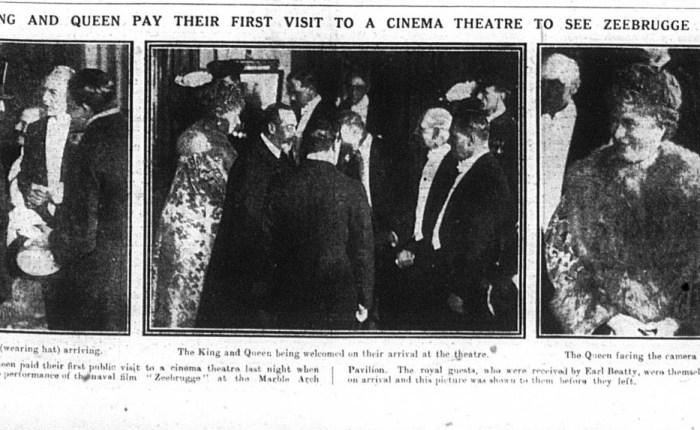
The King and Queen’s first public visit to a cinema came two years later, in November 1924 on the eve of Armistice Day. The occasion was a charity screening to raise money for the newly formed British Legion. The royal couple saw the non-fiction film Zeebrugge, which told the story of the British army’s attempt to close off the Belgian port of Zeebrugge during World War One. Again the event was covered extensively in the press.[3] Crowds cheered the Royal Couple as they arrived at the Marble Arch Pavilion and were shown to the Royal Box which was constructed for the occasion. Three commanders who had received Victoria Crosses for their bravery during the Zeebrugge Raid were also in the audience.
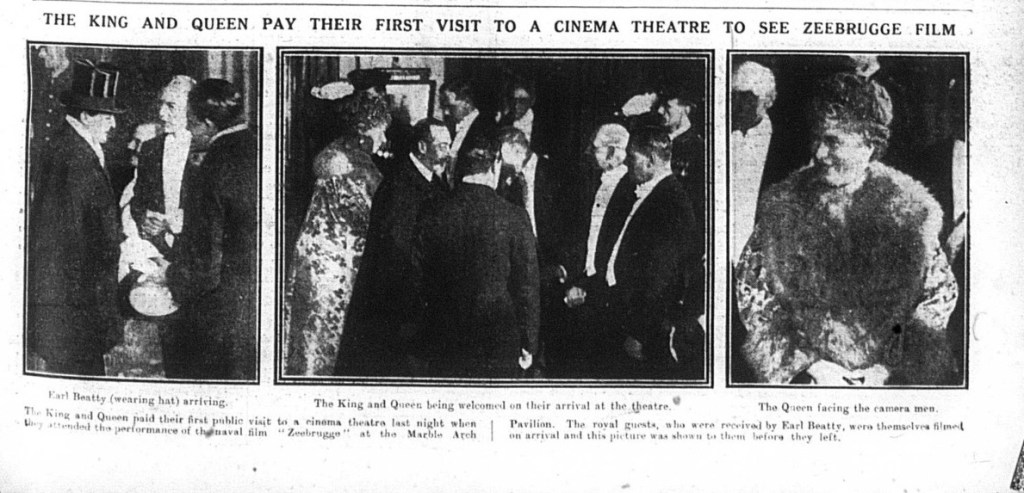
Photos in the Daily Mirror of the Royal visit to the cinema. Daily Mirror, 11 November 1924, front page

The Daily Telegraph gave a detailed report of all the aristocrats who attended the screening. The cinema space, normally open to audiences of all backgrounds, on this occasion became a much more exclusive space. It seems that the King and Queen could endorse cinema, as long as cinema related to serious and inoffensive topics –and the films they viewed were British productions, of course. The Royal’s support of cinema underscored the Royal Family’s values: of course the King and Queen saw films like everyone else, but only those that promoted the national identity of their country, and those that would not cause offence to any of their subjects.

During the visit to the Marble Arch the Royal Family also became the subject of a novel technological experiment: their arrival at the cinema was filmed, and while they were watching Zeebrugge the film was developed, and played back to the audience at the end of the evening. The Royals became subject of a film which they later consumed as an audience. This circularity was also demonstrated in the private Royal screenings in 1922: one of the topics that the Royal family could watch without risk of controversy was – the Royal family.

By the end of the 20s, film had become a recognised medium to promote empire, either directly through ‘educational films’ or indirectly by using cinema screenings to raise money for charities with Royal patronage. In this decade, the Royal family had gotten involved in the cinema business, and started using it as a means of increasing their popularity and profile, and of reaffirming discourse on empire and nationalism. Although the cinema could be a democratic space, the Royal Family’s interactions with it were carefully constructed. This way, they cleared the way for later generations of Royals to use popular entertainment to maintain the ‘common-sense’ status quo of monarchy.

Through Three Reigns is available to watch for free on the BFI Player (UK only)


[1] ‘The Film World’, The Times, 12 May 1925, p. 14

[2] ‘The King Sees Himself’, Daily Express, 26 September 1922, p. 7; ‘Royal Family Film’, Daily Mail, 26 September 1922, p.6; ‘Films at Balmoral Castle’, Daily Telegraph, 26 September 1922, p. 12; ‘Royal Ballroom Cinema’, Daily Mirror, 26 September 1922, p. 2

[3] ‘King and Queen at the Cinema Theatre’, Daily Telegraph, 11 November 1924, p. 11; ‘King and Queen See Zeebrugge Film’, Daily Mirror, 11 November 1924, p. 3; ‘The King & Queen Filmed’, Daily Mail, 11 November 1924, p. 7

J. Lyons and Co – Trocadero and Corner Houses

J. Lyons and Co – Trocadero and Corner Houses

A key pleasure for Londoners in the interwar period was going out for tea or a meal. ‘French-style’ restaurants had appeared in London in the final decades of the nineteenth century. Whilst these original restaurants remained popular, the interwar period saw a democratisation of the dining-out experience. A wider range of outlets catered to people of different backgrounds and with different amounts of disposable income. As more and more Londoners, including women, increased their earnings and got more leisure time, they were able to experience (temporary) luxury in one of the many restaurants, cafes, and teashops in the capital. The player that left one of the biggest marks on the hospitality industry in London between the wars was J. Lyons and Co.

Like other restaurants, Lyons started its business in the late nineteenth century: with a teashop in Piccadilly in 1894, and the opening of the Trocadero Restaurant on Shaftesbury Avenue two years later.[i] The teashop turned into a chain of shops in 1909. Three of these teashops were Corner Houses, big, multi-storey hospitality spaces which offered affordable snacks and drinks to a mass audience. The Corner Houses on Coventry Street in Soho and the Strand were opened in 1909 and 1915 respectively, but the third Corner House, on the corner of Oxford Street and Tottenham Court Road, opened in 1928.[ii] This attests to the continuing success and popularity of the Corner Houses throughout the interwar period.

Corner Houses worked on economies of scale: they had hundreds of seats each, employed hundreds of staff, and aimed to get as many covers a day as possible. You can get a sense of the bustle of a Lyons Corner House in Alfred Hitchcock’s Blackmail (1929). Near the start of the film, the heroine, Alice, and her boyfriend Frank, visit a Corner House after work. As soon as they walk into the building there is a crush of people around them; they struggle to get into the lift. Once they enter the spacious dining room, all the tables are taken. They are hurried along with every step, and only stay at the restaurant for a short while before leaving again. It is no coincidence that Alice has picked this location to meet her lover, ‘The Artist’ – the crowded room provides a perfect cover for a secret rendez-vous, and the Corner House is a democratic space that anyone can enter without difficulty. In real life, the Corner Houses also functioned as meeting spaces for marginalised groups, most notably for queer men.[iii]

Lyons operated a very different policy at the Trocadero restaurant. In some respects the Corner Houses and the Trocadero were very similar; both served hot meals, both catered to huge numbers of customers every day, and both sought to transport their diners to exotic locales through their interior decoration and design choices.[iv] But whereas the Corner Houses were explicitly marketed to a mass audience, the Trocadero restaurant had strict rules about who could enter the space and where they were allowed to go.

An internal “Memo to Superintendents and Reception Clerks” stipulated a number of rules on the handling of “Strange Ladies” – female customers not known to the staff. These rules were clearly intended to prevent prostitutes from entering the space and soliciting; the Trocadero was on the site of what used to be the ‘Argyll Subscription Rooms’, an entertainment venue notorious for the number of prostitutes that frequented it. In its efforts to distance itself from the site’s previous occupiers, the management of the Trocadero were asked to treat all “Strange Ladies” as potential disruptors:

For Luncheons. Strange Ladies to be placed at small tables round the Restaurant, the object being that in case of misbehaviour we can screen the table off.

For Dinners. Strange Ladies either in couples or alone are to be put at the small tables round the Blue Saloon Wall (When Saloon is closed round the Restaurant) the object being that in case of misbehaviour we can screen the table off.

For Suppers. Strange ladies are to be given the small tables in the Restaurant round the Wall, the object being that in case of misbehaviour we can screen the table off.

Grill Rooms. Strange Ladies either alone or in couples are to be placed at small tables round the small room, or (in the event of this being closed or full) at small tables in the Larger Room, the object being that in case of misbehaviour we can screen the table off.[v]

Clearly, the Trocadero restaurant was not intending to be an open and public space for female customers, who were rather expected to visit a Corner House instead. The gendered differences between the Trocadero and Corner Houses also extended to the waiting staff: all waiters at the Trocadero were male, whereas the Corner Houses had exclusively female waitresses, who came to be known as ‘Nippies’.

It was conventional in London that waiting staff in restaurants were male and waiting staff in teashops were female.[vi] Male waiting staff were perceived as similar to the butler or footman in a grand house; by attending a restaurant the (male) customer could experience something akin to what a gentleman in a country estate would experience. In the teashops, on the other hand, the female staff were appreciated for their speed, efficiency, and decorative function.

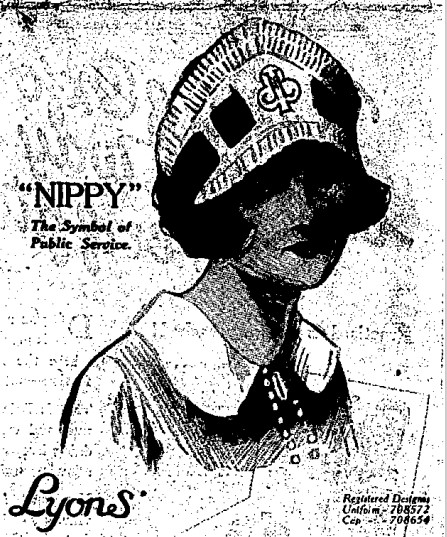
The Nippy grew into a cultural phenomenon in and of itself, to the point that she became a fictional character that both represented the Lyons brand and a host of positive feminine values. Internal guidance to female waiting staff placed a lot of emphasis on physical presentation: Nippies were required to have their hair “neat and tidy”; “teeth well cared for”; “cap correctly worn” and “no conspicuous use of make-up”.[vii] Lyons deliberately crafted this aspirational persona for its female staff and encouraged them to take pride in their femininity.[viii] In advertising for the brand, Nippy became the ‘Symbol of Public Service’.

Advert on front page of Daily Express, 14 April 1925

J. Lyons & Co. had a huge influence on the interwar London dining-out scene; there are countless references to its restaurants and Corner Shops in memoirs and fictional representations of this period. As this piece has shown, Lyons catered to two very different audiences through its restaurants and tea shops respectively. It is in the interwar period that these venues first reached their mass appeal, and the Nippy became established as a cultural reference point. For women, the choice was between conforming to a symbol of feminine perfection or risking being labelled as a prostitute. The venues lasted well beyond this period: the last Corner House closed in 1977 and the Trocadero remained active as an entertainment venue until 2011.


[i] Judith Walkowitz, Nights Out: Life in Cosmopolitan London (New Haven: Yale University Press, 2012), p. 197

[ii] Ibid., p. 198

[iii] Matt Houlbrook, ‘The Man with the Powder Puff’ in Interwar London’ The Historical Journal, Vol. 50, No. 1 (Mar., 2007), 145-171 (149)

[iv] Walkowitz, Nights Out, pp. 198-199

[v] London Metropolitan Archives: ACC 3527/186 – Rules and regulations for Trocadero Restaurant staff (indexed)

[vi] Rosalind Eyben, ‘The Moustache Makes Him More of a Man’: Waiters’ Masculinity Struggles, 1890–1910’, History Workshop Journal 87 (2009), 188-210 (197)

[vii] London Metropolitan Archives: ACC/3527/201/A ‘The Perfect Nippy’

[viii] Walkowitz, Nights Out, p. 205

All-Night Card Clubs

On 8 March 1927 the Daily Express ran a sensational exposé on its front page:

“London’s All Night Card Clubs – Women who play from tea-time to breakfast”

The story ran nearly the full length of the front page. It noted that an advertisement had been appearing in respectable broadsheet The Times, which read:

BEAUCHAMP CLUB
56 Beauchamp Place, S.W. 3 (Sloane 3340)
Mrs Hands has regular games of straight poker daily, at 3 and 9pm. Bridge lessons given

Poker clubs such as this one functioned as private member clubs, where members paid an annual fee to attend. The legislation of private member clubs had been drawn up with the classic Pall Mall club for upper-class men in mind. In the interwar period, however, club legislation and licensing were increasingly exploited by entrepreneurs to facilitate transgressive behaviour. Nightclubs of the period operated under the same legislation; they were nominally private member clubs, which allowed them to evade a level of external scrutiny. However, where the old clubs in ‘Clubland’ often had (and still have) extensive vetting procedures for new members, nightclubs and poker clubs usually allowed anyone to join as long as they paid their annual fee. The poker clubs were perfectly legal, but clearly they were stretching the intentions of club legislation beyond its originally intended purpose.

The Daily Express held the Beauchamp Club up as an example of a supposed sudden influx of private member clubs that catered to poker players. The members of these clubs were alleged to be mainly women, playing into persistent fears of the potential corrupting effect of modern society on women. The article states confidently that: “Women gamblers are patronising these clubs in increasing numbers. They begin in the afternoon, break off for dinner, and then sit down to another long session, which often lasts till dawn.” The question that this may raise in the reader’s mind is – what happens to these women’s families whilst they are spending time at the poker table? At a time when a married woman’s primary role was to support and look after her family, a woman who spends hours at the poker table was presumably neglecting her responsibilities towards her husband and children.

Mrs Hand, the owner of the Beauchamp Club, is quoted as saying “Women will always gamble”; this is presented as a simple fact of life, that all the readers of the article can agree on. Players are described as attending the club after the theatre shows finish, then playing until breakfast, and returning at 3pm for the next round. It is implied that women are particularly susceptible to this addictive behaviour. What is more, Mrs Hand’s earning model banks on it; on top of the club’s annual fee, she charges players for each hour they spend at the table.

The location of the club and the fact that the advert had been placed in The Times – the stalwart of the upper classes – implied that the club members were of a high social standing. The Daily Express was aimed at a lower-middle class audience; this story allowed the Express reader to feel indignation at the wealthy Londoners who were supposedly spending all day gambling their money away. Mrs Hand is quoted as explaining that club members “play for four-shilling rises (…) That means you would have to be most unlucky to lose as much as £10 in a sitting.” Ten pounds was a substantial amount of money for most people; Mrs Hand’s comments only highlight how removed she is from the average person in her understanding of the value of money.

The Express article traces the reason for the sudden increase in poker clubs specifically to a few key court cases of previous years. In 1921 the owner of the Cleveland Club was charged with allowing illegal gambling activity in his club because it contained a poker room. The Express notes that in that instance, “The stakes were low, and play was never continued for more than half an hour after midnight”. Nevertheless, the club owner pleaded guilty and paid a fine.

However, a similar case that was brought to trial not long after was put to a jury, which delivered a verdict of ‘not guilty’ on the basis that poker required a level of skill and was therefore not a form of gambling. According to the Express, the police have since stopped taking action against poker clubs as the jury’s verdict set a precedent. The debate on whether poker is a sport or a form of gambling continues to this day, with both sports and betting companies arguing for their respective positions. A variation of poker called ‘Match Poker’, which removes the random element of which cards a player is dealt. This version of poker is now recognised as a sport, but more commonly played versions such as Texas Hold’em are a mainstay in casinos, and players are required to be at least 18 years old (in the UK) to play.

It is clear where the Express stands on the matter of prosecution, even if the clubs are currently primarily frequented by those who can afford to lose some of their wealth. It argues that complaints keep arising of “women and young men losing much more money than they could afford in poker clubs, and of other evils arising out of this form of gambling.” The article’s final sentence notes that publicly advertising these clubs, as The Times is allowing to do, gives opportunity to professional gamblers to swindle others out of their money.

It is unlikely that many Express readers themselves had been affected by poker clubs, but it was a pretty safe topic to gain their audience’s approval, as it put people of a different social class in the firing line. The article did not spark a bigger inquiry into poker clubs and the Express did not pursue the story. For the paper, private poker clubs were a way to generate indignation towards women, the upper classes, The Times, and the government and police who were not taking any action against these clubs.

Autobiography of an interwar journalist

JC (John Clucas) Cannell was a man of two, seemingly completely separate, careers. He was a Fleet Street journalist, but also a magician. In that latter capacity he became vice-president of The Magician’s Club. After his fellow (and more illustrious) Club member Harry Houdini died in 1926, Cannell wrote the book-length The Secrets of Houdini (1931)[1] which painstakingly explains exactly how each of Houdini’s famous tricks worked. In 1935 Cannell collaborated with Quaker Oats to distribute to Quaker customers copies of The Master Book of Magic[2]; again a book which explained how magic tricks worked.

Sources that relate to Cannell’s work as a magician are silent about his other career as a Fleet Street journalist. Yet the books Cannell wrote about magic show his reporting appetite. He was driven to lift the curtain on how magic worked; a stance that his fellow magicians did not necessarily appreciate. Cannell’s instinct to reveal the ‘truth’ to his readers would have served him well as a tabloid journalist in interwar London.

Aside from his books on magic, JC Cannell also wrote an autobiographical account of his work as a reporter: When Fleet Street Calls.[3] This book, which unfortunately has not been reprinted since its first issue, not only gives insight to journalism practices of the period but also to how journalists wanted to present themselves. In the 1930s British tabloid newspapers were in stiff competition with one another, and all tried to increase their circulation.

This decade also saw the launch of the first university-level course on journalism, at the University of London.[4] There was ongoing public debate about the training and education of journalists. Traditionally most journalists had no formal qualifications but learnt on the job, usually starting out as teenagers on local and provincial papers before making the move to Fleet Street in their 20s. This group of journalists commonly stated that university graduates did not have enough ‘real-life experience’ to be good journalists. The counterargument was that journalists had a duty to explain increasingly complex political, technological and scientific news to their readers; and that without a formal education journalists would not be able to understand the topics they were reporting on.

Cannell’s autobiography is published in the midst of these discussions. In it, he builds a very specific picture of the job and the type of person suited to it. It is an early example of the mythologising of the journalist, that has been expanded on by many subsequent books and films.

For example, Cannell states authoritatively:

“In no profession are contrasts so swift and strange, or is life more full of the unexpected than in that of Fleet Street journalism.”[5]

And

“Because Fleet Street journalism is so unlike every other profession or occupation, the people who follow it are totally different from, may I say, the normal folk.”[6]

His argument is clear: journalism is a very varied job, and not everyone is cut out for it. The role’s fast pace requires stamina and wits. Cannell also implies that whether someone is ‘cut out’ to be a journalist is innate; you either are the right type of person or you are not. A university degree in the subject would not make any difference if you are part of the ‘normal folk’ who are not able to grapple with the challenges of the job.

A bit later on, Cannell addresses the arguments about journalists’ supposed lack of formal education, more head-on:

“There is at least as much culture and accomplishment per head in journalism as in any other of the professions, and the journalist has an additional advantage of more worldly knowledge and shrewdness than the others, apart from, I think I may say, the law.”[7]

The foregrounding here of ‘worldly knowledge and shrewdness’ again plays against the popular stereotype of the educated man as ‘bookish’; it evokes notions of journalists being scrappy and surviving on their wits.

The final part of the above quote concedes some respect only to those enforcing law and order, the most visible exponents of which were police. Cannell considers journalists and police officers as partners, with both groups contributing complimentary skills that allow criminals to be arrested. He describes reporting on a murder story, and going to visit the suspect’s family. Whilst Cannell is in their neighbourhood, he actually spots the main suspect:

“I was bound to inform the police that I had seen the wanted man. (…) The police are well aware that they cannot ignore the Press in their fight against crime, and I know of many cases in which detectives of national repute have asked the opinion of journalists covering a big murder story.”[8]

It is clear that in Cannell’s view journalists, like everyone else, had a duty to respect the rule of law. However, he also makes it clear that in his opinion, the police would not get very far without assistance from journalists. Although it is no doubt true that journalists occasionally provided the police with tips and information, the same happened in the other direction. The police were able to use the press to their advantage when they needed information, such as the description of a suspect, to be distributed quickly. The relationship between police and journalists was more symbiotic than Cannell wants to make it appear. He prefers a more macho representation in which even the police are dependent on the tough journalist to give them clues.

It unfortunately goes almost without saying that Cannell’s ideal, imagined journalist is indisputably male. Although women had worked in British journalism since the Victorian times, and their numbers increased steadily in the run-up to the Second World War, Cannell does not acknowledge their existence at all. Cannell’s description of his job implies that it is unsuitable for women; for example, he boasts that when King George V was seriously ill in 1928, Cannell spent eight nights outside Buckingham Palace, waiting for news.[9] He also describes that journalists can receive a call from their editor any time of the day or night that requires them to stop what they are doing and pursue a story.[10] These working conditions were simply not safe or feasible for women, particularly if they had caring responsibilities.

JC Cannell’s autobiography not only gives insight to the working conditions of tabloid journalists in the interwar period; it also shows how journalists of that period wanted to present the profession. He describes journalism as a challenging job, one that only those with natural aptitude are able to succeed at. Cannell also presents journalism as an essential part of the law enforcement apparatus, to give the profession more legitimacy. When Fleet Street Calls purports to reveal to the reader the inner workings of tabloid journalism, in the same way that Cannell’s magic books revealed the workings of magic tricks. However, in reality the journalism book rather reveals to the reader contemporary attempts to shape the image of journalism in the public imagination.


[1] JC Cannell, The Secrets of Houdini (London: Hutchinson & Son, 1931). The book was re-issued in 1973 by Dover Publications in New York – that version is still readily available for purchase.

[2] JC Cannell, The Master Book of Magic (London: Quaker Oats Ltd, 1935). Second-hand copies of this book are also available online.

[3] JC Cannell, When Fleet Street Calls: being the experiences of a London journalist (London: Jarrolds ltd, 1932)

[4] Political and Economic Planning. Report on the British Press: a survey of its current operations and problems with special reference to national newspapers and their part in public affairs (London: PEP, 1938), p. 14

[5] Cannell, When Fleet Street Calls, p. 92

[6] Ibid., p. 200

[7] Ibid., p. 201

[8] Ibid., p. 177

[9] Ibid., p. 140

[10] Ibid., p. 100

Roadhouses

One of the lesser-known aspects of interwar Britain was the existence and popularity of roadhouses. A roadhouse was a large-ish venue, often located in the countryside a short driving distance from London. Their primary function was as a bar/pub, but many contained other entertainment spaces such as a dancefloor, a garden, or even a swimming pool.[1]

Cultural historian Michael John Law has done substantial work on roadhouses. He has demonstrated links between the emergence of roadhouses, the expansion of London’s suburbs, and the increase of private car ownership. Roadhouses were usually located alongside new bypasses, making it nigh impossible to access them in any way other than by car. Their location just outside the city allowed for the roadhouses to be bigger than a regular pub. The drive required to reach the roadhouse transformed the visit into an excursion. (It’s probably worth mentioning at this point that driving after drinking alcohol was perfectly legal in Britain until the mid-1960s.)

The interest of the popular media in the roadhouse appears to have peaked in 1932-1933. British Pathé visited a few roadhouses for their newsreels; those showing the ‘Ace of Spades’ near Kingston and the ‘Showboat’ in Maidenhead remain readily available. Both newsreels gratefully and extensively use the visual spectacle of roadhouse guests in swimwear, using the pool facilities. Beyond this focus on the swimming pool, however, both roadhouses are portrayed markedly differently.

The newsreel on the Ace of Spades consciously contrasts the roadhouse with more historical leisure pursuits and implies that the activities in the roadhouse are more energetic and transgressive. It exclusively shows activities taking place at night, including late-night swimming and a trio of singers performing a Duke Ellington song. The newsreel situates the Ace of Spades in the wider narrative of the aftermath of the roaring twenties and the London of the Bright Young Things. It shows the roadhouse as a space where adults can access ever-more exuberant entertainment and enjoy American cultural products.

The film taken at the Showboat, on the other hand, starts off during the day, and shows families with children enjoying the swimming pool. Here the roadhouse appears more like a country club where the community can enjoy its facilities. The evening’s cabaret is fairly staid, including dance performances and a comedian to whom no-one appears to be paying much attention. The Showboat is portrayed as less cosmopolitan and transgressive as the Ace of Spades, and as a less problematic space for Londoners to enjoy.

The links with American culture hinted at in the Ace of Spades newsreel were made much more explicitly in a 1932 Daily Express article entitled ‘Roadhouse Joys of Merrie England.’[2] In a stream of flowery language, the Express reporter describes his experiences in the ‘circle of gaiety that has been built around London.’ Yet the pleasure of the roadhouse cannot be enjoyed without complication for this reporter.

In 1932, some elements of the Defence of the Realm Act (DORA), originally implemented during World War One, still remained in place. Amongst these were the restrictions on when alcohol could be purchased and consumed; any venue with a license to serve alcohol could only do so until 10pm, or 11pm in London. The roadhouse the journalist visited, however, did not have a license to serve alcohol. Rather, guests were asked to bring their own – and consequently there was no government-imposed closing time.

The reporter writes: ‘So here was the English “speakie”, flavoured with a touch of American slang.’ Really, the link with the speakeasy and the Prohibition is tenuous: there was no outright ban on alcohol in England and, as the roadhouse waiter who is quoted in the article explains, it is perfectly legal for anyone to bring in their own alcohol and consume it. But throughout the article the journalist appears determined to link the roadhouse to Americanisation: he implies that the phenomenon was imported from America and that the ‘spirit of Jazz’ pervaded the place. The overall impression is that the young people frequenting the roadhouses are turning their back on traditional English culture and values; but also that they are having tremendous fun whilst doing so. The article encapsulates a recurrent tension in British interwar reporting where new developments are welcomed and distrusted at the same time.

Roughly a year later, the debate about whether the roadhouses were fun or to be feared, continued. The proprietors of an island in the Thames near Hampton Court, known as the ‘Thames Riviera’, sued the owners of the Reynolds Illustrated News for libel.[3] The paper had printed a series of critical articles about ‘up-river’ nightlife, which the owners of the island argued were without foundation. The contested reports included ‘Scandalous Bathing and Dancing Scenes’; ‘Plea that Mobile Police Should Combat Growing Menace’; and claims that ‘a large number of young ladies [were] running about naked.’ Although the claims were vehemently disputed by the venue proprietors, there was clearly an assumption both in the papers and in court that the reports could be true.

Roadhouses were a brief and now largely forgotten phenomenon in interwar London. They originated at the intersection between urban expansion, a boost in car ownership, an increase in leisure time and disposable income, and a rise of interest in American culture. As with many other interwar developments that were primarily focused on entertainment, roadhouses caused considerable anxiety about the ‘Americanisation’ of Britain and a potential loosening of morals. These anxieties appear to have been articulated more explicitly in the written press, whereas the newsreels leveraged the visual pleasures roadhouses provided to present them primarily as places of innocent, wholesome and British fun.


[1] Michael John Law, ‘Turning night into day: transgression and Americanization at the English inter-war roadhouse’, Journal of Historical Geography, 35 (2009), 473-494

[2] ‘Roadhouse Joys of Merrie England,’ Daily Express, 18 April 1932, p. 11

[3] ‘Night Life up the River’, Daily Express, 3 March 1933, p. 7

Friday Night is Amami Night

Friday Night is Amami Night

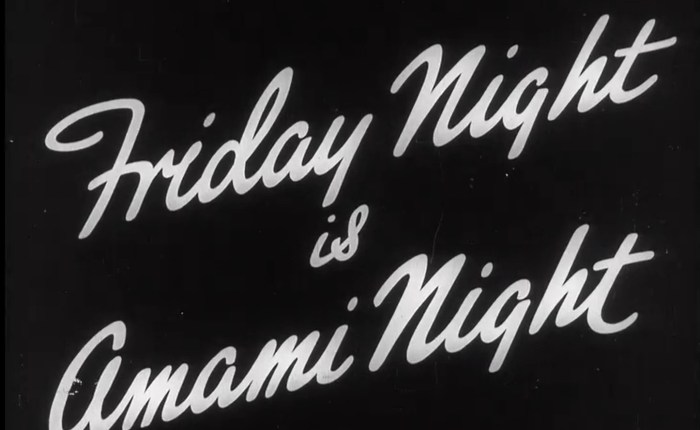
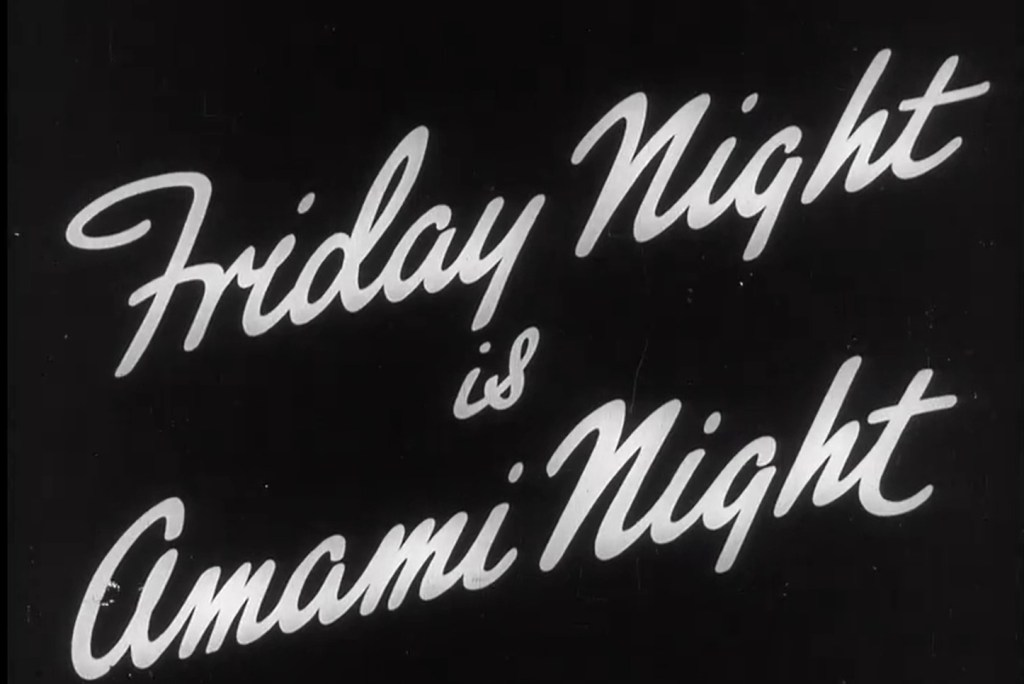
Let’s talk about the biggest and most famous hair product of interwar Britain: Amami shampoo. It was scarcely possible to read tabloid newspapers for any length of time and not see one of the ubiquitous adverts for this brand, with the strapline ‘Friday Night is Amami Night’ used consistently across the interwar period. The brand targeted young women and encouraged them to cultivate a habit of washing their hair with Amami shampoo on Fridays. By encouraging its users to all use the product on the same day of the week, Amami attempted to build a communal experience for women in the interwar period.

In addition to this persistent print campaign, Amami also released an advertising film in 1936, which is available to watch on the BFI Player for anyone based in the UK. Advertising films such as this one would be shown in cinemas, which tended to screen programmes of around three hours in length that contained a mixture of feature films, news reels, cartoons, and perhaps an ‘interest’ film.[1]

The short film, entitled Crowning Glory, is directed by Andrew Buchanan, a Putney native who directed a small number of non-fiction shorts in the 1930s and 1940s. Crowning Glory is his first known directing credit, but it is none the less ambitious for that. The film stands out for its rather laboured commercial messaging, but also for its unusual formal choices. It also highlights who the ideal Amami customer was; and demonstrates the values with which Amami intended to align itself.

The first tongue-in-cheek device the film employs is in the opening credits; after listing the various actors against their character names, the final entry on the list is ‘The Audience – Yourselves’. This is followed by a shot of a film director walking onto a film set, and looking into the camera to directly address the audience. He invites the viewer to ‘join [him] in the interesting experiment of making’ a film. Immediately the film sets up the pretence of a live interaction between audience and character, in a manner still regularly used by children’s TV programming, today. This device serves to enhance the audience’s emotional investment in what is shown, making them feel complicit even though they do not truly have any agency over it.

The director’s journey to make a film is the framing device for the whole short. He states that the subject is ‘one dear to every woman’s heart: her hair’, thus reaffirming Amami’s central brand message that its shampoo should be used by all women, as all women cared about their hair. However, the film’s subsequent visualisation of ‘every woman’ is, unsurprisingly, rather limited.

The film proceeds to show the audience British women in different environments. In the first section of the film, the director finds a woman going for a walk in the countryside (‘a girl who symbolises the British love of the open air to perfection’); a young woman working in a London office (she ‘symbolises the feminine touch in commerce’); a society girl (‘equally important’ to the working woman); and a young woman swimming in a swimming pool (‘the girl who most truly represents sport’). Throughout these scenes the director comments about the women’s excellent hair, and is reassured that no matter what activity, Amami Shampoo and Wave sets can ensure women’s hair stays in tip-top shape.

In the scenes concerning the first, second and fourth woman, the director is physically present in their environment with his hand-held camera, and we can hear his voice in voice-over as if originating behind the camera. This format wavers slightly when we are introduced to the society girl, as she is getting ready for a party in her boudoir. Although the voice-over makes it clear the director is observing her, he is not physically shown to be in the same room as her, giving the scene a more voyeuristic feel. Crowning Glory then changes track and shows the party this society girl is attending as a more straight-forward fiction film sequence. The voice-over disappears and partygoers talk amongst themselves. The film director, however, is also present at the party and spends a few minutes making gags about the party’s other attendees.

Although the film sets these four examples up as representing a wide range of women, they are of course in truth a very narrow representation of femininity. All four women are young, slender, white, apparently unmarried and childless, and middle-class as a minimum. The cinema audiences to which this film was shown was potentially much more diverse. The assertion at the start of the film that ‘every woman’ cares about her hair, combined with the clear visual messaging that only women of a specific type represent ‘the British woman’, likely lead to some female viewers of this advert feeling excluded from the film’s message.

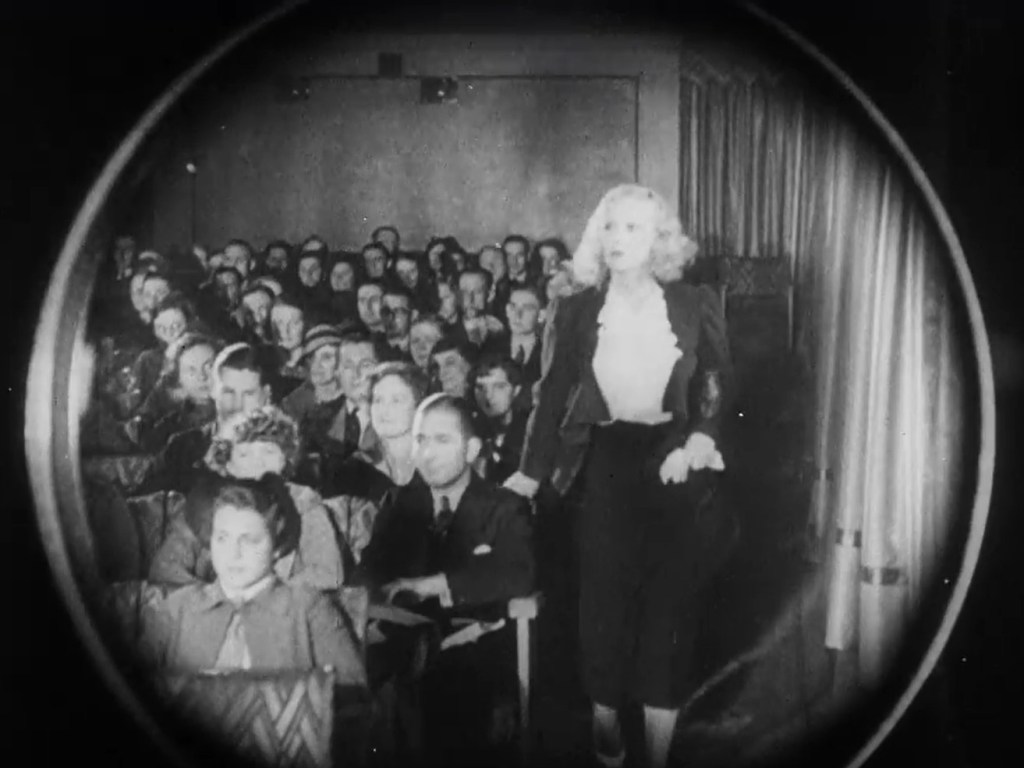
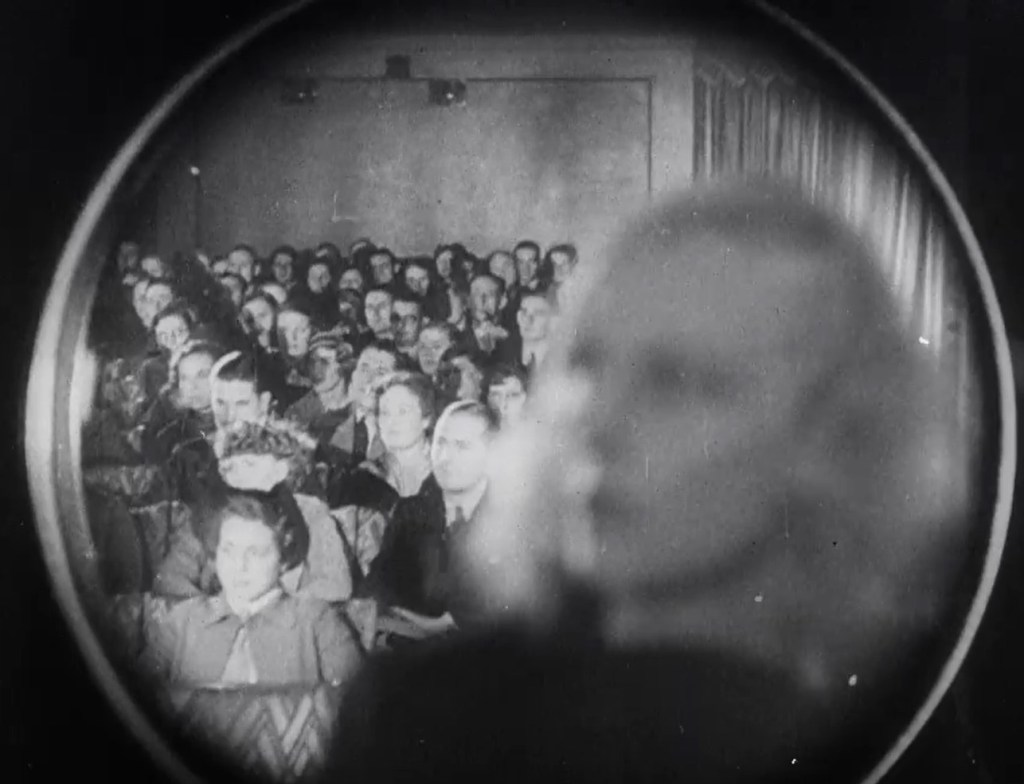
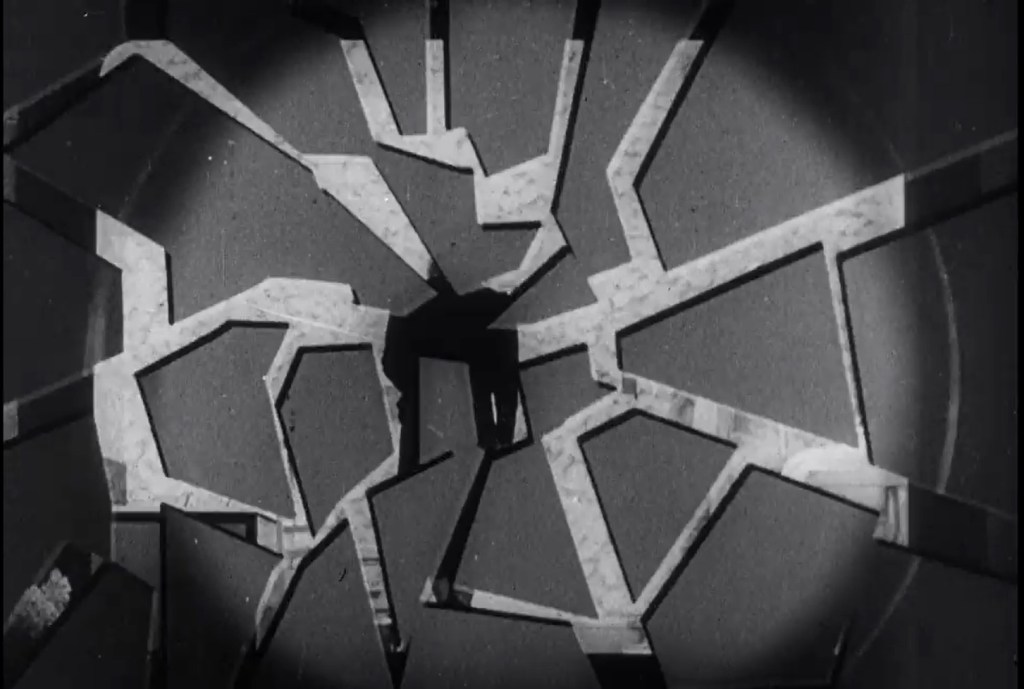
After showing the swimming woman, the film breaks the fourth wall even more decisively. The director is shown in close-up, addressing the camera directly. He tells the viewer: ‘You are going to provide the climax to this picture’; the shot changes to a circular frame to signify the view through a camera lens. Inside the circle, a cinema audience is visible. A woman gets up from her seat and starts walking up the aisle, closer and closer to the camera until she ‘smashes’ it, which is signified by a cartoon scene transition.

In the subsequent shot we see the woman, later identified as Betty, arrive home and talk to a female friend. The very first shot of this sequence is framed as if it is on a theatre stage, adding a further layer of complexity to the advert’s interlocking layers of fiction. Betty’s friend berates Betty for not looking after her hair properly, and decides that a wash with Amami shampoo is in order to lift both Betty’s hair and spirits. The friend stresses that the shampoo should be used ‘every Friday night’ in keeping with the Amami brand.

Looking after your hair is explicitly stated to be as the key to keep a man’s interest and affections. The shampoo is followed by a wave set treatment which is so successful, Betty barely recognises herself. Her ever-attentive friend reminds her to use the wave set every night, and the shampoo every Friday night. The film concludes with Betty not only successfully winning the affections of Dick, her suitor, but also with her friend’s suitor commenting on how well Betty is looking. The closing shot, naturally, has the shampoo’s slogan emblazoned across the screen.

Amami was producing its setting lotion until 2010 but in its later years it was mainly used by women with a particular interest in vintage hair styling. During the interwar period, however, it was one of the most well-known hair products in Britain. Whilst its advertising film was formally innovative, its messaging was predictably narrow and patriarchal. Crowning Glory is a good example of a popular text that demonstrates pervasive cultural ideas in interwar Britain.

Watch Crowning Glory on BFI Player (UK only).


[1] JH Hutchison, The Complete Kinemanager, (London: Kinematograph Publications, 1937), p. 49

1927: More Women Die Young

1927: More Women Die Young

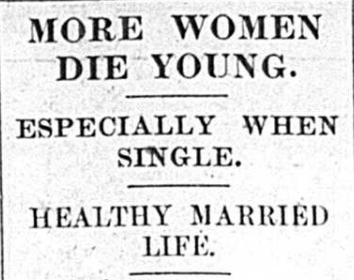
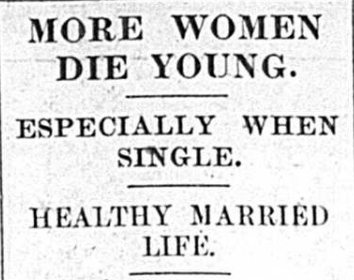
On 22 September 1927 the Daily Mail printed the following article on page 9 of the London edition:

More Women Die Young

Especially When Single

Healthy Married Life

A remarkable fact revealed in a report by the
Government actuary, Sir Alfred W. Watson, on the
expectation of life as shown by statistics, is that the
death rate is increasing for single women between 18 and 27.[i]

The article goes on to note that life expectancy for both men and women has gone up; that both sexes between the ages of 30 and 60 are showing considerably increased levels of ‘vitality’; and that married women between the ages of 18 and 27 are ‘healthier than ever’.

Despite this apparent abundance of good news, the article’s main concern is that for the subset of single women between 18 and 27, a ‘deterioration’ in life expectancy is observed. The article does not only note this trend, but also presents an expert opinion as to what may be the cause of this.

The article’s final paragraph quotes Dr Ethel Browning, an accomplished scientist who was in the process of writing a book on common illnesses and how to prevent them.[ii] Browning is quoted in the Daily Mail as follows:

Probably the increased rates of mortality among
young unmarried women are due to the fact that
so many more of them are now doing really hard work
and closely confined in offices. At night, instead of getting
fresh air, they go to dances or spend their time in cinemas,
with a continuation of the same evil tendencies.[iii]

On the face of it, this article is unremarkable. The article was a one-off, not part of a special series or campaign. It was wedged in on the page between an article about a man who was wrongfully convicted of being drunk and disorderly; and a report on a deadly fire in a school in Winnipeg, Canada. Page 9 of the Daily Mail was reserved for general news items which were not the lead stories of the day. Yet the article is based on a number of tacit underlying assumptions which are highly political. A close reading of a seemingly throwaway article such as this, can demonstrate the agenda of national popular newspapers in the interwar period.

The article makes it clear that the part of the survey that readers should be most interested in is that young, unmarried women appear statistically more likely to die at a younger age, than in previous decades. This implies that the death of a young, unmarried woman deserves more attention and concern than the death of other members of society. The article’s headline explicitly ties marriage to health, underscoring the desirability for women to follow this conventional route.

The report does not actually specify by how much the life expectancy of young single women has declined; it merely states that this is the only group for which a decline has been identified. At the end of the article, Dr Browning is addressed by her title, but no additional information is given about her credentials or area of expertise.[iv] Her title provides her with sufficient authority that her subsequent argument about the detrimental effects of office work, dancing and cinema-going to women’s health are presented as fact. The choice to quote a female scientist sets up a dynamic between a (presumed) older, learned woman criticising the behaviour of younger, more frivolous women.

The Daily Mail editorial team could have chosen to highlight any of the positive aspects of the statistical survey, such as the increased life expectancy for boys and girls. Instead, the article taps into concerns about young women’s behaviour which were amplified regularly through the pages of the Mail and other newspapers in this period. During 1927 and 1928 concerns about ‘flappers’ were particularly fraught as the Representation of the People Act 1928 extended voting rights to women from the age of 21.[v] Articles such as the one under consideration here, helped to subtly reinforce the narrative that young women were irresponsible in their lifestyle choices.

Dr Browning’s comments about office work potentially contributing to earlier deaths for women can be interpreted as a rejection of women’s entrance into the workplace. One could reason that if women were not working in ‘closely confined’ offices but instead spent their time home-making (as they would do when they were married) then women would be healthier. The second part of the quote focuses on leisure activities which, it is implied, women participate in through choice – as they could instead choose to ‘get fresh air’. The supposed ill health of the women therefore becomes their own responsibility; if they chose to have healthier leisure pursuits when single, and endeavoured to get married as soon as possible, they would be healthier and live longer.

This short analysis demonstrates how, through day-to-day reporting, popular newspapers such as the Daily Mail promoted conservative values and stoked concerns that social change was having detrimental effects, in this case implying that fertile young women were dying. Although an article such as this may not seem political, its structure, its language and its cavalier approach providing evidence for statements all work together to reinforce ‘common-sense’ assumptions to its readers. When replicated across hundreds of articles in the daily popular press, these tacit assumptions went a long way to influence how newspaper readers thought about the world around them.


[i] ‘More Women Die Young’, Daily Mail, 22 September 1927, p. 9

[ii] Bartrip, P. W. J. “Browning [née Chadwick], Ethel (1891–1969), toxicologist and factory inspector.” Oxford Dictionary of National Biography. 23 Sep. 2004; Accessed 19 Dec. 2020. https://www.oxforddnb.com/view/10.1093/ref:odnb/9780198614128.001.0001/odnb-9780198614128-e-57854

[iii] ‘More Women Die Young’, Daily Mail, 22 September 1927, p. 9

[iv] Ether Browning is primarily remembered as an industrial toxicologist.

[v] Adrian Bingham, Gender, Modernity, and the Popular Press in Inter-War Britain (Oxford: Oxford University Press, 2004), p. 16