Laburnum Grove (1936)

Laburnum Grove was written as a play in 1933, by J.B. Priestley, a prolific writer and dramatist.[1] It was first staged at the Duchess Theatre in London’s West End (which is currently, Covid restrictions permitting, home to the Play That Goes Wrong). Laburnum Grove transferred to Broadway in 1935 and was turned into a feature film a year later by Associated Talking Pictures. The film adaptation was directed by Carol Reed, who had only recently graduated from Assistant Director positions. The play was adapted for the screen by Anthony Kimmins, who later on in the 1930s would repeatedly direct George Formby on screen. The result is one of the few interwar British films that is explicitly situated in London’s suburbs.

In Laburnum Grove, we meet the Radfern family; father, mother, and daughter Elsie. They live in the eponymous street in an unidentified suburban development. The Radferns have got their in-laws staying over, Mr and Mrs Baxley. Elsie has a beau whom she is hoping to marry. Mr Radfern has some vaguely identified clerking job in a company; he appears content with his suburban routine of commuting to work and tending to his vegetable patch in the evening.

Both the Baxley’s and Elsie are keen on more wealth and success, and both ask Mr Radfern to lend them money – as he does not appear to be attached to it. Over dinner, Mr Radfern calmly explains that his suburban life is merely a front and that he is in fact the lynchpin in an international criminal network, through which he makes a fortune. The rest of the film plays on this tension between his identities as unremarkable ‘middle England’ character and his criminal career. Radfern’s family struggle to believe his claims, and the Scotland Yard inspector investigating the criminal network finds it hard to pin anything on the seemingly innocuous Radfern.

Laburnum Grove is effective because it plays on what, by 1936, was already being cemented as stereotype in the British popular imagination: what it means to live in the suburbs. The title of the film refers to the street in which the Radferns live: although it appears to be a specific location, in reality it stands in for any suburban street. A quick Google Maps search suggests that there are numerous Laburnum Grove’s still in London today, for instance in Hounslow, Southall and New Malden – all areas that saw extensive suburban development during the interwar period.

London’s physical environment expanded rapidly during the interwar period; first many soldiers returned from the front which spurred on the (partially successful) Homes Fit For Heroes campaign. Throughout the 1920s the British economy grew, and more Londoners were able to save up disposable income to put towards a house. The economic crisis of the 1930s did not impact the spending power of people in the south-east of England as much as it did the North, but it did make building materials cheaper.[2] Additionally, the replacement of horse-drawn vehicles with motorcars negated the need for growing wheat to feed the horses, which is what most of Middlesex had been taken up with.[3] This created ideal circumstances for private investors to buy up newly available plots of land and fill them up with competitively priced semi-detached houses. Many people were now in a position to buy a sanctuary away from the noise and smoke of the inner city.

With this mass flight to the outskirts of the city also came assumptions and stereotypes about the people who lived in suburbs. Most suburban developments looked very similar to one another, as private investors and contractors wanted to maximise the number of houses for the lowest possible cost. Consequently, the stereotypical suburban worker also became interchangeable in the public’s imagination: an anonymous stream of men all walking to the same train station in the morning, and returning home via the same route at night. So quickly was the notion established that suburbanites were bland and middle-brow that even during the interwar period, some developers started to market their own houses as “away from suburbia” or “non-suburbanised.”[4]

The gardening that Mr Redfern occupies himself with in Laburnum Grove is also stereotypical – as most suburban houses included a garden, gardening became the quintessential leisure pursuit for suburban men in the interwar period.[5] In Laburnum Grove, Redfern uses his gardening activity as a way to covertly meet up with his neighbour, who is also a partner in the criminal enterprise. Because gardening was such a common leisure activity for suburban men, and because it appears unthreatening (or even emasculating), it provides a strong cover for nefarious activities.

Laburnum Grove repeatedly and skilfully plays with the preconceptions audiences have about suburbs and the people who live in them. The perfect ordinariness of Redfern’s life serves to hide the most extraordinary reality, even from his own family. There is an additional meta-textual element to this, also; very few fiction films in interwar Britain were set so explicitly in a suburban environment. The vast majority of films set in London set their action in either the East End or West End, both of which of course had their own stereotypes attached to them. It appears that writers and filmmakers shared the assumption that there was little of interest to be found in suburban life; that it was too ordinary to ask audiences to pay attention to this.

In Laburnum Grove, Priestley masterfully uses and subverts these expectations of suburban life both within the world of the story itself, and between the film text and its audience. Laburnum Grove provides a British counterpart to the more familiar, post-War American depictions of suburbia. Viewing the film in the 21st century highlights how little these depictions and expectations have changed; the film still works and (most of) the jokes still ‘land’. Despite all the changes London has gone through, the notion of what it means to live in a suburb still endures.


[1] Priestley turned Laburnum Grove into a novel as well, co-written by Ruth Holland

[2] Mark Clapson, Suburban century: social change and urban growth in England and the United States (Oxford: Berg, 2003) p. 2; Stephen Halliday, Underground to everywhere: London’s underground railway in the life of the capital, (Stroud: The History Press, 2013), p. 113

[3] Alan A Jackson, Semi-Detached London: Suburban Development, Life and Transport, 1900-1939 (1st ed 1973; 2nd ed 1991), p. 57

[4] Alan A Jackson, Semi-Detached London, p. 162

[5] Mark Clapson, Suburban Century, p. 68
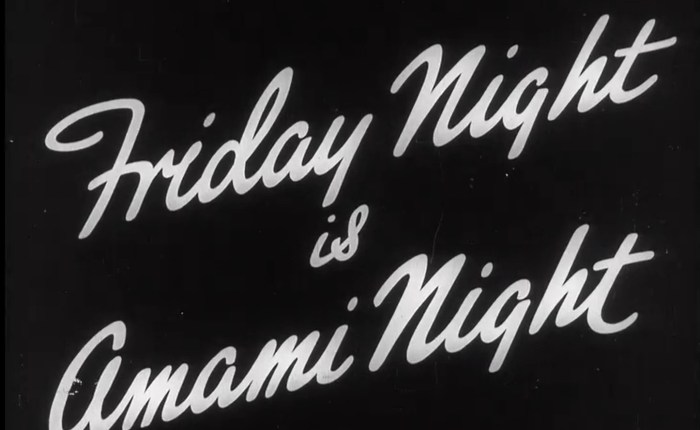
Friday Night is Amami Night

Friday Night is Amami Night

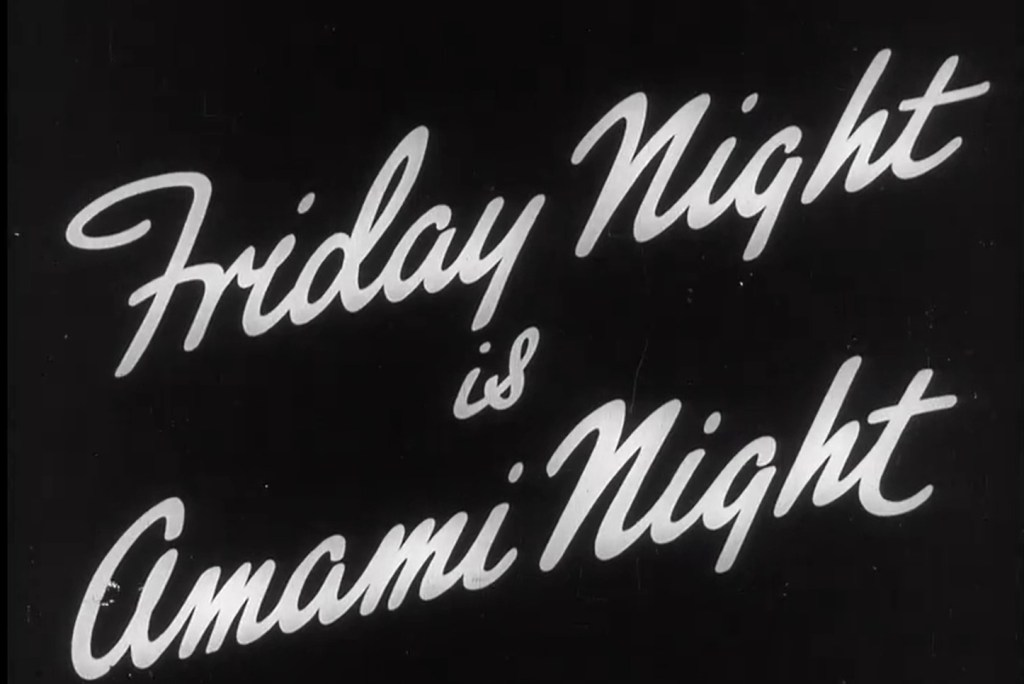
Let’s talk about the biggest and most famous hair product of interwar Britain: Amami shampoo. It was scarcely possible to read tabloid newspapers for any length of time and not see one of the ubiquitous adverts for this brand, with the strapline ‘Friday Night is Amami Night’ used consistently across the interwar period. The brand targeted young women and encouraged them to cultivate a habit of washing their hair with Amami shampoo on Fridays. By encouraging its users to all use the product on the same day of the week, Amami attempted to build a communal experience for women in the interwar period.

In addition to this persistent print campaign, Amami also released an advertising film in 1936, which is available to watch on the BFI Player for anyone based in the UK. Advertising films such as this one would be shown in cinemas, which tended to screen programmes of around three hours in length that contained a mixture of feature films, news reels, cartoons, and perhaps an ‘interest’ film.[1]

The short film, entitled Crowning Glory, is directed by Andrew Buchanan, a Putney native who directed a small number of non-fiction shorts in the 1930s and 1940s. Crowning Glory is his first known directing credit, but it is none the less ambitious for that. The film stands out for its rather laboured commercial messaging, but also for its unusual formal choices. It also highlights who the ideal Amami customer was; and demonstrates the values with which Amami intended to align itself.

The first tongue-in-cheek device the film employs is in the opening credits; after listing the various actors against their character names, the final entry on the list is ‘The Audience – Yourselves’. This is followed by a shot of a film director walking onto a film set, and looking into the camera to directly address the audience. He invites the viewer to ‘join [him] in the interesting experiment of making’ a film. Immediately the film sets up the pretence of a live interaction between audience and character, in a manner still regularly used by children’s TV programming, today. This device serves to enhance the audience’s emotional investment in what is shown, making them feel complicit even though they do not truly have any agency over it.

The director’s journey to make a film is the framing device for the whole short. He states that the subject is ‘one dear to every woman’s heart: her hair’, thus reaffirming Amami’s central brand message that its shampoo should be used by all women, as all women cared about their hair. However, the film’s subsequent visualisation of ‘every woman’ is, unsurprisingly, rather limited.

The film proceeds to show the audience British women in different environments. In the first section of the film, the director finds a woman going for a walk in the countryside (‘a girl who symbolises the British love of the open air to perfection’); a young woman working in a London office (she ‘symbolises the feminine touch in commerce’); a society girl (‘equally important’ to the working woman); and a young woman swimming in a swimming pool (‘the girl who most truly represents sport’). Throughout these scenes the director comments about the women’s excellent hair, and is reassured that no matter what activity, Amami Shampoo and Wave sets can ensure women’s hair stays in tip-top shape.

In the scenes concerning the first, second and fourth woman, the director is physically present in their environment with his hand-held camera, and we can hear his voice in voice-over as if originating behind the camera. This format wavers slightly when we are introduced to the society girl, as she is getting ready for a party in her boudoir. Although the voice-over makes it clear the director is observing her, he is not physically shown to be in the same room as her, giving the scene a more voyeuristic feel. Crowning Glory then changes track and shows the party this society girl is attending as a more straight-forward fiction film sequence. The voice-over disappears and partygoers talk amongst themselves. The film director, however, is also present at the party and spends a few minutes making gags about the party’s other attendees.

Although the film sets these four examples up as representing a wide range of women, they are of course in truth a very narrow representation of femininity. All four women are young, slender, white, apparently unmarried and childless, and middle-class as a minimum. The cinema audiences to which this film was shown was potentially much more diverse. The assertion at the start of the film that ‘every woman’ cares about her hair, combined with the clear visual messaging that only women of a specific type represent ‘the British woman’, likely lead to some female viewers of this advert feeling excluded from the film’s message.

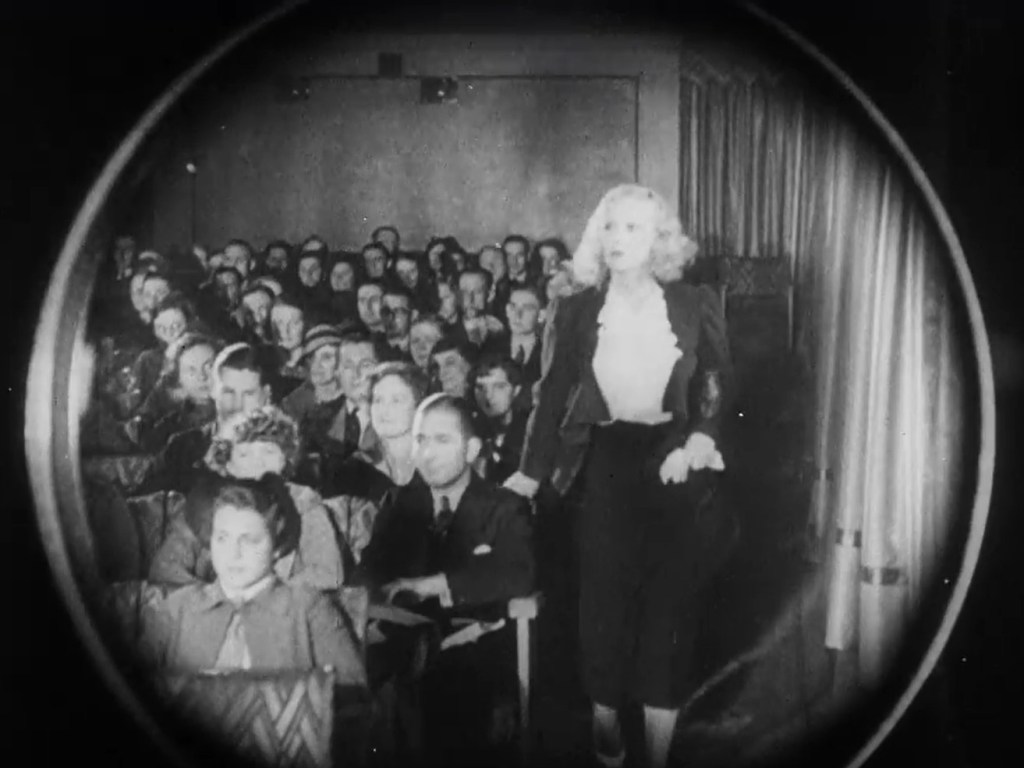
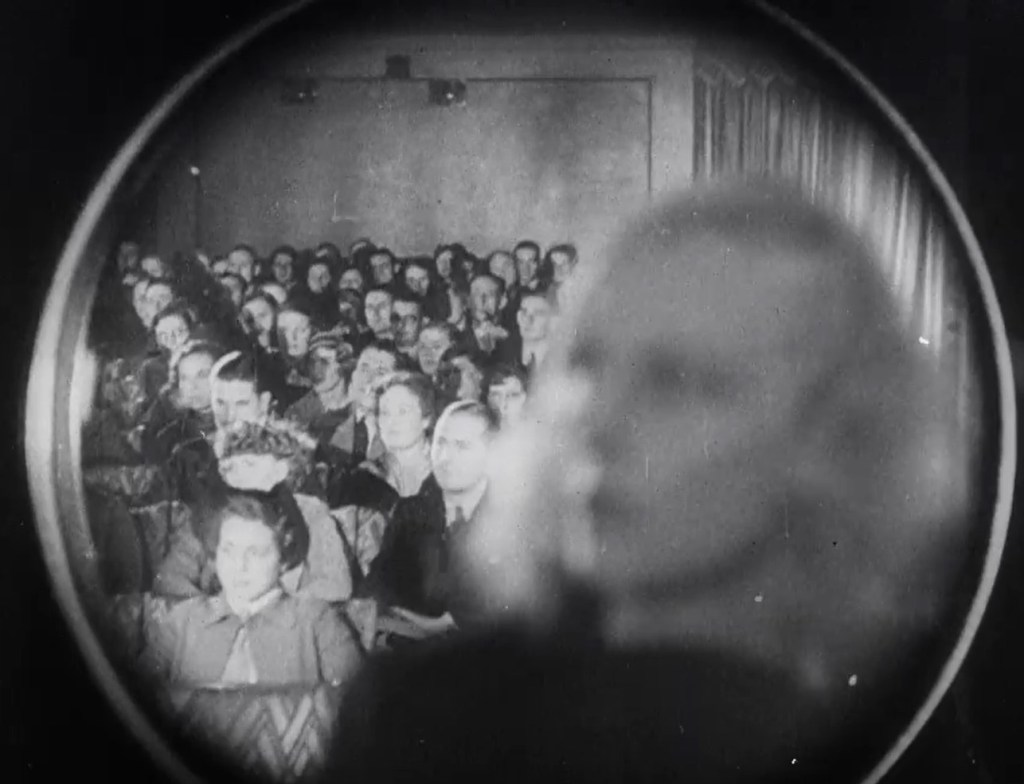
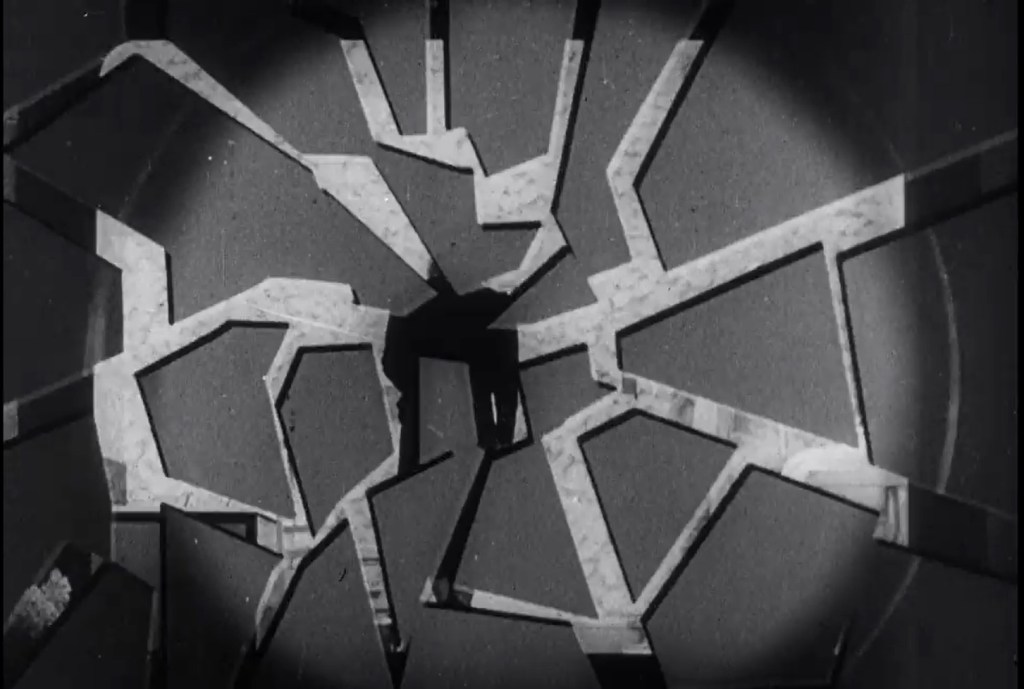
After showing the swimming woman, the film breaks the fourth wall even more decisively. The director is shown in close-up, addressing the camera directly. He tells the viewer: ‘You are going to provide the climax to this picture’; the shot changes to a circular frame to signify the view through a camera lens. Inside the circle, a cinema audience is visible. A woman gets up from her seat and starts walking up the aisle, closer and closer to the camera until she ‘smashes’ it, which is signified by a cartoon scene transition.

In the subsequent shot we see the woman, later identified as Betty, arrive home and talk to a female friend. The very first shot of this sequence is framed as if it is on a theatre stage, adding a further layer of complexity to the advert’s interlocking layers of fiction. Betty’s friend berates Betty for not looking after her hair properly, and decides that a wash with Amami shampoo is in order to lift both Betty’s hair and spirits. The friend stresses that the shampoo should be used ‘every Friday night’ in keeping with the Amami brand.

Looking after your hair is explicitly stated to be as the key to keep a man’s interest and affections. The shampoo is followed by a wave set treatment which is so successful, Betty barely recognises herself. Her ever-attentive friend reminds her to use the wave set every night, and the shampoo every Friday night. The film concludes with Betty not only successfully winning the affections of Dick, her suitor, but also with her friend’s suitor commenting on how well Betty is looking. The closing shot, naturally, has the shampoo’s slogan emblazoned across the screen.

Amami was producing its setting lotion until 2010 but in its later years it was mainly used by women with a particular interest in vintage hair styling. During the interwar period, however, it was one of the most well-known hair products in Britain. Whilst its advertising film was formally innovative, its messaging was predictably narrow and patriarchal. Crowning Glory is a good example of a popular text that demonstrates pervasive cultural ideas in interwar Britain.

Watch Crowning Glory on BFI Player (UK only).


[1] JH Hutchison, The Complete Kinemanager, (London: Kinematograph Publications, 1937), p. 49

Friday the Thirteenth (1933)

Long before the seemingly endless horror franchise of the same name, Gainsborough Pictures made Friday the Thirteenth (1933). This comedy/drama directed by Victor Saville centres on the passengers of a London bus on the eponymous unlucky day. Due to a freakish bad weather event, the bus crashes. We find out that two of the passengers are killed in the crash; which ones pass away is not revealed until the end of the film. First, the film goes back in time and shows the activities of each of the passengers in the day leading up to the crash.

Friday the Thirteenth was one of Saville’s many films for Gainsborough, and one of six in which he directed Jessie Matthews. She appears in this film alongside her then-husband Sonnie Hale; the cast also includes Ralph Richardson, Robertson Hare, Emlyn Williams, Edmund Gwenn and Mary Jerrold.

The film is one of several produced in interwar Britain that foregrounds modern culture’s ability to bring people of all walks of life together. Public transport in London, particularly Underground trains and buses, fostered social mixing. Long-distance railway trains at the time operated three different ticket prices, which in turn ensured that people of different social strata sat in separate carriages. Tubes and buses, on the other hand, operated a flat fare and there were no separate seating arrangements.

According to transport historian Christian Wolmar, during the 1930s London’s public transport network “was probably most crucial as a means of transport to the widest range of social classes”.[1] This was the brief period in which the public transport network had expanded to cover the city and its suburbs; and private car ownership was not yet commonplace, particularly not for travel in the city centre.[2] For almost everyone in London, using public transport was one of the easiest, quickest and cheapest ways to get around.

The characters on the bus in Friday the Thirteenth are a careful mix of familiar stereotypes. There is the aspiring showgirl; the put-upon husband; the East-End crook; the well-to-do City trader; the clerk struggling to make ends meet; the devious blackmailer; and of course the street-wise bus driver and conductor. As we are introduced to these characters throughout the film, we see that each one of them has their problems. Despite their differences, they all end up travelling alongside one another, and get caught up in the same accident. No matter how wealthy or poor, or successful or not, these characters are, the film highlights how the city brings them all together.

A similar trope appears in the 1928 film Underground, directed by Anthony Asquith. That film’s opening title states about the London Tube:

The “Underground” of the Great Metropolis of the British
Empire, with its teeming multitudes of ‘all sorts and
conditions of men’, contributes its share of light and shade,
romance and tragedy and all those things that go to make
up what we call ‘life’.

Both films purport to show a ‘slice of life’; normal people going about their business. For most Londoners in the interwar period, using public transport would have been a very common experience. The city’s suburban expansion (in the 1930s in particular) meant that many people lived so far away from the city’s centre that public transport was imperative to get to their place of work as well as to central places of entertainment such as West End theatres and cinemas. Audiences could recognise the characters and situations the films presented.

It was an appealing message that public transport was a great leveller, and that the modern urban experience eroded class differences and strengthened commonality of experience. Cinema itself, alongside other emergent forms of mass-communication, provided a common cultural ‘language’ for all Britons during the interwar period.[3] For the working- and middle-class members of the audience it was no doubt reassuring to be reminded that wealth and success do not make one immune from being potentially caught up in a deadly bus crash.

However, Friday the Thirteenth deviates from its central tenet that all men (and women) are fundamentally equal, in its resolution. At the end of the film it is revealed which two passengers did not survive the crash. One is the struggling clerk, who was just about to go home and surprise his unhappy wife with tickets to a dream holiday. The other is the blackmailer who was carrying a cheque written by his latest victim; his death releases his target from a lifetime of extortion. All the other characters are shown to have learnt their lesson from the crash; they make amends with their partners or revisit the bad decisions they were about to make.

The two victims of the crash clearly represent the two ends of the scale. The death of the blackmailer not only helps his victim, but also society as a whole: a police officer informs the erstwhile victim that the police had been trying to pin down the blackmailer for a while. The message is clearly that many future crimes are now prevented. The death of the clerk, on the other hand, appears designed to elicit nothing but sympathy from the audience. Whereas most of the other characters were making morally questionable choices (selling stolen goods, cheating on their spouses) the clerk is presented as faithful to his wife and hardworking.

It is in this resolution, then, that Friday the Thirteenth moves away from its apparent principle of demonstrating equality between people, and instead reminds the viewer that death and fate are not always ‘fair’. The viewer is asked to reflect on whether the surviving characters deserve to live. It is precisely the assumption that some people are more deserving than others that drives the narrative tension in Friday the Thirteenth; and it is an assumption that the film ultimately encourages rather than dispels.

Friday the Thirteenth is available on the Internet Archive. Please note the film contains the mention of a racial slur by one of the characters.


[1] Christian Wolmar, The Subterranean Railway: How the London Underground was built and how it changed the city forever (London: Atlantic, 2005), p. 276

[2] Michael John Law, “‘The car indispensable’: the hidden influence of the car in inter-war suburban London”, in Journal of Historical Geography, 38 (2012), 424-433 (p. 424-425)

[3] D. L. LeMahieu, A Culture for Democracy: Mass Communication and the Cultivated Mind in Britain Between the Wars (Oxford: Clarendon Press, 1998), pp. 59-66