The Prince of Wales and the interwar craze for Fair Isle jumpers

The Prince of Wales and the interwar craze for Fair Isle jumpers

A few years ago I had the privilege of visiting Shetland, a group of islands approximately 170 kilometres north of mainland Scotland. This northernmost part of the UK has a strong heritage in textile creation, particularly in knitted lace and Fair Isle jumpers. It’s the latter garments this post will discuss, as the interwar period saw this type of knitwear absolutely explode in popularity in England. What I learnt during my visit to the (excellent) Shetland Museum and Archives in Lerwick was that this sudden popular appeal of Fair Isle knitwear had a big impact on the financial independence of Shetland women.

Fair Isle itself is a small island located to the south of the main Shetland archipelago; in 2020 it had a population of 65 individuals and is only accessible by intermittent ferry and flight services. It is here that a new style of knitting was developed in the 19th century, one characterised by bold use of colour and patterns. The practice was soon adopted across the Shetland islands[1], initially to produce accessories such as caps and stockings. A true Fair Isle garment uses a limited number of colours, usually four or five. Only two colours are used in each row of knitting, which are built up into stars, crosses, zig zags, and other motifs.

The patterns and colours used in Fair Isle knitting make it a time-consuming and expensive way to produce garments. Shetland women (obviously) also produced more standard knitting items such as jumpers and stockings, either for use within their own household or to trade. From the middle of the 19th century until the 1920s, Shetland women were dependent on something called the Truck System, “a trading arrangement which involved payment in kind.” Rather than being able to sell their knitwear to shops and traders for money, instead women were obliged to trade the garments for things like coffee, tea and sugar. Women had little control over how much they would get traded for each garment; and whilst it was no doubt useful to have staple foods for their household, the Truck System meant that women were not able to put aside and save money for longer term investments.

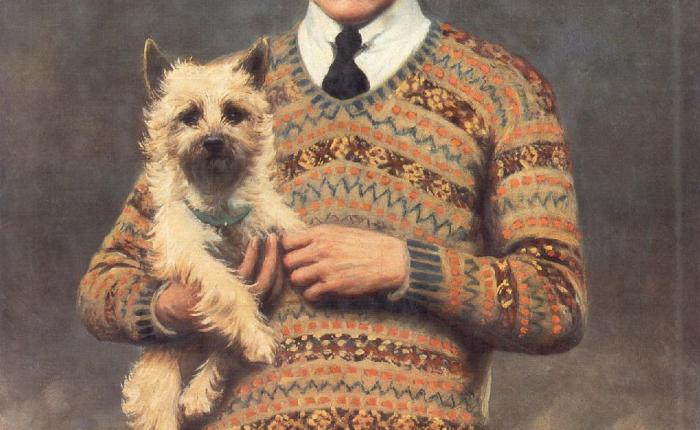
By the end of the First World War, women on Fair Isle and the rest of Shetland had started producing full jumpers in the Fair Isle technique. Then, in a stroke of marketing genius, Shetland hosiery dealer James A Smith gifted a Fair Isle jumper to Edward, Prince of Wales. The Prince of Wales was an immensely popular society figure and bona fide style icon.[2] He decided to wear the Fair Isle jumper whilst sitting for a portrait painted by John St. Helier Lander. In line with the increased importance of mass-communication and consumption of this period, the portrait was reproduced by the Illustrated London News.
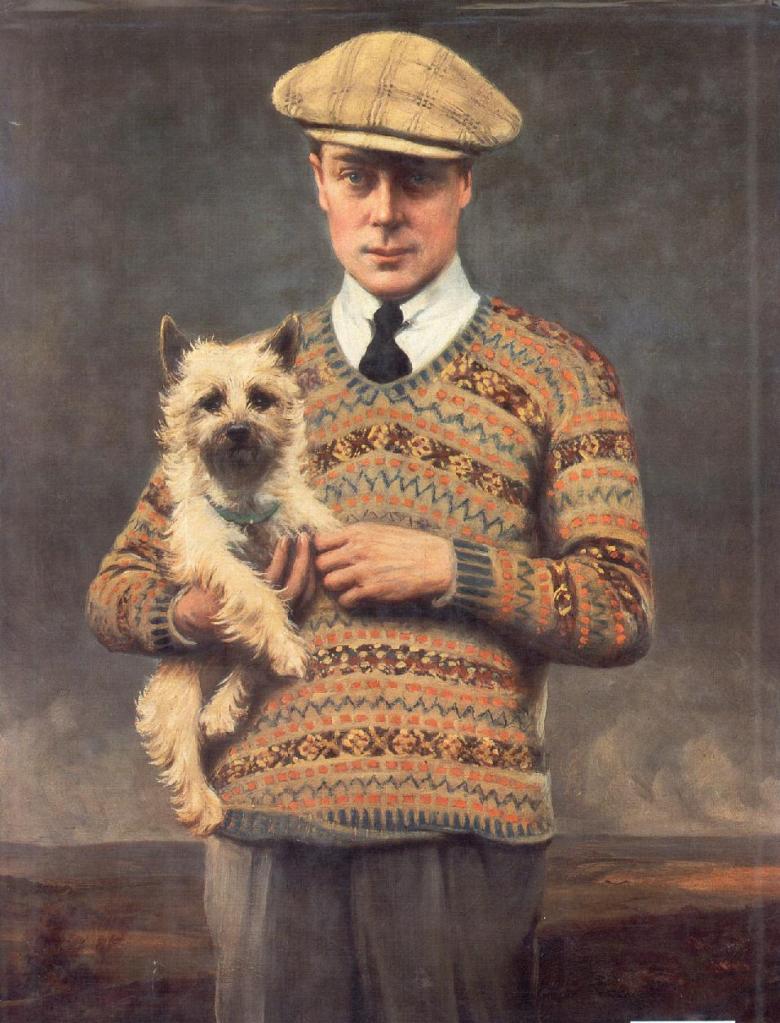
Suddenly, Fair Isle jumpers were the must-have fashion item for fashion-conscious socialites. Although jumpers had initially only been made for men, parallel developments in women’s fashion that favoured relaxed fits and dropped waistlines meant that soon, women were also keen to have their own Fair Isle jumpers. This craze for genuine Fair Isle products inevitably had consequences for the women making these garments. Where they had previously been dependent on the Shetland merchants and traders to take their stock, now women were able to bypass the Truck System and liaise directly with wealthy English buyers. As these buyers sat outside the local economy, they naturally paid in cash which allowed the Shetland women greater financial independence. Eventually the Truck System collapsed completely by the Second World War.

Of course, buying a handmade Fair Isle garment from Shetland was still prohibitively expensive for most people. Very quickly, the exclusive garment worn by the Prince of Wales spawned mass-produced knitting patterns which allowed amateur knitters to make their own garments at home. These remained popular into the 1940s, and Fair Isle garments more generally have become a wardrobe staple for period dramas set in this period. Fair Isle jumpers and vests have periodically regained popularity ever since, and there continue to be knitwear designers on Shetland who are evolving the style. The original 1920s jumper that started it all has not been forgotten; you can purchase an exact replica of the Prince of Wales’ jumper from various Shetland merchants, such as here and here.


[1] Although to this day, only garments actually produced on the island of Fair Isle can carry the Fair Isle trademark

[2] He popularised amongst other things: a particular type of collar (still known as the Prince of Wales collar); a particular way of tying ones tie; the Prince of Wales check motif and plus-fours trousers
Car ownership and regulation in interwar London

One of the features of the British interwar period is the absolute explosion of car ownership that took place, and the development of ‘car culture’. The number of private (non-commercial) vehicles on the road increased in particular; from 187,000 private cars in 1920 to 1,523,000 by the outbreak of the Second World War, of which around 350,000 drove around London.[1] Not only were there more and more cars on the road; they also were able to reach increasingly high speeds. These two developments led inevitably to one of the greatest traffic concerns of the interwar period: an increase in road traffic accidents leading to casualty or even death.

The rapid increase in the number of privately-owned cars was facilitated by both a reduction the price of cars (and a burgeoning second-hand market), and a general rise in living and income standards for lower-middle-class workers, particularly those in London and the South East.[2] More people were able to put money aside to buy consumer goods, and many more families were able to buy a low-power, low-cost car, or buy a care through a hire-purchase scheme in which one pays in instalments. For those who had moved into one of London’s newly developed suburbs, the car represented the possibility to go on weekend day-trips outside of the city and visit roadhouses. Yet suburban development also increased the chances of accidents, “because of the high number of fast arterial roads built there and the predilection for building housing estates near to these new roads.”[3]

As the number of vehicles on the road increased, so did the number of fatal accidents: from 2386 fatal accidents in England and Wales in 1920, to 5690 fatal accidents in 1935.[4] To put these figures in context: “there were more road fatalities in the three years 1929 to 1931 than there were British soldiers killed in the wars with France between 1793 and 1815.”[5] Naturally, these figures sharpened minds and political will to make roads safer. It seems counter-intuitive, then, that the Government actually decided to abolish maximum speed limits in 1930.[6] As the average car could reach speeds of 70 miles per hour, abandoning speed limits had consequences.[7] The decision was hastily reversed in 1934 in light of the fast-increasing numbers of accidents and casualties.[8]

The reason for the original abolishment of speed limits came down to social class, as so many things in interwar Britain do. Before the First World War, cars were luxury items that were only accessible to a select few. In the Victorian tradition of law making, the upper classes were used to their leisure pursuits to be unregulated.[9] When traffic regulations were adopted, many drivers suddenly found themselves confronted with the law for the first time.[10] To make matters worse, those enforcing the regulations were police officers who were generally working class.[11] Those with political clout and influence found themselves suddenly treated as criminals when they breached traffic regulations, and they were able to build a coalition that successfully lobbied for the removal of the speed limit in 1930.

The 1930 Road Traffic Act did, conversely, introduce additional offences in ‘careless driving’ and driving under the influence of alcohol or drugs.[12] This subtle shift in legislation meant that rather than allowing blanket prosecution for anyone breaking an (arbitrary) speed limit, only individuals in specific circumstances could be prosecuted. It assumed that most drivers would be responsible enough to stick to a sensible speed limit. The rise in road traffic incidents and casualties following the passing of the Act, however, indicated otherwise. Before long, those lobbying on behalf of pedestrians and other vulnerable road users were able to argue in parliament for the (re)introduction of tighter traffic safety laws.[13]

The big flaw in depending on drivers to be responsible, was that there was no formal system for training or testing drivers. People taught each other how to drive, and there was no agreed quality test that determined what constituted ‘good’ or ‘safe’ driving. The 1934 Road Traffic Act tackled both issues together by not only re-introducing a speed limit (although it was raised from 20 mph to 30 mph[14]) but also introducing a compulsory driving test for everyone who started driving after 1 April 1934. The road infrastructure was also amended with the introduction of pedestrian and pelican crossings.[15] Ford made this reassuring instruction video for budding drivers in 1935, explaining how the driving test worked:

By the end of the interwar period the debates around traffic regulations and car safety had settled down as car ownership had become normalised. Cars were no longer a dangerous and transgressive novelty but rather had been incorporated into the standard and expected middle-class experience. After a period in which various futures for car ownership and regulation appeared possible, the matter solidified into a regulatory framework that is still in use today.


[1] Clive Emsley, ‘’Mother, What Did Policemen Do When There Weren’t Any Motors?’ The Law, the Police and the Regulation of Motor Traffic in England, 1900-1939’, The Historical Journal, Vol. 36, No. 2 (Jun., 1993), 357-381 (p. 358); Michael John Law, 1930s London: The Modern City (Canterbury: Yellowback Press, 2015), p. 62

[2] Michael John Law, ‘‘The car indispensable: the hidden influence of the car in inter-war suburban London’, Journal of Historical Geography, no. 38 (2012), 424-433 (p. 427)

[3] Law, 1930s London, p. 70

[4] Emsley, ‘Mother’, p. 359

[5] P.W.J.Bartrip, ‘Pedestrians, Motorists, and No-Fault Compensation for Road Accidents in 1930s Britain’, The Journal of Legal History, 31:1 (2010), 45-60, p. 47

[6] Ibid.

[7] Law, 1930s London, p. 70

[8] Claire Corbett, Car Crime (Uffculme : Willan 2003), p. 107

[9] Emsley gives the examples of racecourse betting and foxhunting, which were permitted when equivalent pursuits of the working-classes were regulated. The regulation of foxhunting of course remains a live political issue in the 21st century. Emsley, ‘Mother’, pp. 358-360

[10] Corbett, Car Crime, p. 18

[11] Emsley, ‘Mother’, p. 358

[12] Corbett, Car Crime, p. 19

[13] Bartip, ‘Pedestrians’, p. 50

[14] Corbett, Car Crime, p. 19

[15] Bartip, ‘Pedestrians’, p. 48

Brian Aherne

Brian Aherne

Like other actors featured on this blog, Brian Aherne started his career in English film in the 1920s, before moving to Hollywood in the 1930s. Unlike some of his contemporaries, however, he was able to establish a long and successful career in the US, which lasted until the 1960s. He was nominated for an Academy Award for Best Actor in a Supporting Role for his portrayal of Emperor Maximilian I of Mexico in the 1939 US production Juarez. The seeds of this career were sown in interwar London.

Aherne’s full name was William Brian de Lacy Aherne, which hints at his upper middle-class background. His father was an architect, his mother an actress; Aherne trained in his father’s profession before deciding to follow into his mother’s footsteps instead and pursue acting. He started out on the stage and landed his first film role in 1924, in a supporting role in the no longer extant film The Eleventh Commandments (dir. George A Cooper).

Aherne quickly moved into leading man parts and working with established directors; he was directed by Sinclair Hill in The Squire of Long Hadley and by veteran director Henry Edwards in King of the Castle, both released in 1925. He returned to work with Hill two years later in A Woman Redeemed. However, modern audiences are most likely to have seen Aherne in one of the two silent films he made with Anthony Asquith: Shooting Stars (1928) and Underground (1928). Both have been restored and re-released by the BFI in the last ten years so are readily available to us.

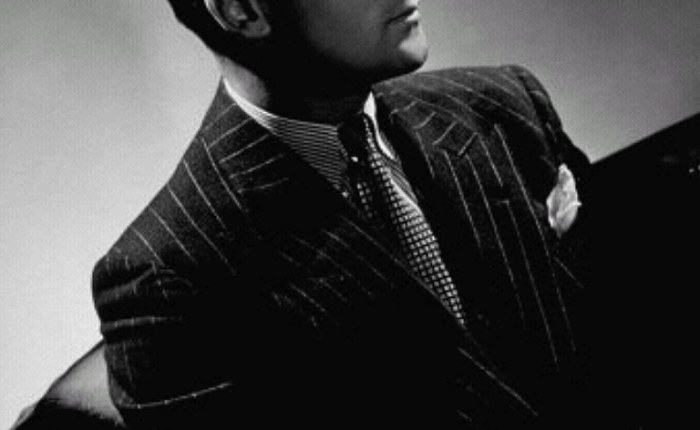
Brian Aherne in 1938

In both films, Aherne plays a good, kind and dependable man who has to endure adversity in his romantic relationships. His even features and a slightly dreamy look in his eyes made him a suitable romantic hero. In Shooting Stars, he plays Julian Gordon, an actor married to actress Mae Feather. Julian and Mae often act together in genre flicks in which he is the hero to her damsel in distress. Off set, however, their relationship is far from happy, and Mae enters into an affair with another actor, the comedian Andy Wilkes.

Mae worries that she will suffer professionally if she were to divorce Julian, so instead she hatches a plan. The couple are recording a western film, and are due to record a scene in which a stooge has to shoot at Julian with a shotgun. Mae secretly puts a live bullet in the gun, hoping that Julian will die and she can pass it off as a freak accident. Of course, the plan goes wrong; the bullet instead hits Andy, who is filming on an adjacent sound stage. Julian realises what Mae was planning and leaves her; her career is destroyed as a result, whilst Julian becomes a successful director.

Much of the joy from viewing Shooting Stars is derived from its tongue-in-cheek knowingness about the film industry, which is perfectly encapsulated by its double-entendre title. Julian’s graduation from actor to director reflects (not very subtly) his journey from a naïve young man to someone who literally calls the shots. Shooting Stars includes a telling scene in which Julian, as yet unaware of Mae’s infidelity, goes to the cinema to watch one of their own films, a typical action flick. He sits among the young boys in the audience and becomes completely engrossed in the fantasy-world in which he is Mae’s hero, saving her from danger. Although Mae is certainly positioned as a cold-hearted, manipulating woman, Aherne’s performance also initially shows Julian as gullible and a bit foolish. By the end of the film, director Julian is hardened and unmoved by Mae’s distress.

Aherne followed Shooting Stars immediately with a lead role in Underground, in which he played London Underground employee Bill. Underground portrays the romantic entanglements between four individuals, and uses the space of a London Underground station to link them together. Bill works as an attendant in the station, helping travellers to find the right trains, making sure they do not fall of the escalator, and answering any queries they may have. He meets Nell when she drops her glove whilst travelling up the escalator. It is love at first sight, but Nell is already being pursued by Bert, a worker at Lott’s power station. Bert in turn has an admirer in the seamstress Kate, who lives in the same boarding house as him.

As soon as Bert realises that Bill is his rival for Nell’s interests, he sends Kate to the underground station; she does as Bert says in the vain hope she will win his affection. Kate manages to lure Bill to an emergency staircase off the main Tube platform, under false pretences. She then waits for the platform to fill up before running out of the staircase and accusing Bill of assaulting her. As planned by Bert, Nell witnesses the incident and she (temporarily) withdraws from Bill as a result. To resolve the misunderstanding and win back Nell, Bill must fight Bert, in this case physically. He succeeds, and the film ends with Nell and Bill united in matrimonial bliss. Like Julian in Shooting Stars, Brian Aherne’s character in Underground starts out as an innocent, but matures through adversity and by tapping in to more traditionally ‘masculine’ behaviours.

After the transition to sound film, Aherne’s last notable British film appearance was his role as Lewis Dodd in the 1933 version of The Constant Nymph (directed by Basil Dean). The 1928 silent film based on the same source material, in which Ivor Novello played Dodd, is the one that is best remembered today. By the time the version with Aherne was released in cinemas, he was already across the Atlantic and appeared opposite Marlene Dietrich in Song of Songs (Rouben Mamoulian, 1933). By the time of his death, Aherne was generally remembered as a Hollywood actor first; but as his appearance in two of the best-known British films of the late silent period testifies, he was also a part of the cultural scene in interwar London.

Comparing two nightclub raids

In the interwar period, London’s nightlife developed rapidly, in a grateful response to the lifting of blackouts and other restrictions imposed during the Great War by the Defence of the Realm Act (DORA). Nightclubs in particular, over restaurants, dance halls or cinemas, have captured the imagination and become emblematic of interwar London’s night-time culture. Nightclubs as such were not illegal, but many of them operated on the border of illegality by serving alcohol past permitted hours; not operating a sufficiently strict membership system; or allowing ‘indecent’ behaviour. As Judith Walkowitz has demonstrated, the appeal of the nightclub was largely that they were spaces that allowed people who would not normally come across one another, to mix freely.[1]  

The policing and controlling of nightclubs was a topic of public interest from the mid-1920s onwards. Due to the clubs’ restricted access, surveillance could only be done by undercover police officers. In order not to draw attention to themselves, these constables had to partake in the club’s activities during their observations. The image of the police officer spending his shift dancing and drinking champagne caused public discomfort, particularly as repeated observations were often deemed necessary before a club could be raided.[2] As nightclub owners got more suspect of single men entering clubs, the Metropolitan police started using undercover female officers as well. Female police officers were still a relative novelty; a male and female officer posing as a couple and entering a club together were less likely to raise suspicions.[3]

Nightclub raids were gratefully covered by newspapers; the reports reveal that the social background of the people attending a club to a large extent shaped how cases were dealt with. In March 1932 for example, the Daily Express covered a hearing at Marlborough Street Police Court relating to the Burlington Club, which had been observed and then raided in January.[4] The charge against the club’s owner and secretary was that of selling alcohol outside of licensing hours; this was the most common charge used against nightclub owners. Despite this illegal activity, the newspaper article takes every opportunity to stress the respectability of the club.

It starts with the description of the police constable who had conducted observations in the club: he is described as ‘debonair’ and having ‘beautifully curly hair and a public school voice.’ The inference is that in the only police officers who were able to successfully blend in with the clientele of the club were those who appeared to be of a high social class. The club itself is described as ‘extensive and well-furnished’ and the police inspector leading the investigation admitted that those present in the club during the raid were ‘reputable people of position’: “You could not put the place down as one of the usual dens”.

In deference to these visitors’ reputations, none of them were charged or even named in the newspaper reports; not even the club visitor who was found by the police to be ‘very drunk’ and emptying half a bottle of champagne over the head and neck of his female companion. The police had also found clear evidence that alcohol had been served at the club beyond permitted hours and not in accompaniment of the substantial meal that was required by law.

Very different was the newspaper reporting on the raid of the Caravan Club in 1934. The Caravan was a gay club in Endell Street, Soho, which was raided within months of its opening. The opening of the Bow Street police court hearing warranted reports across two pages in the Evening Standard of 28 August, against the one column given to the raid on the Burlington Club in the Express two years’ prior.[5]

Unlike the common charge of selling alcohol after hours, which was only laid against the proprietors of a club, in the case of the Caravan Club the charges were those of keeping a place for the purpose of exhibiting ‘lewd’ and ‘obscene’ behaviour; and aiding and abetting such premises. The aiding and abetting aspect applied to all the visitors of the Club – a total of 103 individuals were put in front of the magistrate.

The first part of the Evening Standard report deals almost exclusively with the huge crowd that gathered around Bow Street to see all those charged as they entered the court. The reporter specifically states that ‘Most of the onlookers were market porters’.[6] This evokes an image of a crowd of men who look and behave within the bounds of masculinity as it was accepted at the time. As becomes clear of the remainder of the report, the ‘indecent behaviour’ witnessed at the Caravan Club mostly centred around men behaving in ways that were considered improper and not masculine. The reporter also notes that the crowd of market porters cheered and jeered at each of the defendants as they entered the court, further underscoring that those present at the club had behaved in ways that elicited public ridicule.

Although the language of the report is circumspect when it comes to describing the activities within the club, they are still reported in much greater detail than those that took place inside the Burlington Club. Men were seen dancing with men; men were dressed up as women; a male performer was half-naked; and the ‘conversation in the club was a lot on sex matters’.[7] Interestingly there were no allegations made of alcohol being served without a license; it appears that the club’s proprietors had been observing that particular rule. After the evidence was given, one of the counsels for the defence described the club as a ‘horrible place’.

As is evident from the comparison of these two newspaper reports, the moral judgement of what went on inside a nightclub weighed heavier than the legal argument. The language of the newspaper reports underscores the tacit assumption that wealthy, educated people should be allowed privacy even if they break the law, whereas men engaging in transgressive behaviour can be jeered and shouted at.

Serving alcohol outside of permitted hours was a clear offense, but if the club served ‘reputable’ people then the proprietors were simply fined. However, if the club allowed the display of ‘indecent’ behaviour, particularly behaviour that challenged what was considered appropriate for men, the punishments were much more severe. In the case of the Caravan Club, custodial sentences rather than fines were meted out, with the longest sentence given to the club’s proprietor who had to undertake 20 months of hard labour. Interwar nightclubs may have allowed their visitors to engage in transgressive behaviours but if they threatened to challenge accepted norms too much, institutions of authority were swift to move against them.


[1] Judith Walkowitz, Nights Out: Life in Cosmopolitan London (New Haven: Yale University Press, 2012), pp. 209-252

[2] Heather Shore, ‘Constable dances with instructress’: the police and the Queen of Nightclubs in inter-war London’, Social History, 2013 Vol. 38, No. 2, 183–202, p. 200

[3] Louise A. Jackson, ‘Lady Cops’ and ‘Decoy Doras’: Gender, Surveillance

and the Construction of Urban Knowledge 1919–59, The London Journal, 2002, 27:1, 63-83, p. 77

[4] ’72 People in Raided Club’, Daily Express, 11 March 1932, p. 7

[5] ‘Crowd of 500 in Club Case Scenes at Bow-street’, Evening Standard, 28 August 1934, p. 1; ‘Constable Tells of Scenes in Raided Club’, Evening Standard, 28 August 1934, p. 2

[6] ‘Crowd of 500 in Club Case Scenes at Bow-street’, Evening Standard, 28 August 1934, p. 1

[7] ‘Constable Tells of Scenes in Raided Club’, Evening Standard, 28 August 1934, p. 2

Break the News (1938)

Break the News is a British film of the end of the interwar period that displays some of the ambition of the film industry at that time. The film is a remake of a 1936 French film called Le Mort en Fuite (Death on the Run). Break the News was directed by Frenchman René Clair who cast his compatriot Maurice Chevalier in one of the lead roles. The other male lead was played by Jack Buchanan, a British actor who enjoyed fame both on stage and on film. The main female role was fulfilled by June Knight, a Hollywood starlet who had come over to Europe. Buchanan also produced the film under his short-lived production vehicle Jack Buchanan Productions.

Although Clair is mostly remembered for his post-war films, he started directing in France in the mid-1920s. Break the News was his second picture in the UK, after he directed Robert Donat in the supernatural comedy The Ghost Goes West in 1936. The casting of Break the News demonstrates the high aspirations Buchanan and Clair had for the film. Buchanan had considerable star power in interwar Britain, and Chevalier was a recognised Hollywood star.[1]

The film’s plot is as internationally mobile as its stars. The action starts on the West End, where Teddy and François, played by Buchanan and Chevalier, are in the chorus of a musical comedy show. The show’s lead star is Grace Gatwick, played by Knight. Teddy and François long to have the same level of fame as Grace, so they come up with a cunning plan. After staging a face argument in their lodgings, they make it appear that François has killed Teddy, and make sure that he conspicuously tries to dump the ‘body’ in the Thames. Teddy goes off to the south of France to enjoy a holiday; the plan is that the ‘murder’ will generate a lot of newspaper publicity; François will get arrested and Teddy will dramatically return from France during the trial to ensure François gets acquitted. Both men will get famous and then they will be able to put on their own stage production.

Unfortunately, and obviously, the plan goes awry. Firstly, the anticipated media storm after the ‘murder’ does not materialise, so whilst François eventually gets arrested, the men do not get famous. Secondly, whilst in France Teddy is mistaken for a revolutionary leader of a (fictional) Balkan country, and gets kidnapped and taken back to this Ruritania. He only very narrowly manages to get out and return to Britain just in time before François is executed. This being a musical comedy, of course all is well at the end, and with the help of Grace the men do get their names in lights on the theatre façade.

The plot of Break the News, and indeed the film’s title, place great importance on the operation of the written press. The newspapers are presented as the only vehicle that can give Teddy and François the fame they long for. Fame is not dependent on talent on stage, but rather on who is able to get and keep the attention of the journalists. Grace’s character functions to demonstrate this; early on in the film she manages to create a media storm by reporting that her little dog has gone missing; and then another one when the dog is found. Once the story breaks of a ‘murder’ within her show’s production, she makes sure to put herself in front of journalists and spin the story in a way that puts herself at the centre of it.

Teddy and François also assume that a murder case will most definitely hit the front pages. Much of the comedy in the first part of the film is derived from the way the men stage the ‘murder’, starting with a phoney argument on stage in front of the whole company; moving on to a loud argument in their lodging; and finishing with François taking a black cab to Limehouse to drop a heavy, corpse-shaped parcel in the river. But what the men do not take into account is that the press are not interested in murder per se. Grace is able to generate publicity on anything because the press consider her to be interesting. François and Teddy are never interesting to journalists, no matter what they do. Whereas the men assume that the press can make someone famous, they find that in order for the press to pay attention to you, you must already be interesting or relevant yourself.

The power of the newspaper press is underscored through the implicit assumption that if the press were to write about the murder story, then Teddy and François would become instantly famous. As is often the case in interwar films, ‘the press’ is treated as a homogenous entity, and it is taken for granted that a story is either covered by all papers, or by none. Break the News shows journalists to be operating in a pack, indistinguishable from one another as they all try to get a quote from Grace. Once a story is covered, the next assumption is that the newspapers’ reach is such that the details of the story would become generally known.

The comedy of Break the News relies in a large part on the audience understanding and accepting these beliefs about how the written press operates. It is funny that the murder gets no attention from the papers, because, like Teddy and François, we assume that it would attract column inches. Whilst Break the News pokes fun at these assumptions, the jokes only work because we share the same underlying beliefs that the film’s plot is built on. In that way, Break the News gives insight in the position of the written press in interwar British society.


[1] Andrew Spicer, ‘Jack Buchanan and British Musical Comedy of the 1930s’ in Ian Concrich and Estella Trincknell (eds), Film’s Musical Moments (Edinburgh: Edinburgh University Press, 2006)